Birth and Youth
Born into a scholarly merchant lineage in Changzhou, mastering imperial chronologies from childhood
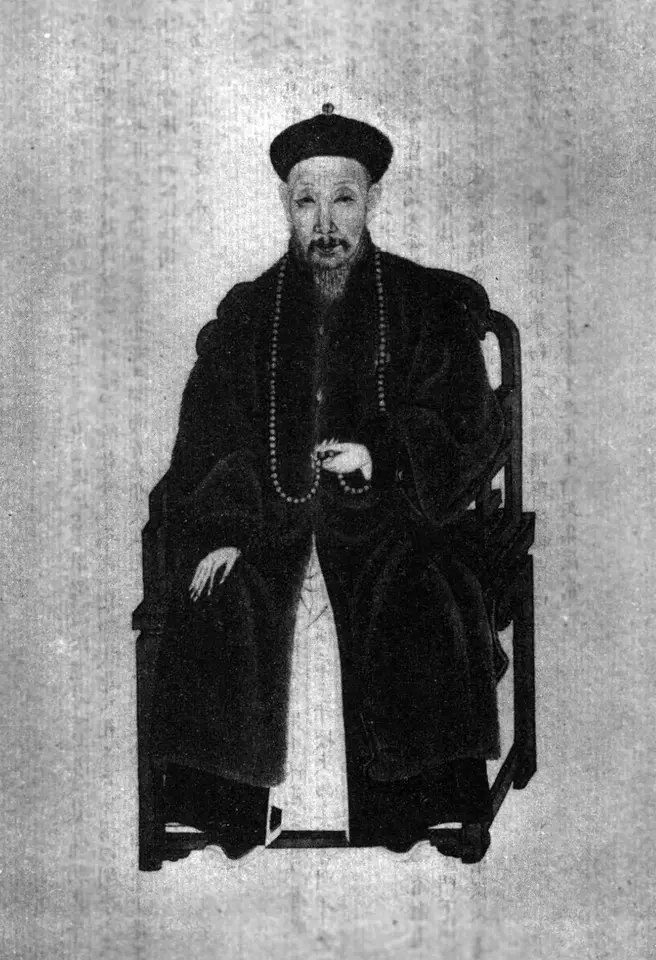
汪由敦
Wang Youdun (汪由敦; 1692–1758), courtesy name Shidiao and art names Jintang and Xiaoshan, was a native of Xiuning in Jiangnan who was born in Changzhou. He was an illustrious senior minister, Confucian scholar, and peerless master of Court-Style (Guange Ti) calligraphy during the Yongzheng and Qianlong reigns of the Qing Dynasty. In 1724, he achieved first-class second rank (Chuanlu) in the imperial palace examinations,…
Wang Youdun (汪由敦; 1692–1758), courtesy name Shidiao and art names Jintang and Xiaoshan, was a native of Xiuning in Jiangnan who was born in Changzhou. He was an illustrious senior minister, Confucian scholar, and peerless master of Court-Style (Guange Ti) calligraphy during the Yongzheng and Qianlong reigns of the Qing Dynasty. In 1724, he achieved first-class second rank (Chuanlu) in the imperial palace examinations, entering the Hanlin Academy. In 1729, he was inducted into the inner court military drafting bureau (precursor of the Grand Council), managing confidential state edicts and frontier military campaigns for over two decades. Following the accession of the Qianlong Emperor, Wang Youdun enjoyed boundless imperial trust, serving successively as Minister of Works, Minister of Justice, and Minister of Personnel, concurrently Chancellor of the Hanlin Academy, and ascending to Grand Secretariat Assistant. Renowned for his exhaustive command of dynastic penal codes, he eradicated systemic local judicial torture and instituted strict appellate reviews. During the Jinchuan campaigns and the pacification of the Dzungar Khanate, he drafted vital imperial decrees day and night, praised by the emperor for his penetrating strategic intellect and exemplary modesty. His calligraphy integrated the gravitas of Yan Zhenqing with the grace of Dong Qichang, establishing the canonical aesthetic for Qing imperial stelae. He passed away in office in 1758, was posthumously elevated to Grand Preceptor to the Crown Prince, enshrined in the Temple of Worthies, and conferred the posthumous name Wenduan.
Born into a scholarly merchant lineage in Changzhou, mastering imperial chronologies from childhood
Passed the Jiangnan provincial examination and attained the Juren degree
Achieved first-place in the second rank (Chuanlu) in the imperial examination and joined the Hanlin Academy
Promoted to Senior Academician and appointed to draft confidential despatches in the Grand Council
Appointed Sub-Chancellor of the Grand Secretariat, assisting in orchestrating the royal coronation
Appointed Minister of Works, supervising palace architecture and capital waterworks
Elevated to Minister of Justice, formulating strict appellate statutes for capital crimes
Directed logistical transports and military supply depots during the Jinchuan expedition
Drafted secret despatches day and night during the campaign to crush Dawachi in Dzungaria
Promoted to Minister of Personnel and Grand Secretariat Assistant, directing the Imperial Archives
Died in office in Beijing; the Qianlong Emperor ordered the stone engraving of his calligraphy
Wang Youdun traced his lineage to Shangxikou in Xiuning, Huizhou. His father, Wang Pinjia, engaged in commerce in Changzhou, where Wang Youdun was born. Demonstrating precocious genius, he began schooling at five, and by eight could recite and debate the dynastic genealogies and reign titles of imperial China. At ten, he returned to Xiuning to sit for the county examinations; upon changing his given name to Youdun as advised in his father's dream, he placed first in the prefecture. He studied classical antiquity with relentless rigor, tracing every doctrine to its ancient origins, which won the admiration of the scholar Cha Nanpu, who chose him as his son-in-law.
In 1715, Wang Youdun passed the provincial examinations as a Juren. Although repeated attempts at the metropolitan exams were delayed, he remained dedicated to classical philosophy. In 1724, under the accession grace examination of the Yongzheng Emperor, he placed first in the second class (Chuanlu) and was appointed Senior Compiler in the Hanlin Academy, serving as Diarist of Imperial Activities.
In 1729, amid military operations against the Dzungars, the Yongzheng Emperor created the Grand Council. Appointed Senior Academician, Wang Youdun was inducted into the council to draft confidential battlefront directives. Concurrently supervising the revenue coinage bureaus, he rooted out illicit debased currency and stabilized prices across the empire. In 1735, he was made Sub-Chancellor of the Grand Secretariat.
Under the Qianlong Emperor, Wang Youdun was made Minister of Works in 1738, and subsequently appointed Minister of Justice in 1745. Governing the Ministry of Justice for eight years, he mastered the Great Qing Code. He detested the systemic extraction of confessions through corporal torture, establishing mandatory re-examination protocols that required provincial governors to personally interrogate capital convicts. His interventions overturned wrongful convictions in Zhili, Shandong, and Jiangsu, saving countless innocent lives.
In the winter of 1749, Grand Secretary Zhang Tingyu retired and incurred imperial displeasure over protocol delays. Out of filial gratitude toward his former mentor, Wang Youdun pleaded for imperial mercy. Discovering that Wang had communicated court sentiment to Zhang, the Qianlong Emperor stripped him of his ministerial rank. Recognizing Wang's genuine uprightness, the Emperor soon granted him the Chenghuai Garden in the Old Summer Palace and restored his ministry. Though later demoted to Vice Minister of War following the provincial fraud of Zhu Quan, Wang accepted every reversal with serene composure.
In 1752, Wang founded the Xiuning Guild Hall outside Xuanwumen in Beijing to assist traveling students, composing a commemorative stele. That winter, the Qianlong Emperor presented him with an imperial tracing of the Fast Snow and Clear Sky Model, from which Wang named his study the Shiqing Studio. In 1755, he was restored as Minister of Justice and rewarded for assisting the western victory. In 1757, he was confirmed as Minister of Personnel, receiving the imperial plaque Holding the Scales of the Six Statutes during the southern tour.
In March 1757, during the imperial inspection tour to Hangzhou, the Emperor granted Wang special leave to visit his ancestral home with his eldest son, Wang Chenghang. Returning to Xiuning, he reunited with his sons Wang Chengpei and Wang Chengjun, and his daughter from Shexian, marking his first family gathering in decades. Conducting ceremonies at the ancestral shrine, he wept in gratitude for his deceased parents and brothers.
Emulating Fan Zhongyan's charitable estate model, Wang donated over one thousand taels of imperial stipends to purchase over one hundred mu of fertile fields as ancestral charity land. He drew up detailed rules using land rents to support weddings, funerals, and schooling for impoverished kinsmen, entrusting management to respected village elders.
In 1754, when Dawachi rebelled, the Qing forces mounted a two-pronged western campaign. Grand Council paperwork was immense; Wang Youdun drafted directives day and night, ensuring supplies reached the frontier. In 1757, he was elevated to Grand Preceptor of the Heir Apparent and Grand Secretariat Assistant.
On the fourth day of the first lunar month in 1758, Wang fell ill at the Old Summer Palace with severe pulmonary vomiting. Deeply alarmed, the Qianlong Emperor ordered chief court physician Sun Yanzhu to administer medicines and sent daily inquiries. As his consciousness faded on the twentieth day, news arrived that the rebel chieftain Amursana had died and his body was surrendered by Russia. Struggling to sit up in bed, Wang bowed repeatedly and rejoiced: "Hearing this news of our imperial might, your servant dies without regret!" He passed away peacefully on the twenty-second day at sixty-seven. The Emperor attended in person, wept aloud, contributed two thousand taels for his funeral, posthumously elevated him to Grand Preceptor to the Crown Prince, and conferred the name Wenduan.
Directing the Ministry of Justice, Wang Youdun established the Regulations for Auditing Capital Cases, abolishing illicit torture instruments in provincial prisons and creating rigorous appellate review mechanisms that safeguarded penal justice across the realm.
During the Dzungar wars, Wang Youdun designed the multi-thousand-mile logistical supply corridor across the Shaanxi, Gansu, and Gobi routes, ensuring uninterrupted food and ammunition for over one hundred thousand troops through innovative financial conversion systems.
Wang Youdun established the Xiuning Guild Hall in Beijing to support scholars and created over one hundred mu of charity land in Xiuning, establishing a model of literati community welfare.
Possessing profound classical learning, Wang Youdun served as lead editorial director in the Hanlin Academy and State Historiography Bureau. He was appointed Chief Director for the monumental Gazetteer of the Unified Great Qing (Da Qing Yitong Zhi), and served as Associate Chief Director for the Strategic Treatises on the Pacification of Jinchuan and Chief Director for the Strategic Treatises on the Pacification of the Dzungars. He meticulously verified border topographies, strategic fortress positions, and operational marches, establishing an unblemished standard of rigorous historiography. Furthermore, his acute strategic memos countered Tsarist Russian diplomatic overtures seeking to exploit western territorial unrest.
Serving repeatedly as Associate Examiner for the capital metropolitan examinations and Reader for the palace examinations, Wang earned renown for identifying genuine talent while strictly refusing private gifts. Throughout his ministerial career, he patronized hundreds of upright, capable young scholars, earning veneration throughout literati circles where contemporaries compared his moral influence to Han Yu and Ouyang Xiu. His literary corpus exceeded one thousand seven hundred classical poems reflecting on administrative duties and rural memories, preserving crucial eighteenth-century institutional and cultural documentation.
FIGURES ASSOCIATED WITH THIS DYNASTY