Birth in Ningbo
Born into a distinguished scholar-official lineage; his father served as Bureau Director in the Ministry of Personnel.
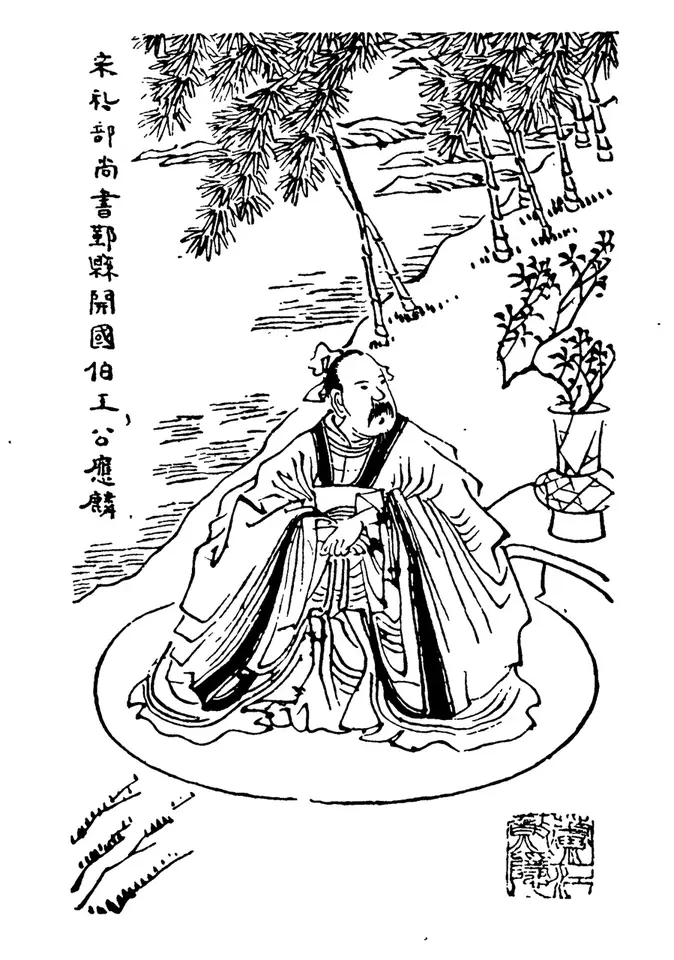
王应麟
Wang Yinglin (王应麟, 1223–1296), courtesy name Bohou, pseudonyms Master Houzhai and Shenning Jushi, native to Yin County in Qingyuan Prefecture (modern Ningbo, Zhejiang), was an eminent scholar, historian, bibliographer, evidential philologist, and high-ranking statesman of the late Southern Song Dynasty, celebrated as the consummate preserver of three centuries of Song intellectual civilization. Endowed with precocious…
Wang Yinglin (王应麟, 1223–1296), courtesy name Bohou, pseudonyms Master Houzhai and Shenning Jushi, native to Yin County in Qingyuan Prefecture (modern Ningbo, Zhejiang), was an eminent scholar, historian, bibliographer, evidential philologist, and high-ranking statesman of the late Southern Song Dynasty, celebrated as the consummate preserver of three centuries of Song intellectual civilization. Endowed with precocious brilliance, he mastered the Six Classics at nine, passed the jinshi examination at nineteen, and achieved first place in the Imperial Decree Examination for Erudition (Boxue Hongci) in 1256. Serving as secondary examiner during Emperor Lizong's palace examinations, he decisively recognized the patriotic genius of Wen Tianxiang, recommending his examination paper as number one in the realm. In his official career, he fearlessly confronted corrupt chancellors Ding Daquan, Jia Sidao, and Liu Mengyan, rising to Minister of Rites and Palace Remonstrant before resigning. Following the collapse of the Song Dynasty, Wang lived in resolute hermetic retirement for two decades as the \"Loyalist of Junyi,\" refusing all summonses from the Yuan court to dedicate himself to textual exegesis. His twenty-volume Notes from Studying with Difficulty (Kunxue Jiwen) established the methodology of rigorous evidential scholarship (kaojuxue), while his monumental 200-volume encyclopedia Jade Sea (Yuhai) was lauded by the Siku Quanshu as the pinnacle of Tang and Song encyclopedias. He passed away in 1296 at age seventy-four.
Born into a distinguished scholar-official lineage; his father served as Bureau Director in the Ministry of Personnel.
Passed the metropolitan examination at age nineteen; appointed assistant magistrate of Xi'an County in Quzhou.
Placed first in the Boxue Hongci examination; served as imperial palace examiner and selected Wen Tianxiang as top graduate.
Rebuked Grand Councilor Ding Daquan for obscuring frontier crises in Huainan and Sichuan, resulting in demotion to Taizhou.
Advanced to Vice Director of the Imperial Diary and Imperial Lecturer under Emperor Duzong; twice dismissed for resisting Jia Sidao.
Promoted to Minister of Rites and Palace Remonstrant; submitted frontier defenses and resigned after vetoing Chancellor Liu Mengyan's appointments.
Following the fall of Song, retreated to Yin County under the pseudonym \"Loyalist of Junyi,\" compiling historical annals.
Passed away peacefully in his native home at the age of seventy-four, leaving behind a massive scholarly corpus.
Wang Yinglin was born on August 17, 1223 (Jiading 16) in Nianshu Lane, Yin County, Qingyuan Prefecture. His father, Wang Hui, was a prominent disciple of the Song Neo-Confucian master Lou Fang, serving as Bureau Director in the Ministry of Personnel and participating in the compilation of the dynastic histories of four Southern Song reigns. Endowed with extraordinary memory and intellectual sharpness, Wang Yinglin mastered the Six Classics by the age of nine under his father's rigorous instruction, earning wide acclaim across southeastern China.
In 1241 (Chunyou 1), at the age of nineteen, Wang passed the metropolitan civil service examination. Influenced by the Cheng-Zhu Neo-Confucian teachings of Wang Ye and Zhen Dexiu, he harmonized moral metaphysics with meticulous textual scholarship. Beginning his administrative service as assistant magistrate of Xi'an County in Quzhou, he enforced tax collection against delinquent local magnates and single-handedly defused a brewing garrison mutiny through ethical persuasion. He later managed grain storage in Pingjiang and the tea and salt monopoly in Liangzhe, establishing a stellar administrative reputation.
In 1256 (Baoyou 4), Wang passed the exceptionally rigorous Decree Examination for Extensive Learning and Grand Composition (Boxue Hongci) with the highest score. Later that year, Emperor Lizong presided over the palace examinations in the Jiying Hall, appointing Wang as secondary examiner.
When the chief examiners submitted their rankings, Emperor Lizong expressed a desire to adjust the order, considering elevating the seventh-ranked paper to the top. Examining the essay, Wang Yinglin was struck by its heroic moral clarity, patriotic conviction, and deep statecraft. Prostrating himself, Wang declared: \"This paper possesses archaic righteousness like a sacred mirror, and a loyal heart like iron and stone; I dare congratulate Your Majesty on acquiring a supreme talent!\" Embracing his assessment, Lizong designated the paper first place. When the sealed names were broken, the author was revealed as Wen Tianxiang. Wang's penetrating discernment became legendary, and Wen Tianxiang's steadfast martyrdom in defense of the realm fully validated Wang's historic appraisal.
Throughout his bureaucratic career, Wang Yinglin exhibited uncompromising integrity. In 1258 (Baoyou 6), Grand Councilor Ding Daquan concealed frontier military crises to fabricate peace. Wang candidly warned Emperor Lizong of perilous threats along the Huai River and in Sichuan, urging active mobilization and cautioning against ministerial deception. Deeply resentful, Ding instigated censorial impeachments, banishing Wang to Taizhou.
Following Ding's downfall, Wang returned as Academician in the Court of Imperial Sacrifices. In 1264, upon Emperor Duzong's accession, Wang was named Vice Director of the Imperial Diary and Imperial Lecturer. He repeatedly warned against frontier neglect, running afoul of the ascendant chancellor Jia Sidao and suffering dismissal. Later appointed Prefect of Huizhou, he curbed local magnates and reduced oppressive levies. Recalled as Director of the Palace Library and Vice Minister of Personnel, he once again clashed with Jia Sidao over border preparedness before retiring due to his mother's death. In 1275, after Jia Sidao's catastrophic defeat at Dingjiazhou, the newly enthroned Emperor Gong summoned Wang as Vice Minister of Rites. Wang presented ten strategic memorials for national salvation, but they were ignored. Promoted to Minister of Rites and Palace Remonstrant, he exercised his veto power against Left Grand Councilor Liu Mengyan's corrupt appointments. When his protests were shelved, Wang resigned from public life and returned home, declining appointments to the Hanlin Academy.
Following the capture of Lin'an in 1276 and the catastrophic naval defeat at Yashan in 1279, the Song Dynasty was extinguished. Remaining steadfast in his dynastic loyalty, Wang withdrew into absolute seclusion in Yin County. Adopting the pseudonym \"Loyalist of Junyi,\" he refused to use Yuan dynasty era names, dating his manuscripts solely by the sexagenary cycle. He avoided urban centers, refused contact with Mongol authorities, and rejected lucrative administrative overtures.
During his twenty years of hermetic scholarship, Wang channeled his grief into rescuing the documentary heritage of the Song Dynasty. He collated scattered manuscripts, verified ancient inscriptions, and compiled voluminous encyclopedias. On July 13, 1296 (Yuanzhen 2), Wang passed away peacefully in his native village at the age of seventy-four, leaving instructions for an austere burial without ostentation.
Wang Yinglin's foremost contribution to Chinese intellectual history was his pioneering development of evidential scholarship (kaojuxue). His twenty-volume masterpiece Notes from Studying with Difficulty (Kunxue Jiwen) contains critical analyses across the Changes, Documents, Songs, ritual codes, the Spring and Autumn Annals, dynastic histories, pre-Qin philosophers, and classical literature. Diverging from the speculative introspection of late Song Neo-Confucianism, Wang emphasized verifiable empirical evidence, rigorous linguistic collation, and institutional precision.
Qing Dynasty scholars including Quan Zuwang, Gu Yanwu, and Qian Daxin traced the empirical methodology of the Qianjia school directly back to Wang Yinglin. Alongside Hong Mai's Rongzhai Suibi and Shen Kuo's Dream Pool Essays, Kunxue Jiwen is celebrated as one of the three foundational masterpieces of Song evidential notebook literature.
To preserve the administrative, legal, and cultural records of the Song Dynasty, Wang compiled the colossal 200-volume encyclopedia Jade Sea (Yuhai). Organized into twenty-one comprehensive categories—including astronomy, calendar science, geography, imperial education, edicts, and literature—the work encompasses over 240 sub-divisions.
Jade Sea preserves hundreds of official Song records, veritable records, court diaries, and institutional statutes that were subsequently incinerated during the dynastic wars. The editors of the Siku Quanshu lauded the work, declaring that in its vast erudition and systematic integration, no Tang or Song encyclopedia could surpass it. It remains an indispensable primary repository for institutional historians of imperial China.
Beyond elite evidential treatises, tradition attributes the authorship of the universally renowned primer Three Character Classic (San Zi Jing) to Wang Yinglin. Composed in rhythmic three-character triplets, the textbook seamlessly synthesized basic Confucian morality, historical dynastic succession, and classical curriculum, serving for centuries as the premier elementary primer across Chinese society. His additional works, including Hanshu Yiwenzhi Kaocheng and Shenning Ji, form an immortal monument of classical Chinese bibliographical scholarship.
FIGURES ASSOCIATED WITH THIS DYNASTY