Lineage Birth
Born into the noble Langya Wang clan; displayed unyielding filial piety from early youth.
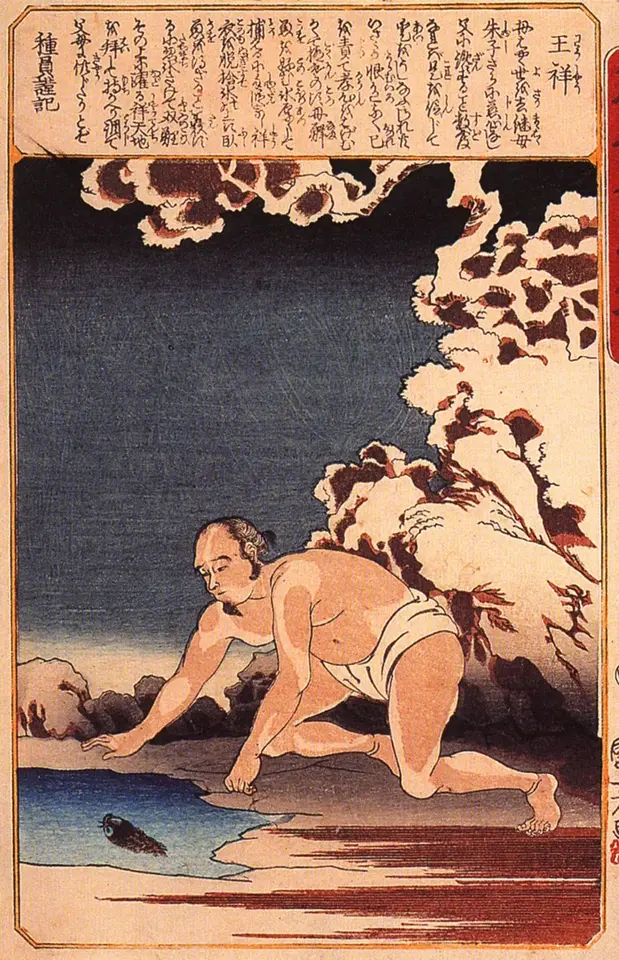
王祥
Wang Xiang (184 – April 30, 268), courtesy name Xiuzheng, was a native of Linyi County, Langya Commandery (modern Linyi, Shandong Province). He was a descendant of Western Han Grand Palace Grandee Wang Ji, the grandson of Cao Wei Inspector of Qingzhou Wang Ren, the son of reclusive scholar Wang Rong, and the grand-uncle of Eastern Jin founders Wang Dao and Wang Dun. A prominent Three Excellencies statesman, political sage,…
Wang Xiang (184 – April 30, 268), courtesy name Xiuzheng, was a native of Linyi County, Langya Commandery (modern Linyi, Shandong Province). He was a descendant of Western Han Grand Palace Grandee Wang Ji, the grandson of Cao Wei Inspector of Qingzhou Wang Ren, the son of reclusive scholar Wang Rong, and the grand-uncle of Eastern Jin founders Wang Dao and Wang Dun. A prominent Three Excellencies statesman, political sage, and moral luminary across the Cao Wei and Western Jin dynasties, Wang Xiang is immortalized as the central figure of the legendary "Lying on Ice to Procure Carp" story in the traditional Twenty-Four Filial Exemplars, and is revered as the foremost founding patriarch of the paramount medieval Langya Wang lineage. During the chaotic close of the Eastern Han, Wang Xiang lost his birth mother Lady Xue early in childhood. His stepmother Lady Zhu treated him with harsh malice, constantly slandering him before his father, who relegated Wang Xiang to mucking out cattle stalls. Unshaken in filial duty, Wang Xiang served his parents with profound devotion. In mid-winter, when his ailing stepmother craved fresh river fish, Wang Xiang stripped to lie across thick river ice to melt it with bodily warmth, whereupon the ice cleaved and two live carp leaped out, cementing his enduring cultural legend. During the Three Kingdoms era, he accompanied his stepmother and half-brother Wang Lan to live in humble reclusion in Lujing for thirty years. Under Emperor Wen of Wei, Inspector of Xuzhou Lu Qian presented him with an auspicious ancestral saber, commissioning him as Administrative Assistant. Wang Xiang eradicated marauding bandits and restored tranquility, inspiring locals to sing: "The peace of Haiyi depends on Wang Xiang; the prosperity of the commandery is the merit of the Assistant." Rising through county and ministerial ranks, Wang Xiang served as Magistrate of Wen, Chamberlain for the National Treasury, Chamberlain for the Palace Attendants, and Colonel Director of Retainers. When Emperor Cao Mao visited the National University, he designated Wang Xiang as the Eldest Elder, seating him facing south with cane in hand to instruct the sovereign on statecraft. Following Cao Mao's murder in 260, Wang Xiang wept bitterly at the bier, lamenting his failure as an elder minister. When Sima Zhao was ennobled as King of Jin and courtiers prostrated themselves, Wang Xiang refused to bow, offering only a dignified bow with folded hands and declaring that Three Excellencies must never bow before royal peers to compromise dynastic prestige, winning profound veneration from Sima Zhao. Upon the founding of Western Jin in 265, Emperor Wu appointed him Grand Guardian and ennobled him as Duke of Suiling, granting him honorable retirement. In 268, Wang Xiang passed away peacefully at age eighty-five, leaving behind a celebrated testament mandating austere burial and five core virtues. He was awarded the posthumous title Yuan ("Primal").
Born into the noble Langya Wang clan; displayed unyielding filial piety from early youth.
Lay across river ice to procure fresh carp for his ailing stepmother; fled to Lujiang in thirty-year seclusion.
Appointed Administrative Assistant of Xuzhou by Lu Qian; eradicated regional banditry and restored agrarian peace.
Succeeded through Magistrate of Wen and Chamberlain for National Treasury; created Marquis of Guannei.
Appointed Chamberlain for Ceremonials; honored as Eldest Elder at the National University to instruct Emperor Cao Mao.
Wept over Cao Mao's murder; refused to kowtow before King of Jin Sima Zhao, preserving ministerial dignity.
Promoted to Minister of Works and Grand Commandant with concurrent attendant rank; ennobled as Marquis of Suiling.
Appointed Grand Guardian upon Western Jin founding; created Duke of Suiling and granted honorable palace retirement.
Composed deathbed instructions mandating modest burial and the Five Virtues; passed away at age eighty-five, posthumously titled Yuan.
Wang Xiang was born into the prestigious Wang lineage of Linyi in Langya Commandery, descended from Western Han statesman Wang Ji. His grandfather Wang Ren served as Inspector of Qingzhou during Cao Wei, while his father Wang Rong was an incorruptible recluse. Wang Xiang's biological mother, Lady Xue, passed away during his infancy, and his father remarried Lady Zhu. Lady Zhu lavished affection on her own son Wang Lan while treating Wang Xiang with calculated hostility, repeatedly fabricating accusations before his father. Consequently, Wang Xiang's father estranged him, compelling him to perform menial labor in cattle pens. Rather than harboring resentment, Wang Xiang redoubled his filial attentiveness.
Whenever his parents fell ill, Wang Xiang attended them day and night without disrobing, personally testing every medicinal decoction. One harsh winter, Lady Zhu fell critically ill and expressed a craving for fresh river fish. All lakes and waterways were frozen solid under thick ice. Wang Xiang walked through the blizzard to the frozen river, stripped his garments, and lay bare-chested across the ice, weeping in prayer to heaven. Suddenly, the ice ruptured of its own accord, and two live carp leaped out upon the bank. Wang Xiang returned home in tears of joy to prepare the fish for his stepmother. The community was stunned by this divine response to filial piety.
On another occasion, an orchard tree in their courtyard bore abundant red crabapples, which Lady Zhu commanded Wang Xiang to guard. Whenever violent gales and storms struck, Wang Xiang embraced the tree, weeping aloud out of fear that falling fruit would displease his mother. His unwavering sincerity ultimately dissolved Lady Zhu's animosity, inspiring her profound repentance.
During the civil warfare of the late Han dynasty, Wang Xiang escorted Lady Zhu and younger brother Wang Lan south to Lujiang in Huainan. For over thirty years, Wang Xiang engaged in manual agriculture, declining official summonses and preserving fraternal harmony amidst severe poverty.
Following the rise of Cao Wei, Lu Qian was promoted from Administrator of Taishan to Inspector of Xuzhou. Having long revered Wang Xiang's moral stature, Lu Qian immediately sent envoys offering him the post of Administrative Assistant. Wang Xiang initially declined, but his brother Wang Lan urged him to serve the realm, personally harnessing an ox-cart to escort him.
Lu Qian entrusted Wang Xiang with complete executive authority over civil and military affairs in Xuzhou. At that time, remnants of predatory insurgencies terrorized the commandery. Wang Xiang instituted disciplined military training, leading coordinated counteroffensives that systematically crushed insurgent strongholds and punished corrupt magnates. Under his administration, agrarian order was restored. Grateful subjects sang throughout the province: "The peace of Haiyi depends on Wang Xiang; the prosperity of the commandery is the merit of the Assistant!"
Recognized as the premier administrator of the empire, Wang Xiang was nominated as an Outstanding Talent and appointed Magistrate of Wen County, the ancestral home of the Sima clan, where he applied impartial justice without deference to powerful kin. He subsequently rose to Chamberlain for the National Treasury, directing state finance.
In 254, Emperor Cao Mao ascended the throne, and Wang Xiang was ennobled as Marquis of Guannei for his role in securing the dynastic succession, advancing to Chamberlain for the Palace Attendants and Colonel Director of Retainers. In 255, he accompanied Sima Shi in suppressing the Huainan rebellion of Guanqiu Jian, earning an increased appanage of four hundred households.
In 256, Wang Xiang was appointed Chamberlain for Ceremonials and ennobled as Marquis of Wansui Pavilion. When Emperor Cao Mao visited the National University to conduct ancestral rites, he honored Wang Xiang with the ancient title of "Eldest Elder" (Sanlao). During the imperial assembly, the eighty-year-old Wang Xiang was seated facing south leaning upon an imperial cane, while the young emperor sat facing north to solicit guidance on classical statecraft. Wang Xiang delivered an impassioned discourse outlining the core duties of enlightened monarchs in respecting heaven, cherishing commoners, and upholding moral rectitude, inspiring deep veneration from the court.
In 260, Emperor Cao Mao led palace attendants in an armed attempt to overthrow Sima Zhao's regency, only to be slain in the street by officer Cheng Ji under Jia Chong's direction. As terrified courtiers cowered in silence, Wang Xiang hurried to the palace and knelt beside the imperial bier, weeping bitterly: "This tragedy is the grievous fault of your old servant!" His public lamentation shamed the assembled nobility.
Seeking to stabilize governance, Sima Zhao elevated Wang Xiang to Minister of Works. In 264, Wang Xiang rose to Grand Commandant with concurrent attendant status, receiving ennoblement as Marquis of Suiling with sixteen hundred households under the newly established five-rank noble system.
Later that year, when Sima Zhao was elevated to King of Jin, court ministers rushed to curry favor. Minister of Education Xun Yi invited Wang Xiang to the palace, suggesting: "The King of Jin stands paramount in status; high ministers like He Zeng have performed the imperial kowtow, and we should likewise prostrate ourselves."
Wang Xiang sternly rebuked him: "The chancellor is indeed illustrious, yet he remains an executive minister of Cao Wei. We three ministers represent the highest Three Excellencies of the empire; our rank is separated from a king by merely a single grade, and we stand in the same court assembly. How can the sovereign's Three Excellencies prostrate themselves before a peer! Doing so dishonors the dignity of Wei while tarnishing the virtue of the King of Jin. A gentleman honors another through righteousness; I shall never bow!" When they entered the audience hall, Xun Yi prostrated himself while Wang Xiang offered only a formal bow with folded hands. Sima Zhao was profoundly moved, remarking: "Only today do I realize how deeply the venerable commander respects me!"
In December 265, Sima Yan received the abdication of Cao Wei, founding the Western Jin dynasty as Emperor Wu. In his initial decrees, Emperor Wu appointed Wang Xiang Grand Guardian and advanced his noble title to Duke of Suiling, authorizing him to establish seven personal secretarial offices.
Conscious of his advanced age and fragile health, Wang Xiang repeatedly petitioned to resign. When Censor Hou Shiguang impeached him for failing to attend dawn audiences, Emperor Wu suppressed the memorial, decreeing that officialdom must not disturb the venerable elder. Emperor Wu granted Wang Xiang honorable palace retirement, according him status equal to the Grand Preceptor and Grand Guardian, positioned above the Three Excellencies with full emoluments. The emperor bestowed four-horse carriages, a luxury estate, one million coins, five hundred bolts of silk, and dedicated imperial attendants.
In the spring of 268, Wang Xiang fell critically ill. Gathering his family, he composed his celebrated Deathbed Injunctions, declaring: "Life and death are natural cosmic laws; at eighty-five years of age, I pass without regret." He strictly ordered an austere burial: his body was to be washed only at the hands and feet, dressed in worn, laundered garments without silk wrappings; all imperial jade pendants and badges were barred from the grave; the tomb was to be dug two fathoms deep without stone masonry or tumulus mounds, accompanied only by dry provisions and plain wine.
Furthermore, Wang Xiang articulated the foundational Five Virtues of family conduct: "Verifiable speech is the peak of trustworthiness; deflecting praise while assuming blame is the peak of virtue; glorifying parents through moral renown is the peak of filial piety; harmonious fraternity is the peak of brotherly love; yielding in the presence of wealth is the foundation of character." On April 30, 268, Wang Xiang passed away peacefully at age eighty-five. Mourning his loss, Emperor Wu conferred the posthumous title Yuan ("Primal").
Wang Xiang occupies a transcendent position in traditional Chinese moral philosophy. His legend of "Lying on Ice to Procure Carp," immortalized by Guo Jujing in the Twenty-Four Filial Exemplars, became an indelible cultural metaphor for unconditional filial devotion across East Asia. Enduring relentless malice from his stepmother and abandonment by his father, Wang Xiang transcended filial duty through self-sacrificing compassion, melting winter ice with bodily warmth and protecting the orchard in howling storms. His conduct established the supreme ethical model for domestic virtue in imperial China.
In early medieval political and lineage history, Wang Xiang was the paramount architect of the Langya Wang clan, the foremost aristocratic family of the Six Dynasties. In his youth, Inspector Lu Qian received a legendary sword prophesied to elevate its owner's descendants to the Three Excellencies, presenting it to Wang Xiang. Recognizing his half-brother Wang Lan's profound virtue, Wang Xiang bequeathed the saber to Wang Lan, establishing an enduring family code of fraternal harmony. Wang Lan fathered Wang Zheng, who fathered Wang Dao and Wang Dun, the founders of the Eastern Jin dynasty under the famous adage "the Wangs and the Simas share the realm." Historians universally attribute the century-long ascendancy of the Langya Wang clan to the moral foundation established by Wang Xiang and Wang Lan.
Amidst the treacherous dynastic transition from Cao Wei to Jin, Wang Xiang upheld the constitutional decorum of the imperial bureaucracy. While peers such as Xun Yi and He Zeng surrendered dignity to flatter Sima Zhao, Wang Xiang maintained unyielding rectitude, offering only a dignified standing bow and demonstrating that high ministers must never compromise institutional propriety for opportunistic safety. His moral independence compelled Sima Zhao to temper autocratic ambition with ethical restraint.
Wang Xiang's Deathbed Injunctions established a foundational milestone in Chinese ancestral pedagogy. Leading the medieval transition toward austere burial, he eliminated wasteful grave goods. Furthermore, his synthesis of the Five Virtues—Trustworthiness, Moral Virtue, Filial Piety, Fraternal Love, and Material Modesty—provided the Langya Wang lineage with an enduring ethical compass that sustained its cultural preeminence across the Northern and Southern Dynasties.
FIGURES ASSOCIATED WITH THIS DYNASTY