Aristocratic Birth
Born in Puzhou into the illustrious Taiyuan Wang clan; raised by his devout Buddhist mother Lady Cui.
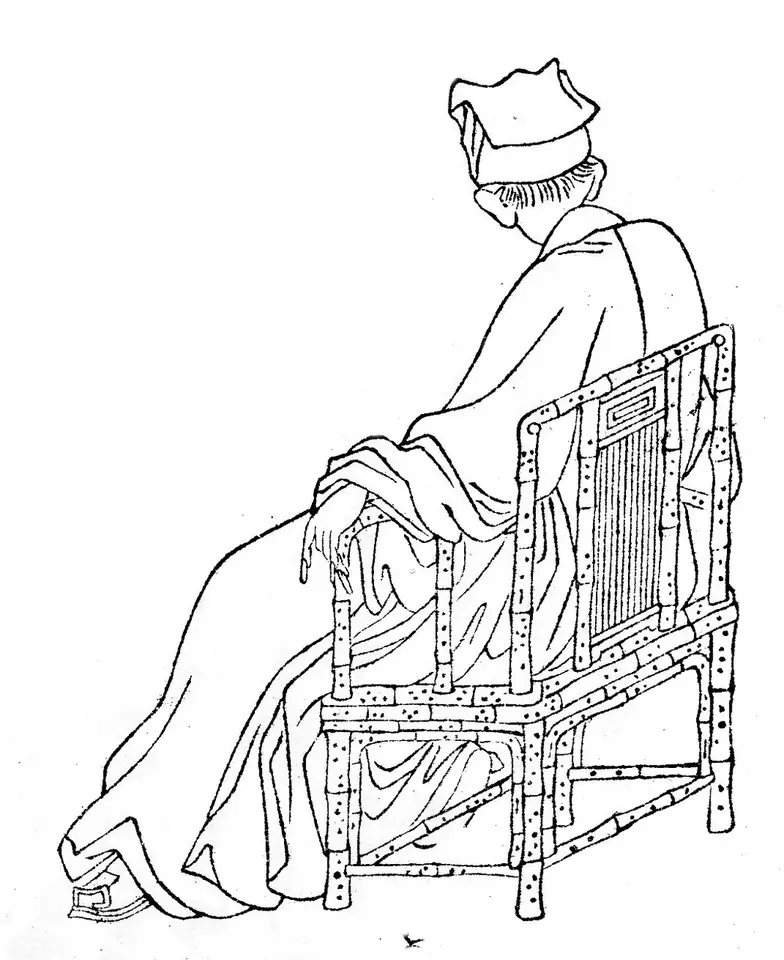
王维
Wang Wei (王维, 701–761), courtesy name Mojie (摩诘), art name Mojie Jushi (摩诘居士), was a native of Puxian, Puzhou (present-day Yongji, Shanxi Province), with ancestral roots in Qi County of Taiyuan. He belonged to the prestigious Taiyuan Wang clan, one of the foremost aristocratic lineages of medieval China. An extraordinary polymath of the high Tang Dynasty, he excelled in classical poetry, painting, music,…
Wang Wei (王维, 701–761), courtesy name Mojie (摩诘), art name Mojie Jushi (摩诘居士), was a native of Puxian, Puzhou (present-day Yongji, Shanxi Province), with ancestral roots in Qi County of Taiyuan. He belonged to the prestigious Taiyuan Wang clan, one of the foremost aristocratic lineages of medieval China. An extraordinary polymath of the high Tang Dynasty, he excelled in classical poetry, painting, music, calligraphy, and statecraft, ultimately serving as Right Assistant Director of the Department of State Affairs (Shangshu Youcheng), earning him the enduring historical epithet "Wang Youcheng". Born into an elite family imbued with deep Buddhist piety, Wang Wei demonstrated precocious literary and musical brilliance, arriving in Chang'an and Luoyang as a teenager and captivating the imperial aristocracy. In 721, he achieved first place in the metropolitan examinations (jinshi examination) and was appointed Director of the Imperial Music Office. However, an unauthorized dance of the imperial yellow lion by an underling led to his demotion as warehouse manager in Jizhou, instilling in him a lasting wariness toward the perils of political life. In 734, Chancellor Zhang Jiuling recalled Wang Wei to the central government as Right Reminder. In 737, serving as Investigating Censor, he was dispatched across the frontier to inspect the Hexi Corridor, where he authored immortal frontier verses such as "A solitary plume of smoke rises straight in the vast desert; the round sun sets over the long river." Disillusioned by the authoritarian rule of Li Linfu and Yang Guozhong in his mature years, Wang Wei acquired the former estate of early Tang poet Song Zhiwen at Mount Zhongnan in Lantian, constructing his famed Wangchuan Villa. There, he cultivated a lifestyle of semi-official retirement, practicing Chan meditation, playing the zither, and writing serene pastoral poetry alongside his confidant Pei Di. During the An Lushan Rebellion in 756, Wang Wei was captured by rebel forces in Chang'an and imprisoned at the Bodhi Temple in Luoyang, where he composed his secret poem Ningbi Chi lamenting the fall of the dynasty. Following the restoration of the twin capitals, his loyalty was verified and his death sentence was pardoned through the intercession of his younger brother Wang Jin, who offered to relinquish his own ministerial rank. Promoted through high offices to Shangshu Youcheng, Wang Wei passed away peacefully in 761 at the age of sixty-one. Celebrated by Su Shi with the immortal praise "There is painting in his poetry, and poetry in his painting," he remains universally venerated as the "Poet Buddha" and the father of southern literati landscape painting.
Born in Puzhou into the illustrious Taiyuan Wang clan; raised by his devout Buddhist mother Lady Cui.
Journeyed to Chang'an and Luoyang at age fifteen, earning renown among imperial princes for his poetry, calligraphy, and lute playing.
Penned the immortal quatrain Jiuyue Jiuri Yi Shandong Xiongdi on the Double Ninth Festival at age seventeen while residing in Chang'an.
Performed Yulunpao before Imperial Princess Yuzhen; took first place in the jinshi examination and was named Director of the Imperial Music Office.
Implicated when a palace dancer performed the imperial yellow lion dance without authorization; demoted to administrative service in Jizhou.
Resigned his provincial post to wander through the Yangtze valleys and Wu-Yue waterways, seeking spiritual guidance from Chan masters.
His beloved wife passed away; Wang Wei chose never to remarry, living thirty years in austere widowerhood.
Appointed Right Reminder under Chancellor Zhang Jiuling, returning to central court governance in Chang'an.
Dispatched as Investigating Censor to the Hexi Corridor, authoring monumental frontier masterpieces including Shi Zhi Saishang.
Purchased the Lantian estate of Song Zhiwen, establishing his celebrated retreat and pioneering semi-official reclusion.
Captured by An Lushan's rebel forces in Chang'an; imprisoned at the Bodhi Temple in Luoyang, secretly writing the patriotic poem Ningbi Chi.
Pardoned by Emperor Suzong due to his patriotic verse and brother Wang Jin's sacrifice; appointed Secretariat Drafter.
Elevated to Palace Remonstrant and then Right Assistant Director of the Department of State Affairs.
Composed farewell memorials and letters to friends; passed away in meditative posture in Chang'an at age sixty-one.
Wang Wei was born in 701 in Puxian, Puzhou (modern Yongji, Shanxi Province), during the closing years of Wu Zetian's reign. His ancestral lineage belonged to the illustrious Taiyuan Wang clan, an elite aristocratic house that traced its ancestry to Qin general Wang Jian and Han minister Wang Yun. Wang Wei's father, Wang Chulian, served as Administrative Assistant in Fenzhou before relocating the household to Puzhou. His mother originated from the Boling Cui clan, another of the preeminent "Five Surnames and Seven Clans" of medieval China. Lady Cui was a devoted follower of Northern Chan master Puji for over three decades, practicing austere Buddhist vegetarianism and imbuing her children with deep spiritual awareness.
Surrounded by scholarly and spiritual discipline, Wang Wei and his younger brother Wang Jin demonstrated remarkable intellect from early youth. According to official historical records, Wang Wei was capable of drafting elegant literary compositions by the age of nine, demonstrating equal proficiency in clerical and cursive calligraphy, landscape painting, and musical pitch. In 715, at the age of fifteen, Wang Wei traveled westward to the imperial capital of Chang'an, where his cultivated manners and artistic brilliance made him an immediate favorite among high imperial princes, including Prince of Qi Li Fan and Prince of Xue Li Ye.
In 717, while spending the Double Ninth Festival as an adolescent guest in Chang'an, he composed his famous seven-character quatrain Jiuyue Jiuri Yi Shandong Xiongdi, capturing the universal longing of travelers far from their ancestral homes: "All alone in a foreign land as a stranger, on every festive day my longing for my kin redoubles." In addition to poetry, Wang Wei was an accomplished master of the pipa. To secure recommendation for the capital examinations, he gained admittance to the residence of Imperial Princess Yuzhen disguised as a musician, performing his newly arranged suite Yulunpao. The poignant melody and graceful demeanor of the young artist thoroughly enchanted the princess, who endorsed him as the top metropolitan candidate.
In the spring of 721, twenty-one-year-old Wang Wei achieved first place in the metropolitan civil service examinations (jinshi examination) in Chang'an. Following this triumph, the imperial court appointed him Director of the Imperial Music Office (Taile Cheng, secondary eighth rank lower), placing him in charge of court ritual music and ceremonial dance rehearsals within the Court of Imperial Sacrifices. Though modest in rank, the post offered direct proximity to the sovereign during imperial sacrifices at the ancestral temple and state altars.
However, Wang Wei's early administrative success was abruptly shattered by a procedural violation. In the autumn of 721, a dancer within the Imperial Music Office performed the "Yellow Lion Dance" during an informal rehearsal. Under Tang statutory law, the Yellow Lion Dance was an exclusive imperial prerogative reserved strictly for the reigning emperor's personal viewing. As director of the music office, Wang Wei was held liable for supervisory failure and insubordination.
Emperor Xuanzong issued a decree demoting Wang Wei to the post of warehouse manager in Jizhou (modern Dong'e, Shandong Province). Removed from the cosmopolitan center of Chang'an to an unglamorous regional storehouse, Wang Wei managed grain stockpiles and local accounting records. The bitter experience of provincial exile disabused the young scholar of naive political ambitions, introducing him to the precarious instability of court service.
In 726, upon completing his tenure in Jizhou, Wang Wei resigned his post to embark on travels through the middle and lower Yangtze valleys. Crossing the Yellow and Huai rivers, he explored Yangzhou, Suzhou, Hangzhou, and the coastal waterways of Zhejiang, conversing with Chan hermits and Tiantai monks. The serene purity of mountain rivers gradually dissolved his worldly anxieties, transforming his poetic diction from ornate courtly elegance to transparent, meditative simplicity.
In 728, Wang Wei returned to northern China, dwelling in quiet retreat along the Qi River in modern Henan. During this period, he studied southern Chan doctrines under master Daoguang at the Dajianfu Monastery in Chang'an, immersing himself in sudden enlightenment philosophy. Around 731, personal tragedy struck when his beloved wife passed away. Overcome by grief, Wang Wei resolved never to remarry, observing thirty years of strict widowerhood, waking before dawn to light incense and meditate in silence.
In 734, political fortunes turned favorable when upright statesman Zhang Jiuling was appointed Director of the Secretariat. Renowned for integrity and literary patronage, Zhang actively sought uncorrupted scholars to revitalize imperial governance. In 735, Zhang recommended Wang Wei for appointment as Right Reminder (You Shiyi, secondary eighth rank upper). Wang Wei embraced his remonstrance duties earnestly, submitting policy memorials to reform civil administration.
However, by late 736, Machiavellian courtier Li Linfu orchestrated Zhang Jiuling's removal from the chancellorship. Recognizing the dangerous factional currents dominating the court, Wang Wei adopted a stance of cautious neutrality to protect his integrity.
In March 737, after Tang forces under regional commander Cui Xiyi defeated Tibetan armies in Qinghai, Xuanzong selected Wang Wei, then serving as Investigating Censor, to undertake an imperial inspection of the frontier forces in the Hexi Corridor. Journeying westward through the Xiao Pass and traversing the arid expanses of the Tengger Desert, Wang Wei reached Liangzhou. The immense grandeur of the desert landscape inspired his masterpiece Shi Zhi Saishang, celebrated for its immortal description of desert smoke and the setting sun. Returning to Chang'an in 738, he served successively as Palace Censor, Director of Personnel Evaluations, and Assistant Director in the Ministry of Personnel.
In 744, Wang Wei purchased the country estate of early Tang poet Song Zhiwen at Mount Zhongnan in Lantian, situated several dozen kilometers southeast of Chang'an. Bordered by winding streams, dense bamboo groves, and wooded ridges, the property was transformed into the legendary Wangchuan Villa. Over subsequent years, Wang Wei constructed twenty distinct landscape sites across the valley, including the Bamboo Lodge, Deer Enclosure, and Magnolia Bank.
In 750, following the death of his mother Lady Cui, Wang Wei observed three years of filial mourning at Wangchuan, living an ascetic monastic existence. After returning to government service as Director in the Ministry of Personnel, he adopted a lifestyle of semi-official retirement. Whenever official duties at court concluded, Wang Wei withdrew to Wangchuan with his companion, poet Pei Di. Together, they drifted across the misty waters in light skiffs, played the zither, and composed matching five-character quatrains that were compiled into the celebrated Wangchuan Collection. In this idyllic sanctuary, Wang Wei synthesized aesthetic beauty with Chan tranquility.
In November 755, An Lushan launched his catastrophic rebellion from Fanyang. Rebel forces swept through the central plains, overrunning Luoyang and forcing the mountain pass of Tongguan in June 756. Emperor Xuanzong fled secretly toward Sichuan, leaving the capital in chaos. Unable to escape in time, Wang Wei was trapped in Chang'an alongside numerous court officials.
To evade service under the rebel regime, Wang Wei ingested potent purgatives to induce severe dysentery, feigning muteness caused by throat sores. However, because his literary fame was renowned throughout the empire, An Lushan ordered him transported under armed escort to Luoyang, confining him within the Bodhi Temple.
In the autumn of 756, An Lushan hosted an opulent victory banquet beside the Ningbi Pool in Luoyang, forcing captured musicians of the Pear Garden to perform imperial Tang music. Overcome by grief for the exiled monarch, court musician Lei Haiqing hurled his pipa to the ground and wept facing west, prompting An Lushan to order him brutally executed before the assembly. Confined in the Bodhi Temple, Wang Wei learned of the tragedy and wept bitterly. When his confidant Pei Di secretly visited his cell, Wang Wei dictated the courageous seven-character poem Ningbi Chi: "Ten thousand households mourn as wilderness smoke arises; when will the hundred officials again attend the Son of Heaven? Autumn sophora leaves drift down upon deserted palace courtyards, while pipes and strings resound beside the Ningbi Pool." Despite his defiance, the rebel regime forcibly invested Wang Wei with the bogus title of Palace Remonstrant.
In late 757, Tang armies under Guo Ziyi and Li Guangbi liberated the twin capitals of Chang'an and Luoyang. Captured officials who had accepted puppet titles under the rebel administration were imprisoned and brought before judicial tribunals. Under the penal code decreed by Emperor Suzong, those holding high offices under the rebels were subject to execution or lifelong banishment.
Wang Wei faced execution due to his puppet post. However, his secret poem Ningbi Chi, preserved and submitted by Pei Di, was presented to Emperor Suzong, proving that his loyalty had never wavered. Concurrently, Wang Wei's younger brother Wang Jin, who had distinguished himself during the defense of Shanxi and served as Vice Minister of Justice, petitioned the throne to forfeit his own ministerial rank to redeem his elder brother. Moved by the poem's patriotism and Wang Jin's fraternal sacrifice, Suzong granted a special pardon, demoting Wang Wei to Assistant Administrator of the Heir Apparent.
Soon afterward, Wang Wei's reputation was fully restored. He was promoted to Secretariat Drafter and Palace Remonstrant. In 759, he was elevated to Right Assistant Director of the Department of State Affairs (Shangshu Youcheng, secondary fourth rank lower), overseeing the administrative bureaus of the central government, which led contemporaries to refer to him as "Wang Youcheng".
In his final years, Wang Wei converted his official quarters into a serene meditation hall, dressing in plain hemp robes, abstaining from meat, and reading Buddhist scriptures. In July 761, sensing his approaching demise, the sixty-one-year-old poet drafted respectful memorials resigning his offices and wrote dozens of affectionate farewell letters to his brother Wang Jin and closest companions. Upon setting aside his writing brush, Wang Wei passed away peacefully in a seated meditative posture in Chang'an.
Wang Wei is revered in classical Chinese literature as the "Poet Buddha" (Shifo), standing alongside Li Bai the "Poet Immortal" and Du Fu the "Poet Sage" as the three transcendent summits of Tang poetry. While Li Bai represented Daoist transcendence and Du Fu embodied Confucian humanism, Wang Wei transformed Buddhist metaphysics and Chan intuition into luminous sensory imagery.
In his celebrated masterpiece Autumn Twilight in the Mountain Dwelling (Shan Ju Qiu Ming), he captured cosmic harmony: "Empty mountains after fresh rain; weather turning to autumn in the evening. The bright moon shines among the pines; clear springs flow over the rocks." In his five-character quatrains such as Bird Singing Ravine (Niao Ming Jian) and Deer Enclosure (Lu Chai), Wang Wei used subtle natural motions—a falling cassia flower, a bird call in a nocturnal ravine, or lingering evening sunlight penetrating deep moss—to illuminate the profound silence of the universe. His verse achieved an effortless synthesis of objective nature and subjective consciousness.
In visual art, Wang Wei revolutionized classical Chinese landscape painting, recognized by Ming critic Dong Qichang and subsequent theorists as the founding patriarch of the Southern School of literati painting. Prior to Wang Wei, landscape painting was dominated by the meticulous green-and-blue (qinglü) decorative style practiced by Li Sixun. Wang Wei broke free from rigid outlines and heavy mineral pigments, pioneering the technique of "broken ink" (pomo) and ink-wash gradations.
Wang Wei championed the philosophy that "in the art of painting, ink wash is supreme, capturing the essence of nature and completing the creative processes of heaven." His monumental landscapes, including Wangchuan Tu and Snowy Stream, captured misty mountain ravines, snow-covered riverbanks, and rustic thatched retreats with poetic economy. Northern Song master Su Shi famously observed: "Savoring Mojie's poetry, there is painting within his poetry; gazing upon Mojie's painting, there is poetry within his painting." This aesthetic insight established the ideal of the scholar-painter for a millennium.
Wang Wei was celebrated throughout the Tang Dynasty as an accomplished musical virtuoso whose understanding of pitch theory informed his poetic cadences. His legendary solo performance of the pipa suite Yulunpao demonstrated his ability to convey deep emotional pathos through stringed instruments, winning him the favor of Imperial Princess Yuzhen and securing his examination triumphs.
Serving as Director of the Imperial Music Office in his early career, Wang Wei mastered both sacred ritual court melodies and secular foreign suites imported from the Western Regions. This musical sensibility manifested directly in his poetry, where internal rhymes, balanced vowel tones, and rhythmic pauses created an extraordinary auditory beauty. His parting quatrain Song Yuan'er Shi Anxi ("Morning rain in Weicheng dampens the light dust; green willows by the guest lodge look fresh and new. I urge you to drink one more cup of wine, for west of Yangguan Pass there are no old friends") was set to music by the imperial Pear Garden as Yangguan Sandie, remaining the supreme farewell anthem of Chinese civilization.
Beyond his tranquil pastoral compositions, Wang Wei authored some of the most powerful frontier poetry of the high Tang. Traveling across the Hexi Corridor in 737, he depicted the stark majesty of the northern borderlands with cinematic clarity. His couplet from Shi Zhi Saishang—"A solitary plume of smoke rises straight in the vast desert; the round sun sets over the long river"—was praised by Qing critic Gu Donggao as an unrivaled spectacle of poetic composition. His frontier verses avoided artificial bellicose swagger, focusing instead upon the profound emotional reality of garrison life, desert solitudes, and the vast scale of imperial frontier defenses.
Wang Wei's estate at Mount Zhongnan became a foundational touchstone for Chinese literati garden architecture and aesthetic retreats. By integrating natural topography with minimalist architecture, Wangchuan Villa departed from ostentatious aristocratic parks, creating a contemplative environment where art, poetry, and meditation flourished together. The twenty landscape poems composed with Pei Di in the Wangchuan Collection established a cultural model that inspired later luminaries such as Bai Juyi at Mount Lu, Su Shi at Huangzhou, and the master garden builders of Ming and Qing Jiangnan.
FIGURES ASSOCIATED WITH THIS DYNASTY