Entry into Palace Service
Castrated in youth and entered the Forbidden City, serving in domestic inner apartments with calculated discretion.
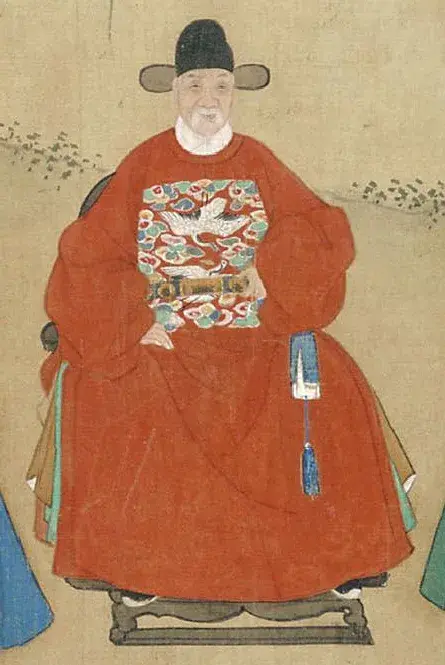
王体乾
Wang Tiqian (王体乾) was a prominent court eunuch of the late Ming Dynasty from Changping County, North Zhili, who served as the Seal-holding Eunuch of the Directorate of Ceremonial (Silijian Zhangyin Taijian) and formed the inner court core of Wei Zhongxian's tyrannical eunuch faction. Emerging from the palace service during the Wanli reign, Wang aligned himself with the newly enthroned Tianqi Emperor's wet nurse, Lady Ke, and…
Wang Tiqian (王体乾) was a prominent court eunuch of the late Ming Dynasty from Changping County, North Zhili, who served as the Seal-holding Eunuch of the Directorate of Ceremonial (Silijian Zhangyin Taijian) and formed the inner court core of Wei Zhongxian's tyrannical eunuch faction. Emerging from the palace service during the Wanli reign, Wang aligned himself with the newly enthroned Tianqi Emperor's wet nurse, Lady Ke, and the rising eunuch Wei Zhongxian. Following the purge of upright chief eunuch Wang An, Wang Tiqian was appointed to the supreme post of Seal-holding Eunuch, possessing exclusive custody of the imperial seals and the constitutional authority to approve memorials through "red brush" endorsements (pihong). Beneath a mild and subservient demeanor, Wang Tiqian was ruthless and duplicitous, acting in seamless collusion with Wei Zhongxian. He intercepted memorials critical of the faction, issued forged imperial decrees, and orchestrated the bloody persecution of the Donglin Academy scholars, including Yang Lian, Zuo Guangdou, and Gao Panlong. Following Emperor Chongzhen's accession in late 1627, the eunuch faction was systematically dismantled; Wang Tiqian was stripped of titles, his immense fortunes were confiscated, and he was listed among the principal traitors in the Imperial Index of Treasonous Retainers (Qinding Ni'an), eventually meeting execution under imperial justice.
Castrated in youth and entered the Forbidden City, serving in domestic inner apartments with calculated discretion.
Formed confidential alliances with eunuch Wei Zhongxian and wet nurse Lady Ke upon Emperor Guangzong's death.
Elevated to Seal-holding Eunuch of the Directorate of Ceremonial after Wei Zhongxian engineered the downfall of Wang An.
Intercepted Censor Yang Lian's indictment of Wei Zhongxian's twenty-four crimes, instigating decrees to imprison reformers.
Orchestrated the Wang Wenyan show trial, fabricating treason charges to eliminate leading Donglin scholarly opponents.
Arrested, stripped of office, and had his estates confiscated by Emperor Chongzhen; subsequently condemned and executed under the Treason Register.
Wang Tiqian was born into an impoverished household in Changping County, North Zhili. Castrated during boyhood, he entered the Forbidden City during the mid-to-late Wanli era. In the lower ranks of palace administration, he distinguished himself not through scholarship, but through an intuitive capacity to discern court rivalries and adapt his behavior to imperial superiors.
In autumn 1620, following the sudden demise of the Taichang Emperor, the fifteen-year-old Zhu Youxiao ascended the throne as the Tianqi Emperor. Two dominant figures immediately seized control of domestic court influence: the emperor's wet nurse, Lady Ke, and her confidant, eunuch Wei Zhongxian. At the time, the upright Seal-holding Eunuch Wang An staunchly resisted their illicit ambitions. Recognizing the shifting tides of court politics, Wang Tiqian abandoned Wang An and swore fealty to Ke and Wei. In 1621, after Ke and Wei orchestrated Wang An's dismissal and murder, Wei Zhongxian assumed the office of Pen-holding Eunuch and Commander of the Eastern Depot. To maintain nominal decorum while retaining absolute control over palace paperwork, Wei placed the ostensibly submissive Wang Tiqian into the preeminent position of Seal-holding Eunuch of the Directorate of Ceremonial.
In the institutional hierarchy of the Ming court, the Seal-holding Eunuch headed the twelve palace directorates and held physical charge of the imperial seal. While the Grand Secretariat composed drafts of policy decisions (piaoni), no measure could become imperial law without the official red-brush endorsement and imperial stamp affixed by the Directorate of Ceremonial. Wang Tiqian's elevation placed the legal mechanism of supreme monarchical authority directly into the hands of the eunuch faction.
Wang Tiqian displayed consummate deceit. Within the palace walls, he treated Wei Zhongxian with obsequious deference, addressing him as "Depot Commander" and complying with every directive. In reality, he served as the principal strategist for the regime. Whenever remonstrating censors submitted secret memorials denouncing Wei Zhongxian or his confederates, Wang Tiqian immediately intercepted the documents and handed them to Wei. Together with factional grand secretaries such as Wei Guangwei and Gu Bingqian, they drafted fraudulent imperial rebukes, turning the imperial court into a private machinery for arbitrary retribution.
In July 1624, Left Vice Censor-in-Chief Yang Lian bravely submitted a memorial enumerating "twenty-four heinous crimes" committed by Wei Zhongxian, shaking the political establishment. When the document arrived in the palace, Wang Tiqian concealed it for days while notifying Wei Zhongxian. Waiting until the young emperor was immersed in carpentry and palace sports, they presented a distorted version of events, falsely portraying Yang Lian's righteous criticism as an affront to imperial dignity, thereby inciting the emperor to issue a harsh denunciation of the remonstrator.
Over the succeeding two years, Wang Tiqian collaborated with Eastern Depot interrogators and Embroidered Uniform Guard commanders Tian Ergeng and Xu Xianchun to unleash terror. Fabricating the "Wang Wenyan Case" and the "Liaodong Border Failure Case," they arrested the leading figures of the Donglin Academy—including Yang Lian, Zuo Guangdou, Wei Dazhong, Zhou Chaorui, Yuan Huazhong, and Gu Dazhang. Wang Tiqian stamped every decree authorizing torture, extortion, and clandestine murder in the Imperial Prison. His actions culminated in the brutal deaths of these upright ministers, earning Wang Tiqian enduring infamy alongside Wei Zhongxian as a primary perpetrator of the late Ming atrocities.
In October 1627, the Tianqi Emperor died without issue, and his younger brother Zhu Youjian succeeded to the throne as the Chongzhen Emperor. Determined to eradicate the eunuch stranglehold over governance, Emperor Chongzhen moved cautiously to dismantle Wei Zhongxian's networks. Observing the impending collapse of the faction, Wang Tiqian attempted to save himself by submitting humble memorials requesting retirement, but the emperor rejected his petitions, keeping him under surveillance.
In December 1627, Wei Zhongxian was exiled to Fengyang and hanged himself on the road to escape trial. Early in 1628, civil officials submitted coordinated petitions detailing Wang Tiqian's treasonous manipulation of imperial seals and participation in judicial murder. Emperor Chongzhen promptly stripped Wang Tiqian of all titles and confiscated his vast estates in Beijing and Changping. In the spring of 1629, the emperor ratified the official Imperial Index of Treasonous Retainers (Qinding Ni'an), designating Wang Tiqian as a primary instigator of sedition. Convicted of usurpation of imperial prerogative and conspiratorial tyranny, Wang Tiqian was sentenced according to dynastic law and executed, his name indelibly recorded among the most infamous eunuch despots in the History of Ming.
FIGURES ASSOCIATED WITH THIS DYNASTY