Birth in Xiuning
Born in Fuxi, Xiuning County, Huizhou, Anhui, into poverty, dedicating his youth to classical poetry, painting, and seal carving.
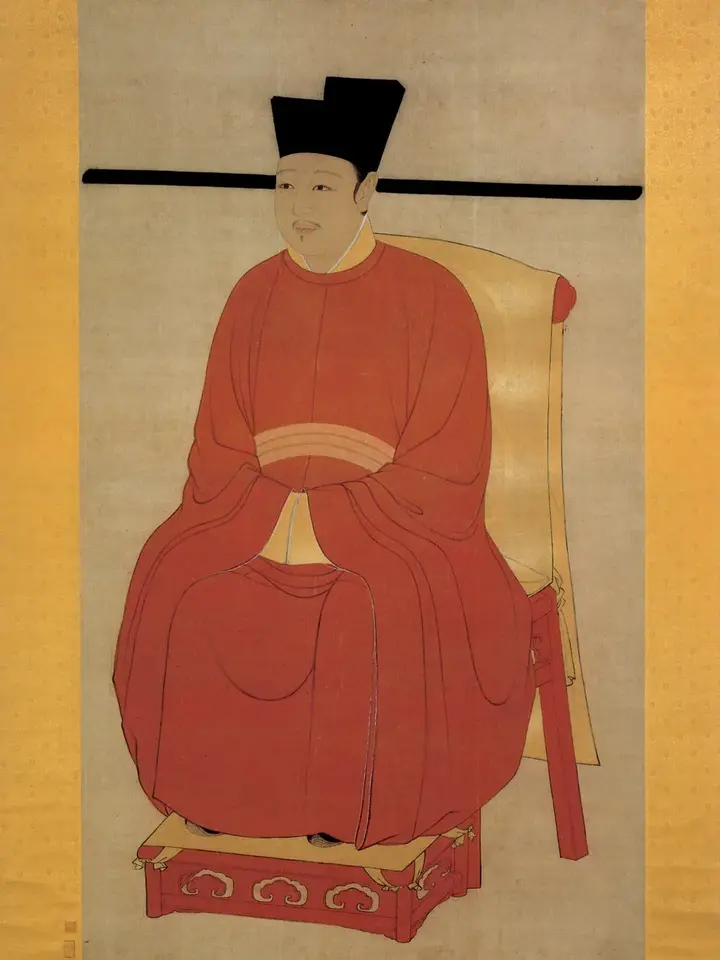
汪士慎
Wang Shishen (1686–1759), courtesy name Jinren, art name Chaolin, and alternate sobriquets Xidong Qiaosheng, Qifeng Jushi, and Qingshan Yalao, was a native of Xiuning County, Huizhou Prefecture, Anhui Province. He was an eminent painter, calligrapher, seal carver, and poet of the Qing dynasty, recognized as a core representative of the "Eight Eccentrics of Yangzhou." Born into an impoverished family in southern Anhui, he…
Wang Shishen (1686–1759), courtesy name Jinren, art name Chaolin, and alternate sobriquets Xidong Qiaosheng, Qifeng Jushi, and Qingshan Yalao, was a native of Xiuning County, Huizhou Prefecture, Anhui Province. He was an eminent painter, calligrapher, seal carver, and poet of the Qing dynasty, recognized as a core representative of the "Eight Eccentrics of Yangzhou." Born into an impoverished family in southern Anhui, he endured decades of penury in his native mountains before traveling to the bustling commercial metropolis of Yangzhou at the age of thirty-seven. There he relied on the patronage of fellow Huizhou salt merchants Ma Yueguan and Ma Yuelu, residing in their "Qifeng Thatched Cottage" and later purchasing his humble "Qingshan Study," earning a living through selling paintings, teaching, and engraving seals. Wang achieved supreme mastery across poetry, calligraphy, painting, and seal carving, earning national acclaim particularly for his ink paintings of plum blossoms and narcissus. Drawing inspiration from Song and Yuan traditions, his plum blossoms differed sharply from Li Fangying's weathered monumentality and Gao Xiang's sparse branches, excelling in depicting dense thickets of frosty blossoms saturated with ethereal cold fragrance, prompting Jin Nong to praise his work as "leading cold fragrance among thousands of flowers and myriads of blossoms, as if amidst wind and snow at Ba Bridge." Possessing a proud, aloof, and austere temperament, Wang had a legendary passion for tea and an obsession with plum blossoms, earning the moniker "Tea Immortal" from Jin Nong and praise from Zheng Banqiao for his "supreme moral purity." In his later years, Wang was struck by severe blindness, losing his left eye at age fifty-four yet continuing to paint and compose verse with stubborn fortitude; at age sixty-seven, he lost vision in both eyes completely. Undaunted, he relied on muscle memory and spiritual perception to brush sweeping wild cursive (kuangcao) calligraphy, signing works with the seal "Vision of the Heart" (Xinguan), achieving the sublime state of being "blind in the eyes but clear in the heart." In clerical script, he captured the archaic austerity of Han-Wei steles; in seal carving, he followed small seal and Han bronze seals, sharing equal fame with Ding Jing and Gao Xiang; he left behind the seven-volume poetry collection Chaolin Ji. Through unyielding artistic pursuit and noble contentment in poverty, Wang carved an immortal name in the history of Chinese literati flower-and-bird painting.
Born in Fuxi, Xiuning County, Huizhou, Anhui, into poverty, dedicating his youth to classical poetry, painting, and seal carving.
Departed his native Huizhou at age thirty-seven with his family, settling in Yangzhou under the hospitality of the Ma brothers.
Resided at the Qifeng Pavilion in the Ma family's Xiaolinglong Villa, naming it Qifeng Thatched Cottage and selling paintings.
Purchased a small dwelling in Yangzhou with his art earnings, planting fir trees and plum blossoms and naming it Qingshan Study.
Lost vision in his left eye due to exhaustion and eye disease at age fifty-four; remained serene and continued painting plum blossoms.
Published his seven-volume lifetime poetry collection Chaolin Ji with financial aid from the Ma brothers, winning praise across Jiangnan.
Lost sight in his right eye at age sixty-seven, adopting the sobriquet Xinguan and writing sweeping wild cursive calligraphy by spiritual perception.
Entertained himself with ancient guqin zithers and fine teas, frequently visited by close friends Jin Nong and Li E.
Passed away at his Qingshan Study in Yangzhou at age seventy-four, deeply mourned by fellow artists and literati in Yangzhou.
Wang Shishen was born in 1686 in Xiuning County, Huizhou Prefecture, Anhui Province (alternatively cited as Fuxi Village, She County). Southern Anhui along the Xin'an River boasted magnificent peaks and rivers, fostering long-standing traditions of seal carving, calligraphy, and painting, where the legacy of Xin'an School masters Hongren and Cheng Sui still resonated. Born into poverty, Wang exhibited sharp intellect from childhood, persevering in classical studies, ancient prose, poetry, seal carving, and painting amidst material deprivation.
Historical records contain scant details regarding Wang's life before age thirty-seven in the Huizhou mountains. Naturally reserved and reticent, Wang rarely discussed his early struggles after settling in Yangzhou, hinting at unspoken hardships. Surviving early verses reveal that he read widely across classical collected works beside lonely candles, possessed a lifelong obsession with fine tea, and frequently drew water from the Bailong Pool of Mount Huangshan to brew tea over melted snow, nurturing an austere, unworldly character amidst rural poverty.
During the late Kangxi and early Yongzheng eras, Yangzhou—with its massive concentration of commercial salt capital—became the nation's foremost financial and transportation hub, gathering wealthy merchants, fostering arts and culture, and creating a vibrant art market that drew numerous Xin'an painters and impoverished scholars seeking livelihoods. In 1723, thirty-seven-year-old Wang resolved to escape the isolation of his mountainous homeland, packing his meager belongings and leading his family on the journey to Yangzhou.
Arriving in Yangzhou as a stranger in strained economic circumstances, Wang was fortunate to receive generous hospitality from fellow Huizhou salt merchant brothers Ma Yueguan and Ma Yuelu. Although enormously wealthy, the Ma brothers were ardent patrons of literature, maintaining the famous "Xiaolinglong Villa" where they opened their doors to scholars nationwide. Admiring Wang's integrity and antique painting style, the brothers renovated the "Qifeng Pavilion" within their residential gardens to house Wang's family. Surrounded by seven jagged rocks resembling mountain peaks, Wang named his quarters "Qifeng Thatched Cottage," adopting the art name "Qifeng Jushi."
During his residence at Qifeng, Wang forged ties with eminent literati, establishing himself as a professional painter and seal engraver. He associated daily with painting masters then visiting or residing in Yangzhou—including Jin Nong, Gao Xiang, Zheng Xie, Li Fangying, and Bian Shoumin—exchanging poetry, drinking wine, and refining painting techniques, gradually coalescing into the "Eight Eccentrics of Yangzhou" art school characterized by individualist expression and resistance to rigid academic orthodoxies.
Wang was proud and fiercely independent, unwilling to remain dependent on wealthy patrons indefinitely. In 1733, utilizing modest earnings saved from selling paintings and carving seals, Wang purchased a humble, modest cottage in Yangzhou, moving out of the Ma estate to establish his own independent household.
Surrounded by dense green fir trees, with plum blossoms, narcissus, camellias, gardenias, and peonies planted beneath windows and doorways, Wang loved the tranquil seclusion of the residence, naming it "Qingshan Study" and styling himself "Qingshan Yalao." Henceforth, his surviving masterworks proudly bore the signature "Painted at Qingshan Study."
Nevertheless, the fierce commercial competition in Yangzhou's art market and the fickle tastes of merchant patrons kept Wang near destitution. Reticent and unsuited to flattering wealthy salt grandees, his austere, chilly painting style diverged sharply from the opulent, colorful compositions favored by commercial buyers. Wang frequently painted amidst cold and hunger to purchase daily rice and firewood, writing the self-reflective lines: "Lacking fields, I constantly beg for rice; in an empty study, I brew clear tea all day," capturing the reality of subaltern literati existence in high-Qing Yangzhou.
Prolonged poverty, overwork, and meticulous brushwork under dim oil lamps took a devastating toll on Wang's eyesight. In 1739, at age fifty-four, he developed severe ocular disease; lacking funds for medical treatment, he lost vision in his left eye completely.
To a professional painter who lived through his eyes, losing an eye was a catastrophic blow. Yet Wang displayed astonishing resilience. With only his right eye remaining, he persisted in painting, his brushwork becoming more robust, austere, and seasoned than before his injury. Contemporary Jiangnan literati agreed that the plum blossoms painted with his single eye surpassed those created prior to his blindness.
Misfortune struck again in 1752, when the sixty-seven-year-old artist lost sight in his right eye, plunging into total darkness. Facing this final tragedy, Wang remained calm and unbowed. Putting aside fine detail brushes, he took up large coarse brushes, relying on decades of muscular memory and inner perception to brush sprawling wild cursive (kuangcao) scrolls on Xuan paper. He stamped his calligraphy with the seal "Vision of the Heart" (Xinguan), proudly declaring that he was "blind in the eyes but clear in the heart." This artistic transformation captivated Yangzhou, with art lovers clamoring for his "blind cursive" scrolls.
In his final years of complete blindness, Wang lived quietly in his Qingshan Study, finding solace in playing the guqin, brewing tea, and reciting verse. On pleasant days, friends including Jin Nong, Zheng Banqiao, and Li E visited him, sitting beside his tea brazier to listen to his guqin melodies and taste freshly harvested Longjing tea.
Deeply moved by Wang's lofty character, Jin Nong repeatedly compared him to ancient hermits in painting inscriptions, praising him as the "foremost pure gentleman in the city of Yangzhou." In 1759, this master who brought artistic light out of darkness passed away peacefully at Qingshan Study at the age of seventy-four. His passing was mourned across the Eight Eccentrics and southeastern art circles. Through his plum blossom masterpieces and unyielding integrity, Wang achieved an enduring place in Chinese art history.
Wang Shishen's most towering achievement in Chinese flower-and-bird painting was his creation of an original aesthetic model for ink plum blossoms. Within the Eight Eccentrics, Li Fangying's plum blossoms featured iron branches bursting with tempestuous fury, and Gao Xiang's featured sparse twigs with light cinnabar touches; Wang alone specialized in dense clusters of blossoms radiating frosty purity. To capture the true spirit of plum blossoms, Wang walked through winter snows around Yangzhou's Meihua Ridge and Mount Shu with walking stick in hand, sketching blossoms directly from nature.
Jin Nong praised Wang's plum blossoms in a famous inscription: "Chaolin paints dense branches with thousands of flowers and myriads of blossoms, leading cold fragrance as if amidst wind and snow at Ba Bridge." In painting blossoms, Wang employed light ink to outline petals with thin, resilient lines resembling twisted ice silk, while brushing trunks with bold dark ink, rendering ancient trunks like writhing dragons and young shoots like spears. The ink values were crisply contrasted, dense without confusion, tight without suffocation.
He sought not merely external resemblance, but the proud spirit of plum blossoms that disdained worldly glamour to flourish alone on frozen peaks. His surviving masterworks—including Lingfang of Xiaoxiang, Green Calyx Plum Blossoms, Scattered Fragrance of Plum Shadows, Robes in the Wind, Ancient Pine, and Spiritual Root Emerging from the Valley—exuded pure, chilly grace, reflecting the highest ideals of literati art.
Beyond painting, Wang achieved distinction in calligraphy. He specialized in clerical script (lishu), drawing directly from Han and Wei stone steles and pictorial inscriptions. In an era dominated by smooth, sweet calligraphic models, Wang rejected ornamental flattery, adopting rugged, upright strokes and rectangular, severe structures. His surviving Seven-Character Ancient Verse composed at age forty displays profound bone-strength and uncompromising spirit.
Poet Li E observed in an inscription: "His suspended wrist resembles silkworm-head seal script; his horizontal brushes retain the ripples of falcon tails. Displaying only lean hardness devoid of sweet charms, he is constantly misunderstood by common eyes." Wang's lean, archaic clerical script formed an avant-garde front in early Qing stele calligraphy alongside Jin Nong's "lacquer script" and Zheng Banqiao's composite style.
Even more legendary was his "heart-vision wild cursive" after becoming totally blind. In complete darkness, Wang relied on decades of artistic integration to brush dynamic, sprawling wild cursive scrolls. His lines surged with unconstrained vitality and natural wonder, achieving a spiritual transcendence that made his blind calligraphy an unprecedented feat in Chinese calligraphy.
In epigraphy and seal carving, Wang was an outstanding master bridging the Huizhou and Zhe schools. Since Wen Peng and He Zhen, late Ming and early Qing seal carvers had fallen into mannered artificiality. Versed in classical philology, Wang modeled his seals on Qin and Han official bronzes, advocating the integration of painterly composition with archaic discipline.
His seals blended small seal structures with the solidity of Han miao-zhuan script, utilizing combinations of slicing and pushing knife techniques to create natural eroded textures resonant with stone weathering. His personal seals—such as "Wang Shishen," "Chaolin," "Qifeng Thatched Cottage," "Qingshan Study," and "Xinguan"—featured bold yet balanced composition, exhibiting visual tension between void and solid. Connoisseurs ranked him alongside Gao Xiang and Ding Jing, recognizing that his seals not only enhanced his painting colophons, but also infused Qing literati seal carving with antique purity.
Wang's artistic style was inseparable from his personality, with his love of tea, passion for plum blossoms, and skill on the guqin reinforcing one another. In the commercial metropolis of Yangzhou, Wang remained content in poverty, maintaining the noble integrity of an uncompromised scholar.
Wang possessed an extraordinary devotion to tea, pursuing perfection regarding water quality, brewing temperature, utensils, and leaf varieties. His poetry collection Chaolin Ji contains more than twenty verses celebrating tea, such as "A mountain dweller loves purity, brewing fragrant tea each day." Recognizing his refined taste, Jin Nong bestowed upon him the title "Tea Immortal." Wang integrated the bitter purity of tea brewing and the chill of plum blossoms into his brushwork.
Beside tea, Wang played the guqin with antique restraint, frequently playing classical melodies like High Mountains and Flowing Water with close companions. Even after losing his sight, he sat alone playing his zither, its sparse melodies blending with tea smoke and plum fragrance. The Ma brothers composed verses commending his devotion to mountain springs and ancient tunes. Zheng Banqiao summarized Wang's life in four characters: "Supreme moral purity." Within the Eight Eccentrics, although Wang experienced the deepest poverty and physical hardship, his nobility of spirit earned the enduring reverence of his peers.
FIGURES ASSOCIATED WITH THIS DYNASTY