Crushed Rebellion in Jiangnan
Defeated Liu Yuanjin's rebellion with decisive maneuvers, gaining promotion to Commandery Governor of Jiangdu.
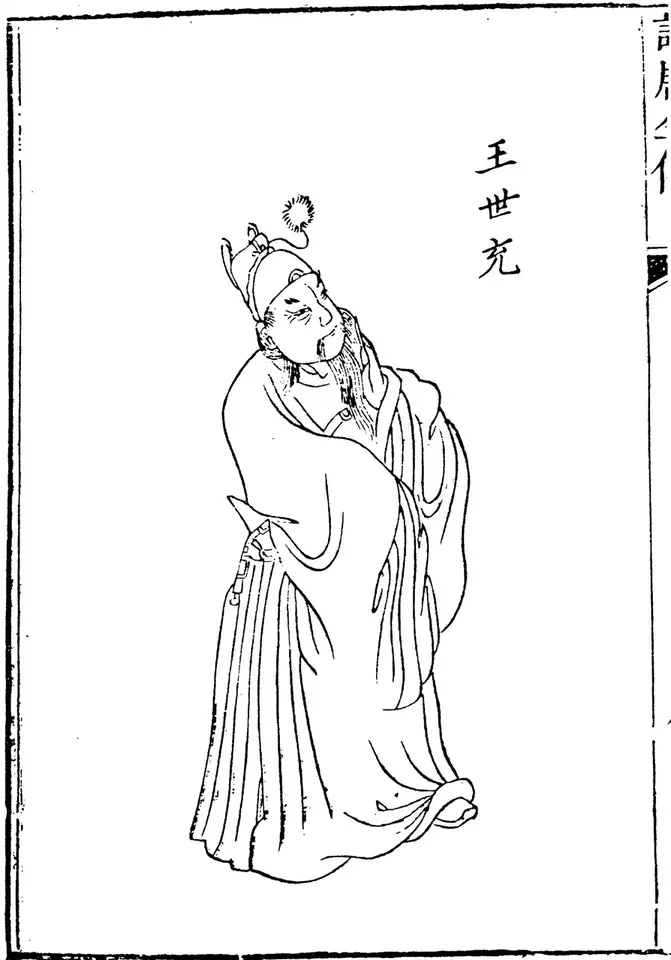
王世充
Wang Shichong (王世充, ?–621), courtesy name Xingman, originally of Sogdian descent from the Western Regions and registered in Xin'an (modern Xin'an County, Luoyang, Henan), with the ancestral surname Zhi, was a prominent warlord and contender for supremacy during the transition from Sui to Tang, and the founding emperor of the Da Zheng regime. Versed in military strategy and civil statutes, he gained Emperor Yang of Sui's favor…
Wang Shichong (王世充, ?–621), courtesy name Xingman, originally of Sogdian descent from the Western Regions and registered in Xin'an (modern Xin'an County, Luoyang, Henan), with the ancestral surname Zhi, was a prominent warlord and contender for supremacy during the transition from Sui to Tang, and the founding emperor of the Da Zheng regime. Versed in military strategy and civil statutes, he gained Emperor Yang of Sui's favor through flattery and administrative acumen, serving as Assistant Administrator of Jiangdu and Commandery Governor of Jiangdu. He earned deep royal trust after crushing Liu Yuanjin's peasant rebellion in Jiangnan. In 617, Emperor Yang dispatched Wang Shichong to lead Jiangdu elite forces north to relieve the eastern capital Luoyang against Li Mi's Wagang Army. Following Emperor Yang's assassination in the Jiangdu mutiny, Wang Shichong, alongside Luoyang grandees Duan Da and Yuan Wendu, enthroned Prince of Yue Yang Tong (Emperor Huangtai), rising to Minister of Personnel and Commander of all Luoyang military forces. In 618, exploiting the exhaustion of Wagang forces after their clashes with Yuwen Huaji, Wang Shichong launched a surprise assault at the Battle of Mount Beimang, crushing Li Mi's main army and forcing Li Mi to flee to Chang'an, while absorbing celebrated commanders including Pei Renji, Qin Shubao, Cheng Yaojin, Luo Shixin, and Shan Xiongxin. In 619, Wang Shichong launched a bloody palace purge, deposed and poisoned Emperor Huangtai Yang Tong, and declared himself Emperor of Da Zheng, adopting the reign era Kaiming. However, his profound hypocrisy and paranoia alienated his best commanders, prompting Qin Shubao and Cheng Yaojin to defect to Tang on the battlefield. Between 620 and 621, Prince of Qin Li Shimin besieged Luoyang, leading Wang Shichong to seek desperate relief from Dou Jiande of Hebei. After Li Shimin annihilated Dou Jiande's army at the Battle of Hulao Pass, Wang Shichong surrendered. Emperor Gaozu of Tang spared his life and exiled him to Shu; while awaiting transit at an imperial relay station in Chang'an, he was assassinated by Dugu Xiude, son of an official he had executed.
Defeated Liu Yuanjin's rebellion with decisive maneuvers, gaining promotion to Commandery Governor of Jiangdu.
Led elite troops north on imperial orders to defend the eastern capital, waging continuous campaigns against Li Mi's Wagang Army.
Following Emperor Yang's death, enthroned Yang Tong with court nobles, assuming supreme command of Luoyang forces.
Routed Li Mi's Wagang Army in a decisive surprise offensive at Mount Beimang, incorporating major Wagang generals.
Usurped the throne from Yang Tong to establish Da Zheng, adopting the reign title Kaiming, and later poisoned Yang Tong.
Li Shimin led 100,000 Tang troops to encircle Luoyang; Wang Shichong dispatched urgent envoys to Dou Jiande for salvation.
Dou Jiande fell at Hulao Pass; Wang Shichong led officials out of Luoyang to surrender, terminating the Da Zheng regime.
Demoted to commoner and sentenced to exile in Shu, he was assassinated at an imperial relay station in Chang'an by Dugu Xiude.
Wang Shichong's ancestors were Sogdians from the Western Regions, originally bearing the surname Zhi. His father, Zhi Shou, resided in Shanzhou, and when his mother remarried Wang Can of Xin'an, Zhi Shou adopted the Wang surname and established registration in Xin'an. Wang Shichong had a dark complexion, curly hair, and deep-set eyes, possessing a cunning mind, sharp intellect, and broad versatility. In his youth, he read extensively in military strategy, becoming proficient in the Art of War and Wuzi, while also mastering criminal statutes, calendar calculation, and astronomy. During the Kaihuang era, his mastery of administrative legal texts earned him selection as an equestrian officer in the Left Guard, gradually rising to Vice Director in the Ministry of War, where he demonstrated polished clerical competence.
During the reign of Emperor Yang of Sui (Yang Guang), Wang Shichong catered adroitly to the emperor's fondness for luxury and display. In the early Daye era, he served as Palace Overseer of Jiangdu, supervising the construction of detached imperial palaces. He scoured the Jiangnan region for rare treasures, exotic flora, and master craftsmen, creating palaces of extraordinary splendor. Highly impressed, Emperor Yang elevated him to Assistant Administrator of Jiangdu and later Commandery Governor of Jiangdu. Wang Shichong was severe by nature, adept at discerning imperial intentions, and imposed harsh punishments on his subordinates and commoners. Although grievances mounted, he used eloquence and flattery to conceal his misconduct, leading Emperor Yang to regard him as an exceptionally capable and loyal official.
In 613, Minister of Rites Yang Xuangan rose in rebellion against the Sui dynasty at Liyang, throwing the empire into turmoil. Taking advantage of the unrest, Liu Yuanjin of Wu Commandery and Zhu Xie of Kuaiji led a massive insurrection in Jiangnan, rallying over 100,000 followers, seizing commanderies and counties, and causing most of Jiangnan to fall into rebel hands. Emperor Yang commissioned Wang Shichong to lead tens of thousands of elite infantry and cavalry across the Yangtze River to suppress the insurrection.
Wang Shichong demonstrated exceptional battlefield acumen and ruthless methods. Deploying his forces in Wu Commandery, he fought repeated engagements against the rebels along the Huanglong Stream. Utilizing ambush tactics and feigned retreats, he overran dozens of rebel encampments; Liu Yuanjin was slain in battle, and Zhu Xie drowned after throwing himself into the river. To crush further resistance, Wang Shichong ordered the summary execution and burial alive of tens of thousands of surrendered rebel captives regardless of age, blocking river channels with corpses. Due to his ruthless military success, his prestige soared, earning him promotion to Commandery Governor of Jiangdu and commander of Huai south military forces, making him Emperor Yang's foremost field commander in the lower Yangtze corridor.
In 617, Li Mi, leader of the Wagang Army, seized the immense Xingluo Granary and led hundreds of thousands of rebels to besiege the eastern capital Luoyang, placing the court in extreme peril. Far away in Jiangdu, Emperor Yang urgently commissioned Wang Shichong as general, directing him to lead tens of thousands of elite infantry and cavalry north to join relief forces including Wang Bian and Xue Deyin. Wang Shichong established fortified encampments along the Luo River at Luokou and Heishiguan, engaging Li Mi in an exhausting year-long war of attrition.
At the Luoyang front, Wang Shichong clashed with the Wagang Army more than sixty times. In the winter of 617, both sides fought a massive pitched battle at the Shizi River. Wang Shichong personally led cavalry charges, but his horse was struck down by arrows, plunging him into the freezing waters of the Luo River; only through the desperate efforts of his officers was he pulled ashore and saved from drowning. Thereafter, Wang Shichong utilized Luoyang's massive fortifications and the natural moat of the Luo River to mount a protracted defense, repelling Li Mi's surprise cavalry raids at Heishiguan and preventing the fall of Luoyang. Both sides remained locked in a stalemate while surrounding fields were devastated and littered with human bones.
In March 618, Right Forest Guard General Yuwen Huaji orchestrated a palace coup in Jiangdu, strangling Emperor Yang. When the news reached Luoyang, high officials including Duan Da, Yuan Wendu, Huangfu Wuyi, and Lu Chu proclaimed Emperor Yang's grandson, Prince of Yue Yang Tong, as emperor (Emperor Huangtai). The new monarch appointed Wang Shichong Minister of Personnel and Duke of Zheng, granting him unified command of internal and external forces. To counter Yuwen Huaji's northward advance with 100,000 elite Xiaoguo troops, Yuan Wendu persuaded the court to enlist Li Mi, commissioning him to engage Yuwen Huaji at Liyang. Li Mi engaged Yuwen Huaji in a brutal struggle; although he decimated the Xiaoguo army, his own forces suffered catastrophic casualties and exhaustion.
Meanwhile, internal factional conflict intensified in Luoyang. Grand Councilors Yuan Wendu and Lu Chu detested Wang Shichong's arrogance and plotted to ambush and execute him at court. Their co-conspirator Duan Da secretly betrayed the plot to Wang Shichong. Furious, Wang Shichong struck preemptively, launching a night assault on the Taiyang Gate of the palace. Yuan Wendu fled into the inner halls, but Wang Shichong forced Yang Tong to surrender Yuan Wendu, who was beheaded on the spot; Lu Chu was captured and executed. Wang Shichong appointed himself Left Vice Director of the Imperial Secretariat, seizing absolute control of court governance.
Having consolidated supreme power, Wang Shichong seized the golden moment to strike at Wagang. In September 618, he led 20,000 elite infantry and cavalry across the Luo River and struck directly toward Mount Beimang. Employing psychological warfare, Wang Shichong sent an equestrian warrior on a white steed pretending to be an avatar of Lord Guan, electrifying his army's morale. Da Zheng forces executed a devastating cavalry flank attack, shattering Li Mi's lines like autumn wind sweeping fallen leaves. Suffering total defeat, Li Mi fled west to Chang'an with a few hundred horsemen to surrender to Li Yuan. Wagang commanders including Pei Renji, Zu Junyan, Shan Xiongxin, Qin Shubao, Cheng Yaojin, and Luo Shixin surrendered in succession, handing Wang Shichong complete victory over the Wagang host and terrifying the northern plains.
Following his triumph at Mount Beimang, Wang Shichong's imperial ambitions surged beyond restraint. In March 619, he compelled Yang Tong to bestow upon him the titles of Prime Minister and Prince of Zheng with the Nine Bestowals. In April, casting aside all pretenses, he fabricated petitions from court officials and forced fifteen-year-old Emperor Huangtai Yang Tong to abdicate. Wang Shichong formally ascended the imperial throne in Luoyang, proclaimed the Da Zheng dynasty, adopted the reign title Kaiming, and enfeoffed his brothers Wang Shiyun as Prince of Qi, Wang Shiwei as Prince of Chu, and his sons and nephews as princely rulers, monopolizing all high offices within his family. Two months after his enthronement, fearing restoration plots, he secretly sent agents to poison young Yang Tong.
As emperor, Wang Shichong exhibited extreme hypocrisy and narrow-minded paranoia. To mask his usurpation, he posted three recruitment placards outside the Duan Gate, feigning eagerness to attract talent; when sentencing political adversaries, he publicly wept with prisoners to display compassion while privately exterminating their clans. He instituted harsh laws including the five-household collective liability system, where a single defection resulted in the execution of neighboring families, leaving the city enveloped in terror. Surrendered Wagang stalwarts quickly saw through his deceit. In February 619, while confronting Tang forces at Jiuqu, Qin Shubao and Cheng Yaojin turned their mounts, bowed to Wang Shichong, and defected openly to the Tang camp. Shortly thereafter, Luo Shixin captured Qianjin Fortress and defected, leaving Wang Shichong isolated.
In July 620, determined to eliminate central plains warlords, Emperor Gaozu of Tang ordered Li Shimin, Prince of Qin, to lead over 100,000 troops east against Luoyang. Employing a methodical encirclement strategy, Li Shimin captured peripheral bastions including Cijian, Huanyuan Pass, and Longmen, trapping Wang Shichong inside the capital. Relying on Luoyang's massive fortifications and seasoned Jiangdu soldiers, Wang Shichong resisted fiercely. He deployed giant stone throwers launching fifty-pound boulders along with heavy incendiary crossbow bolts, crushing and incinerating Tang siege engines while inflicting heavy casualties.
The siege dragged on for eight agonizing months, cutting off all supplies. A horrifying famine engulfed the city. Commoners and soldiers stripped tree bark and dug up grass roots for food, eventually scraping mud and dried dung from administrative walls to bake cakes, before descending into cannibalism. Seventy to eighty percent of Luoyang's population starved to death, and corpses lay unburied in streets and offices, while even imperial princes received only meager servings of thin gruel. Facing annihilation, Wang Shichong dispatched envoys carrying vast treasures to cross the Yellow River and appeal to King of Xia Dou Jiande of Hebei for urgent relief.
Recognizing that the fall of Luoyang would leave Hebei exposed, Dou Jiande rejected advice to avoid a direct confrontation and mobilized over 100,000 troops south. Displaying supreme strategic acumen, Li Shimin dismissed calls to retreat, leaving a detachment to maintain the siege while leading cavalry elite forward to seize the crucial choke point of Hulao Pass. In May 621, Li Shimin executed a brilliant surprise maneuver at Hulao Pass, annihilating Dou Jiande's host and capturing Dou Jiande alive.
Li Shimin paraded the captive Dou Jiande before Luoyang's walls. Observing Dou Jiande in chains from the ramparts, Wang Shichong turned pale, burst into tears, and recognized that all hope was extinguished. On the fifth day of the fifth month, Wang Shichong led Da Zheng civil and military officials out of the gates to surrender unconditionally, bringing an end to the Da Zheng dynasty.
Following the fall of Luoyang, Li Shimin executed key Wang Shichong partisans, including Shan Xiongxin and Duan Da, while transporting Wang Shichong and his clan to Chang'an. In the imperial hall, Emperor Gaozu enumerated his crimes of usurpation and regicide. Wang Shichong kowtowed and pleaded: "My crimes indeed merit death, but the Prince of Qin promised me my life!" Gaozu granted him clemency, stripped him of all honors, reduced him to commoner status, and ordered his exile to Shu with his brother Wang Shiyun. While lodging at an imperial relay station in Chang'an awaiting departure, Dugu Xiude, son of former Shuizhou Inspector Dugu Ji who had been executed by Wang Shichong, arrived pretending to bear imperial orders, drew his blade, and assassinated Wang Shichong and Wang Shiyun on the spot. The turbulent warlord met a violent end, leaving behind a cautionary historical legacy.
Wang Shichong's most remarkable military triumph was his victory at Mount Beimang in September 618. At that time, Li Mi's Wagang Army commanded hundreds of thousands of troops, controlled vast grain supplies, and possessed legendary generals, inspiring dread throughout northern China.
Demonstrating astute strategic timing, Wang Shichong attacked Li Mi's forces precisely when they were exhausted from fighting Yuwen Huaji at Liyang. Exploiting battlefield superstition by staging an appearance of Lord Guan, he orchestrated a sophisticated combined-arms assault across Mount Beimang that shattered Li Mi's ranks. This victory extinguished the Wagang Army, the largest rebel confederation of the Sui-Tang transition, and allowed Wang Shichong to absorb Henan's territory and top commanders, establishing Da Zheng as a formidable tripartite rival to the Tang and Dou Jiande.
Wang Shichong's establishment of the Da Zheng regime represented an instructive political drama during the Sui-Tang transition. Aware of his foreign roots and illegitimate accession, he resorted to extreme political posturing to maintain authority.
He monopolized supreme state authority among incompetent clan members while staging elaborate displays of meritocracy, posting recruitment notices outside the Duan Gate; when pronouncing death sentences, he wept ostentatiously to feign compassion while ruthlessly executing opponents and their entire households. He enforced collective liability laws and minted debased currency, driving hyperinflation across Luoyang. This persistent hypocrisy corrupted court governance, alienating his finest commanders like Qin Shubao and Cheng Yaojin, culminating in his regime's inevitable ruin.
The prolonged confrontation at Luoyang and Hulao Pass between 620 and 621 served as the decisive campaign that determined the political reunification of China under the Tang dynasty. Wang Shichong's defense of Luoyang acted as the central anvil around which the strategic forces of China coalesced.
Utilizing massive fortifications and seasoned troops, Wang Shichong endured relentless Tang assaults for months, forcing Li Shimin to divide his forces and enticing Dou Jiande into committing his entire army. The resulting showdown culminated in Li Shimin's double victory over Wang Shichong and Dou Jiande, laying the foundation for the unified Tang empire and inscribing Wang Shichong into history as Tang's most resilient adversary.
In the early years of the late Sui upheaval, Wang Shichong rose from a palace overseer to an independent regional commander largely due to his iron-fisted pacification campaigns in Jiangnan and Huaihai.
When Liu Yuanjin and Zhu Xie mobilized over 100,000 rebels across Wu Commandery and Kuaiji in 613, the southern half of the Sui empire was crumbling. Wang Shichong crossed the Yangtze with relentless aggression, routing the rebels at Huanglong Stream and burying tens of thousands of prisoners alive to terrorize the populace. This ruthless military efficiency earned him Emperor Yang's deep trust and military command, providing the veteran Jiangdu forces and political foundation that enabled his subsequent domination of the central plains.
FIGURES ASSOCIATED WITH THIS DYNASTY