Birth in Jiading
Born on July 4 in Jiading County, Taicang Subprefecture, Jiangsu; displayed precocious intelligence and was hailed as a child prodigy by the local magistrate.
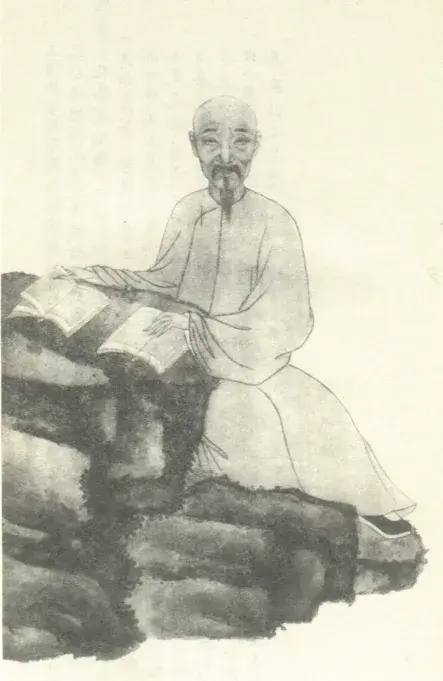
王鸣盛
Wang Mingsheng (王鸣盛, 1722–1798) was a preeminent historian, classicist, and bibliophile of the Qianlong and Jiaqing eras of the Qing dynasty, and one of the core figures of the Wu School of Qianjia evidential scholarship. In his youth, he studied literature under Shen Deqian and classicism under Hui Dong. In 1754, he achieved the rank of second-place graduate in the imperial palace examinations. He served consecutively as…
Wang Mingsheng (王鸣盛, 1722–1798) was a preeminent historian, classicist, and bibliophile of the Qianlong and Jiaqing eras of the Qing dynasty, and one of the core figures of the Wu School of Qianjia evidential scholarship. In his youth, he studied literature under Shen Deqian and classicism under Hui Dong. In 1754, he achieved the rank of second-place graduate in the imperial palace examinations. He served consecutively as Compiler in the Hanlin Academy, Reader-in-waiting, Daily Lecturer and Imperial Diarist, and eventually rose to Grand Secretariat Academician concurrently Vice Minister of Rites. Later, due to taking a concubine while journeying to supervise the provincial examination in Fujian, he was impeached by Censor Luo Dian and demoted to Chief Minister of the Court of Imperial Entertainments. At forty-two, following his mother's death, he retired permanently from officialdom and lived quietly in Suzhou for thirty years, dedicating his life entirely to scholarship. Wang Mingsheng applied the evidential research methods of Han learning to historical inquiry, advocating that the Confucian classics were intended to illuminate the moral Way through rigorous linguistic analysis rather than abstract speculation. In historical scholarship, his supreme principle was the pursuit of verifiable truth, focusing on the historical reality of governmental institutions and historical events while opposing the subjective manipulation of historical facts through praise and blame. Over more than twenty years, he authored the monumental one-hundred-volume critical work Shiqi Shi Shangque (Deliberations on the Seventeen Histories), which stands alongside Zhao Yi's Nian'ershi Zhaji and Qian Daxin's Nian'ershi Kaoyi as one of the three great evidential historical masterpieces of the Qing dynasty. In his later years, he produced comprehensive encyclopedic works such as Eshu Pian and Shangshu Hou'an, making enduring contributions to classical textual collation, the mutual verification of stone inscriptions and official texts, the evaluation of unofficial historical notes, and the objective reassessment of historical figures.
Born on July 4 in Jiading County, Taicang Subprefecture, Jiangsu; displayed precocious intelligence and was hailed as a child prodigy by the local magistrate.
Admitted as a licentiate at age seventeen; studied poetics under Shen Deqian in Changzhou and later studied Han classical commentaries under Hui Dong.
Placed on the supplementary list of the Jiangnan provincial examination at age twenty-six, earning wide intellectual renown.
Passed the metropolitan examination and placed second overall in the palace examination, receiving appointment as Compiler in the Hanlin Academy.
Promoted to Expositor and Reader-in-waiting, also serving as Daily Lecturer and Imperial Diarist, highly esteemed by Grand Secretary Jiang Pu.
Appointed Grand Secretariat Academician and Vice Minister of Rites at thirty-eight; while en route to oversee the Fujian examination, took a concubine, was impeached by Luo Dian, and demoted to Chief Minister of the Court of Imperial Entertainments.
Resigned from office at age forty-two following his mother's death; settled in Suzhou for thirty years, refusing further political office to devote himself to scholarship.
Completed his one-hundred-volume evidential masterpiece Shiqi Shi Shangque after more than twenty years of painstaking research.
Suffered complete vision loss at age sixty-eight due to intense study; regained sight two years later through cataract surgery performed by a Wuxing physician and resumed writing.
Died peacefully at his residence in Suzhou on January 18 at the age of seventy-six.
Wang Mingsheng was born on July 4, 1722 into a scholarly family in Jiading County, Taicang Subprefecture, Jiangsu. From his earliest childhood, he demonstrated exceptional intellectual gifts and a retentive memory. At the tender age of four or five, he was already able to recognize several hundred Chinese characters and recite classical verses effortlessly. When the magistrate of Jiading County, Feng Yong, examined his recitations, he was astonished by his precocity and praised him publicly as a child prodigy.
During his youth, Wang Mingsheng cultivated an insatiable passion for learning and read extensively across classical canons. In 1738, at the age of seventeen, he gained official status as a government student. To advance his scholarly attainments, he sought out the most eminent masters of the region. He traveled to Changzhou to study poetic metrics and ancient prose composition under the renowned literary master Shen Deqian, acquiring a solid foundation in rhetorical style. Later, influenced by the emerging evidential research movement, he formally became a disciple of Hui Dong, the leading figure of the Wu School of Han learning in Suzhou, dedicating himself to Han dynasty classical exegesis, phonology, and institutional terminology. Hui Dong's rigorous empirical method and reverence for ancient Han commentaries left a decisive imprint on Wang's lifelong academic trajectory.
In 1747, at the age of twenty-six, Wang Mingsheng sat for the Jiangnan provincial examination and attained secondary honors. Although he did not secure direct provincial candidacy at that time, his profound learning in classical and historical texts gained widespread acclaim among scholars throughout the Jiangnan region. During this period, he secluded himself to study the thirteen classics and their ancient commentaries, laying a solid foundation for his future large-scale evidential historical research.
In 1754, at the age of thirty-three, Wang Mingsheng traveled to the capital to participate in the metropolitan examination, passing with distinction. In the subsequent imperial palace examination, his rapid thinking, pragmatic policy proposals, and rigorous textual evidence deeply impressed the examiners, earning him the prestigious rank of second-place graduate. He was appointed Compiler in the Hanlin Academy, entering the central administrative and literary elite of the Qing empire. Grand Secretary Jiang Pu, who then directed the Hanlin Academy, deeply admired Wang's scholarship and treated him as an honored guest, frequently consulting him on official compilations.
During his tenure at the Hanlin Academy, Wang had direct access to the imperial library, further enriching his scholarship. He soon rose to the positions of Expositor-in-waiting and Reader-in-waiting, concurrently serving as Daily Lecturer and Imperial Diarist responsible for recording the emperor's daily activities and lecturing on the classics. In 1759, at the youthful age of thirty-eight, he was promoted to Grand Secretariat Academician concurrently Vice Minister of Rites, becoming one of the most prominent rising civil officials in the Qing court.
In the autumn of that year, the court appointed Wang Mingsheng as Chief Examiner for the Fujian provincial examination. However, while traveling toward Fujian to supervise the examinations, Wang became acquainted with a local woman and took her as his concubine. Censor Luo Dian learned of this and memorialized the throne, accusing the imperial examiner of improper conduct that undermined bureaucratic dignity and intellectual morals. The Qianlong Emperor expressed strong displeasure, severely reprimanded Wang, and demoted him by several ranks to Chief Minister of the Court of Imperial Entertainments. This sudden political setback made Wang keenly aware of court factions and administrative hazards, planting the seeds of his desire to withdraw from public life.
In 1763, at the age of forty-two, Wang Mingsheng left office to observe mourning for his mother. Once the mourning period concluded, having grown disillusioned with bureaucratic vanity, he chose not to return to the capital. He formally resigned his commission and relocated his household to Suzhou, the cultural heart of the Jiangnan region. He resided in Suzhou for thirty continuous years, closing his doors to outside social distractions and dedicating himself entirely to independent study and writing. In Suzhou, he maintained close intellectual contact with prominent evidential scholars such as Hui Dong and Shen Tong, engaging in mutual critique on ritual texts, phonology, and historical institutions.
Throughout these three decades of reclusion, Wang Mingsheng freed himself completely from bureaucratic burdens and devoted his entire intellectual energy to the systematic collation and critique of early Chinese historical records. Employing the empirical methods of Han learning, he maintained an extraordinarily disciplined regimen, reading from dawn until late at night without missing a single day. Over twenty years, he meticulously combed through all standard dynastic histories from the Records of the Grand Historian to the New History of the Five Dynasties, examining text variants, geographical shifts, bureaucratic offices, and institutional inconsistencies, ultimately producing his masterpiece Shiqi Shi Shangque.
In 1789, at the age of sixty-eight, Wang Mingsheng experienced sudden and complete blindness in both eyes due to decades of relentless reading and eyestrain. Despite this severe handicap, his devotion to scholarship remained undiminished, and he relied on his family and disciples to read ancient books aloud to him. Two years later, he consulted a skilled physician from Wuxing who performed an eye operation with fine needles, miraculously restoring his sight. Overjoyed by his recovery, Wang immediately resumed his writing, completing Eshu Pian and other works.
On January 18, 1798, Wang Mingsheng passed away peacefully at his home in Suzhou at the age of seventy-six.
Wang Mingsheng's greatest contribution to Chinese historiography is his one-hundred-volume masterpiece, Shiqi Shi Shangque (Deliberations on the Seventeen Histories), which occupied more than two decades of his life. Spanning historical works from Sima Qian's Records of the Grand Historian and Ban Gu's Book of Han down to the Old History of the Five Dynasties and Ouyang Xiu's New History of the Five Dynasties, the treatise scrutinizes seventeen official and private dynastic histories. Wang systematically applied empirical methods to collate texts, restore corrupted or missing characters, eliminate redundant interpolations, and resolve contradictory accounts between annals and biographies.
Wang paid particular attention to the historical evolution of administrative geography, official titles, and governmental institutions. In his preface to Shiqi Shi Shangque, he formulated a foundational maxim for historical study: "The institutions recorded by historians have both merits and flaws; readers need not indulge in subjective opinions or loose moralizing to deduce lessons. Rather, they should simply ascertain the actual reality of institutional arrangements so that institutional evolution over thousands of years becomes transparent, leaving it to readers to choose what to emulate or avoid. Likewise, historical events contain both virtue and vice; readers need not fabricate rigid rhetorical formulas or arbitrarily grant praise and censure. Rather, they should simply verify the actual facts of events, ordering them by chronological sequence and geographic location, sorting through divergent accounts and rumors until every doubt is resolved, leaving praise and blame to public consensus."
This clear division between institutional reality and factual accuracy marked a major break from Song and Ming Neo-Confucian moralistic historiography. Wang insisted on the primacy of objective historical facts, arguing that only when historical realities are clarified can historical precedents provide genuine utility, thereby establishing a methodological cornerstone for modern empirical historiography.
In his later years, inspired by Gu Yanwu's monumental Rizhilu, Wang Mingsheng gathered the insights and notes accumulated over his career into the one-hundred-volume collection Eshu Pian. The title derives from a passage in the Book of Rites describing how young ants continuously carry tiny particles to build an ant mound, symbolizing the patient, cumulative nature of genuine scholarship.
Eshu Pian covers an extraordinarily broad range of topics, serving as an encyclopedic survey of traditional Chinese scholarship and material culture. Wang's original draft was organized into ten categories: notes on learning, orthography, geography, institutions, historical figures, material culture, literary collections, stone inscriptions, overarching themes, and ancestral genealogy. After Wang's death, his disciple Ze Heshou carefully verified the citations. In 1841, the Shikai Hall published the work in eighty-two volumes, omitting the stone inscriptions section and the ancestral genealogy section. The printed edition comprises fourteen volumes on general notes, twenty-two on characters and phonology, fourteen on geography, ten on historical figures, two on material culture, twelve on institutions, six on literary anthologies, and two on overarching inquiries, complete with Ze Heshou's editorial citations.
In addition to Shiqi Shi Shangque and Eshu Pian, Wang Mingsheng devoted over thirty years to classical studies, championing the Eastern Han commentaries of Zheng Xuan to produce Shangshu Hou'an in thirty volumes and Shangshu Houbian in one volume. He also authored Zhouli Junfu Shuo in six volumes, Xu Song Wenjian in eighty volumes, and his collected poetry and prose Xizhi Jushi Ji in forty volumes.
Through his extensive research, Wang Mingsheng developed a rigorous methodology for reading and collating classical texts. He recognized that ancient texts, transmitted over centuries through repeated hand-copying and woodblock carving, inevitably suffered from extensive typographical errors and arbitrary tampering by careless editors. If a scholar attempts to build interpretations or write treatises based on corrupted texts without first conducting rigorous collation, the resulting scholarship will be devoid of academic validity.
In his preface to Shiqi Shi Shangque, Wang coined the celebrated aphorism: "Loving to write books is inferior to reading books broadly, and wanting to read books requires first collating them meticulously. If one reads before texts are properly collated, one's reading will be full of errors; if one writes without having read diligently, one's writing will be reckless." He insisted that reading and collating must go hand in hand, constantly cross-referencing rare editions to resolve textual ambiguities. For Wang, collation was not merely typographical error-correction, but a scientific process of reconstructing authentic historical reality.
Furthermore, Wang articulated the dialectical view of "writing by not writing." He maintained that Shiqi Shi Shangque was not an attempt to invent novel theoretical claims, but rather a faithful presentation of the verified findings derived from disciplined reading and collation. In his view, historical works that abandon verifiable facts in favor of arbitrary moralizing do not qualify as genuine historical treatises.
Another major methodological innovation of Wang Mingsheng was his proactive use of stone inscriptions and private memoirs to supplement and rectify official dynastic histories, anticipating the modern dual-evidence method. He maintained that ancient epigraphic inscriptions, having survived on stone without the distortions of successive scribal copying, possessed unique evidentiary value for correcting corrupted official records.
In utilizing stone inscriptions to fill historical omissions, Wang made significant discoveries. For instance, both the Old Book of Tang and the New Book of Tang completely omitted the detailed circumstances surrounding the political conspiracy between Li Linfu and Yang Guozhong that framed the prominent Tang general Wang Zhongsi. Relying on an excavated rubbing of the spirit-way stele of Wang Zhongsi composed by Yuan Zai, Wang Mingsheng reconstructed the full sequence of false accusations against the general. He argued that Wang Zhongsi was among the foremost military commanders of the Tang dynasty, and that the imperial court's unjust destruction of its own leading general directly precipitated the An Lushan Rebellion. In correcting textual errors, Wang used rubbings of steles dedicated to Li Liangchen, Li Guangjin, and Li Guangyan to demonstrate that the Old Book of Tang had mistakenly attributed Li Liangchen's military achievements in crushing the An Lushan Rebellion to his son Li Guangjin.
Similarly, Wang emphasized the evidentiary value of private memoirs and unofficial notes. Recognizing that official imperial Veritable Records suffered from flattering omissions designed to protect imperial prestige, he famously argued that unofficial memoirs were not necessarily untruthful, while official records were not necessarily authentic. He noted that the records of the Five Dynasties were compiled hastily by court officials who engaged in mutual concealment, whereas private accounts often preserved candid and reliable historical details. Consequently, he advocated that historians should critically balance both official and private sources without dogmatic bias.
Although Wang Mingsheng adhered strictly to empirical verification, he was far from a blind adherent of conventional historical verdicts. In his analytical commentaries, he displayed penetrating historical insight, rejecting moralistic shibboleths and re-evaluating historical figures based on verifiable evidence.
When traditional historians condemned the Liu Song dynasty historian Fan Ye as a traitor, Wang analyzed court politics to demonstrate that Fan was merely a victim of brutal factional struggles, restoring his reputation as an honest historian. Regarding the Four Paragons of the Early Tang (Wang Bo, Yang Jiong, Lu Zhaolin, and Luo Binwang), he overturned Song Neo-Confucian prejudices that dismissed their literary genius due to unconventional personal lifestyles, affirming their pioneering contributions to High Tang poetry. Analyzing the Yongzhen Reform of Emperor Shunzong's reign and the Ganlu Incident during Emperor Wenzong's reign, Wang cleared away the official historical smears of treason, pointing out that these civil officials were patriots attempting to curb the autocratic power of court eunuchs. He also defended Late Tang poets Wen Tingyun and Li Shangyin against charges of moral frivolity, highlighting their personal integrity and poetic brilliance.
Throughout his life, Wang Mingsheng lived frugally, harboring no passion for material luxuries and devoting himself entirely to books. Following his retirement to Suzhou, he systematically collected Song, Yuan, and Ming editions, with a particular emphasis on rare unofficial historical records, classical philosophical treatises, and epigraphic rubbings.
His library halls, named Gengyangzhai and Yizhitang, housed tens of thousands of volumes, all serving his rigorous classical and historical research. Wang personally collated and cataloged his holdings, verifying their textual lineages. His collector's seals included "Grand Master for Thorough Counsel," "Second Place Palace Examination Graduate of the Yichou Year," "Xizhuang Jushi," "Xizhi Jushi," and "Seal of the Chief Minister of the Court of Imperial Entertainments." Renowned later bibliophiles such as Huang Peilie, Mo Boji, Ding Bing, and Luo Zhenchang proudly noted items in their catalogs that had once been part of Wang's Gengyangzhai collection. Additionally, Wang compiled Tailing Ji, an anthology of poems by twelve of his close literary associates, and published Xizhuang Shicun Gao, making a lasting contribution to the preservation of Jiangnan literary heritage.
FIGURES ASSOCIATED WITH THIS DYNASTY