王梁
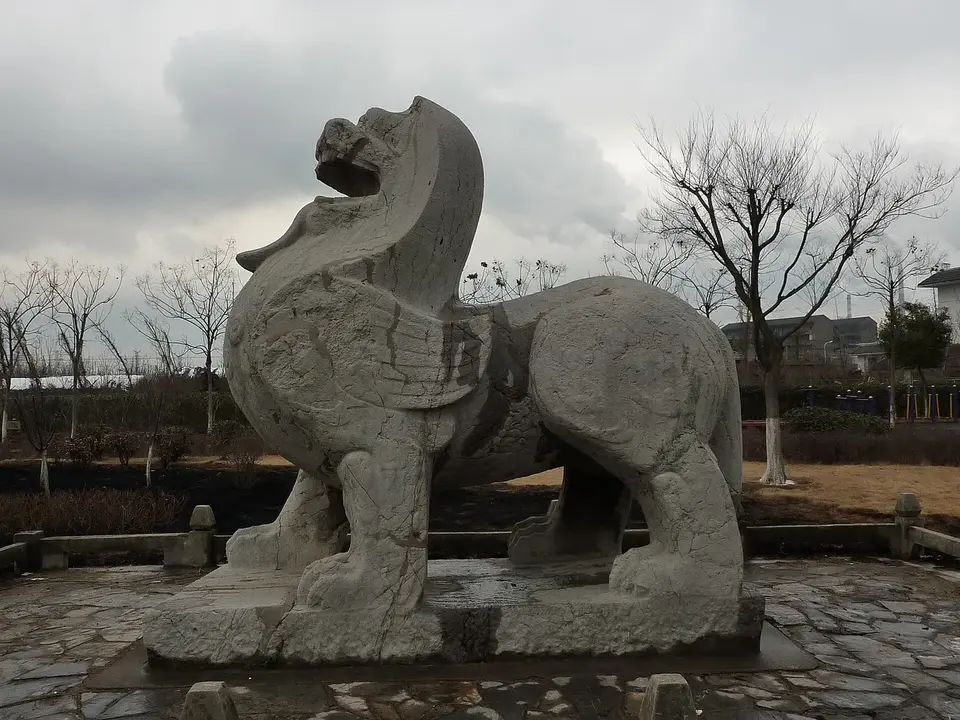
Mausoleum / epitaph / stele (Liang dynasty)
Image creditsUser:Vmenkov · CC BY-SA 3.0Image source

Historical figure

Wang Liang (王梁)

王梁

Wang Liang (died 38 CE), courtesy name Junyan, was a native of Yaoyang in Yuyang Commandery (modern Fengning, Hebei). He was a distinguished founding general of the Eastern Han dynasty, ranked eighteenth among the Twenty-Eight Generals of Yuntai, and served as the inaugural Grand Minister of Works of the restored Han empire. Born into an official family, he served as a commandery clerk under Wang Mang and was appointed…

Era not stated

PROFILE

Wang Liang (died 38 CE), courtesy name Junyan, was a native of Yaoyang in Yuyang Commandery (modern Fengning, Hebei). He was a distinguished founding general of the Eastern Han dynasty, ranked eighteenth among the Twenty-Eight Generals of Yuntai, and served as the inaugural Grand Minister of Works of the restored Han empire. Born into an official family, he served as a commandery clerk under Wang Mang and was appointed Magistrate of Foxu by the Gengshi regime. In late 23 CE, when Wang Lang declared himself emperor in Handan, Wang Liang persuaded Yuyang Administrator Peng Chong to ally with Liu Xiu, co-leading elite Yuyang cavalry south to crush Wang Lang, receiving the rank of Major General and ennoblement as Marquis Within the Passes. In 25 CE, following Emperor Guangwu's accession, the emperor elevated Wang Liang from magistrate directly to Grand Minister of Works and ennobled him as Marquis of Wuqiang, fulfilling the prophetic text of the Red Talisman stating "Wang Liang shall direct the balance as Minister of Works." The following year, Wang Liang was dismissed from the chancellery after setbacks in the Yang Canal hydraulic project and military insubordination, continuing his service as a general. He fought alongside Wu Han and Du Mao at the Battle of the Zhang River, routing over one hundred thousand peasant rebels and clearing entrenched manors across Weijun, Qinghe, and Dongjun. Later promoted to General of the Front, he crushed the rebel forces of Su Mao and Dong Xian. In his later years, he served as Administrator of Shanyang, Intendant of Henan, and Administrator of Jinan, ennobled as Marquis of Fucheng. He passed away in office in 38 CE.

Courtesy Name
Junyan (君严)
Native Place
Yaoyang, Yuyang Commandery (present-day south of Fengning, Hebei)
Date of Death
38 CE (14th year of Jianwu, Eastern Han)
Major Offices Held
Grand Minister of Works, General of the Front, Intendant of Henan, Administrator of Jinan, Administrator of Shanyang, Major General
Noble Title
Marquis of Fucheng (阜成侯, initially Marquis of Wuqiang)
Identity / Historical Role
Illustrious founding Eastern Han general, ranked eighteenth among the Twenty-Eight Generals of Yuntai, and inaugural Grand Minister of Works

LIFE TIMELINE

Relationship graph

BIOGRAPHY

Chronology

  • 5 BCE (2nd year of Jianping, Western Han) | Birth in Yuyang | Born in Yaoyang, Yuyang Commandery; skilled in horsemanship, archery, and administrative law.
  • 23 CE (1st year of Gengshi) | Persuades Peng Chong | Appointed Magistrate of Foxu; convinced Peng Chong to join Liu Xiu, co-leading Yuyang cavalry south.
  • 24 CE (2nd year of Gengshi) | Major General | Aided in the capture of Handan; appointed Major General, ennobled as Marquis Within the Passes, and made Magistrate of Yewang.
  • 25 CE (1st year of Jianwu, Eastern Han) | Grand Minister of Works | Elevated by Emperor Guangwu to inaugural Grand Minister of Works and Marquis of Wuqiang based on apocryphal prophecy.
  • 26 CE (2nd year of Jianwu, Eastern Han) | Dismissal and Reassignment | Dismissed following Yang Canal setbacks; reassigned as Palace Leader of the Gentlemen, crushing rebels on the Zhang River.
  • 28 CE (4th year of Jianwu, Eastern Han) | General of the Front | Promoted to General of the Front, campaigning across the east and crushing Zhang Feng's rebellion at Linju.
  • 31 CE (7th year of Jianwu, Eastern Han) | Governing Jinan | Served as Intendant of Henan and Administrator of Jinan, ennobled as Marquis of Fucheng with superior governance marks.
  • 38 CE (14th year of Jianwu, Eastern Han) | Passing in Jinan | Died in office in Jinan; honored with imperial funerary regalia and enshrined in the Yuntai gallery.

Biographical Narrative

The Yuyang Alliance and Elite Cavalry

Wang Liang possessed a bold character and deep knowledge of administrative law and military tactics, serving as a commandery clerk in Yuyang in his youth. Following Wang Mang's fall in 23 CE, the Gengshi regime appointed him Magistrate of Foxu. Later that year, when Liu Xiu crossed the Yellow River to pacify northern regions, fortune-teller Wang Lang claimed imperial descent in Handan, gaining rapid control of northern commanderies and demanding Yuyang's capitulation.

Recognizing that Wang Lang was an imposter and that Liu Xiu possessed true imperial virtue, Wang Liang traveled to the commandery capital to persuade Administrator Peng Chong to ally with Liu Xiu. Persuaded by his strategic reasoning, Peng Chong dispatched Wang Liang and Anle Magistrate Wu Han with three thousand elite northern cavalry. Marching south, Wang Liang ambushed and killed Wang Lang's generals Ni Hong and Liu Feng at Lu County, capturing Ji and rendezvousing with Liu Xiu at Guang'a. Delighted by the arrival of the elite cavalry, Liu Xiu appointed Wang Liang Major General and ennobled him as Marquis Within the Passes, stationing him at Yewang to guard the strategic northern bank of the Yellow River.

Apocryphal Elevation to Grand Minister of Works

In the sixth month of 25 CE, Emperor Guangwu ascended the imperial throne in Hao. An ancient apocryphal text, the Red Talisman, contained the prophecy: "Wang Liang shall direct the balance as Minister of Works." Deeply devoted to apocryphal portents as revelations of Heaven's will, Emperor Guangwu overlooked established founding generals and elevated Wang Liang directly from county magistrate to Grand Minister of Works, ennobling him as Marquis of Wuqiang.

This sudden elevation astonished the court. Aware of his limited political standing, Wang Liang worked tirelessly to achieve monumental civil accomplishments. In 26 CE, he was commissioned to oversee the construction of the Yang Canal to divert the Luo River, intended to solve capital grain transport and irrigation needs. However, due to rushed construction and hydrological miscalculations, the canal banks suffered catastrophic collapses upon water intake, rendering the waterway impassable. Censors impeached him for squandering state resources. Concurrently, when rebel forces advanced toward Henei, Wang Liang was ordered to garrison Yewang, but adjusted his troop dispositions contrary to specific imperial directives. Seizing upon these setbacks, Emperor Guangwu rescinded his ministerial seals, reducing him to Palace Leader of the Gentlemen to redeem himself in battle.

Battlefield Redemption and the Zhang River Campaign

Relieved of chancellery burdens, Wang Liang returned to frontline military commands, demonstrating his martial excellence. In late 26 CE, surviving Five Masters and Tanxiang rebels numbering over one hundred thousand invaded Weijun and Qinghe. Emperor Guangwu ordered Grand Marshal Wu Han to lead nine generals, including Wang Liang and Du Mao, in a concerted counteroffensive along the Zhang River east of Ye. Wang Liang braved arrow storms to spearhead frontal cavalry assaults, helping shatter the rebel army and capturing over one hundred thousand enemy combatants.

Following this victory, Wang Liang and Du Mao were assigned to clear hostile strongholds across Weijun, Qinghe, and Dongjun. Fortified manors belonging to local warlords and rebel commanders dotted the landscape. Coordinating a sweeping operational campaign, Wang Liang and Du Mao razed hundreds of fortified ramparts and accepted the surrender of over thirty rebel generals, securing the central plains as a vital logistical base for Han armies. In 27 CE, Wang Liang campaigned in Nanyang and Runan, and in 28 CE was promoted to General of the Front, crushing the rebel army of Zhang Feng at Linju, taking thousands of captives.

Regional Governance and Yuntai Enshrinement

In 29 CE, with internal wars subsiding, Emperor Guangwu appointed Wang Liang Administrator of Shanyang, where he enforced strict laws and restored public order. Shortly afterward, he was transferred to Intendant of Henan, the capital administrator, where he restrained lawless aristocrats. In 31 CE, his fief was revised to Marquis of Fucheng. He was subsequently appointed Administrator of Jinan, where he reduced corvee levies, encouraged farming and silk cultivation, and repaired local irrigation canals, enabling the war-torn commandery to recover prosperity.

In 38 CE, Wang Liang passed away in office in Jinan. Grieved by his loss, Emperor Guangwu dispatched envoys with imperial seals to oversee his state funeral, with his son Wang Yu inheriting the marquisate. In 60 CE, Emperor Ming included Wang Liang eighteenth among the Twenty-Eight Generals of Yuntai. While later historians noted that his initial ministerial appointment stemmed from apocryphal prophecy rather than administrative seniority, his subsequent military achievements and exemplary regional governance confirmed his status as a true founding hero of the restoration.
Personal Relationships

  • Sovereign: Emperor Guangwu of Han, who elevated Wang Liang to Grand Minister of Works based on the Red Talisman.
  • Patron: Peng Chong, Yuyang Administrator whom Wang Liang persuaded to support Liu Xiu.
  • Comrades: Wu Han and Du Mao, who partnered with Wang Liang in the Zhang River campaign and clearing Hebei manors.
  • Son: Wang Yu, who inherited the marquisate of Fucheng.

Historical Evaluation

  • Emperor Guangwu of Han, Book of the Later Han: "The Red Talisman says: 'Wang Liang shall direct the balance as Minister of Works.' How could I dare oppose the revelations of Heaven?"
  • Fan Ye, Book of the Later Han: "Wang Liang ascended to the ministerial balance through apocrypha, which was beyond his original ambitions. Yet commanding armies at the Zhang River, pacifying the eastern lands, and educating two commanderies, he truly displayed the glorious achievements of a virtuous general and civil official."
  • Sima Guang, Zizhi Tongjian: "Though Wang Liang attained ministerial rank through prophecy, upon returning to the army he crushed fierce rebels and pacified frontiers, proving himself a hero of his era."

See Also

  • Twenty-Eight Generals of Yuntai
  • Emperor Guangwu of Han
  • Grand Minister of Works
  • Du Mao
  • Red Talisman

FIGURES ASSOCIATED WITH THIS DYNASTY

Bibliography

  • Book of the Later Han, Volume 22
  • Dongguan Hanji, Volume 10
  • Zizhi Tongjian, Volume 40