Birth
Wang Kaiyun was born in Xiangtan, Hunan, orphaned early and raised in poverty by his uncle.
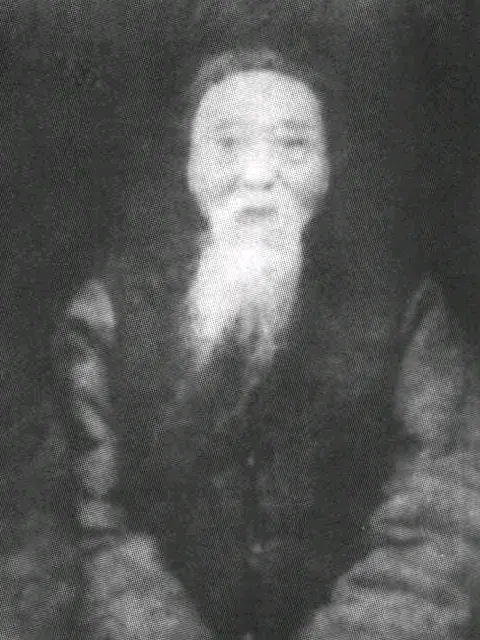
王闿运
Wang Kaiyun (王闿运, 1833–1916), courtesy names Renqiu and Renfu, art name Xiangqi, was a native of Xiangtan, Hunan. He was an eminent late Qing classicist, historian, poet, and celebrated educator, revered as the founding patriarch of the "Xiangqi School" and a leading figure in nineteenth-century New Text Confucianism and Huxiang cultural thought. Attaining his provincial juren degree in 1857, he entered the private circle of…
Wang Kaiyun (王闿运, 1833–1916), courtesy names Renqiu and Renfu, art name Xiangqi, was a native of Xiangtan, Hunan. He was an eminent late Qing classicist, historian, poet, and celebrated educator, revered as the founding patriarch of the "Xiangqi School" and a leading figure in nineteenth-century New Text Confucianism and Huxiang cultural thought. Attaining his provincial juren degree in 1857, he entered the private circle of Grand Minister Sushun in Beijing as a revered adviser, later participating in Zeng Guofan's Xiang Army headquarters before resigning over sharp strategic disagreements and devoting the remainder of his life to scholarship and academy lecturing. In classical learning, Wang championed the Gongyang Commentary on the Spring and Autumn Annals, emphasizing institutional reform and practical statecraft across more than two hundred volumes of canonical commentaries. In historical writing, he authored the sixteen-volume Xiangjun Zhi (Chronicle of the Xiang Army), lauded as one of the finest unvarnished historical narratives since the Tang dynasty for documenting both the military triumphs and internal plundering of Qing forces. In literature, he led the archaist poetic revival modeling Han, Wei, and Six Dynasties verse, being acclaimed by early Republican critics as the foremost poet of the late Qing era. As head of the Zunjing Academy in Chengdu, the Sixian Lecture Society in Changsha, and the Chuanshan Academy in Hengyang, he instructed thousands of pupils, including Liao Ping, Yang Du, Liu Guangdi, Yang Rui, and master painter Qi Baishi. In his final years, he served as Director of the National Historiography Institute under Yuan Shikai before retiring to Hunan.
Wang Kaiyun was born in Xiangtan, Hunan, orphaned early and raised in poverty by his uncle.
Studied at the Chengnan Academy in Changsha and established a poetry society with Deng Fulun, focusing on Han and Wei verse.
Passed the special provincial examination in fifth place, earning high praise from Provincial Education Commissioner Zhang Jinyong.
Traveled to Beijing for the metropolitan exam, failing the test but winning the deep respect of Grand Minister Sushun, whom he served as domestic tutor and adviser.
Joined Zeng Guofan's military headquarters in Anqing; parted ways after sharp disagreements on strategy, renouncing bureaucratic office.
Commenced compiling Xiangjun Zhi at the invitation of Zeng Guoquan, laboring seven years to produce an unvarnished sixteen-volume history.
Invited by Sichuan Governor-General Ding Baozhen to direct the Zunjing Academy in Chengdu, revolutionizing regional scholarship through New Text studies.
Returned south to direct the Sixian Lecture Society in Changsha and the Chuanshan Academy in Hengyang, lecturing to thousands of disciples.
Recommended by Hunan Governor Cen Chunxuan and granted the rank of Hanlin Corrector, later promoted to Hanlin Reader in 1910.
Appointed Director of the National Historiography Institute and State Councilor by President Yuan Shikai, resigning when monarchical restoration schemes intensified.
Passed away peacefully at his residence in Xiangtan at age eighty-three; President Li Yuanhong composed his funerary inscription.
Wang Kaiyun was born in 1833 in Xiangtan, Hunan. His ancestors migrated from Jiangxi during the Ming dynasty, settling in Hengyang before relocating outside the walls of Xiangtan. His great-great-grandfather resided at Shinitang with extensive farmlands, his great-grandfather was an avid poet, and his grandfather gave up agriculture to practice medicine in Changsha. His father, Wang Shifan, worked in commerce, while his mother was literate in folk ballads. Losing his father early in childhood, Wang was raised under the strict tutelage of his uncle, Wang Lin. As a young boy, Wang was not naturally quick-witted, struggling to memorize a hundred characters a day, but he possessed an iron will.
As recorded in the Draft History of Qing, he enforced an uncompromising daily regimen: "What was studied in the morning, if not memorized, he would not eat; what was recited at night, if not understood, he would not sleep." Through relentless discipline, he mastered philology at fifteen, classical syntax at twenty, Zhou dynasty ritual regulations at twenty-four, and the esoteric doctrines of the Spring and Autumn Annals at twenty-eight. By age nine, he was already composing complete essays.
In 1850, nineteen-year-old Wang fell deeply in love with a woman of the Zuo family, but because she was already betrothed, their union was thwarted, and she died shortly thereafter of melancholy; later that year, Wang was betrothed to Cai Mengti, with whom he shared thirty-eight years of marriage and eight children. Entering Chengnan Academy in Changsha, he formed a poetry society with Deng Fulun, hand-copying the archaic anthology Yutai Xinyong and laying the foundation for the regional "Hunan Poetry School." He disdained commercial profit, famously declaring: "I am not a mere man of letters, but a true classical scholar!"
In 1857, during the delayed provincial examination, twenty-four-year-old Wang placed fifth as a juren. Education Commissioner Zhang Jinyong marveled at his literary power, spreading his reputation across the province. Amidst the height of the Taiping Rebellion, Wang moved among senior Xiang Army generals. While Zeng Guofan treated him with great courtesy, Wang maintained his independence as an unattached literatus.
In 1859, Wang traveled to Beijing for the metropolitan examinations. Although he failed, his strategic essays caught the attention of Sushun, the powerful Assistant Grand Secretary and confidant of the Xianfeng Emperor. Sushun hired Wang as tutor for his household, treating him as an elder statesman and consulting him on major military decisions.
When Zuo Zongtang was impeached by General Fan Xie and faced immediate execution under imperial order, Wang vigorously defended Zuo before Sushun, emphasizing that Zuo possessed extraordinary military genius and was indispensable for suppressing the rebellion. Sushun's intervention before the emperor spared Zuo's life. Following the Xianfeng Emperor's death in 1861, Empress Dowager Cixi staged the Qixiang Coup, executing Sushun and his allies. Courageously remembering his patron's kindness, Wang authored Qixiang Gushi (Tales of the Qixiang Coup), candidly defending Sushun's historical record.
In 1862, Zeng Guofan assumed supreme command of military operations across four provinces from his headquarters in Anqing. Zeng invited Wang to serve on his staff, and senior commanders Hu Linyi and Peng Yulin received him with high honors. However, Wang's aggressive strategic vision clashed fundamentally with Zeng's cautious Neo-Confucian approach.
Folklore suggests that Wang urged Zeng to take advantage of his massive regional armies to seize national power, a suggestion that terrified Zeng. Recognizing that their paths could never converge, Wang resigned from the headquarters, renouncing bureaucratic office forever.
In 1864, seeking a livelihood in Guangzhou, Wang took Mo Liuyun as a concubine in Nanhai. Mo managed the household with exceptional devotion, and Wang treated her with deep affection. Living on modest tutorial stipends, Wang focused entirely on writing and teaching. In 1884, Mo traveled to Sichuan to join Wang at the Zunjing Academy, but passed away from exhaustion in Chengdu the following year, plunging Wang into profound grief.
In 1879, Sichuan Governor-General Ding Baozhen recruited Wang to serve as chancellor of the Zunjing Academy in Chengdu. Ding accorded him supreme pedagogical freedom, treating him as an honored state guest. On his very first day of lectures, Wang outlined his revolutionary approach: "In studying the Changes, one must recognize that the character yi holds multiple meanings and avoid inventing metaphysical names; in studying the Documents, one must punctuate sentences properly; in studying the Odes, one must recognize that love poems are not suitable for bureaucratic moralizing. Only after washing away these three vulgarities can one study ritual; and only when ritual is clear can one study the Spring and Autumn Annals."
He instituted rigorous requirements, inspecting student daily study diaries and monthly examination essays while staging classical ritual performances. Over eight years, he transformed Sichuan's intellectual culture, producing renowned scholars such as Liao Ping, Hu Congjian, Song Yuren, and Dai Guang.
Returning to Hunan in 1888, Wang headed the Sixian Lecture Society in Changsha and the Chuanshan Academy in Hengyang, and later taught at the Jiangxi University in Nanchang in 1902. At his ancestral Xiangqi Pavilion in Xiangtan, he taught thousands of students, earning the accolade that "Xiangqi disciples fill the empire." Prominent statesmen Yang Du and Xia Shoutian, 1898 martyrs Liu Guangdi and Yang Rui, and future international painting titan Qi Baishi all emerged from his academy.
In 1906, at age seventy-three, Wang was recommended by Hunan Governor Cen Chunxuan, prompting the Qing court to confer upon him the title of Hanlin Corrector, elevated to Hanlin Reader in 1910. Amidst the collapse of the imperial order, Wang observed the political turmoil with philosophical detachment.
In 1914, President Yuan Shikai recruited Wang to Beijing as Director of the National Historiography Institute and Councilor of State. Wang traveled to the capital accompanied by his longtime country servant, Mother Zhou. At official receptions hosted by Hubei Military Governor Wang Zhanyuan and President Yuan Shikai, Wang insisted that Mother Zhou sit beside him at the banquet table, heaping fine dishes onto her bowl while largely ignoring high-ranking dignitaries. When Mother Zhou began using Wang's calling cards to solicit bribes, and when student Yang Du's monarchical movement triggered the arrest of fellow student Song Yuren, Wang saw through the political absurdity. Submitting a petition faulting his own inability to manage household affairs, he abruptly resigned and returned south.
In 1916, Wang passed away quietly at his home in Xiangtan at age eighty-three. On his deathbed, he composed his own elegiac couplet: "The chronological tables for the Annals remain incomplete, yet fortunate am I that fine sons continue the poetic rites; my grand political strategies bore no fruit, leaving only lofty chants to echo across the rivers and mountains." President Li Yuanhong personally drafted his memorial stele, and provincial leaders across Hunan and Sichuan held public memorials in his honor.
Wang Kaiyun was the foremost master of New Text Confucianism in the late Qing dynasty. Discarding both Song dynasty metaphysical speculation and Qing Han-learning pedantry, he insisted that classical scholarship must illuminate fundamental statecraft principles to "assist governance, preserve ancient canons, clarify ancestral lessons, and elevate literary prose."
Lamenting that contemporary commentators produced tedious glosses that caused readers to fall asleep within ten lines, he insisted that scripture must communicate meaning clearly. Drawing on Eastern Han scholar He Xiu's commentaries on the Gongyang Zhuan, he decoded the esoteric principles of historical cycles. His monumental canonical corpus—including commentaries on the Changes, Documents, Rites, Odes, Rites of Zhou, Analects, Erya, and Gongyang—spanned over two hundred volumes, marking a peak of nineteenth-century classical scholarship.
Wang's crowning historical achievement was the sixteen-volume Xiangjun Zhi (Chronicle of the Xiang Army), composed over seven years at the invitation of Zeng Guoquan. Drawing on secret Grand Council archives and interviews with veteran officers, he applied the unsparing standard of Sima Qian's Records of the Grand Historian.
While commemorating the courage of regional armies, Wang refused to conceal uncomfortable truths: he described the sweeping momentum of the early Taiping forces, the humiliating defeats of imperial garrisons, the factional infighting among Xiang Army commanders, and the widespread looting and embezzlement perpetrated by Zeng Guoquan's soldiers after the sack of Nanjing. Outraged commanders branded it a "libelous book," forcing the destruction of its printing blocks. Although Zeng Guoquan commissioned Wang Anding to compose the flattering Xiangjun Ji to counter its narrative, historians universally acclaim Xiangjun Zhi as the most objective and literarily powerful historical record of the nineteenth century. His local gazetteers for Guiyang, Dong'an, Hengyang, and Xiangtan were similarly praised for condensing profound historical insight into local records.
In late Qing literature, Wang was the preeminent leader of classical verse. In Wang Guoyuan's Comprehensive Record of the Guangxu and Xuantong Poetic Circles, Wang was positioned as the supreme patriarch of late Qing poets.
Modeling his five-character ancient verse on Cao Zhi, Ruan Ji, and Zuo Si, and his seven-character narratives on High Tang master Du Fu, he advocated transforming ancient forms to express contemporary reality. Masterpieces such as Duxing Yao and Yuanmingyuan Ci captured the catastrophic foreign invasions and dynastic decline of his era with epic gravity. Tan Sitong praised his verse as transcending conventional poetry to achieve a higher philosophical plane. His prose and poetry were preserved in Xiangqi Lou Wenji, Xiangqi Lou Shiji, and his extensive daily journals.
Wang transformed traditional Chinese academy education during the transition to modernity. At the Zunjing Academy in Chengdu, his methodological reforms swept away empty examination cramming and trained the vanguard of modern southwestern intellectuals.
His premier student, Liao Ping, revolutionized classical scholarship with his theory of institutional transitions, directly providing Kang Youwei with the intellectual blueprint for the 1898 reforms. His disciples included constitutionalist theorist Yang Du, reform martyrs Liu Guangdi and Yang Rui, and modern master artist Qi Baishi, who arrived at his door as an untrained carpenter and was nurtured into an internationally renowned cultural figure.
Throughout his long life, Wang maintained absolute personal independence. Rising before dawn and abstaining from alcohol and tobacco, he hand-copied all his own manuscripts in elegant, rigorous calligraphy.
He met the hypocrisy of late Qing and early Republican officialdom with razor-sharp satire. By taking his rustic housekeeper Mother Zhou to elite state banquets, he exposed the pretensions of warlords and ministers. Resigning immediately when monarchical ambitions threatened the young republic, he embodied the defiant moral sovereignty of the classical Confucian scholar.
FIGURES ASSOCIATED WITH THIS DYNASTY