Birth in Wuyang
Born into an impoverished family in Wuyang, Xuzhou; engages in merchant trades in early youth.
唐末五代
王建
Emperor Gaozu of Former Shu (前蜀高祖, February 26, 847 – July 11, 918), personal name Wang Jian (王建), courtesy name Guangtu (光图) and childhood moniker Xingge, was the founding sovereign of the Former Shu dynasty during the Five Dynasties and Ten Kingdoms period, reigning from 907 to 918. Born into an impoverished commoner family in Wuyang, Henan, he enlisted in the regional Zhongwu Army during the chaotic twilight of the Tang…
Emperor Gaozu of Former Shu (前蜀高祖, February 26, 847 – July 11, 918), personal name Wang Jian (王建), courtesy name Guangtu (光图) and childhood moniker Xingge, was the founding sovereign of the Former Shu dynasty during the Five Dynasties and Ten Kingdoms period, reigning from 907 to 918. Born into an impoverished commoner family in Wuyang, Henan, he enlisted in the regional Zhongwu Army during the chaotic twilight of the Tang dynasty. Rising through the ranks through conspicuous tactical bravery, he gained imperial prominence during the Huang Chao rebellion when he personally escorted Emperor Xizong across mountain defiles to seek refuge in Sichuan. For his stalwart loyalty, the grateful sovereign bestowed an imperial robe upon him and elevated him to provincial governorships in Bizhou and Lizhou. Over subsequent decades, Wang Jian systematically outmaneuvered regional warlords, culminating in his seizure of Chengdu in 891 and his investiture as Prince of Shu by Emperor Zhaozong in 903. Following Zhu Wen's usurpation of the Tang throne in 907, Wang Jian formally proclaimed himself emperor in Chengdu, establishing the Great Shu dynasty. Throughout his eleven-year imperial reign, Emperor Gaozu demonstrated extraordinary administrative vision and regional statesmanship. He unified the four major circuits of Western Sichuan, Eastern Sichuan, Shannan West, and Qiannan, creating an impregnable southwestern empire shielded by the Qinling mountains. Rather than indulging in military adventurism in the Central Plains, he prioritized internal stability, extending lavish patronage to displaced scholars and appointing Tang literary luminary Wei Zhuang as chancellor to reproduce Tang administrative and ritual codes. He undertook extensive hydraulic repairs on the Dujiangyan irrigation system, promoted sericulture, and enforced low taxation, transforming Chengdu into a prosperous and peaceful cultural sanctuary amid nationwide fragmentation. His court fostered an unprecedented flourishing of arts and poetry, providing the fertile cradle for the Huajian School of lyrics. Passing away in 918 at the age of seventy-two, he was interred at the Yongling Mausoleum in Chengdu.
Born into an impoverished family in Wuyang, Xuzhou; engages in merchant trades in early youth.
Enlists in the loyalist Zhongwu Army; elevated to corps commander during campaigns against Huang Chao's insurgent forces.
Breaks away from rebellious warlord Lu Yanhong to lead loyalist regiments to Emperor Xizong's temporary capital in Chengdu.
Shields Emperor Xizong during a perilous night escape through mountain bluffs; granted imperial robes and appointed Prefect of Bizhou.
Banished by rival eunuch factions to Lizhou; storms the citadel and subsequently captures Langzhou to establish independent regional power.
Allies with Gu Yanlang of Dongchuan to petition imperial court against Chen Jingxuan; appointed vanguard commander to besiege Chengdu.
Compels Chen Jingxuan and eunuch Tian Lingzi to capitulate after prolonged siege; appointed Military Governor of Xichuan.
Dispatches Wang Zongdi to storm Zizhou; forces rival Gu Yanhui to commit suicide, unifying eastern and western Sichuan.
Commands southern military campaigns to annex Qianzhou, extending provincial authority toward Bozhou.
Launches a surprise offensive through the Sword Gate pass to capture Xingyuan, annexing eight prefectures from warlord Li Maozhen.
Formally created Prince of Shu and Grand Councilor by Emperor Zhaozong of Tang.
Lives a rough life in his youth before being advised by a monk on Mount Wudang to enlist in the Zhongwu Army.
Defeats rebellious Weisheng Military Commissioner Dong Zhang and consolidates control over western Sichuan prefectures.
Leads troops northward to Hanzhong under the banner of relieving Emperor Zhaozong from Li Maozhen's coercion.
Ascends the imperial throne in Chengdu following Zhu Wen's usurpation; establishes the Great Shu dynasty and proclaims Tianfu era.
Proclaims the Wucheng era, expands Chengdu's northern and southern city walls, and establishes civil examinations.
Proclaims the Tongzheng era and commissions the compilation of dynastic veritable records.
Temporarily changes the dynastic title to Great Han and proclaims the Tianhan era before restoring the title of Shu in 918.
Inflicts a severe defeat on Li Maozhen's armies at Qingniling, absorbing the frontier prefectures of Jie, Cheng, Wen, Qin, and Feng.
Suppresses a violent coup attempt by Crown Prince Wang Yuanying; subsequently designates his youngest son Wang Zongyan as heir apparent.
Passes away at age seventy-two after an eleven-year reign; succeeded by Wang Zongyan and entombed at Yongling Mausoleum.
Emperor Gaozu was born in 847 in Wuyang, Xuzhou, into an ordinary family that operated a small bakery. In his early adolescence, he demonstrated a restless, daring temperament, engaging in illicit cattle slaughter and salt smuggling across local waterways. Because he ranked eighth among his cousins and possessed a formidable physical build, neighboring villagers referred to him as Zei Wangba. Apprehended by county magistrates and cast into Xuchang prison, he was spared capital punishment by a sympathetic jailer named Meng Yanrui, who marveled at his imposing stature and released him under cover of darkness. Wang Jian fled into the dense forests of Mount Wudang, where a wandering Buddhist monk recognized his commanding demeanor and advised him to seek advancement through military service. Heeding this advice, Wang Jian enlisted as a foot soldier in the regional Zhongwu Army stationed in Xuzhou, rapidly earning promotion to squad commander through raw courage in skirmishes.
In 880, when Huang Chao's rebel host breached Hangu Pass and seized the imperial capital of Chang'an, Emperor Xizong fled west to Sichuan. Wang Jian was appointed commander of one of the eight elite corps of the Zhongwu Army under eunuch general Yang Fuguang. Following Yang's sudden demise, senior officer Lu Yanhong attempted to hijack the divisions for private plundering across Hubei. Refusing to serve a bandit commander, Wang Jian organized four fellow commanders—Han Jian, Jin Hui, Zhang Zao, and Li Shitai—to break away and march through the rugged Qinling mountains to join Emperor Xizong in Chengdu. In 885, as the imperial court attempted to return to Chang'an, mutinous armies led by Zhu Mei encircled the palace, forcing Emperor Xizong into a desperate night escape toward Baoji. Wang Jian marched in the vanguard, hacking through mountain barricades and shielding the imperial carriage amidst raging brush fires. Touched by his fierce loyalty, Emperor Xizong slept with his head resting on Wang Jian's lap in an abandoned shrine, subsequently rewarding him with the imperial robe and appointing him Prefect of Bizhou.
Following eunuch factional purges in Chang'an, Wang Jian was reassigned to the remote outpost of Lizhou in 886. When local magistrates refused him entry, Wang Jian stormed the fortress, subsequently taking Langzhou and gathering over ten thousand irregulars and indigenous fighters into a private army. In 888, when Chengdu warlord Chen Jingxuan and eunuch Tian Lingzi sought to eliminate him, Wang Jian allied with Gu Yanlang of Eastern Sichuan to lay siege to Chengdu. After three grueling years of encirclement, during which Wang Jian outmaneuvered imperial commissioners and enforced strict discipline, Chen Jingxuan surrendered in 891. Entering Chengdu, Wang Jian executed looters to preserve city order, receiving formal court appointment as Military Governor of Xichuan. Over the ensuing decade, he systematically expanded his domain: in 897, his general Wang Zongdi stormed Zizhou, driving Gu Yanhui to suicide and annexing Eastern Sichuan; in 898, his forces absorbed Qiannan; and in 902, he seized Shannan West from Li Maozhen, creating an expansive empire across modern Sichuan, Chongqing, southern Shaanxi, and Guizhou.
In 907, following news that Zhu Wen had murdered the last Tang emperor and established the Later Liang dynasty in Kaifeng, Wang Jian rejected subordinate vassalage. Denouncing Zhu Wen as an unpardonable traitor, he ascended the imperial throne in Chengdu on September 25, 907, proclaiming the Great Shu dynasty. Recognizing that enduring governance required civil institutions, he entrusted state affairs to premier poet and scholar Wei Zhuang, who established administrative ministries, imperial academies, and civil service examinations modeled strictly upon Tang precedents. Emperor Gaozu promulgated decrees protecting agricultural land, prohibited private encroachments upon peasant farms, and subsidized extensive canal dredgings on the Dujiangyan hydraulic network. Under his clement administration, Sichuan enjoyed unprecedented internal tranquility, commercial growth, and urban wealth, while northern China burned in warfare. He patronized distinguished literati and artists, enabling the composition of the celebrated lyric poems compiled in the Huajian Ji and sponsoring early block-printing presses.
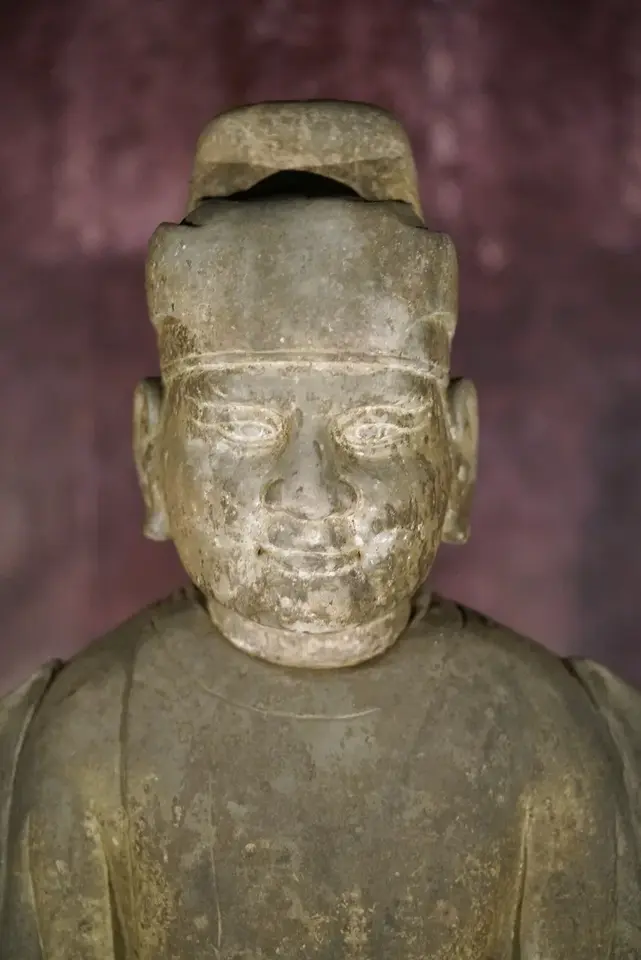
In his sunset years, Emperor Gaozu struggled to resolve intense succession rivalries within the inner court. His eldest surviving son, Crown Prince Wang Yuanying, possessed martial vigor but harbored deep mutual enmity toward senior palace eunuch Tang Wenyi and chancellor Zhang Ge. In 913, violent clashes erupted in the capital when Wang Yuanying mobilized palace guards to attack ministerial offices. Misled into believing that the crown prince was staging an armed parricide coup, Wang Jian ordered elite garrison regiments to suppress the outbreak, resulting in Wang Yuanying's defeat and murder by mutinous guards. Stricken with grief, Wang Jian yielded to the entreaties of his favored concubines, the Consorts Xu, designating their tender and dissolute adolescent son Wang Zongyan as crown prince. In the summer of 918, Emperor Gaozu fell mortally ill in Chengdu; after entrusting the government to senior general Wang Zongbi, he passed away on July 11, 918, at age seventy-two. He was interred at the Yongling Mausoleum in Chengdu, where modern excavations have revealed his stone effigy and exquisite carvings of the Twenty-Four Musicians.
Emperor Gaozu's foremost geopolitical achievement was terminating decades of militarized disunity across southwestern China. By systematically conquering and consolidating Western Sichuan, Eastern Sichuan, Shannan West, and Qiannan between 891 and 902, he forged an autonomous, defensively secure regional empire that protected southwestern populations from the catastrophic violence ravaging the Central Plains.
Unlike contemporary Five Dynasties warlords who governed through brutal martial retinues, Wang Jian instituted a sophisticated civil administration. Guided by chancellor Wei Zhuang, Former Shu replicated the Tang three departments and six ministries, re-established competitive imperial examinations, and codified systematic legal statutes, preserving the cultural and institutional traditions of classical Chinese statecraft.
Emperor Gaozu established agrarian rehabilitation as the fundamental pillar of state security. He personally inspected agricultural lands, issued edicts prohibiting arbitrary military extractions, and invested state resources into renovating the ancient Dujiangyan irrigation infrastructure, guaranteeing consistent crop yields across the Chengdu plain and transforming Shu into the wealthiest region of the era.
Through his generous reception of displaced scholars, poets, painters, and Buddhist monks, Emperor Gaozu made Chengdu the preeminent cultural haven of tenth-century China. His court nurtured the development of the ci lyric genre, culminating in the foundational poetic movement preserved in the Huajian Ji, while sponsoring revolutionary advancements in woodblock printing and sculptural arts.
Empress Shunde of the Zhou clan upheld palace decorum following the founding of Former Shu, while Consorts Xu and Xiao Xu exercised profound political influence over the late-reign succession settlement.
Alongside his biological sons Wang Yuanying and Wang Zongyan, Wang Jian organized an elite corps of adopted military commanders—known as the Fake Sons Troop—including Wang Zongdi, Wang Zongbi, and Wang Zongkan, who spearheaded the unification of Sichuan.
In his rise from Lizhou to Chengdu, Wang Jian relied heavily on strategic counselors such as Zhou Xiang and Feng Juan, who advised him to pacify local populations and legitimacy through imperial loyalty.
During his reign as Emperor of Former Shu, eminent former Tang officials including Chancellor Wei Zhuang, Zhang Ge, and Wang Kai institutionalized civil examinations, court rituals, and legal codes.
Throughout his career, Wang Jian contended fiercely with rival warlords including Chen Jingxuan in Western Sichuan, Gu Yanhui in Eastern Sichuan, Li Maozhen in Guanzhong, and Zhu Wen in the Central Plains.
Historians of the Song dynasty delivered nuanced assessments of Wang Jian's character and historical impact. Ouyang Xiu noted in the Historical Records of the Five Dynasties that although Wang Jian originated among rogue brigands in Henan, his capacity to nurture soldiers, recruit men of talent, and govern with restraint enabled the people of Western Sichuan to dwell in rare peace and security. Chroniclers commended his appointment of capable statesmen, observing that his court preserved civil order when northern realms succumbed to barbarian militarism.
During the Ming and Qing eras, political philosophers highlighted Wang Jian's humane stewardship of southwestern civilization during nationwide turmoil. Wang Fuzhi argued in his Reading the Comprehensive Mirror that while Wang Jian participated in regional usurping dynamics, his protection of civilian livelihoods in Shu stood as a profound historical merit, preserving millions of households from annihilation and creating a sanctuary of productive labor amid catastrophic dynastic collapse.
Modern scholarship evaluates Emperor Gaozu as one of the most effective regional nation-builders of early medieval China. Historians emphasize that his policies shielded the Sichuan basin from decades of predatory conflict, allowing urban commerce, printing technology, and lyric poetry to reach unprecedented heights. His excavated burial at Yongling stands today as exceptional physical evidence of the artistic refinement, musical culture, and material wealth achieved under his rule.
FIGURES ASSOCIATED WITH THIS DYNASTY