Birth in Kuaiji
Born into a prominent dramatic lineage in Kuaiji County; grew up studying family collections of Yuan zaju.
王骥德
Wang Jide (王骥德, 1540–1623), courtesy names Boliang and Bojun, art names Fangzhusheng, Yuyanggsheng, Qinlou Waishi, and Fangzhu Xianshi, a native of Kuaiji County, Shaoxing Prefecture, Zhejiang Province (modern-day Yuecheng District, Shaoxing), was an illustrious dramatic theorist, playwright, and musicological synthesizer of the middle and late Ming Dynasty. Born into an esteemed family devoted to musical theater, his…
Wang Jide (王骥德, 1540–1623), courtesy names Boliang and Bojun, art names Fangzhusheng, Yuyanggsheng, Qinlou Waishi, and Fangzhu Xianshi, a native of Kuaiji County, Shaoxing Prefecture, Zhejiang Province (modern-day Yuecheng District, Shaoxing), was an illustrious dramatic theorist, playwright, and musicological synthesizer of the middle and late Ming Dynasty. Born into an esteemed family devoted to musical theater, his grandfather and father were both experts in poetic metrics, possessing a collection of hundreds of Song and Yuan zaju editions. Tutored in classical theater from childhood, Wang studied under the literary icon Xu Wei (Qingteng), mastering southern drama and poetics. In his youth, he fulfilled his father's request by expanding his grandfather's dramatic draft Hongye Ji into the chuanqi romance Ti Hong Ji, earning early acclaim across Jiangnan. Throughout his life, Wang disdained bureaucratic examinations, traveling widely across Nanjing, Yangzhou, Wujiang, Kaifeng, and Luoyang. In his later years, he twice journeyed north to Beijing to investigate the historical origins of Yuan zaju and the northern dialect spoken in the hometown of Romance of the Western Chamber author Wang Shifu. He maintained close friendships with leading playwrights Shen Jing, Tang Xianzu, Lü Tiancheng, and Feng Menglong. Wang Jide's crowning intellectual contribution was his four-volume treatise Qulü (Rules of Poetic Drama). Synthesizing previous traditions, the work established the first comprehensive theoretical system for Chinese dramatic literature and stage performance, covering prosody, tonal harmonization, poetic diction, dramatic structure, and dialogue, representing the zenith of Ming dramatic theory. During the famous literary debate between Shen Jing's Wujiang School (emphasizing strict musical metrics) and Tang Xianzu's Linchuan School (emphasizing romantic emotion and poetic untrammeledness), Wang adopted an impartial stance, asserting that genuine drama must reconcile lyrical spirit with musical singability. His surviving dramatic works include the romance Ti Hong Ji and the zaju Nan Wanghou, while his philological commentary New Annotated Edition of the Old Romance of the Western Chamber remains an enduring milestone in Chinese dramatic criticism and aesthetics.
Born into a prominent dramatic lineage in Kuaiji County; grew up studying family collections of Yuan zaju.
At age twenty, adapted his grandfather's draft into the chuanqi drama Ti Hong Ji, gaining literary renown in Jiangnan.
Studied poetics and dramatic composition under literary master Xu Wei in Shaoxing.
Traveled extensively across Nanjing, Yangzhou, Wujiang, Kaifeng, and Luoyang, befriending musicologists Shen Jing and Sun Rufa.
Hosted by Shanyin Magistrate Mao Shounan, discussing prosody and dramatic criticism with young literati.
Twice visited Beijing to investigate Yuan dramatic origins and verify northern colloquialisms in Wang Shifu's homeland.
Completed his theoretical masterwork Qulü in four volumes, hailed by contemporary critics for restoring dramatic excellence.
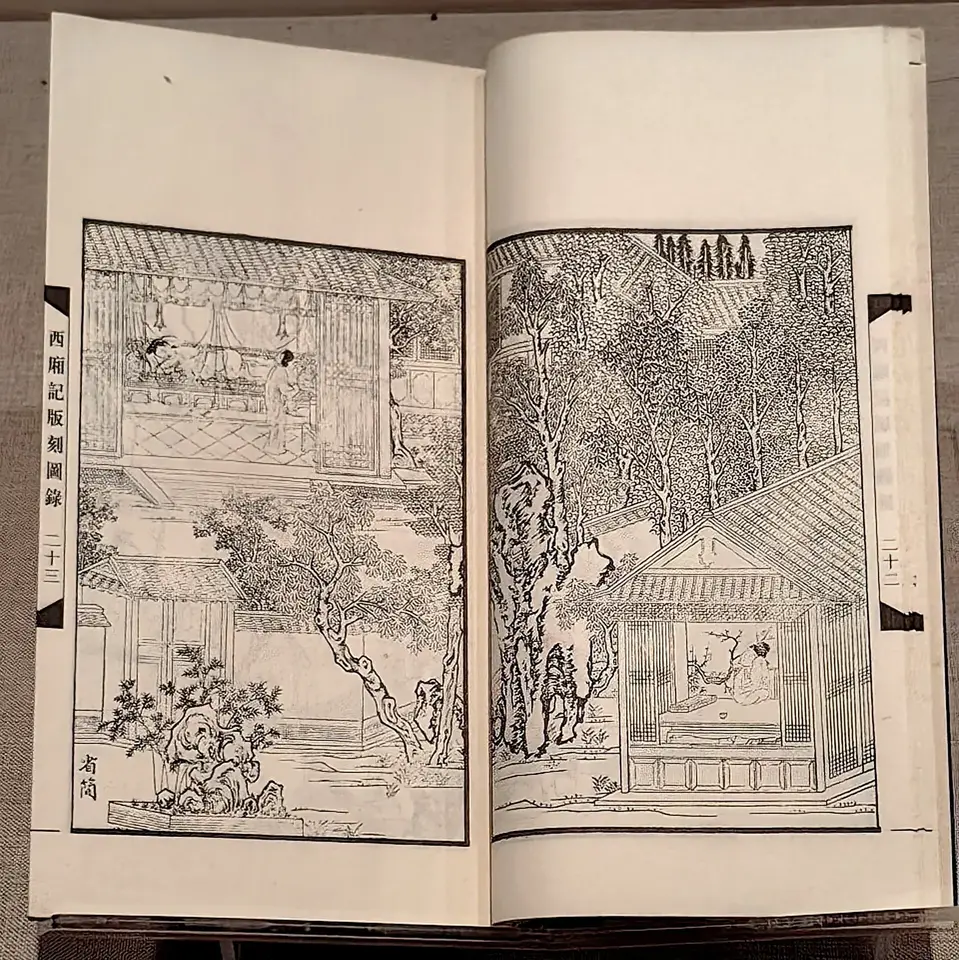
Published the New Annotated Edition of the Old Romance of the Western Chamber, using dynastic histories and Yuan plays to verify colloquialisms.
Passed away peacefully at his ancestral home in Kuaiji at age eighty-four.
Wang Jide was born in 1540 (the 19th year of the Jiajing reign) in Kuaiji County, Shaoxing Prefecture, Zhejiang Province. The Kuaiji Wang clan had long cultivated musical scholarship; his grandfather and father were deeply versed in prosody and northern and southern melodies, amassing hundreds of authentic Song and Yuan dramatic scripts. Growing up surrounded by classical theatrical texts, Wang Jide developed early sensitivity to dramatic structure and vocal harmonies.
At age twenty, in accordance with his late father's instructions, Wang undertook the complete revision of his grandfather's unpublished script Hongye Ji, which dramatized the Tang court romance of verse inscribed upon a red leaf. Wang revised the dialogue, refined the lyrics, and renamed the work Ti Hong Ji (Inscribing the Red Leaf). The play was praised for its harmonious melodies and elegant verse, circulating widely among southern theatrical troupes and establishing Wang's reputation as a prodigy in Yue cultural circles.
Around 1573, at the beginning of the Wanli reign, Wang formally became a student of the unconventional literary master Xu Wei (Qingteng). Xu Wei was an iconic figure in late Ming arts whose treatise Nanci Xulu was the first monograph on southern drama. Under Xu Wei's mentorship, Wang moved beyond rigid academic conventions, absorbing the vitality of folk southern opera and cultivating an aesthetic philosophy that prized authentic emotion and natural expression.
Disdaining bureaucratic examinations, Wang Jide remained a private scholar throughout his life. Possessing a restless spirit, he traveled extensively, visiting Nanjing, Yangzhou, Wujiang, Kaifeng, and Luoyang, associating with playwrights, musicians, and performers.
Around 1592, Magistrate Mao Shounan of Shanyin invited Wang to reside in his yamen as a literary guest. There, Wang spent years debating dramatic aesthetics with Mao's son Mao Yisui and local scholars. In his travels, Wang established friendships with the foremost theatrical figures of the era. He engaged in deep musical exchanges with Shen Jing, leader of the Wujiang School, composed a preface for Shen's landmark work Southern Nine Palaces and Thirteen Modes, studied vocal phonology under Sun Rufa, and formed warm friendships with younger dramatist Lü Tiancheng, master playwright Tang Xianzu, and popular writer Feng Menglong.
To recover the authentic vernacular of Yuan drama, Wang journeyed to Beijing twice in his sixties. He investigated theatrical performance traditions in the former Yuan capital of Dadu and visited the ancestral home of Wang Shifu, recording northern phonetic shifts and colloquial phrases. This commitment to empirical field research provided unshakeable documentary grounding for his dramatic theories.
During the middle and late Ming, the ascendancy of the refined Kunshan vocal style ignited the celebrated "Shen-Tang Debate." Shen Jing's Wujiang School demanded strict adherence to musical metrics and rhyme categories so that plays could be performed effortlessly on stage, even at the cost of poetic elegance. Conversely, Tang Xianzu's Linchuan School prioritized transcendent poetic genius and unrestrained emotional depth, declaring that as long as the lyrical spirit was pure, it did not matter if the singers' throats were strained.
Recognizing that both extremes damaged the art, Wang Jide spent more than two decades composing his four-volume theoretical treatise Qulü (Rules of Poetic Drama). In this work, Wang praised Shen Jing for rescuing dramatic literature from amateur irregularity, but criticized him for sacrificing poetic vitality for the sake of rigid rules. Concurrently, Wang celebrated Tang Xianzu's extraordinary genius in The Peony Pavilion, while pointing out that ignoring musical constraints created awkward vocal stumbling blocks for performers. Wang advocated that authentic drama must harmonize emotional brilliance with musical singability, establishing a balanced aesthetic framework that transcended partisan factionalism.
Alongside Qulü, Wang Jide made lasting contributions to dramatic textual scholarship. He produced the authoritative New Annotated Edition of the Old Romance of the Western Chamber, utilizing dynastic histories to verify institutional terminology and Yuan plays to decode northern vernacular idioms.
Additionally, Wang compiled the phonetic dictionaries Nanci Zhengyun and Shengyun Fenhe Tu, composed five zaju plays (including Nan Wanghou), and produced numerous graceful sanqu lyrics collected in Fangzhuguan Yuefu. In 1623, Wang Jide passed away peacefully at his home in Kuaiji at age eighty-four.
Wang Jide's primary achievement was the compilation of Qulü in four volumes across forty specialized chapters. Prior to Wang, theatrical writings consisted largely of impressionistic notes or catalog rosters. Qulü was the first comprehensive, systematic treatise on dramatic theory in Chinese history.
The work encompasses four core domains: prosody and phonetics, establishing precise rules for southern and northern melodic modes; poetic diction, advocating natural elegance over pedantic artifice; dramatic structure (Lun Juxi), where he pioneered Chinese structural theory by analyzing spatial layout, plot momentum, and proportion ("overgrowth causes structural laxity"); and stagecraft, where he emphasized the performability of dramatic scripts and formulated guidelines for stage dialogue and comedic interludes. Dramatist Lü Tiancheng declared that Qulü "restored dramatic theory after eight generations of decay," cementing its status as the pinnacle of Ming dramatic criticism.
In the fierce debate between the Wujiang and Linchuan schools, Wang Jide demonstrated exemplary intellectual impartiality. Though a close companion of Shen Jing, he refused to let personal friendship compromise theoretical truth.
He refuted the extreme view that "correct sound excuses crude diction," insisting that crude language disqualified a work as literature. Simultaneously, while expressing awe at Tang Xianzu's peerless poetic genius, he candidly noted that Tang's indifference to musical rules caused immense vocal strain for actors. Wang argued that dramatic masterpieces must achieve supreme excellence in both emotional resonance and melodic precision, establishing an enduring aesthetic standard that guided late Ming and Qing dramatists such as Li Yu.
In dramatic textual criticism, Wang Jide revolutionized the study of Yuan drama with his New Annotated Edition of the Old Romance of the Western Chamber. Rejecting arbitrary textual alterations common among contemporary literati, he instituted a rigorous philological methodology: verifying historical allusions through dynastic histories and decoding northern colloquialisms through Yuan dramatic texts.
Supported by his firsthand dialect investigations in northern China, his edition accurately clarified the linguistic context of Yuan zaju, providing subsequent generations with the most reliable historical commentary on Romance of the Western Chamber.
Wang Jide maintained an active creative career alongside his theoretical writing. His chuanqi romance Ti Hong Ji dramatized the Tang love story of verse on a floating leaf with refined melodies and balanced structure, prompting Tang Xianzu to compare it favorably with his own Zixiao Ji. His zaju Nan Wanghou broke conventional romantic boundaries by dramatizing the historical affection between Emperor Wen of Chen and Han Zigao, demonstrating bold creative range.
His surviving sanqu lyrics, collected in Fangzhuguan Yuefu, are noted for their emotional authenticity, delicate phrasing, and impeccable musical rhythm. Renowned author Feng Menglong lauded his verse as possessing an elegance and charm equal to Romance of the Western Chamber.
FIGURES ASSOCIATED WITH THIS DYNASTY