Birth
Wang Guowei was born in Haining, Zhejiang, into an educated gentry family with deep classical traditions.
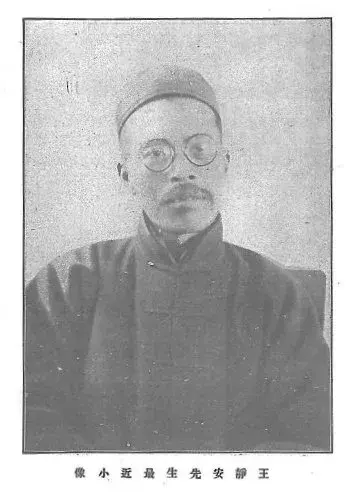
王国维
Wang Guowei (王国维, 1877–1927), courtesy names Jing'an and Boyu, art name Guantang, and posthumous title Zhongque, was a native of Haining, Zhejiang. He was a preeminent Chinese polymath, literary critic, epigrapher, and pioneer of Dunhuang studies and modern evidential historiography, celebrated as one of the legendary "Four Great Tutors" of the Tsinghua Institute of Chinese Studies. In his youth, Wang was among the earliest…
Wang Guowei (王国维, 1877–1927), courtesy names Jing'an and Boyu, art name Guantang, and posthumous title Zhongque, was a native of Haining, Zhejiang. He was a preeminent Chinese polymath, literary critic, epigrapher, and pioneer of Dunhuang studies and modern evidential historiography, celebrated as one of the legendary "Four Great Tutors" of the Tsinghua Institute of Chinese Studies. In his youth, Wang was among the earliest Chinese thinkers to systematically introduce and apply Western metaphysics and aesthetics, translating the philosophies of Immanuel Kant, Arthur Schopenhauer, and Friedrich Nietzsche. He utilized Schopenhauer's concept of tragedy to write A Critique of the Dream of the Red Chamber and authored Renjian Cihua (Poetic Remarks in the Human World), formulating the influential "Three Realms" of artistic and intellectual attainment. Following the 1911 Revolution, Wang lived in self-imposed exile in Kyoto alongside his mentor Luo Zhenyu, shifting his focus to oracle bone script, Bronze Age epigraphy, and Dunhuang manuscripts. Combining traditional Qing philology with modern scientific empiricism, he pioneered the "Dual Evidence Method," correlating excavated archaeological artifacts with transmitted historical texts. His masterworks, including Yin-Zhou Zhidu Lun (On the Yin and Zhou Institutional Systems), confirmed the historical accuracy of the Shang royal lineage recorded by Sima Qian and laid the foundations for modern Chinese historiography and theater studies. In his later years, he served as an attendant in the imperial study to abdicated emperor Puyi and taught at Tsinghua University. On June 2, 1927, devastated by revolutionary turmoil and cultural dislocation, he drowned himself in Kunming Lake at the Summer Palace at age fifty.
Wang Guowei was born in Haining, Zhejiang, into an educated gentry family with deep classical traditions.
Passed the local examinations to earn the xiucai degree at sixteen, hailed as the foremost of the "Four Talents of Haining."
Moved to Shanghai to work at the Current Affairs Newspaper and enrolled in Luo Zhenyu's Eastern Literature Institute to learn Japanese, English, and sciences.
Traveled to Tokyo to study physical sciences at the Tokyo Physics School, returning the following year due to illness.
Taught ethics and Chinese at the Tongzhou Normal School, immersing himself in German philosophy and composing A Critique of the Dream of the Red Chamber.
Published Renjian Cihua in Educational World, establishing his celebrated "Realm Theory" and the three progressive stages of scholarship.
Following the fall of the Qing dynasty, moved to Kyoto with Luo Zhenyu, dedicating himself to oracle bones, bronze inscriptions, and ancient geography.
Returned to Shanghai to direct Xueshu Congbian at the Hardoon Gardens, compiling his scholarly masterpiece Guantang Jilin.
Summoned by abdicated emperor Puyi to serve as Attendant in the Imperial Southern Study in the Forbidden City.
Accepted appointment as Tutor at the newly established Tsinghua Institute of Chinese Studies, lecturing on New Evidence on Ancient History.
Left a testament declaring his refusal to endure further humiliation and drowned himself in Kunming Lake at the Summer Palace.
Wang Guowei was born on December 3, 1877, in Haining, Zhejiang. His family traced its ancestry to Wang Bing, a celebrated Song dynasty military general who fought against Jurchen invaders. His father, Wang Naiyu, was an accomplished scholar, painter, seal carver, and numismatist who deeply nurtured Wang Guowei's early intellectual development. Wang's mother died when he was four, and his upbringing was supervised by his grand-aunt and his father.
In 1883, at age seven, Wang entered local private schools under tutors Pan Zigui and Chen Shoutian, acquiring an exceptional foundation in the Confucian classics and philology. In 1886, his family moved to Zhoujiadou in Haining. In 1892, at sixteen, he passed the local examinations to become a licentiate (xiucai). Alongside fellow students Chen Shouqian, Ye Yichun, and Zhu Jiayou, he was celebrated by local elders as the foremost of the "Four Talents of Haining." However, disdaining the rigid formula of the eight-legged essay, he repeatedly failed subsequent higher examinations. Entering Chongwen Academy in Hangzhou in 1894, he turned his attention toward evidential scholarship, epigraphy, and Western learning introduced in the wake of the Sino-Japanese War.
In January 1898, Wang traveled to Shanghai under his father's guidance, taking employment at the reformist Current Affairs Newspaper (Shiwu Bao) under Ou Jujia. A month later, he joined the Eastern Literature Institute founded by Luo Zhenyu, studying Japanese, English, physics, and calculus under Japanese scholars Fujita Toyohachi and Taoka Sayoji. Wang's extraordinary intellectual focus deeply impressed Luo Zhenyu, initiating a close thirty-year partnership between the two scholars.
In late 1900, financed by Luo Zhenyu and recommended by his Japanese instructors, Wang went to Japan to study at the Tokyo Physics School. However, suffering from beriberi and severe fatigue, he returned to Shanghai in the spring of 1901. He subsequently taught Japanese at the Wuchang Agricultural School while contributing prolifically to Luo's journal Educational World (Jiaoyu Shijie), eventually becoming its chief editor. In its pages, Wang translated and popularized Western works on formal logic, educational theory, psychology, and ethics, creating numerous foundational modern Chinese terms.
In the spring of 1903, invited by industrialist Zhang Jian, Wang became an instructor at the Tongzhou Normal School, teaching ethics and literature. During this period, he immersed himself in the philosophical systems of Immanuel Kant, Arthur Schopenhauer, and Friedrich Nietzsche, comparing Western metaphysics with pre-Qin and Song Confucianism.
Applying Schopenhauer's philosophy of tragedy, Wang published A Critique of the Dream of the Red Chamber in 1904, marking the first modern philosophical analysis of traditional Chinese vernacular fiction. In 1908, he published Renjian Cihua (Poetic Remarks in the Human World), synthesizing European aesthetics with classical poetic criticism to articulate his renowned "Realm Theory." Following the death of his first wife, he remarried Lady Pan and accepted an editorial post in the Ministry of Education in Beijing, authoring Qulu (Catalog of Operas) to establish the academic study of traditional Chinese theater.
The outbreak of the 1911 Revolution ended imperial rule. As a loyalist devoted to classical civilization, Wang accompanied Luo Zhenyu into self-imposed exile in Kyoto, Japan, where he resided for more than four years. In Kyoto, Wang lived a disciplined, reclusive life next door to Luo. He studied the vast collections of bronze inscriptions, oracle bone rubbings, and ancient stone tablets in Luo's Dayun Library, while engaging in intensive exchanges with Japanese sinologists Naito Torajiro (Naito Konan) and Kano Naoki.
During these productive years, Wang shifted his primary research from European philosophy to pre-Qin history, archaic scripts, and epigraphy. Correlating oracle bone inscriptions with the Records of the Grand Historian, he wrote Investigation of the Ancestral Kings Appearing in the Yin Oracle Inscriptions and On the Yin and Zhou Institutional Systems. He also completed A History of Song and Yuan Drama, which established the field of Chinese dramatic history. He later remarked that his years in Kyoto were the most intellectually transformative and prolific period of his entire career.
In 1916, unwilling to burden Luo Zhenyu's finances, Wang returned to Shanghai to serve as chief editor of Xueshu Congbian at the Hardoon Gardens and professor at Cangsheng Mingzhi University. In Shanghai, he compiled the monumental Guantang Jilin in twenty volumes, establishing his reputation as the foremost philological historian of his generation.
Between 1917 and 1922, Peking University Chancellor Cai Yuanpei and deans Ma Yuzao and Shen Jianshi extended at least six formal invitations to Wang, dispatching Ma Heng and Gu Jiegang to urge him to accept a chair professorship. Wang repeatedly declined due to his political status as an imperial loyalist, eventually agreeing only to serve as an uncompensated "correspondence adviser" for graduate students.
In the spring of 1923, on the strong recommendation of former viceroy Shengyun, abdicated emperor Puyi broke longstanding bureaucratic precedent by appointing Wang an Attendant in the Imperial Southern Study in the Forbidden City. Over the next year, Wang cataloged imperial rare books and palace archives. When warlord Feng Yuxiang staged a coup in late 1924 and expelled Puyi from the Forbidden City, Wang considered the humiliation unbearable and prepared to drown himself in the palace moat, but was restrained by his family.
In 1925, Tsinghua University invited Wang to become a founding professor at the newly established Tsinghua Institute of Chinese Studies. With Puyi's consent, Wang accepted the post, joining Liang Qichao, Chen Yinke, and Y. R. Chao as one of the legendary "Four Great Tutors." Lecturing on New Evidence on Ancient History, he codified his famous "Dual Evidence Method," guiding brilliant students such as Jiang Liangfu, Xu Zhongshu, and Lu Kanru.
In the autumn of 1926, the sudden death of his eldest son Wang Qianming in Shanghai shattered Wang's emotional health, leading to a bitter rupture with Luo Zhenyu over family affairs. On his fiftieth birthday, students presented him with a painting titled Qiju Tu, the sole tribute in an otherwise somber celebration.
In the summer of 1927, as the Nationalist Northern Expedition army advanced toward Beijing, political panic swept the ancient capital. On the morning of June 2, 1927, Wang arrived at his office, graded graduate examination papers with scrupulous fairness, and borrowed two silver dollars from colleague Hou Houpei. He hired a rickshaw to the Summer Palace, walked to the Fish Algae Pavilion on the shores of Kunming Lake, smoked his final cigarette, and threw himself into the water at approximately 11:00 AM. In his pocket was found a brief testament reading: "At fifty years of age, I lack only death; having witnessed such worldly cataclysms, righteousness permits no further humiliation." In 1929, Tsinghua faculty and students erected a monument in his honor, on which Chen Yinke inscribed his celebrated tribute to "independence of spirit and freedom of thought."
Wang Guowei's primary contribution to modern historical scholarship was the formulation of the "Dual Evidence Method" (Erzhong Zhengjufa). Outlined in his Tsinghua lectures New Evidence on Ancient History, this methodology demanded the rigorous mutual verification of transmitted textual sources ("materials on paper") with excavated archaeological artifacts ("materials beneath the ground").
By deciphering late Shang oracle bone inscriptions and matching them with the royal genealogy recorded in Sima Qian's Records of the Grand Historian (Shiji), Wang proved that Sima Qian's account of the Shang dynasty was authentic historical fact, overturning the extreme skepticism of early twentieth-century iconoclasts.
Furthermore, in his masterwork On the Yin and Zhou Institutional Systems, Wang demonstrated that the transition from Shang to Zhou represented an institutional revolution, replacing agnatic brother-to-brother succession with primogeniture, patrilineal ancestral temples, feudal investiture, and mourning regulations. This analysis established modern Chinese institutional history on an empirical footing.
In the field of literary criticism, Wang's Renjian Cihua stands as the preeminent bridge connecting classical Chinese poetics with Western aesthetic philosophy. Rejecting superficial metric manuals, he established "artistic realm" (jingjie) as the supreme standard of literary excellence, distinguishing between the "realm with self" and the "realm without self."
Drawing on Song dynasty lyrics, he famously articulated the three progressive stages of profound scholarship and great human enterprise: First, viewing the horizon from high towers (quoting Yan Shu), representing visionary aspiration and clarity of purpose; Second, enduring physical emaciation without regret (quoting Liu Yong), signifying unrelenting perseverance and sacrifice; Third, discovering the sought object upon turning around in the fading lamplight (quoting Xin Qiji), symbolizing sudden intuitive breakthrough and intellectual mastery.
Prior to Wang Guowei, traditional Confucian literati treated popular opera and vernacular drama as vulgar entertainments unworthy of serious scholarship. Wang dismantled this prejudice in A History of Song and Yuan Drama (Song Yuan Xiqu Kao).
He traced the chronological development of theatrical arts from ancient shamanic rituals and Han dynasty pantomimes through Tang military skits, Song narrative plays, and Yuan musical dramas. Formulating the modern definition of traditional Chinese theater as "acting out stories through song and dance," he placed Guan Hanqing, Bai Pu, and Ma Zhiyuan on the world stage alongside Shakespeare and Goethe.
Wang was among the earliest scholars in the world to recognize the revolutionary importance of archaeological discoveries in northwestern China. Collaborating with Luo Zhenyu, he cataloged and analyzed thousands of Han and Jin dynasty wooden writing strips and Dunhuang manuscripts looted by European explorers.
In Liusha Zhuijian (Documents on Floating Sands), he deciphered ancient administrative documents, border beacon garrison codes, and mathematical texts, single-handedly establishing modern Chinese wooden strip studies (jianduxue) and securing Chinese leadership in early international Dunhuangology.
Wang was the first modern Chinese intellectual to overcome the simplistic "Chinese learning for substance, Western learning for utility" dichotomy. By translating Kant's epistemological treatises and Schopenhauer's metaphysics, he defined philosophy as the foundational study of nature, life, and knowledge.
His philosophical essays, such as On Human Nature and Explaining Principle, used Western analytical tools to categorize Chinese classical thought, profoundly influencing subsequent standard histories of Chinese philosophy written by Hu Shih and Feng Youlan.
During his tenure at Tsinghua, Wang conducted forensic investigations into the historical geography of Inner Asia, Mongolia, and the Silk Road. Collating rare Mongolian and Persian historical records alongside Chinese texts like the Secret History of the Mongols, he corrected centuries of errors in official dynastic histories and established modern standards for Eurasian historical research.
As a mentor at the Tsinghua Institute of Chinese Studies, Wang trained a generation of distinguished scholars who became the intellectual leaders of twentieth-century Chinese archaeology, linguistics, and paleography. His uncompromising integrity and tragic suicide prompted Chen Yinke's celebrated eulogy, which permanently enshrined "independence of spirit and freedom of thought" as the highest ethical ideals of modern Chinese scholarship.
FIGURES ASSOCIATED WITH THIS DYNASTY