Selection into the Inner Palace
Born to an eminent family in Langya; selected into Sun Quan's court, earning deep imperial favor.
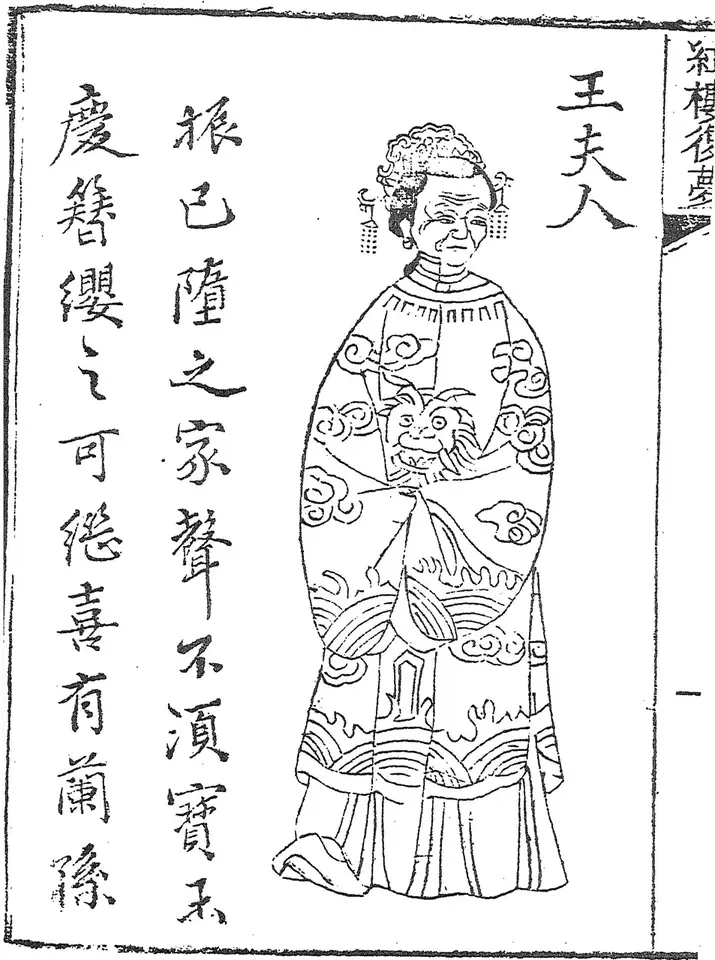
王夫人
Lady Wang (王夫人, ?–245), posthumously honored as Empress Dayi, was a native of Langya (present-day Linyi, Shandong). She was a favored imperial consort of Sun Quan, Emperor Da of Eastern Wu, the biological mother of deposed Crown Prince Sun He, and the paternal grandmother of Sun Hao, the last emperor of Eastern Wu. Entering the palace through an imperial selection, Lady Wang gained supreme favor during the Huangwu era…
Lady Wang (王夫人, ?–245), posthumously honored as Empress Dayi, was a native of Langya (present-day Linyi, Shandong). She was a favored imperial consort of Sun Quan, Emperor Da of Eastern Wu, the biological mother of deposed Crown Prince Sun He, and the paternal grandmother of Sun Hao, the last emperor of Eastern Wu. Entering the palace through an imperial selection, Lady Wang gained supreme favor during the Huangwu era (222–229) when Sun Quan ruled as King of Wu, giving birth to his third son, Sun He. Gentle, poised, and uncontentious, Lady Wang ranked second in imperial favor within the Eastern Wu inner court, surpassed only by Sun Quan's most beloved consort, Lady Bu (Bu Lianshi). In turn, Sun He was cherished by Sun Quan on account of his mother's favor, receiving his own dedicated palace guard at fourteen and studying statecraft under master Confucian scholar Kan Ze. In the first month of 242 (Chi'wu 5), following the untimely death of the first crown prince Sun Deng, Sun Quan formally invested Sun He as crown prince. Civil and military officials submitted memorials petitioning that Lady Wang be enthroned as empress. Although Sun Quan temporarily deferred the enthronement due to wartime hardships, Lady Wang achieved supreme stature in the inner court, and former favored concubines were relocated to external residences out of deference. Following Lady Bu's demise, Sun Quan resolved multiple times to formally invest Lady Wang as empress. However, Sun Quan's eldest daughter, Princess Quan (Sun Luban), had long despised Lady Wang and feared retribution if Sun He became emperor. Princess Quan relentlessly opposed the appointment and conspired with Sun Ba, the Prince of Lu, triggering the destructive Succession Struggle between the Two Palaces. In 245 (Chi'wu 8), Sun Quan fell critically ill, dispatching Crown Prince Sun He to offer ancestral prayers at the shrine of Sun Ce. Princess Quan concocted vicious slanders, falsely claiming that the crown prince was plotting with his consort's clan and alleging that Lady Wang exhibited a "joyful countenance" (xi se) in the palace, gloating over the emperor's mortal peril. Paralyzed by senile paranoia, Sun Quan erupted into fury and dispatched imperial attendants to violently rebuke Lady Wang. Trapped in the inner court without means of defense, Lady Wang succumbed to terror, grief, and despair, passing away that same year. Her demise stripped Crown Prince Sun He of maternal protection, leading directly to his deposition and forced suicide in 250. In 264 (Yuanxing 1), Sun He's son Sun Hao ascended the imperial throne, officially vindicating his grandmother by conferring upon her the posthumous title Empress Dayi and enfeoffing her three brothers as marquises, concluding one of the most mournful inner-court tragedies of the Three Kingdoms era.
Born to an eminent family in Langya; selected into Sun Quan's court, earning deep imperial favor.
Enjoyed supreme favor second only to Lady Bu, bearing Sun Quan his third son, Sun He.
Sun He was invested as crown prince; ministers petitioned to install Lady Wang as empress, elevating her status.
Sun Quan prepared to invest Lady Wang as empress; Princess Sun Luban vehemently opposed it, backing Sun Ba.
Sun Quan fell ill; Princess Quan falsely claimed Lady Wang showed joy over his illness; Lady Wang died of grief and terror.
Stripped of maternal support, Crown Prince Sun He was deposed amid the Succession Struggle and later forced to commit suicide.
Her grandson Sun Hao ascended the throne, posthumously honoring Lady Wang as Empress Dayi and enfeoffing her brothers.
Lady Wang was born into the prestigious Langya Wang lineage (present-day Linyi, Shandong) during the final decades of the Eastern Han dynasty. Amid the widespread civil turmoil that ravaged the Central Plains, northern gentry families migrated south across the Yangtze River. Cultured, graceful, and endowed with exceptional beauty and modest deportment, Lady Wang was selected into the inner palace of Sun Quan, the ruler of Jiangnan.
Following Sun Quan's establishment of the Huangwu era as King of Wu in 222, Lady Wang received extraordinary imperial favor. Within the inner court hierarchy, Sun Quan's affections had long been dominated by Lady Bu (Bu Lianshi), who was celebrated for her serene magnanimity and lack of jealousy. Aside from Lady Bu, Lady Wang emerged as the most favored consort, recorded in history as "favored second only to Lady Bu" (chong ci Bushi).
Shortly thereafter, Lady Wang gave birth to Sun Quan's third son, Sun He (courtesy name Zixiao). Because of Sun Quan's deep affection for Lady Wang, Sun He enjoyed special parental tenderness from early childhood. Endowed with a stately appearance, intellectual curiosity, and filial virtue, Sun He displayed remarkable aptitude for governance. When Sun He was merely fourteen years old, Sun Quan took the unprecedented step of establishing a dedicated palace guard for him and appointed the distinguished scholar-official Kan Ze, Director of the Imperial Secretariat, to instruct him in the classics, history, literature, and martial arts, grooming him as a core pillar of the state.
In the summer of 241 (Chi'wu 4), the Eastern Wu dynasty was struck by a severe blow: the beloved first crown prince Sun Deng passed away prematurely at the age of thirty-three. Sun Deng had governed with exemplary benevolence and wisdom, winning the universal reverence of the realm. With his passing, the succession became the preeminent political question of the state.
Among Sun Quan's surviving sons, the second son Sun Lu had already died young; Sun He was the eldest and most accomplished surviving prince. In the first month of 242 (Chi'wu 5), Sun Quan promulgated an imperial edict formally investing twenty-one-year-old Sun He as crown prince, declaring a general amnesty and renaming Hexing County to Jiaxing to commemorate the auspicious succession.
Following Sun He's elevation to statutory heir, court civil and military ministers, adhering to the classical protocol that an heir's mother rises with her son, jointly submitted memorials petitioning Sun Quan to formally enthrone Lady Wang as Empress and enfeoff the remaining princes as regional kings. Confronting these appeals, Sun Quan issued a widely recorded rescript declining the formal enthronement: "The realm remains unsettled, and the people are weary from warfare. Meritorious officers remain unrewarded, and the destitute lack adequate relief. To parcel out territories to enrich imperial sons and elevate ranks to indulge concubines is conduct I strongly reject. Let this proposal be dismissed!"
Although Sun Quan deferred the formal coronation ceremony for reasons of state economy, Lady Wang's actual status within the court reached absolute supremacy. To honor her position as the mother of the crown prince and avoid factional friction, all other favored concubines in Sun Quan's inner harem were ordered to vacate the palace and take up residence in external estates. The inner court treated Lady Wang as its de facto matriarch: "The mother of Sun He was honored above all, and favored concubines were all sent to live outside."
Lady Bu, who had long presided over the harem, passed away in 238 (Chi'wu 1). With the seat of empress vacant and Sun He firmly established as heir, Sun Quan repeatedly resolved in private audiences to officially install Lady Wang as empress.
However, this decision provoked the fierce animosity of Princess Quan, Sun Luban (courtesy name Dahu). Princess Sun Luban was the eldest daughter of Sun Quan and Lady Bu, married to General of the Left Quan Cong. Arrogant, cunning, and fiercely protective of her political primacy, Princess Sun Luban held immense sway over her aging father. Earlier in the harem, petty rivalries had created a bitter personal feud between Princess Quan and Lady Wang. Princess Quan was terrified that if Lady Wang became empress, Sun He's eventual ascension to the throne would result in Lady Wang becoming Empress Dowager, leaving the Quan clan vulnerable to marginalization or purge.
Resolved to preempt this threat, Princess Sun Luban relentlessly opposed Lady Wang's elevation, whispering continuous slanders into Sun Quan's ears. Furthermore, Princess Quan formed a clandestine alliance with Sun Quan's fourth son, Sun Ba, the Prince of Lu. Princess Quan and her allies sought to poison Sun Quan's mind against Sun He, campaigning tirelessly to depose the crown prince and install Sun Ba, thus igniting the devastating Succession Struggle between the Two Palaces that tore the Eastern Wu bureaucracy apart.
In 245 (Chi'wu 8), Sun Quan fell critically ill. Confined to his bedchamber by severe illness, the emperor became increasingly irritable, suspicious, and fragile.
Anxious to pray for his father's recovery, Crown Prince Sun He was dispatched by imperial command to the ancestral shrine of Sun Ce (the Changsha Huan Wang Temple) in the suburbs of Jianye to offer solemn prayers on behalf of the monarch. The residence of General Zhang Xiu, uncle of Sun He's primary consort Lady Zhang, was situated immediately adjacent to the shrine grounds. Seeing the crown prince exhausted from performing exhaustive rites in the summer heat, Zhang Xiu extended familial hospitality, inviting Sun He to step into his home for a brief rest and refreshment.
This innocent familial gesture was immediately seized upon by Princess Sun Luban's network of spies. Rushing to Sun Quan's sickbed, Princess Quan broke into tears and concocted a venomous accusation: "Your Majesty lies critically ill in the palace, and you sent the crown prince to pray for your recovery. Yet the prince is not praying devoutly in the shrine; instead, he has gone directly to the residence of his wife's maternal kin to plot treason behind closed doors!"
Even more fatally, Princess Quan directed her malice straight at Lady Wang: "Not only is the prince disloyal, but I personally witnessed Lady Wang! Seeing Your Majesty confined to your sickbed, she showed not the slightest grief; instead, she was beaming with joy (you xi se), secretly celebrating that Your Majesty's end is near and that she will soon rule as Empress Dowager!"
In his twilight years, worn down by physical decline and decades of political paranoia, Sun Quan had lost all rational discernment. Upon hearing the allegations from his favorite daughter, the emperor was consumed by incandescent fury.
Without convening a tribunal to question the crown prince, and without affording Lady Wang any opportunity to explain or defend herself, Sun Quan dispatched palace eunuchs to Lady Wang's apartments. The messengers delivered an excruciatingly harsh imperial reprimand, denouncing her in the severest terms for ingratitude, disrespect, and treasonous ambition.
To Lady Wang, who had conducted herself with gentle rectitude and devotion for over two decades, this thunderous accusation was a catastrophic shock. She found herself condemned for the monstrous crime of anticipating her husband's demise, an offense against every moral principle she held dear. Paralyzed by the knowledge that the emperor had accepted the slander without hearing her voice, and surrounded by Princess Quan's hostile faction, Lady Wang saw no path to justice or survival.
Overwhelmed by acute terror, humiliation, and insurmountable despair, Lady Wang collapsed into severe illness. Refusing food and weeping continuously, her condition deteriorated rapidly within days. In the gloom of the inner palace in 245, Lady Wang passed away in profound grief, an innocent victim of ruthless court slander.
The death of Lady Wang dealt a fatal blow to the political survival of Crown Prince Sun He. Stripped of his mother's presence in the inner court, Sun He stood defenseless against Princess Sun Luban and the Prince of Lu faction. Despite desperate memorials from Chancellor Lu Xun, General Zhu Ju, and other loyalist ministers, Sun Quan ultimately deposed Sun He in 250, exiling him as Prince of Nanyang and subsequently ordering his execution during the regency of Sun Jun. The factional purge crippled the Eastern Wu state.
Yet justice was eventually restored by history. In 264 (Yuanxing 1), following the death of Emperor Jing (Sun Xiu), Eastern Wu ministers Puyang Xing and Zhang Bu enthroned Sun He's twenty-three-year-old eldest son, Sun Hao (the Marquis of Wucheng), as the new emperor.
Upon ascending the throne, Sun Hao's foremost filial obligation was the full posthumous rehabilitation of his wronged father and grandmother. Sun Hao issued a solemn imperial decree conferring upon Lady Wang the supreme posthumous title of Empress Dayi (The Great Virtuous Empress). Her spirit tablet was escorted with imperial honors into the ancestral temple of the Eastern Wu dynasty to receive state sacrifices.
Simultaneously, Sun Hao enfeoffed Lady Wang's three surviving younger brothers as marquises (liehou), restoring the Langya Wang lineage to the highest ranks of the southern nobility. Lady Wang's tragic martyrdom, immortalized in the Records of the Three Kingdoms, remains a poignant testament to the destructive power of palace slander and the fragility of virtue under imperial despotism.
Selected into the inner court of Sun Quan during the Huangwu era, bearing his third son Sun He.
Earned enduring favor through her modest and virtuous conduct, ranking second in imperial favor within Eastern Wu only to Lady Bu.
Supported the investiture of Sun He as crown prince in 242, prompting ministers to petition for her coronation as empress.
Commanded supreme status in the inner palace, leading to the relocation of other concubines to external residences to preserve her precedence.
Resolutely preserved personal integrity during the Succession Struggle between the Two Palaces despite vicious opposition from Princess Sun Luban.
Refused to engage in corrupt factional scheming, earning the deep respect and protective devotion of loyalist statesmen like Lu Xun and Kan Ze.
Falsely accused by Princess Sun Luban of showing joy over Sun Quan's critical illness in 245.
Subjected to severe imperial condemnation without trial, passing away from acute grief and terror in the inner palace.
Vindicated in 264 when her grandson Sun Hao ascended the throne and formally proclaimed her Empress Dayi.
Enfeoffed her three brothers as marquises and installed her tablet in the imperial ancestral temple, achieving complete historical restoration.
FIGURES ASSOCIATED WITH THIS DYNASTY