Noble Birth
Born into a prominent aristocratic clan in Wannian, Jingzhao; younger brother of loyalist general Wang Chucun.
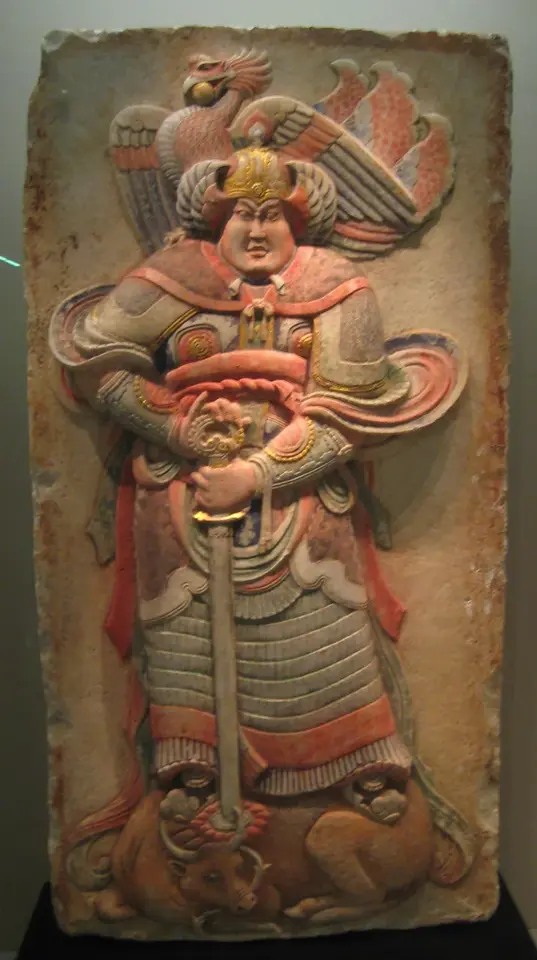
王处直
Wang Chuzhi (王处直; 862–923), courtesy name Yunming (允明), was a native of Wannian, Jingzhao (modern Xi'an, Shaanxi). He was a prominent regional warlord and Military Commissioner of Yiwu Circuit during the late Tang and Five Dynasties period. Born into a distinguished aristocratic and military lineage, he was the son of Wang Zong, Military Commissioner of Xingyuan, and the younger brother of Wang Chucun, the famous loyalist…
Wang Chuzhi (王处直; 862–923), courtesy name Yunming (允明), was a native of Wannian, Jingzhao (modern Xi'an, Shaanxi). He was a prominent regional warlord and Military Commissioner of Yiwu Circuit during the late Tang and Five Dynasties period. Born into a distinguished aristocratic and military lineage, he was the son of Wang Zong, Military Commissioner of Xingyuan, and the younger brother of Wang Chucun, the famous loyalist general who governed Dingzhou. In his early years, Wang Chuzhi governed Yizhou and Qizhou before serving as Commander of the Yiwu Rear Guard. In 900, when Xuanwu general Zhang Cunjing launched a massive invasion of Dingzhou, Wang Chuzhi was defeated at the Sha River and surrendered, subsequently expelling his nephew Wang Gao to seize control of Yiwu as acting commissioner, receiving official investiture from the Tang court as Prince of Taiyuan. Following the founding of Later Liang, Zhu Wen created him Prince of Beiping. In 910, when Zhu Wen deceitfully seized Shenzhou and Jizhou in an attempt to disarm the Hebei circuits, Wang Chuzhi and Wang Rong of Chengde renounced Later Liang and allied with Prince Li Cunxu of Jin. Their joint forces achieved the historic victory at the Battle of Baixiang in 911, breaking Later Liang supremacy north of the Yellow River. For the next decade, Wang Chuzhi maintained Dingzhou's de facto autonomy through skillful diplomacy. In 921, when Jin annexed Chengde, Wang Chuzhi feared complete subjugation and secretly sought military intervention from the Khitan. Opposing this move, his adopted son Wang Du launched a garrison coup, confining Wang Chuzhi to house arrest. In 923, Wang Chuzhi died in confinement from grief and illness at the age of sixty-two.
Born into a prominent aristocratic clan in Wannian, Jingzhao; younger brother of loyalist general Wang Chucun.
Governed Yizhou and Qizhou; promoted to Commander of the Yiwu Rear Guard under nephew Wang Gao.
Defeated by Zhang Cunjing at the Sha River, surrendered, expelled Wang Gao, and seized control of Dingzhou.
Officially commissioned by the Tang court as Military Commissioner of Yiwu and created Prince of Taiyuan.
Submitted nominal vassalage to Zhu Wen's Later Liang; invested as Prince of Beiping and Chief Minister.
Severed ties with Liang after the treacherous seizure of Shen and Ji prefectures; allied with Wang Rong and Jin.
Dispatched Yiwu forces to fight alongside Jin at Baixiang, crushing Later Liang's primary northern army.
Attempted to invite Khitan intervention against Jin; overthrown and confined to house arrest by adopted son Wang Du.
Died of grief and illness under house arrest in Dingzhou at the age of sixty-two; posthumously honored by Later Tang.
Wang Chuzhi descended from a wealthy patrician family in the Tang capital region; his grandfather Wang Yue was a prominent merchant magnate, and his father Wang Zong served as Military Commissioner of Xingyuan and Acting Minister of Works. His elder brother Wang Chucun achieved national fame during the Huang Chao Rebellion, leading loyalist armies into Guanzhong and securing hereditary rule over Dingzhou as Military Commissioner of Yiwu. Wang Chucun was widely respected for his generous treatment of soldiers and rehabilitation of displaced peasants. Wang Chuzhi served his brother as an administrative and fiscal deputy, managing frontier defense and tax collections before being promoted to Prefect of Yizhou and Prefect of Qizhou.
In 895, Wang Chucun died, and the garrison elevated his youthful son Wang Gao to the commissionership. Lacking operational experience, Wang Gao entrusted military administration to his uncle Wang Chuzhi, appointing him Commander of the Rear Guard. In 900, Zhu Wen launched a campaign to subdue Hebei, sending general Zhang Cunjing with tens of thousands of troops against Dingzhou. Wang Gao ordered Wang Chuzhi to confront the invaders at the Sha River. Despite desperate resistance, the Yiwu army was ambushed and routed by Zhang Cunjing, suffering heavy casualties.
Wang Chuzhi retreated to Dingzhou and, recognizing that resistance was futile, sent emissaries to surrender to Zhu Wen. Terrified by his uncle's unilateral action and control of the remaining troops, Wang Gao fled by night to seek shelter under Li Keyong in Taiyuan. Wang Chuzhi seized control of the provincial apparatus, expelling Wang Gao's loyalists and declaring himself acting military commissioner. Zhu Wen recommended him to the Tang court, which officially commissioned Wang Chuzhi as Military Commissioner of Yiwu and created him Prince of Taiyuan in 901.
Governing Dingzhou, Wang Chuzhi found himself trapped between the rival powers of Later Liang, Jin, and Liu Shouguang of Youzhou. To preserve his circuit, he adopted a conciliatory policy toward Zhu Wen, dispatching regular tributary gifts and maintaining vigilant watchtowers along the Yishui and Hutuo rivers. He lowered agricultural taxes and promoted trade along the Taihang mountain passes, enabling Yizhou, Dingzhou, and Qizhou to flourish commercially despite surrounding turmoil.
Following Zhu Wen's usurpation of the throne in 907, Wang Chuzhi submitted nominal allegiance, receiving the title of Prince of Beiping and Acting Grand Preceptor. However, Zhu Wen deeply distrusted the independent military commissioners of Hebei. In late 910, Zhu Wen dispatched general Wang Jingchong on the pretext of assisting against Youzhou, secretly ordering Du Tingyin to seize Shenzhou and Jizhou from Wang Rong of Chengde. Du Tingyin stormed the cities and slaughtered their garrisons.
Wang Rong sent frantic messages to Dingzhou warning that Dingzhou would be next. Recognizing the imminent peril, Wang Chuzhi executed the Later Liang imperial monitor stationed in Dingzhou, concluded a blood oath with Wang Rong, and dispatched emissaries with lavish gifts to Taiyuan to appeal for Jin protection.
Prince Li Cunxu of Jin welcomed the appeals as the golden opportunity to shatter Liang's northern defenses. Marching through Jingxing Pass, Li Cunxu joined his armies with those of Chengde and Yiwu. In January 911, the opposing forces clashed in the momentous Battle of Baixiang.
Wang Chuzhi deployed several thousand elite Yiwu cavalry to support the Jin center and flanks. Guided by veteran Jin commanders Zhou Dewei and Li Siyuan, the allied cavalry executed pincer envelopments that shattered Later Liang's elite Longxiang and Shenjie guard units, slaying over twenty thousand troops. The victory broken Liang's military presence in Hebei, forcing Zhu Wen's armies to retreat behind the Yellow River.
Following Baixiang, Wang Chuzhi utilized Jin protection to shield Dingzhou from Later Liang, but he refused to surrender real autonomy to Taiyuan. While offering nominal allegiance and regular tribute to Jin, he kept channels open with the Liang court, maintaining de facto independence for another decade.
In 921, internal mutineers assassinated Wang Rong in Zhenzhou, elevating Zhang Wenli. Li Cunxu marched north to avenge Wang Rong and annex Chengde into his direct realm. Watching the extinction of the neighboring Wang clan, Wang Chuzhi was gripped by panic. He recognized that once Zhenzhou fell under direct Jin control, isolated Dingzhou would quickly be swallowed.
Desperate to maintain autonomy, Wang Chuzhi resolved to invite the Khitan to intervene, dispatching secret couriers through the northern mountains to plead with Abaoji (Emperor Taizu of Liao) to raid Jin's rear. His adopted son Wang Du, who held administrative control of Dingzhou, vehemently opposed this gamble, arguing that inviting barbarian horsemen would bring devastation upon the people and provoke Li Cunxu into annihilating their house.
When Wang Chuzhi adamantly refused to listen, Wang Du staged a garrison coup in late 921, storming the private residence, seizing Wang Chuzhi, and locking him under house arrest in a detached lodge. Wang Du then assumed the commissionership and pledged full submission to Li Cunxu. Confined in solitude and raging against his betrayal by an adopted son, Wang Chuzhi died of grief and illness in Dingzhou in 923 at the age of sixty-two. He was posthumously honored as Grand Preceptor by Emperor Zhuangzong of Later Tang.
Wang Chuzhi's decisive break with Later Liang in 910 was a watershed event in Five Dynasties history. By uniting with Wang Rong and opening the mountain passes to Jin armies, he dismantled Later Liang's Hebei buffer zone, leading directly to the decisive victory at Baixiang and reversing the geopolitical balance between northern and central China.
Surrounded by predatory warlords, Wang Chuzhi preserved internal stability in Dingzhou for more than twenty years through prudent diplomatic balancing and low tax policies. His governance protected local artisans and merchants, making Yiwu one of the few resilient commercial hubs in Hebei during a period of relentless destruction.
In his declining years, Wang Chuzhi's fear of annexation led him to violate fundamental political and cultural boundaries. Attempting to summon Khitan nomadic cavalry to protect his local autonomy, he triggered an internal mutiny that ended his career in house arrest, illustrating the tragic limits of local warlordism in the face of imperial centralization.
FIGURES ASSOCIATED WITH THIS DYNASTY