Birth and Youth
Born in Gushi, Guangzhou; served as a county clerk and was praised alongside his brothers as the \"Three Dragons of Gushi.\"
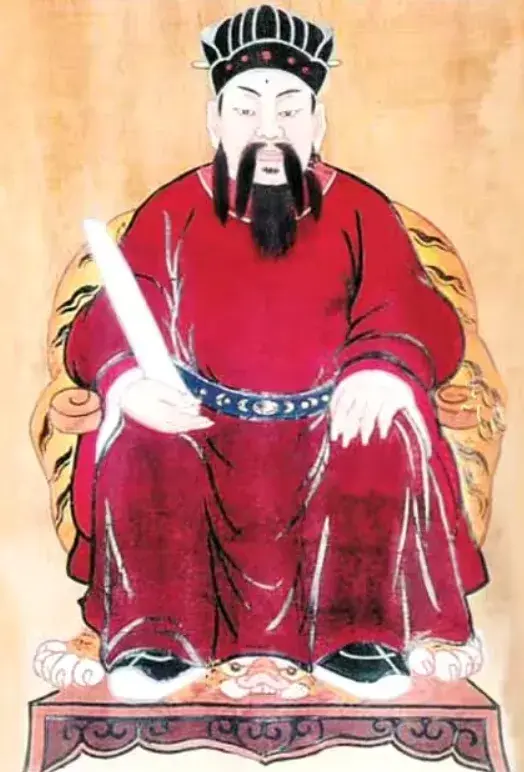
王潮
Wang Chao (王潮, 846–898), originally named Wang Shenchao, was an eminent regional military commander of the late Tang Dynasty and the principal founder of the Min State during the Five Dynasties and Ten Kingdoms period. Born in Gushi, Guangzhou, he initially served as a county clerk and was acclaimed alongside his younger brothers Wang Shengui and Wang Shenzhi as the \"Three Dragons of Gushi.\" Amid the turmoil of the late…
Wang Chao (王潮, 846–898), originally named Wang Shenchao, was an eminent regional military commander of the late Tang Dynasty and the principal founder of the Min State during the Five Dynasties and Ten Kingdoms period. Born in Gushi, Guangzhou, he initially served as a county clerk and was acclaimed alongside his younger brothers Wang Shengui and Wang Shenzhi as the \"Three Dragons of Gushi.\" Amid the turmoil of the late Tang peasant rebellions, the brothers marched south into Fujian with Wang Xu's army. When Wang Xu's tyrannical paranoia threatened the army, Wang Chao orchestrated the Nan'an Bamboo Grove Mutiny, capturing Wang Xu and assuming supreme military leadership. In response to petitions from local gentry, Wang Chao captured Quanzhou, executed the oppressive prefect Liao Yanruo, and was appointed Prefect of Quanzhou by the Tang court. He later defeated the rebellious warlord Fan Hui to conquer Fuzhou, pacifying all eight prefectures of Fujian. Emperor Zhaozong created the Weiwu Military Commission, appointing Wang Chao as Military Commissioner and Acting Situ. Wang Chao fostered agriculture, reduced taxes, established public academies, and brought lasting stability to Fujian. On his deathbed, he broke dynastic inheritance norms to transmit power to his capable younger brother Wang Shenzhi, securing the foundation for five decades of peace under the Min regime.
Born in Gushi, Guangzhou; served as a county clerk and was praised alongside his brothers as the \"Three Dragons of Gushi.\"
Joined Wang Xu's rebel forces in Guang Prefecture, serving as army quartermaster while marching south across Jiangxi and into Fujian.
Overthrew the suspicious and tyrannical Wang Xu in Nan'an; chosen by the soldiers as supreme commander of the army.
Besieged and captured Quanzhou, executing the corrupt prefect Liao Yanruo; appointed Prefect of Quanzhou.
Dispatched his brother Wang Shenzhi to capture Fuzhou, defeating Fan Hui and bringing all eight prefectures of Fujian under his administration.
Emperor Zhaozong established the Weiwu Military Commission, appointing Wang Chao as Military Commissioner and Acting Situ.
Passed away in Fuzhou at age fifty-two, transmitting authority to Wang Shenzhi; posthumously honored as Sikong by the Tang court.
Wang Chao was born in Gushi County in Guang Prefecture. The Wang lineage had settled in Gushi for generations; his fifth-generation ancestor Wang Ye had served as magistrate of Gushi, after which the family prospered through agriculture. In his early years, Wang Chao served as a county clerk. He was thoroughly versed in administrative governance and military strategy, possessing a steady, courageous temperament and commanding presence. He maintained close fraternal devotion with his younger brothers Wang Shengui and Wang Shenzhi, and the trio was celebrated by local villagers as the \"Three Dragons of Gushi.\"
In 881 (Zhonghe 1), rebel leader Wang Xu and his brother-in-law Liu Xingquan captured Shouzhou and Guangzhou. Recognizing Wang Chao's administrative competence and local popularity, Wang Xu enlisted the Wang brothers, appointing Wang Chao as army quartermaster in charge of provisions. Soon after, Qin Zongquan, Military Commissioner of Fengguo, extorted heavy military taxes. Fearing retribution, Wang Xu forced over five thousand soldiers, officials, and civilians to cross the Yangtze River in 885, marching through Jiangxi and traversing the Dayu Mountains into Tingzhou and Zhangzhou in Fujian.
During the exhausting march through rugged mountains, acute food shortages developed. The suspicious Wang Xu issued draconian orders prohibiting soldiers from taking elderly relatives or infants, decreeing immediate execution for violators. When Wang Chao and his brothers accompanied their elderly mother, Lady Dong, Wang Xu ordered her execution. The brothers shielded their mother and declared they would die before her. Deeply moved, the army officers pleaded for mercy, compelling Wang Xu to relent. Nevertheless, Wang Xu's paranoia intensified, leading him to execute capable lieutenants such as Liu Xingquan, casting the ranks into universal panic.
When the expedition reached Nan'an County near Quanzhou, Wang Chao covertly coordinated with the vanguard commanders and planned an ambush in a dense bamboo forest. As Wang Xu rode past, dozens of concealed warriors seized him, earning widespread rejoicing throughout the army. The assembly acclaimed Wang Chao as supreme commander. Assuming leadership, Wang disciplined the troops, maintained strict military conduct, and proclaimed his loyalty to the Tang court.
At that time, the Prefect of Quanzhou, Liao Yanruo, ruled tyrannically. Hearing of Wang Chao's disciplined governance, local gentry led by Zhang Yanlu met him with offerings, imploring him to liberate Quanzhou. In the eighth month of 885, Wang Chao initiated a siege of Quanzhou. Liao Yanruo offered stubborn resistance. Wang Chao fortified his encirclement for a year, during which he also crushed the bandit leader Xue Yun. In the eighth month of 886, Wang's troops stormed Quanzhou and executed Liao Yanruo. Recognizing his popular legitimacy, Surveillance Commissioner Chen Yan memorialized the court to appoint Wang Chao as Prefect of Quanzhou.
Assuming office, Wang Chao undertook comprehensive rehabilitation. He constructed the inner city of Quanzhou, opened commercial markets, and prohibited troops from mistreating commoners. For displaced northern refugees, he distributed uncultivated land, seeds, and farm implements, granting a three-year tax exemption. He established four official academies and engaged learned scholars from the north to teach local youth, revitalizing culture and securing widespread public devotion.
In 891 (Dashun 2), Surveillance Commissioner Chen Yan became gravely ill. Highly esteeming Wang Chao's virtue and ability, Chen dispatched envoys requesting Wang to assume provincial governance. However, after Chen's death, his brother-in-law Fan Hui illegally claimed the position and mobilized troops against Wang Chao. In the second month of 892, Wang Chao dispatched his younger brothers Wang Shenzhi as vanguard and Wang Shengui as rear guard to besiege Fuzhou.
Fan Hui resisted obstinately behind formidable fortifications and sought reinforcement from Dong Chang in eastern Zhejiang. Dong sent five thousand troops under Jiang Gui, but Wang Chao deployed cavalry to ambush and rout the relieving force. As the siege stretched over a year and rations dwindled, Wang Shenzhi proposed retreat; Wang Chao sternly admonished him, insisted on continuing the siege, and personally visited the frontline trenches to distribute supplies. In the fifth month of 893, Fuzhou ran out of food. Fan Hui fled by boat and was slain by his own subordinates. Wang Chao entered Fuzhou in triumph, strictly forbidding looting and according Chen Yan a solemn burial. Wang subsequently subdued Jianzhou, Jianzhou, Tingzhou, and Zhangzhou, ending decades of regional division in Fujian.
Having unified all of Fujian, Wang Chao dispatched envoys to submit tribute to the Tang court. In 896 (Qianning 3), Emperor Zhaozong upgraded Fujian to the Weiwu Military Commission, appointing Wang Chao as Military Commissioner and Acting Situ. In this capacity, Wang Chao implemented benevolent policies to foster post-war recovery.
In early 898 (Qianning 4), worn down by years of arduous campaigns, Wang Chao fell critically ill in the government offices at Fuzhou. Recognizing the collapse of the Tang central government, Wang realized that naming an inexperienced son would ignite succession warfare. Seeing that his younger brother Wang Shenzhi was exceptionally prudent and beloved by the army, Wang Chao broke the traditional hereditary convention and entrusted the military seals to Wang Shenzhi. On January 2, 898 (Qianning 4, 12th month, 6th day), Wang Chao passed away at age fifty-two. Emperor Zhaozong mourned his death and posthumously granted the title of Sikong. Wang Shenzhi faithfully preserved his brother's vision, laying the foundation for fifty years of peace and prosperity in the Min Kingdom.
Following the An Lushan and Huang Chao rebellions, Fujian was geographically isolated, fractured among competing warlords, and infested with bandits. Entering as an outsider, Wang Chao demonstrated extraordinary military acumen and political skill. Basing himself in Quanzhou, he conducted a decade of disciplined campaigns to dismantle warlord enclaves, welding Fuzhou, Jianzhou, Quanzhou, Zhangzhou, Tingzhou, and Jianzhou into an integrated political realm. The imperial establishment of the Weiwu Military Commission liberated Fujian from external regional interference, establishing the territorial and administrative prototype of the independent Min State and the modern province.
Wang Chao understood that enduring authority rested upon the welfare of the people. In administrative affairs, he prosecuted corrupt subordinates and recruited local talent. In economics, he balanced labor service, lowered agricultural land taxes, and organized northern refugees to reclaim mountain terrain and construct sea dykes and irrigation canals, greatly enhancing agricultural output and maritime trade along the southeastern coast. In cultural life, he founded public academies in Fuzhou and Quanzhou, inviting northern scholars to educate regional students. His policies transformed Fujian into a peaceful haven during late Tang chaos, prompting later historians to observe that the Wang brothers truly brought civilization and literacy to Fujian.
FIGURES ASSOCIATED WITH THIS DYNASTY