Birth in the North
Born in the Wanyan tribe along the Anchuhu River as the fifth son of Wanyan Aguda
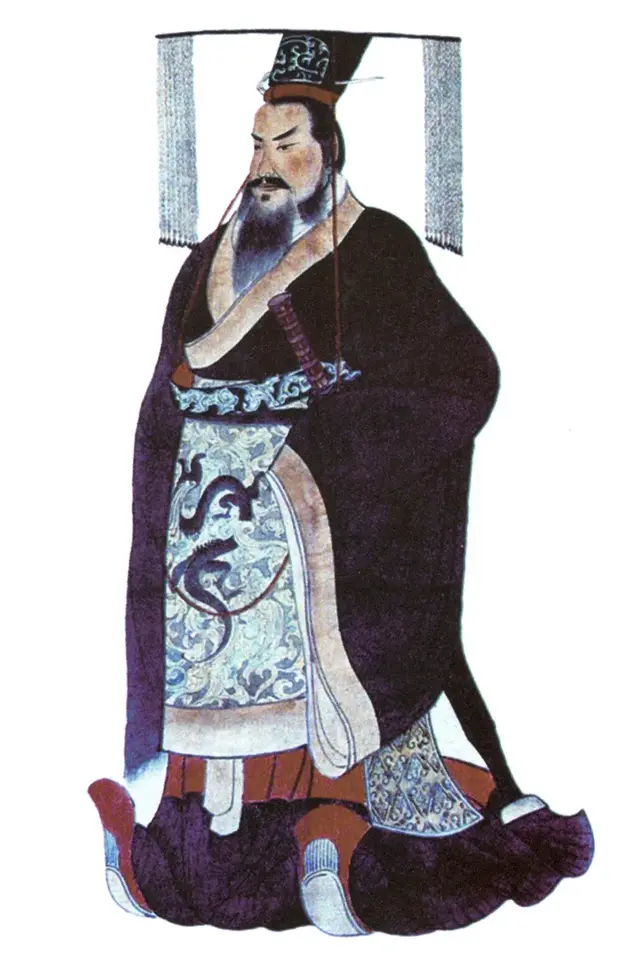
?–1135 CE
完颜宗辅
Wanyan Zongfu (1096–1135), original Jurchen name Elidu, was the fifth son of Emperor Taizu (Wanyan Aguda) and Empress Xuanxian (Lady Pusan), the father of Emperor Shizong (Wanyan Yong), and a preeminent imperial prince and military commander during the founding era of the Jin Dynasty. Wanyan Zongfu possessed an imposing, dignified physique that naturally inspired reverence, while displaying a forgiving temperament,…
Wanyan Zongfu (1096–1135), original Jurchen name Elidu, was the fifth son of Emperor Taizu (Wanyan Aguda) and Empress Xuanxian (Lady Pusan), the father of Emperor Shizong (Wanyan Yong), and a preeminent imperial prince and military commander during the founding era of the Jin Dynasty. Wanyan Zongfu possessed an imposing, dignified physique that naturally inspired reverence, while displaying a forgiving temperament, generosity, and steadfast integrity. During Emperor Taizu's sweeping campaigns across northern China, while other imperial sons directly led combat divisions on the front lines, Zongfu remained in the imperial headquarters assisting in strategic planning and civil arbitrations. Following the demise of his elder brother Wanyan Zongwang in 1127, Zongfu assumed command as Right Vice Commander-in-Chief stationed in Yanjing. He led armies southward to pacify Zizhou and Qingzhou, routed twenty thousand Song troops led by Ma Kuo at the Battle of Le'an, and conquered Huazhou, Kaide, and Daming, thoroughly securing the Hebei region for the Jin realm. In 1130, Emperor Taizong commissioned Wanyan Zongfu as supreme field marshal for the western offensive against the Southern Song in Shaanxi. At the decisive Battle of Fuping, Zongfu orchestrated a masterly pincer assault with Wanyan Loushi commanding the left wing and Wanyan Zongbi commanding the right wing, routing the massive 180,000-man army of Song commissioner Zhang Jun across six brutal engagements in a single day. Capitalizing on this victory, he swept through the Guanzhong basin and brought all five Shaanxi circuits under Jin dominion. Returning victorious to the capital, Zongfu staunchly advocated the installation of Emperor Taizu's legitimate eldest grandson Wanyan Dan (Emperor Xizong) as heir apparent, safeguarding political stability. In 1135, he died of illness at Guizhou while accompanying the imperial entourage at the age of forty. Following the accession of his son Emperor Shizong, he was posthumously revered as Emperor Ruizong.
Born in the Wanyan tribe along the Anchuhu River as the fifth son of Wanyan Aguda
Assisted in imperial headquarters and collaborated with Wugunai to suppress the rebellion of An Fuge at Huanglong
Appointed Right Vice Commander-in-Chief after Zongwang's death, garrisoned Yanjing, and pacified Zizhou and Qingzhou
Crushed Ma Kuo's twenty-thousand-strong army at Le'an, took Huazhou, Kaide, and Daming, securing the Hebei plain
Commanded western armies to crush Zhang Jun's 180,000 Song troops at Fuping, pacifying the five Shaanxi circuits
Returned to court, championed Wanyan Dan as imperial heir apparent (Anban Bojilie), promoted to Left Vice Commander
Accompanied the imperial procession, fell ill and died at Guizhou at age forty, posthumously created Prince of Lu, and later revered as Emperor Ruizong in 1161.
Wanyan Zongfu was born in 1096 (the second year of the Shoulong era of Liao), the fifth son of the Jurchen chieftain Wanyan Aguda (later Emperor Taizu of Jin), born to Empress Xuanxian of the Pusan clan. Endowed with a tall, majestic bearing and solemn countenance, Zongfu commanded immediate respect; yet in personal conduct he was exceptionally gentle, generous, and renowned for honesty. During the formative years of the Jin state when Jurchen forces overran the Liao Empire, most of Aguda's sons served as frontline combat commanders. Zongfu, possessing a prudent and balanced temperament, remained by his father's side in the imperial command pavilion, participating in core strategic deliberations.
In 1122 (the sixth year of the Tianfu era), while Emperor Taizu conducted operations on the northern frontier, newly submitted populations under An Fuge incited a revolt in Huanglong Prefecture. Zongfu was assigned alongside veteran commander Wugunai to suppress the uprising, quickly crushing the insurrection and securing the rear areas. Later, when Southern Route Commander Gushida was implicated in corruption, Emperor Taizu dispatched Zongfu to conduct the investigation; Zongfu investigated with rigorous impartiality, earning universal acclaim across civilian and military ranks for fairness.
In 1127 (the fifth year of the Tianhui era), following the untimely death of Right Vice Commander-in-Chief Wanyan Zongwang, the Jin court appointed Zongfu to assume command over his late brother's armies and entrusted him with the strategic defense of Yanjing. In November of that year, as Jin forces advanced across multiple avenues into Central Plains territories, Zongfu marched his army south from Hejian, swiftly subduing Zizhou and Qingzhou.
In January 1128, Song general Ma Kuo mobilized remnant Song units numbering two hundred thousand men and concentrated at Le'an, attempting to cut off Jin supply and retreat routes. Zongfu personally took the field and launched an all-out offensive with elite Jurchen heavy cavalry, completely shattering Ma Kuo's formations and capturing vast quantities of provisions. Recognizing the advent of the spring farming season, Zongfu posted garrison forces to farm along both banks of the Yellow River while redeploying the main striking force into Shanxi. In February, he resumed operations, capturing Huazhou, seizing Kaide Prefecture, and overrunning Daming Prefecture, capturing Song generals Zongjun and Song Zhong. This campaign eradicated active Song resistance north of the Yellow River, firmly consolidating Hebei under Jin administrative rule.
With Hebei firmly secured, the Jin leadership redirected its strategic focus toward the western theater of Shaanxi and Sichuan, where Song commissioner Zhang Jun had assembled powerful field armies from five circuits. Seeking to permanently neutralize this western threat, Emperor Taizong issued an imperial edict placing Wanyan Zongfu in supreme command of the Shaanxi expedition.
In 1130 (the eighth year of the Tianhui era), Zongfu assembled and drilled his expeditionary forces along the Luo River. Zhang Jun concentrated sixty thousand cavalry and one hundred twenty thousand infantry in fortified encampments across the low-lying marshes of Fuping. Despite facing overwhelming numerical superiority, Zongfu devised a combined tactical encirclement: veteran commander Wanyan Loushi was assigned to smash through the Song lines as the left-wing vanguard, while Wanyan Zongbi (Jin Wuzhu) directed the right wing. During the pitched battle, Loushi plunged across muddy marshes into the Song center, throwing their vanguard into chaos, while Zongbi's cavalry closed the trap. Over six fierce clashes between midday and dusk, the Song army suffered a catastrophic collapse, losing thousands of elite troops.
The victory at Fuping shattered Southern Song defense in the northwest. Zongfu drove forward without respite: Yaozhou and Fengxiang surrendered, while Jin units took Jingzhou and Weizhou. After routing Song commissioner Liu Ni at Wating and taking Yuanzhou, Zongfu captured Baochuan fortress and forced the capitulation of Xizhou. He dispatched column commanders Alubu and Shoubi to accept the submission of eight western prefectures—Gongzhou, Taozhou, Hezhou, Lezhou, Xining, Lanzhou, Kuozhou, and Jishi—along with over forty strategic mountain outposts. Zongfu detached six thousand elite cavalry under general Salihe to garrison strategic mountain passes, successfully bringing the five Shaanxi circuits under Jin control before leading his triumphant army back to the capital.
In 1132 (the tenth year of the Tianhui era), following his triumphs in Shaanxi, Zongfu returned to the capital. With Emperor Taizong aging, succession disputes loomed large among imperial princes. In council with senior statesman Wanyan Zonghan, Zongfu decisively insisted on observing ancestral legitimacy by naming Emperor Taizu's eldest grandson Wanyan Dan (later Emperor Xizong) as Anban Bojilie (imperial crown prince), defusing factional strife and cementing institutional continuity. For his statesmanship and military feats, he was promoted to Left Vice Commander-in-Chief.
In 1135 (the thirteenth year of the Tianhui era), following Emperor Xizong's enthronement, Zongfu accompanied the imperial entourage on an imperial tour. While encamped at Guizhou (present-day Huailai, Hebei), he suddenly fell gravely ill and passed away at the age of forty. Mourning his loss, the court interred him at the Ruiling Mausoleum, posthumously ennobling him as Prince of Lu with the posthumous title Xiangmu. In 1146, he was promoted to Prince of Ji. In 1157, Prince Hailing posthumously conferred upon him the ranks of Grand Preceptor and Pillar of State, creating him Prince of Xu and Prince of Bin. In 1161, his second son Wanyan Yong took the throne as Emperor Shizong and posthumously elevated him to Emperor Ruizong Wenwu Jiansu, reinterring him in the grand Jingling Mausoleum at Mount Dafang.
The Battle of Fuping in 1130 was the largest clash between Jin and Song armies in the northwest. Confronting Zhang Jun's entrenched army of 180,000, Wanyan Zongfu rejected a conventional frontal assault, designing a coordinated pincer maneuver that maximized the shock value of Jurchen heavy cavalry. Entrusting the aggressive left-wing breakthrough to Wanyan Loushi and coordinating with Wanyan Zongbi on the right, Zongfu personally held the tactical center and reserve. When the fighting stalemated in marshy terrain, Zongfu maintained strict cohesion across all wings, executing successive cavalry penetrations that shattered the Song command hub. This operation remains a classic case of operational coordination in early Jin military history.
Upon overrunning the five Shaanxi circuits, Wanyan Zongfu instituted a balanced policy combining military pacification with civic reconciliation. He strictly forbade pillaging and unwarranted slaughter, granting clemency and administrative employment to surrendered Song local officials. He dispatched envoys with tokens of imperial goodwill to pacify border Tibetan and Han communities, winning voluntary submissions from tribal leaders across Qinlong and Xihe. To avoid draining the local economy, he withdrew the main expeditionary force, stationing only six thousand elite horsemen under Salihe to guard critical choke points, allowing the war-torn populace to recover while consolidating imperial rule.
FIGURES ASSOCIATED WITH THIS DYNASTY