Birth in the North
Born into the imperial Wanyan clan along the Anchuhu River, with the native Jurchen name An
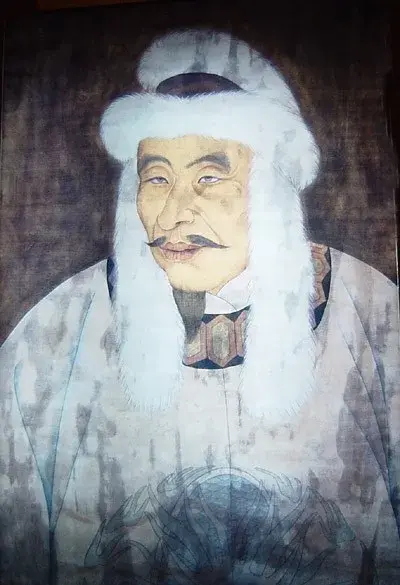
1140 CE–1202 CE
完颜襄
Wanyan Xiang (1140–1202), original Jurchen name An, was a fifth-generation descendant of the Jin ancestral patriarch Wanyan Shilu, grandson of Eastern Capital Defender Wanyan Shigunai, and son of Assistant Administrator Wanyan Arudai, serving as a renowned military general, chancellor, and regent of the mid-Jin Dynasty. From early youth, Wanyan Xiang exhibited elevated moral character, exceptional mastery of equestrian…
Wanyan Xiang (1140–1202), original Jurchen name An, was a fifth-generation descendant of the Jin ancestral patriarch Wanyan Shilu, grandson of Eastern Capital Defender Wanyan Shigunai, and son of Assistant Administrator Wanyan Arudai, serving as a renowned military general, chancellor, and regent of the mid-Jin Dynasty. From early youth, Wanyan Xiang exhibited elevated moral character, exceptional mastery of equestrian archery, and audacious tactical cunning. At the age of eighteen, he inherited his family's hereditary meng'an chieftainship. During the early Dading era, when Khitan leader Yila Wowan rebelled, Wanyan Xiang spearheaded assaults at Changluo, the Mengsong River, and Xianquan, fighting while wounded and being adjudged the top warrior in merit, winning appointment as Defense Commissioner of Bozhou at only twenty-three. In the Huainan campaigns against Southern Song, he crossed the Ying River to recapture Yingzhou and capture Song general Yang Si, seized Qingjianshan at Haozhou to capture Commander Guo, and mounted a daring mountain infiltration to seize the impregnable Qingliu Pass, prompting Left Prime Minister Heshelie Zhining on his deathbed to acclaim Xiang as an incomparable genius whose capabilities surpassed his own. Wanyan Xiang advanced through prestigious posts including Military Commissioner of Henan, Minister of Personnel, Palace Guard Commander, and Censor-in-Chief, winning Emperor Shizong's deep admiration for diligence and administrative prudence, subsequently ascending to Right Grand Councilor, Left Grand Councilor, Manager of Governmental Affairs, and Right Prime Minister. On Emperor Shizong's deathbed, Xiang received the dynastic testament alongside Tudan Kening and Zhang Rulin, smoothly overseeing the succession of Emperor Zhangzong. During the northern nomadic frontier crisis in late Mingchang, he was entrusted with the golden imperial talisman to direct regional campaigns from Linhuang; his forced march relieved the besieged eastern army at the Longju River, broke the Beizuxu and Tatar confederations, and carved his victory inscription onto the Nine Peaks cliff face, winning promotion to Left Prime Minister and Prince of Changshan Commandery. In his later years stationed at Beijing, he stabilized grain prices, relieved famine, and demobilized forty thousand garrison troops to alleviate agrarian burdens. Promoted to Minister of Works (Sikong), he passed away in 1202 at sixty-three, posthumously honored as Wuzhao and granted ancestral temple accompaniment under Emperor Zhangzong.
Born into the imperial Wanyan clan along the Anchuhu River, with the native Jurchen name An
Inherited his clan's hereditary meng'an battalion rank at the age of eighteen
Campaigned against Yila Wowan under Wanyan Mouyan; wounded in the foot but persevered to win seven battles
Pursued rebels to Xianquan under Pusan Zhongyi, shattered enemy ranks, and was appointed Defense Commissioner of Bozhou
Recaptured Yingzhou, captured Song general Yang Si and Commander Guo, and infiltrated to capture Qingliu Pass
Heshelie Zhining recommended him on his deathbed; summoned to the capital and dispatched as ambassador to Southern Song
Served as Military Commissioner of Shaanxi and Henan, Minister of Personnel, and Censor-in-Chief before appointment as Vice Grand Councilor
Promoted to Manager of Governmental Affairs and created Duke of Xiao, earning Emperor Shizong's deepest reliance
Appointed Right Prime Minister and created Duke of Dai, reaching the pinnacle of civil governance
Received Emperor Shizong's deathbed testament alongside Tudan Kening; assisted Emperor Zhangzong's succession
Succeeded Jiagu Qingchen to direct the northern expedition from Linhuang with full plenipotentiary authority
Relieved the eastern army and smashed Tatar forces at the Longju River; promoted to Left Prime Minister and Prince of Changshan
Reassigned as Left Vice Commander; stabilized grain prices in Beijing and demobilized forty thousand garrison troops
Elevated to Minister of Works (Sikong); died of illness at sixty-three, posthumously named Wuzhao
Wanyan Xiang was born in 1140 (the third year of the Tianjuan era), named An in the Jurchen tongue, descending from Jin ancestral chieftain Wanyan Shilu. His grandfather Wanyan Shigunai had assisted Emperor Taizu in the conquest of Liao, holding the hereditary meng'an rank of the Supreme Capital and serving as Defender of the Eastern Capital; his father Wanyan Arudai distinguished himself in northern campaigns during the early Huangtong era and rose to Assistant Administrator of the Secretariat. From an early age, Wanyan Xiang displayed lofty personal aspirations, quiet composure, and formidable skill in equestrian archery combined with deep tactical cunning. In 1158 (the third year of the Zhenglong era), at eighteen, he inherited his father's hereditary meng'an command.
In 1161, Khitan rebels led by Yila Wowan rose in broad revolt in the Northwest Route. Emperor Shizong ordered Left Vice Marshal Wanyan Mouyan to suppress the insurrection, and Wanyan Xiang led his tribal regiment in the vanguard. During the Battle of Changluo in Zhaozhou, Wanyan Xiang fought at the head of his men, and although struck in the foot by a stray arrow, he bandaged the wound and continued fighting with heightened fervor, triumphing across seven consecutive engagements. When the Khitan rebels retreated across the Mengsong River and set the dry prairie grass ablaze to halt pursuit, Wanyan Xiang executed a counter-burn tactic, standing with his troops upon the scorched clearing before launching a ferocious frontal charge that crushed the enemy and yielded ten thousand prisoners.
Later, when Emperor Shizong appointed Pusan Zhongyi as supreme commander, Wanyan Xiang pursued the rebel remnants to Xianquan west of Niaoling. Sighting the rebel main force, Wanyan Xiang personally charged at the head of the right wing, precipitating a general rout among the insurgent formations. Yila Wowan escaped with merely dozens of horsemen before being captured. In the court's overall performance assessment, Wanyan Xiang's exploits were judged the foremost in the empire, earning him promotion to Defense Commissioner of Bozhou at the age of twenty-three.
In 1163, during the Longxing Northern Expedition of Southern Song, Wanyan Xiang was appointed Commander of Yingzhou and Shouzhou. Leading two thousand armored shock troops across the Ying River, he clashed head-on with a five-thousand-strong Song army, annihilating their formations, recapturing Yingzhou, and capturing Song commander Yang Si alive. Continuing the advance to Haozhou, Song general Commander Guo retreated to the crags of Qingjianshan. Wanyan Xiang led an uphill assault; though struck in the knee by a concealed crossbow quarrel, he pressed the attack with redoubled urgency, storming the mountain peak and capturing Commander Guo.
Advancing toward Chuzhou, Wanyan Xiang's vanguard scouts captured enemy pickets before Qingliu Pass, discovering that the Song defenders intended to stage a three-pronged night ambush. Consulting with Left Vice Marshal Heshelie Zhining, Wanyan Xiang argued that given the rugged terrain and limited manpower, seizing the strategic pass immediately was vital to avoid tactical catastrophe, volunteering to lead the surprise assault himself. Dividing his two thousand horsemen, he directed one contingent to advance openly along the main valley to divert attention, while personally leading one thousand elite dismounted troopers along hazardous precipices to infiltrate the pass from behind. Falling upon the garrison before the alarm could be sounded, Xiang secured the mountain fortress. Inspecting the captured defile, Heshelie Zhining grasped his hand and exclaimed: "To defeat the enemy in impassable terrain—truly, you are an extraordinary hero of the realm!"
Following the conclusion of the Song-Jin peace treaty, Wanyan Xiang returned to the imperial capital, holding posts as Palace Bodyguard Commander and Left Palace Guard General, before serving as Northwest Pacification Commissioner, Supin Jiedushi, and Helan Military Commander.
In 1172 (the twelfth year of the Dading era), Left Prime Minister Heshelie Zhining fell mortally ill. When Emperor Shizong visited his bedside, Zhining urgently recommended Wanyan Xiang: "Xiang combines tactical genius with bravery, possessing supreme statecraft that none can match; in future high office, his accomplishments will surpass my own." Moved by this dying assessment, Emperor Shizong summoned Xiang to court as Left Associate Palace Guard Commander and appointed him chief envoy for the Southern Song Emperor's birthday mission. When the Song court sought to dispense with the ritual of personally receiving the imperial credentials, Xiang stood resolutely upon dynastic protocol, refusing all compromises until full ceremonial dignity was observed.
Subsequently, Wanyan Xiang served as Military Commissioner of Shaanxi Route and Henan Route, pacifying border administration. Summoned back to court, he served as Minister of Personnel and Palace Guard Commander, receiving imperial gifts of ten million copper coins. Emperor Shizong praised him before the grand councilors for his modest gravity and unswerving diligence, noting that even off-duty he attended the palace to coordinate state affairs until all tasks were properly assigned. In 1178, he was promoted to Censor-in-Chief, followed swiftly by Right Vice Grand Councilor and Left Vice Grand Councilor. In 1183, he became Manager of Governmental Affairs and Duke of Xiao. In 1188, he reached the pinnacle of ministerial rank as Right Prime Minister, advanced to Duke of Dai.
In 1189 (the twenty-ninth year of the Dading era), as Emperor Shizong lay dying, Wanyan Xiang, Grand Preceptor Tudan Kening, and Manager of Governmental Affairs Zhang Rulin guarded the inner halls, jointly receiving the imperial deathbed testament and ensuring the smooth accession of Emperor Zhangzong (Wanyan Jing). In the early reign of Zhangzong, Wanyan Xiang memorialized to emancipate Buddhist and Daoist bonded serfs (er shui hu) into free commoners, eliminating fiscal evasion and equalizing corvee burdens. In 1190, following factional slander from border officials, Xiang tactfully withdrew from court, serving as Prefect of Pingyang, Prefect of Fengxiang, and Defender of Datong. In 1193, he was recalled as Associate Governor of the Imperial Clan Court, Director of the Bureau of Military Affairs, and reinstated as Right Prime Minister, ennobled as Duke of Ren.
In 1195 (the sixth year of the Mingchang era), Left Prime Minister Jiagu Qingchen bungled the northern border defense, provoking an extensive tribal insurrection. Emperor Zhangzong bestowed an imperial golden talisman granting plenipotentiary authority upon Wanyan Xiang, commissioning him to direct regional affairs from Linhuang. In 1196, Xiang deployed a flanking force along the eastern avenue while personally leading the western column. When the eastern column was surrounded along the Longju River (Kerulen River) for three days, Wanyan Xiang executed a rapid forced cavalry relief, breaking through the tribal perimeter from the flank and routing the combined forces of the Beizuxu and Tatar confederations. Pursuing the retreating remnants to the Ulz River (Wolizha He), his forces captured immense livestock and supplies, carving a commemorative victory inscription upon the cliff face of Nine Peaks (Jiufeng). In September, he was elevated to Left Prime Minister and created Prince of Changshan Commandery. Stationed in Beijing that winter, he smoothly suppressed the Khitan revolts of Deshou and Tuosuo through composed diplomacy and military vigilance.
In 1197 (the second year of the Cheng'an era), Tatar tribes mutinied again. Emperor Zhangzong once more appointed Wanyan Xiang as Left Vice Commander and Director of the Bureau of Military Affairs stationed at Beijing. Confronting severe regional drought and spiraling grain prices, Xiang immediately opened state granaries to sell grain at subsidized prices, punishing hoarders and sustaining hundreds of thousands of starving refugees. Realizing that the permanent garrisoning of massive armies at Linhuang depleted agrarian resources, he petitioned successfully to demobilize forty thousand garrison troops and decommission twenty thousand war horses, greatly alleviating civilian supply burdens.
Returning to court, Wanyan Xiang submitted his Ten Critical Measures for Frontier Defense, all of which were implemented by the emperor. When Emperor Zhangzong considered creating sinecure offices for retired elders akin to Song dynasty temple protectors, Xiang firmly argued that honorable retirement was far preferable to clinging to stipends in idle sinecures, preserving official dignity. In 1202 (the second year of the Taihe era), Wanyan Xiang was elevated to the supreme rank of Minister of Works (Sikong), dying of exhaustion in the same year at the age of sixty-three. Emperor Zhangzong deeply mourned his passing, conferring the posthumous title Wuzhao. In 1209, his spirit tablet was granted ancestral accompaniment in Emperor Zhangzong's imperial temple.
From his youth, Wanyan Xiang was renowned for remarkable battlefield audacity. At the Battle of Xianquan in 1162, when Yila Wowan's Khitan forces fought with desperate tenacity, Xiang personally spearheaded the right-wing cavalry breakthrough, turning the tide of battle. At the Battle of Qingliu Pass in 1163, confronted by narrow mountain defiles and impending Song ambushes, he volunteered to lead the assault, mounting a daring nocturnal cliff-scaling maneuver that seized the pass from the rear before the defenders could organize. These tactical masterpieces established his enduring reputation as one of the most brilliant assault commanders of his era.
The Battle of the Longju River in 1196 was the decisive northern frontier campaign of the mid-Jin period. When the isolated eastern column faced annihilation, Wanyan Xiang abandoned standard cautious marching schedules, driving his cavalry through day and night in a lightning relief assault. Striking the tribal siege lines like a bolt from the blue, he smashed the enemy formations in a coordinated pincer, pursuing them across vast steppes to the Ulz River and stabilizing the northern frontier for decades. Carving his achievements on the Nine Peaks cliff face, he recorded one of the most celebrated military triumphs in Jin martial annals.
Beyond his military laurels, Wanyan Xiang distinguished himself through profound economic foresight. While governing Beijing and the northern circuits, he recognized the devastating toll that endless military mobilizations inflicted upon agrarian stability. During famines, he decisively deployed state reserves to suppress speculation and sustain the populace; in military logistics, he boldly demobilized forty thousand garrison troops and twenty thousand cavalry mounts, providing crucial economic breathing space for Hebei and northern border populations.
FIGURES ASSOCIATED WITH THIS DYNASTY