Royal Birth
Born into the Jurchen imperial clan, eldest son of Wanyan Yongji, ennobled as Prince of Liang.
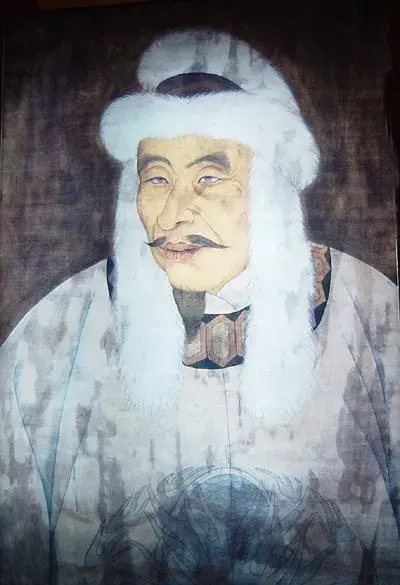
完颜从恪
Wanyan Congke (完颜从恪, ?–April 1233), of the Jurchen Wanyan clan, ancestral native of Huining Prefecture (modern Acheng, Harbin, Heilongjiang Province), was an imperial prince and Crown Prince of the Jurchen Jin dynasty. He was the eldest son of Emperor Weishaowang (Wanyan Yongji) and Empress Qinsheng (née Yuan). Initially ennobled as Prince of Liang, he was noted for his cautious modesty, gentle temper, and adherence to…
Wanyan Congke (完颜从恪, ?–April 1233), of the Jurchen Wanyan clan, ancestral native of Huining Prefecture (modern Acheng, Harbin, Heilongjiang Province), was an imperial prince and Crown Prince of the Jurchen Jin dynasty. He was the eldest son of Emperor Weishaowang (Wanyan Yongji) and Empress Qinsheng (née Yuan). Initially ennobled as Prince of Liang, he was noted for his cautious modesty, gentle temper, and adherence to Confucian rites. In November 1208, following the childless demise of Emperor Zhangzong, his uncle Prince of Wei Wanyan Yongji succeeded to the imperial throne as Emperor Weishaowang. In January 1209, during the first year of the Da'an era, Weishaowang formally designated his eldest son Wanyan Congke as Crown Prince, awarding him the title Commander Unequalled in Honor and appointing him Controller of the Bureau of Military Affairs. However, as Genghis Khan's Mongol armies launched their devastating southward invasion, violent political intrigue erupted in the capital of Zhongdu. In August 1213, general Heshahu (Wanyan Heshilie Zhizhong) executed a palace coup, murdered Weishaowang, and enthroned Wanyan Xun as Emperor Xuanzong. Upon taking power, Emperor Xuanzong abolished Wanyan Congke's crown prince status, demoting him to Prince of Zheng and stripping him of all military command. When the Jin dynasty relocated its capital south to Bianjing (modern Kaifeng, Henan), Wanyan Congke accompanied the court and was placed under strict house arrest for two decades. In the spring of 1233, as Mongol armies encircled Bianjing and Emperor Aizong fled to Guide, regional commander Cui Li mutinied and surrendered the city to the Mongols. Seeking to curry favor with his new masters and eliminate imperial pretenders, Cui Li carried out a sweeping massacre of the Jin royal house, slaying Wanyan Congke alongside the surviving princes of Weishaowang's line.
Born into the Jurchen imperial clan, eldest son of Wanyan Yongji, ennobled as Prince of Liang.
Zhangzong passed away without heirs; Prince of Wei Wanyan Yongji was enthroned as Emperor Weishaowang.
Formally installed as Crown Prince in the first month, receiving military and administrative commissions.
Mongol armies crushed Jin forces at Yehuling; the Crown Prince assisted in organizing the defense of Zhongdu.
General Heshahu assassinated Weishaowang; Xuanzong ascended the throne, demoting Congke to Prince of Zheng.
Accompanied the court southward to Kaifeng, living under strict imperial surveillance in his private residence.
Sacked Bianjing commander Cui Li surrendered to the Mongols and purged imperial princes, executing Wanyan Congke.
Wanyan Congke was born in the late twelfth century during the transition of the Jin empire from peak prosperity toward terminal crisis. His grandfather was Emperor Shizong (Wanyan Yong), his father was Shizong's seventh son, Prince of Wei Wanyan Yongji, and his mother was Lady Yuan (Empress Qinsheng). During the reigns of Shizong and Zhangzong, he held the rank of Prince of Liang.
In the winter of 1208, the thirty-nine-year-old Emperor Zhangzong passed away. Because all of his sons had died in infancy and no male heir survived in the inner palace, Bureau of Military Affairs Director Wanyan Kuang and Consort Jia executed the late sovereign's testament, enthroning Prince of Wei Wanyan Yongji as Emperor Weishaowang.
In the first month of 1209, Weishaowang established dynastic succession, formally creating his eldest son Wanyan Congke as Crown Prince. The court held elaborate ceremonies, conferring the rank Commander Unequalled in Honor and charging him with directing the Bureau of Military Affairs. Wanyan Congke was known for earnest compliance and filial piety, yet he was called to the heirship at a moment of existential crisis.
In 1211, Genghis Khan personally led Mongol cavalry south across the desert. At the Battle of Yehuling (modern Wanquan, Hebei), a massive Jin host of four hundred thousand troops was decisively crushed by the Mongols, annihilating the empire's veteran divisions. Mongol detachments rode directly to the walls of Zhongdu (modern Beijing), overrunning northern prefectures. Inside the palace, Weishaowang and Crown Prince Congke looked on in helplessness as the empire's northern frontier disintegrated.
In the autumn of 1213, Mongol columns advanced deep into the Central Plains, severing the outer defenses of Zhongdu. The Right Vice Marshal, Heshahu, garrisoned Dingxing with several tens of thousands of elite soldiers. Facing light Mongol cavalry detachments, Heshahu fled back to Zhongdu in panic. An incensed Weishaowang stripped Heshahu of his command and ordered him to await judicial trial.
Brutal and desperate, Heshahu launched a preemptive palace coup on August 25, 1213. Leading rebellious retainers, he seized the inner palace, placed Weishaowang under confinement, and dispatched a palace eunuch to poison the emperor. Seeking to legitimize his treason, Heshahu dispatched messengers to Zhangde to summon Emperor Shizong's eldest grandson, Wanyan Xun, to the throne as Emperor Xuanzong.
With Xuanzong's coronation, Weishaowang's lineage was systematically suppressed. To secure his own dynastic legitimacy, Xuanzong immediately stripped Wanyan Congke of his crown prince status, demoting him to Prince of Zheng and depriving him of all military and administrative authority. His mother, Empress Qinsheng, was stripped of her empress dowager title, and Weishaowang's descendants were excluded from imperial governance.
In 1214, as Mongol forces encircled Zhongdu, Emperor Xuanzong abandoned the northern capital and fled south to Bianjing (modern Kaifeng, Henan).
Deposed Crown Prince Wanyan Congke joined the imperial exodus to Bianjing. In the southern capital, both Emperor Xuanzong and his successor Emperor Aizong (Wanyan Shouxu) maintained intense surveillance over the former heir. Wanyan Congke was confined to a private residence, watched day and night by garrison sentries. Barred from communicating with civil officials, consort relatives, or commoners, he recognized his perilous standing. He closed his gates, turned away visitors, and spent two decades quietly reading Confucian texts, composing verse, and playing chess to avert imperial suspicion.
However, as the Mongol conquest reached its climax, death arrived inescapable. In 1232, Mongol supreme commander Subutai besieged Bianjing, subjecting the city to a catastrophic famine that led to cannibalism. In December 1232, Emperor Aizong broke out of the encirclement and fled to Guide, leaving the capital's defense to regional commanders.
In January 1233, Western Regional Marshal Cui Li launched a mutiny, seized control of Bianjing, and surrendered to the Mongols. Seeking to curry favor with Subutai and seize the imperial treasury, Cui Li unleashed a ruthless purge against the Jin royal lineage.
In April 1233, rebel soldiers battered down the doors of the Prince of Zheng's residence, dragging out the aged Wanyan Congke. While imperial consorts and other princes were carted north to Mongol encampments, Cui Li executed former Crown Prince Wanyan Congke and his brothers in the capital. The tragic prince, who had lived through investiture, deposition, decades of confinement, and final betrayal, perished alongside the dying Jin dynasty in the ruins of Bianjing.
Enthroned as Crown Prince in 1209 upon his father's accession, he was appointed Commander Unequalled in Honor and Controller of the Bureau of Military Affairs.
Stripped of his crown prince title and demoted to Prince of Zheng following Heshahu's regicide in 1213, he lived under strict house arrest for two decades in Bianjing.
Barred from political office, he maintained quiet isolation, dedicating his years to literature and avoiding court intrigues under Xuanzong and Aizong.
Slain in the purge of imperial clan princes following Cui Li's betrayal of Kaifeng in 1233, his death marked the final tragedy of the Jin royal house.
FIGURES ASSOCIATED WITH THIS DYNASTY