Birth into Imperial Lineage
Born into the Jurchen imperial clan as the great-grandson of Jin Shizu.
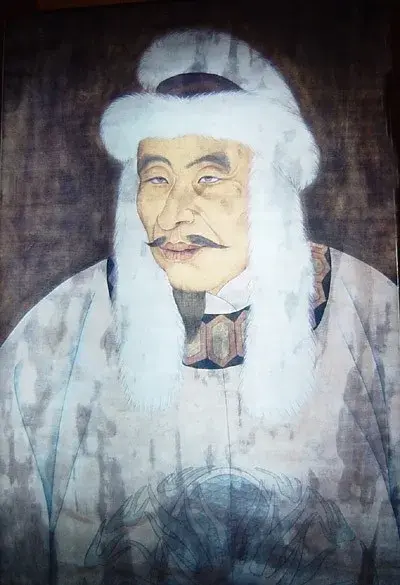
完颜承晖
Wanyan Chenghui (完颜承晖, 1149–1215), original name Fuxing, courtesy name Weiming, was a native of Heshui (modern Acheng District, Harbin, Heilongjiang Province) and an eminent imperial clansman, statesman, and military commander of the Jin dynasty. Great-grandson of Shizu (Wanyan Helibo) and son of Wanyan Zhengjia, Prefect of Yidu, Chenghui studied classical scriptures and histories from youth. Inheriting his father's…
Wanyan Chenghui (完颜承晖, 1149–1215), original name Fuxing, courtesy name Weiming, was a native of Heshui (modern Acheng District, Harbin, Heilongjiang Province) and an eminent imperial clansman, statesman, and military commander of the Jin dynasty. Great-grandson of Shizu (Wanyan Helibo) and son of Wanyan Zhengjia, Prefect of Yidu, Chenghui studied classical scriptures and histories from youth. Inheriting his father's hereditary company commander (mouke) rank, he served across civilian and military posts, including Attendant of the Imperial Insignia, Director of the Palace Attendant Bureau, Assistant Surveillance Commissioner of Dongjing, Governor of Daming, Governor of Daxing, Area Commander of Shandong, Censor-in-Chief, and Vice Grand Chancellor. Throughout his career, Wanyan Chenghui was celebrated for unyielding integrity and upright judicial conduct. Under Emperor Zhangzong, he refused late-night imperial decrees seeking to admit disgraced imperial relatives through palace gates. As Governor of Daxing, he firmly rejected imperial eunuchs attempting to requisition government courtesans and caned influential gentry who bribed court favorites to seize irrigation waters. In Shandong, he successfully stopped a draconian proposal to clear-cut and burn Mount Tai's ancient forests to flush out bandits, safeguarding both regional livelihoods and a cultural monument. During Prince Weishao's reign, he openly denounced corrupt imperial sons-in-law for manipulating administrative affairs. Amid catastrophic Mongol invasions, Chenghui was appointed Right Prime Minister and Commander-in-Chief of All Armies, created Duke of Dingguo. When Emperor Xuanzong fled south to Bianjing (modern Kaifeng), Chenghui was entrusted with the defense of the central capital, Zhongdu (modern Beijing). Besieged by Mongol armies, isolated from external relief, betrayed by mutinous generals, and abandoned by his fleeing deputy, Monian Jinzhong, Chenghui refused to surrender. In May 1215, as the capital walls fell, Chenghui adjusted his official robes, took poison, and ordered his retainers to run him through with a sword, dying a martyr for the state. Deeply shaken, Emperor Xuanzong posthumously created him Prince of Guangping, granted the posthumous name Zhongsu, and decreed his tablet be enshrined in the imperial ancestral temple.
Born into the Jurchen imperial clan as the great-grandson of Jin Shizu.
Inherits his father's company commander rank, entering government as Attendant of the Imperial Insignia.
Selected as Rectifier of Conduct to serve Grand Imperial Grandson Wanyan Jing (later Emperor Zhangzong).
Promoted to Director of the Palace Attendant Bureau; refuses to open palace gates at night for a disgraced imperial in-law.
Serves as Assistant Surveillance Commissioner of Dongjing, earning praise from the Censorate for subduing corrupt elites.
Appointed Area Commander of Shandong; successfully petitions against burning down Mount Tai's forests to flush out bandits.
Serves as Censor-in-Chief and Vice Grand Chancellor; publicly condemns imperial son-in-law Tushan Molie for bribery.
Dismissed from office following the disastrous defeats of Jin armies at Yehuling and Huihebao against Genghis Khan.
Recalled by Emperor Xuanzong as Right Vice Director of the Department of State Affairs, elevated to Duke of Zouguo.
Xuanzong flees south to Bianjing; Chenghui is appointed Right Prime Minister to defend the isolated capital.
When Zhongdu falls to Mongol forces, Chenghui commits suicide by poison and blade at age sixty-seven.
Xuanzong mourns his sacrifice, posthumously granting him the rank of Grand Commandant, title Prince of Guangping, and name Zhongsu.
Wanyan Chenghui was born into the prominent Jurchen royal clan originating from the Heshui region (modern Acheng District, Harbin, Heilongjiang Province). He was the great-grandson of Jin Shizu (Wanyan Helibo), one of the early unifiers of the Jurchen tribes. His father, Wanyan Zhengjia, served as Prefect of Yidu, distinguished by his administrative competence and battlefield achievements. Chenghui's original name was Fuxing, with the courtesy name Weiming. From youth, he displayed a contemplative, resolute character. Unlike many aristocratic Jurchen youths who indulged exclusively in mounted archery and hunting, Chenghui applied himself diligently to Confucian classical canons and dynastic histories, mastering administrative codes and civil governance.
In 1175, during the Dading era of Emperor Shizong, Chenghui inherited his father's hereditary company commander (mouke) rank and was selected as Attendant of the Imperial Insignia, inaugurating his official career. Diligent and meticulous in conduct, he rose steadily through court posts, serving as Inscriber of Ink and Brush, Section Chief of the Palace Attendant Bureau, and Police Commissioner of the Right in Zhongdu. When Grand Imperial Grandson Wanyan Jing was named heir apparent, the imperial court sought scholarly clansmen to instruct the Eastern Palace. Chenghui was appointed Rectifier of Conduct, earning the young prince's profound respect.
Upon ascending the throne in 1189 as Emperor Zhangzong, the sovereign promoted Wanyan Chenghui to Director of the Palace Attendant Bureau. Wuyelan, brother-in-law of Empress Xiaoyi, had previously been dismissed from court by Emperor Shizong for corruption. Recalling their kinship, Zhangzong dispatched late-night orders summoning Wuyelan to enter the palace. On duty that night, Chenghui refused to open the palace gates, declaring: "Wuyelan offended the late Emperor. The statutes cannot be waived, and he must not be granted midnight audiences." The following morning, Chenghui memorialized the throne, prompting Zhangzong to commend his adherence to dynastic law.
Shortly thereafter, the Jin court instituted nine regional surveillance circuits, assigning Chenghui as Assistant Surveillance Commissioner of Dongjing and Xianping. In this post, he eradicated administrative extortion, broke up criminal gangs, and rectified judicial abuses. The Censorate praised his performance, noting that under his jurisdiction, violent and unscrupulous magnates vanished. Later promoted to Surveillance Commissioner of Beijing, Governor of Daming, and Minister of Justice, Chenghui maintained strict impartiality. When Chancellor Tushan Yi attempted to bypass bureaucratic regulations to secure a prestigious eighth-rank metropolitan post for his nephew, Chenghui blocked the appointment, forcing Emperor Zhangzong to reprimand the Chancellor.
While serving as Governor of Daxing, imperial eunuch Li Xinxi attempted to requisition official courtesans for a private banquet. Chenghui denied the request, humiliating the favored eunuch. When a wealthy landowner bribed Left Commissioner of Imperial Entertainments Li Renhui to secure water rights in an agricultural dispute, Li sent intermediaries to influence Chenghui's ruling. Chenghui investigated the facts, caned the corrupt landowner in open court, and remarked to the courier: "You may deliver this flogging as my reply to the Commissioner!"
During the Taihe era, when the Southern Song launched the Kaixi northern expedition, the Jin dynasty mobilized massive armies in counter-offensive operations. Chenghui was appointed Area Commander of Shandong to oversee regional defenses. With warfare spreading, banditry erupted across Shandong, destabilizing society. Chenghui petitioned the throne for reforms in the apprehension of outlaws, granting local commanders authority to execute common rebels swiftly while preserving formal reporting procedures for hereditary commanders, thereby restoring order.
Following the armistice, though major rebel leaders surrendered, stubborn remnants took shelter in the rugged caverns of Mount Tai. The Shandong Surveillance Commission proposed mobilizing tens of thousands of corvee laborers to chop down and incinerate all forests across Mount Tai, stripping the mountainside to deny outlaws concealment. Chenghui opposed this reckless scheme, memorializing: "Mount Tai is the preeminent sacred summit of the Five Sacred Mountains, the sacred altar where emperors perform the Feng and Shan sacrifices to communicate with Heaven. It must never be reduced to a bare hill! Furthermore, the people of Shandong are easily unsettled; driving tens of thousands into the wilderness to destroy forests will leave them destitute, breeding further rebellion rather than quelling it. The empire holds countless mountains; shall we burn them all down?" Convinced by Chenghui's foresight, Emperor Zhangzong dismissed the proposal, safeguarding Mount Tai's ancient ecosystem and regional stability.
Under Prince Weishao, Chenghui served as Censor-in-Chief and Vice Grand Chancellor. Imperial son-in-law Tushan Molie and his father abused their status to manipulate state commerce. While other officials remained silent, Chenghui openly denounced their corruption in court. Promoted to Left Vice Director of State Affairs, Chenghui oversaw the provincial secretariat at Xuande. In 1211, when Genghis Khan launched his invasion, Jin general Wanyan Chengyu suffered crushing defeats at Yehuling and Huihebao. Though stationed in the rear, Chenghui was implicated in the defeat and stripped of official rank.
In 1213, general Heshelie Zhizhong (Hushahu) staged a coup, assassinating Prince Weishao and enthroning Emperor Xuanzong. Facing imminent collapse before Mongol cavalry, Xuanzong recalled Chenghui as Military Commissioner of Hengxian and summoned him to the capital as Right Vice Director. Chenghui departed immediately for Zhongdu, leaving his family in Cangzhou. Shortly thereafter, Mongol forces stormed Cangzhou, slaughtering Chenghui's wife and children. Enduring grief, Chenghui dedicated his remaining days to the defense of the dynasty.
Following the execution of Hushahu, Xuanzong promoted Chenghui to Manager of Governmental Affairs and Commander-in-Chief of All Armies, creating him Duke of Zouguo. In early 1214, Mongol forces surrounded Zhongdu, subjecting the city to severe famine. Chenghui personally ventured outside the walls to negotiate a peace accord. However, once the initial siege lifted, Emperor Xuanzong resolved to flee south, abandoning the northern capital for Bianjing (modern Kaifeng).
Ignoring warnings from loyal ministers, Xuanzong departed, leaving the defense of the ancestral capital to Chenghui. He appointed Chenghui Right Prime Minister and Commander-in-Chief, elevating him to Duke of Dingguo, instructing him to guard Zhongdu alongside Crown Prince Wanyan Shouzhong. Soon afterward, the Crown Prince fled south in secret, while Right Vice Commander Pucha Qijin surrendered his army to the Mongols, leaving Zhongdu's defensive perimeter fatally compromised. Chenghui secretly dispatched an urgent memorial written in alum ink, pleading for immediate imperial relief armies to prevent the loss of all northern territories.
Emperor Xuanzong dispatched an army of tens of thousands under Commander Yongxi and General Wugulun Qingshou, escorted by Censor Li Ying with grain shipments. However, Mongol cavalry ambushed the relief column at Baqiao near Bazhou, annihilating Li Ying's forces and capturing all supplies. Zhongdu became an isolated, starving fortress, with citizens reduced to cannibalism and soldiers collapsing from exposure on the ramparts.
Confronting total disaster, Left Vice Commander Monian Jinzhong plotted to abandon the city and flee south. Discovering the plot, Chenghui convened an emergency council at the Department of State Affairs, urging Jinzhong to join him in dying for the ancestral altars. Jinzhong feigned agreement, but fled toward Baozhou under cover of darkness. Learning of Jinzhong's desertion, Chenghui declared: "I entrusted military command to Monian Jinzhong hoping to preserve the dynastic temples, yet he has fled like a coward! Matters have reached their end, and I have only my death to repay the state!" When his staff urged him to break through the siege, Chenghui retorted: "I am the Prime Minister of the realm! How could I cling to life like common deserters? The city's survival is my survival; its ruin is my ruin!"
On June 1, 1215 (the second day of the fifth month in the third year of Zhenyou), Mongol forces breached Tongxuan Gate. Chenghui bathed, donned his full formal court robes, burned incense toward Bianjing in the south, and performed nine prostrations. He then drank poisoned wine. As the poison took effect, unwilling to prolong his agony, his faithful retainers fulfilled his instructions and pierced his chest with a sword. Chenghui died a martyr at age sixty-seven, and several of his retainers committed suicide beside him. Upon hearing of his death, Emperor Xuanzong suspended court audiences for three days, posthumously conferred the rank of Grand Commandant, created him Prince of Guangping, granted the posthumous name Zhongsu, and ordered his tablet enshrined in the imperial ancestral temple.
Wanyan Chenghui's defining legacy in late Jin dynasty history rests upon his heroism during the Siege of Zhongdu (1214–1215). At this turning point, Emperor Xuanzong disregarded the counsel of loyal ministers and abandoned the central capital, retreating south to Bianjing and leaving the northern imperial shrines unprotected.
Knowing that Zhongdu's defense was a hopeless endeavor, Chenghui accepted the appointment of Right Prime Minister and Commander-in-Chief. Over an agonizing year-long siege marked by starvation, epidemic disease, mutinous surrenders, and the desertion of his chief military deputy, Chenghui demonstrated unwavering resolve, maintaining civic order and repelling repeated assaults. When defenses collapsed, he refused flight, taking his own life to fulfill his oath to the realm.
In the Qing dynasty, the Qianlong Emperor praised Chenghui as the most virtuous and resolute statesman of the Jin dynasty. Yuan dynasty historian Tuotuo placed Chenghui at the head of the loyalist biographies in the History of Jin, observing that Chenghui shared the fate of the capital and embraced death with tranquility, an act of supreme courage rare even among the ancients.
Wanyan Chenghui was not merely a dedicated military commander, but also an administrator guided by Confucian benevolence. During his tenure as Area Commander of Shandong, when the local Surveillance Commission proposed clear-cutting and incinerating Mount Tai to deny concealment to bandits, Chenghui intervened decisively.
Chenghui recognized that Mount Tai embodied millennia of Chinese cultural memory, ritual heritage, and ecological balance. Furthermore, he understood that regional unrest was driven by famine and wartime dislocation, warning that forcing tens of thousands of starving laborers to fell forests would incite widespread peasant rebellions rather than suppress crime.
His successful intervention preserved the ancient forests and historical sanctuaries of Mount Tai while stabilizing regional order. His memorial remains a celebrated historical example of enlightened governance, balancing law enforcement with environmental and human preservation.
Throughout his official life, Wanyan Chenghui was renowned for impartiality and incorruptibility. From the late Dading era through the Da'an era, as Jin governance grew decadent through nepotism, eunuch interference, and bribery, Chenghui stood firm as a pillar of dynastic discipline.
He defied imperial decrees at night to enforce palace gate regulations against disgraced in-laws; rejected illicit requests from favored eunuchs; flogged corrupt landlords who bribed high ministers; and publicly rebuked imperial sons-in-law for administrative manipulation. Across his postings in Dongjing, Beijing, Daxing, and Daming, corrupt magnates ceased their depredations, and justice was delivered to commoners. His unyielding moral rectitude won him the deep reverence of Emperor Shizong, Emperor Zhangzong, and the northern populace.
FIGURES ASSOCIATED WITH THIS DYNASTY