Birth in Zhucheng
Born in Zhucheng County, Qingzhou Prefecture, to petty county clerk Wan Gui.
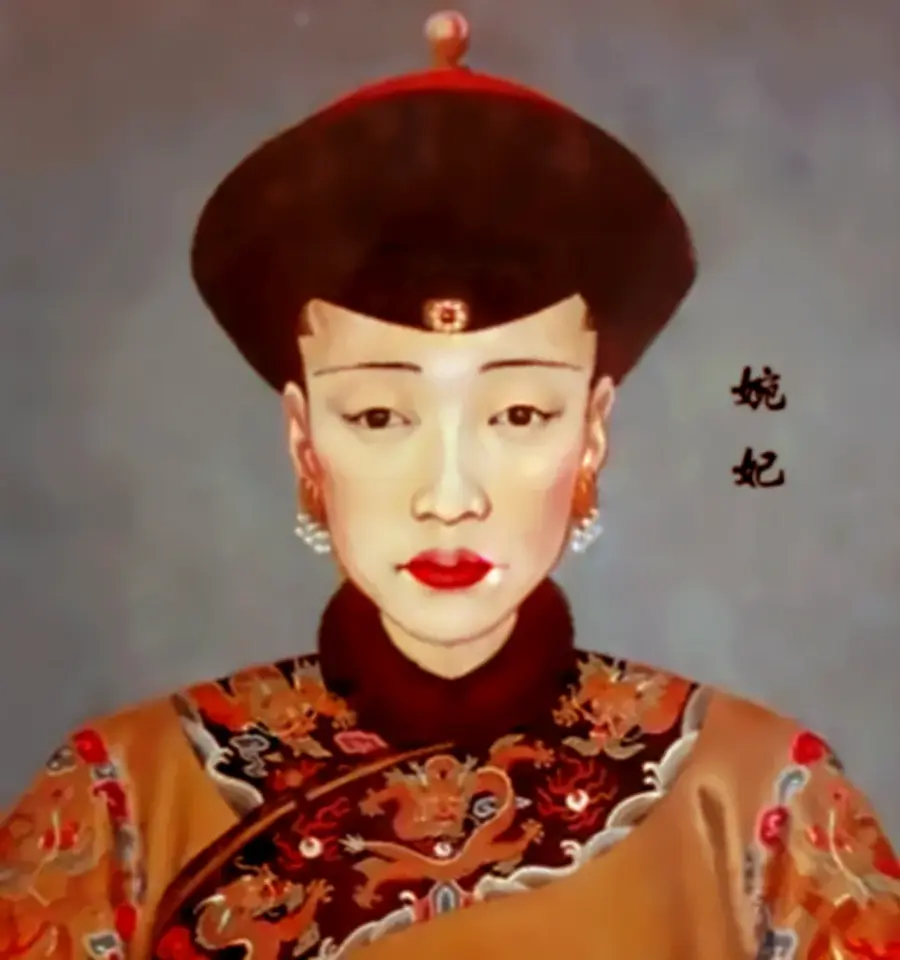
万贵妃
Noble Consort Wan (万贵妃, 1430 – February 1487), formally known as Wan Zhen'er, was an Imperial Noble Consort of Emperor Xianzong of the Ming dynasty (Zhu Jianshen). Born in Zhucheng, Shandong, she was brought into the imperial court at age four following her father's penal exile and served in the palace of Empress Sun. During the Tumu Crisis and the subsequent dynastic succession disputes when young Zhu Jianshen was demoted…
Noble Consort Wan (万贵妃, 1430 – February 1487), formally known as Wan Zhen'er, was an Imperial Noble Consort of Emperor Xianzong of the Ming dynasty (Zhu Jianshen). Born in Zhucheng, Shandong, she was brought into the imperial court at age four following her father's penal exile and served in the palace of Empress Sun. During the Tumu Crisis and the subsequent dynastic succession disputes when young Zhu Jianshen was demoted and placed under palace confinement, Wan was assigned to care for the vulnerable prince. Living together through continuous danger, she developed an unbreakable emotional bond with the future monarch. When the eighteen-year-old Emperor Xianzong ascended the throne in 1464, he granted exclusive affection to Wan, who was seventeen years his senior. After Empress Wu administered corporal punishment to Wan, the enraged emperor deposed the empress after barely a month of marriage. In 1466, Wan gave birth to the emperor's firstborn son and was elevated to Noble Consort; although the infant died within months, her imperial favor never waned. In 1476, she was officially invested as Imperial Noble Consort, dominating the inner court while her family members attained lucrative hereditary positions in the Embroidered Uniform Guard. Upon her death in 1487, Emperor Xianzong suspended court sessions in grief, conferred an extravagant posthumous name, and entombed her southwest of Tianshoushan. She remains one of the most powerful and controversial female figures in Ming palace history.
Born in Zhucheng County, Qingzhou Prefecture, to petty county clerk Wan Gui.
Entered imperial palace service at age four following her father's exile to Bazhou.
Assigned to protect and nurse two-year-old Crown Prince Zhu Jianshen after the Tumu Crisis.
Emperor Xianzong ascended the throne; Empress Wu was deposed after flogging Wan.
Bore the emperor's firstborn son and was created Noble Consort; the prince died in infancy.
Her father Wan Gui was promoted to hereditary assistant commander in the Embroidered Uniform Guard.
Formally invested as Imperial Noble Consort with gold seals and imperial patents.
Died suddenly in the palace at age 58; Emperor Xianzong mourned deeply and ordered an opulent burial at Tianshoushan.
Wan Zhen'er was born in 1430 in Zhucheng, Shandong. Her father, Wan Gui, served as a petty local clerk until he fell afoul of the law and was banished to Bazhou. Because of family punishment, four-year-old Wan Zhen'er was selected into the imperial palace, becoming a maidservant in the household of Empress Sun (later Empress Dowager Shenglie Cishou). Astute, perceptive, and efficient, she gradually earned Empress Dowager Sun's trust.
In 1449, Emperor Yingzong was captured by the Oirats at the Battle of Tumu. Zhu Qiyu assumed the regency and throne, while Yingzong's infant son Zhu Jianshen was designated crown prince. Empress Dowager Sun dispatched the adult Wan Zhen'er to the Eastern Palace to oversee the infant prince. In 1452, Emperor Jingtai replaced Zhu Jianshen with his own son, demoting Zhu Jianshen to Prince of Yi and placing him under strict palace isolation. Amid persistent peril and separation from his biological mother Consort Zhou, young Zhu Jianshen relied entirely on Wan Zhen'er for daily sustenance and emotional security, fostering an enduring psychological attachment.
Following Emperor Yingzong's restoration in 1457, Zhu Jianshen was reinstated as crown prince, with Wan Zhen'er continuing as his constant companion. When Emperor Yingzong passed away in 1464, eighteen-year-old Zhu Jianshen took the throne as Emperor Xianzong. Although Wan Zhen'er was thirty-five years old, Xianzong showered her with exclusive imperial affection, neglecting all other concubines.
Empress Wu, selected by Emperor Yingzong before his death, became the principal consort. Young and forthright, Empress Wu took offense at Wan's overbearing conduct and ordered her caned for insolence. Enraged by the corporal punishment inflicted upon his beloved, Emperor Xianzong deposed Empress Wu after less than two months of marriage and relegated her to the Western Palace. The official Veritable Records of Ming Xianzong bluntly recorded that the dismissal of Empress Wu was directly caused by Consort Wan. Her successor, Empress Wang, took warning, adopting a gentle, non-confrontational posture that allowed Wan to command the inner court unopposed.
In February 1466, thirty-seven-year-old Wan Zhen'er gave birth to Emperor Xianzong's firstborn son. Overjoyed, the emperor dispatched imperial couriers to temples and sacred mountains to offer prayers and conferred upon her the title of Noble Consort. Leading ministers, including Duke Sun Jizong and Grand Secretary Li Xian, were appointed to officiate the grand investiture ceremonies.
However, in December of that same year, the infant prince contracted an illness and died before reaching his first birthday. The grief-stricken emperor ordered scaled-down mourning rituals conforming to rites for young children. Due to her advancing age, Noble Consort Wan never conceived again. Over the subsequent decade, the absence of an imperial heir caused immense consternation among civil officials, who repeatedly submitted memorials petitioning the monarch to distribute his favors widely among the concubines. Nevertheless, Xianzong's devotion to Wan remained unshakable, and her father and brothers were repeatedly awarded high ranks in the imperial guard.
In November 1476, Emperor Xianzong sent Marquess Jiang Wan and Minister Wan An bearing golden certificates and imperial seals to formally promote Noble Consort Wan to Imperial Noble Consort. In the imperial proclamation, Xianzong lauded her virtuous demeanor and prudent conduct, asserting that she brought joy to the imperial bedchambers and assisted the throne dutifully.
As Imperial Noble Consort, Wan wielded de facto supremacy over the imperial harem. Intelligent, calculating, and sensitive to imperial desires, she cultivated strong alliances among powerful palace eunuchs, including Wang Zhi. Her tastes influenced imperial manufacturing; the imperial kilns at Jingdezhen produced exceptionally refined doucai porcelain pieces specifically for her, most notably the renowned Chicken Cups (Jigangbei), which became legendary milestones in Chinese ceramic history.
On February 10, 1487, fifty-eight-year-old Imperial Noble Consort Wan died suddenly in her palace quarters. Emperor Xianzong, returning from state sacrificial ceremonies at the southern suburban altar, was devastated by the news, lamenting that his own life would soon follow hers. The emperor cancelled court audiences for seven days and granted her the elaborate nine-character posthumous name "Gongsudanshenrongjing Imperial Noble Consort."
Xianzong directed Vice Minister of Works Jia Jun to construct an elaborate mausoleum for her at the base of Sushan, southwest of Mount Tianshou, with architectural dimensions surpassing customary ranks for imperial consorts. The grief-stricken emperor passed away barely seven months later in September 1487. Following the accession of Emperor Xiaozong, court officials repeatedly submitted memorials demanding the revocation of her posthumous titles and the reburial of her remains. However, Emperor Xiaozong, respecting his late father's profound feelings, rejected these proposals, ensuring that her tomb remained intact.
Noble Consort Wan's ability to maintain the emperor's undivided devotion across more than two decades represents an extraordinary phenomenon in Chinese imperial history. Seventeen years senior to Emperor Xianzong, she was already past customary childbearing age during the peak of her imperial favor. Her ascendancy was founded on deep psychological interdependence forged during their shared years of palace confinement under Emperor Jingtai.
Emperor Xianzong regarded Wan not merely as a romantic interest but as a protector and indispensable emotional confidante. Even after her infant son died and she was unable to bear further children, Xianzong consistently protected her against court criticism, refusing to dilute his affections and removing any court obstacles—including his first empress—that threatened her standing.
Following her promotion to Imperial Noble Consort, Wan Zhen'er established comprehensive control over inner palace administration. With Empress Wang adopting a deferential approach, Wan managed daily court ceremonies, inner palace expenditures, and palace personnel assignments.
She coordinated closely with key palace eunuchs to safeguard her position, maintaining a vigilant network that observed court activities. While later vernacular accounts and private histories attributed sinister machinations and concubine poisonings to her, official dynastic annals confirm that her genuine authority rested on unassailable imperial favor and administrative shrewdness within the Forbidden City.
Through Wan's imperial standing, her family transformed from disgraced frontier exiles into one of the most prominent external clans of the Chenghua era. Her father Wan Gui received posthumous promotions to assistant commissioner in the Embroidered Uniform Guard, while her brothers Wan Xi and Wan Da reached senior military appointments.
The Wan brothers amassed extensive urban estates and commercial monopolies in Beijing, aligning with influential courtiers such as Grand Secretary Wan An. Although their political fortunes collapsed upon Emperor Xianzong's death when Xiaozong's government purged external corruption, the clan was spared severe capital punishment, retaining nominal military titles and stipends.
FIGURES ASSOCIATED WITH THIS DYNASTY