Imperial Birth
Born in Dadu as the ninth biological son of Kublai Khan; trained in archery and steppe military strategy.
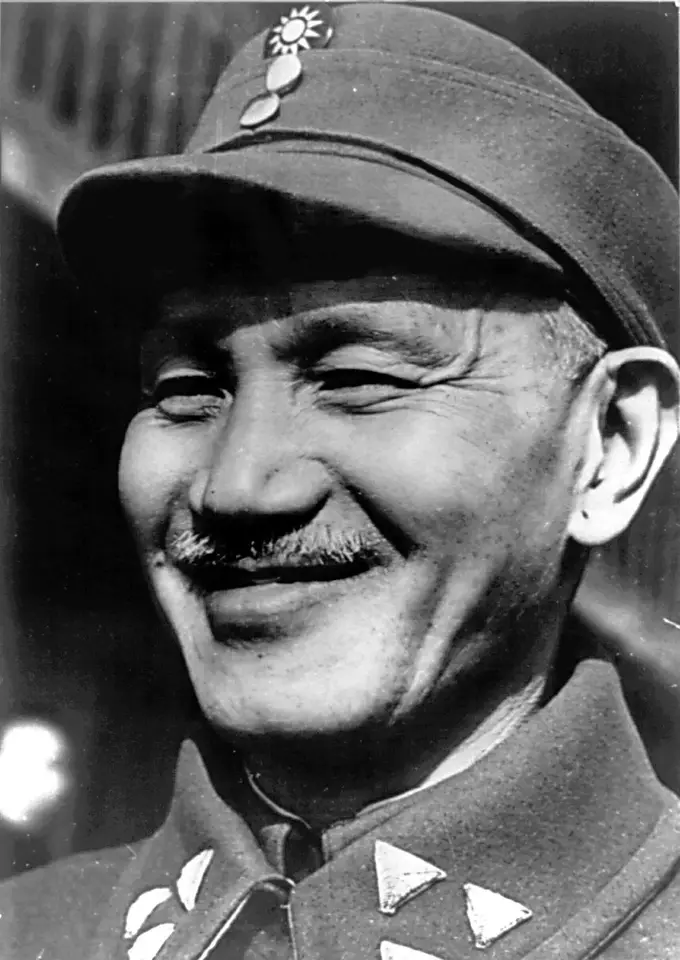
脱欢
Toghon (脱欢, ?–1301), also spelled Toghan, was an imperial prince of the Mongol Borjigin clan and the ninth son of Kublai Khan (Emperor Shizu of Yuan). He was ennobled as the Prince of Zhennan (Zhennan Wang). In 1284, Kublai invested Toghon as Prince of Zhennan, granting him a gilded silver seal with a camel-shaped knob and ordering him to establish his princely appanage at Ezhou (modern Wuhan, Hubei). He was appointed…
Toghon (脱欢, ?–1301), also spelled Toghan, was an imperial prince of the Mongol Borjigin clan and the ninth son of Kublai Khan (Emperor Shizu of Yuan). He was ennobled as the Prince of Zhennan (Zhennan Wang). In 1284, Kublai invested Toghon as Prince of Zhennan, granting him a gilded silver seal with a camel-shaped knob and ordering him to establish his princely appanage at Ezhou (modern Wuhan, Hubei). He was appointed commander-in-chief alongside seasoned generals including Right Chancellor Sodu and Assistant Administrator Ariq Qaya to demand passage through Annam (Dai Viet, under the Tran Dynasty) to invade Champa. When the Tran monarch, Tran Thanh Tong, adamantly refused access and mobilized national defenses, the campaign transformed into a full-scale invasion of Annam. In 1285, Toghon led six army columns across the border, seizing the mountain passes, defeating Tran armies at Van Kiep, and capturing the royal capital of Thang Long (modern Hanoi). However, under the guerrilla strategy and scorched-earth tactics directed by Prince Tran Quoc Tuan (Tran Hung Dao), combined with severe tropical pestilence and logistics collapse, general Sodu was killed and Toghon was forced to conduct a costly retreat back to China. In 1287, Kublai dispatched Toghon on a second major expedition commanding massive combined land and naval forces. While Toghon again occupied Thang Long, the Yuan supply fleet commanded by Zhang Wenhu was annihilated at sea, and the withdrawal fleet under naval commander Omar was completely trapped and destroyed by Tran Hung Dao using iron-tipped wooden stakes at the famous Battle of the Bach Dang River in 1288. Incensed by two successive disastrous failures and the loss of prominent generals, Kublai banished Toghon to Yangzhou and issued an imperial decree forbidding him from ever returning to the imperial presence in Dadu for the remainder of his life. Toghon lived in isolation in Yangzhou until his death in 1301.
Born in Dadu as the ninth biological son of Kublai Khan; trained in archery and steppe military strategy.
Formally invested by Kublai as Prince of Zhennan, stationed at Ezhou to command the southern campaign through Annam.
Penetrated the border, captured Thang Long; subsequently driven back by Tran resistance, tropical disease, and supply failure.
Commanded a large invasion force, recapturing Thang Long; suffered naval annihilation at Bach Dang River.
Censured by an enraged Kublai, stripped of court audience rights, and permanently banished to Yangzhou.
Nephew Emperor Chengzong confirmed material stipends while sustaining the ban on court participation.
Passed away in melancholic seclusion at his princely residence in Yangzhou; title inherited by his son Laozhang.
Toghon was the ninth son of Kublai Khan, the founding emperor of the Yuan dynasty. Following the conquest of the Southern Song in 1279, Kublai turned his geopolitical ambition toward Maritime Southeast Asia and the Indochinese Peninsula, seeking to compel Champa, Annam, and Pagan into tributary submission.
In July 1284, Kublai conferred upon Toghon the prestigious title of Prince of Zhennan (Zhennan Wang, literally "Prince Pacifier of the South"), providing him with a gilded silver seal with a camel knob. Stationed at the strategic crossroads of Ezhou in modern Hubei, Toghon was entrusted with overseeing civil and military resources across Huguang and Jianghuai branch secretariats. In autumn of that year, Kublai resolved to chastise the Champa kingdom for refusing tributary homage. Because maritime transport faced hazardous monsoon storms, Kublai determined that the imperial army should march overland through Annam. He designated Prince Toghon as supreme expeditionary general, placing experienced veteran commanders including Right Chancellor Sodu, Left Vice Chancellor Tanggutai, and Assistant Administrator Ariq Qaya under his nominal command.
In late 1284, Toghon assembled his expeditionary forces at the Siming border and sent ultimatums to King Tran Nhat Huyen (Tran Thanh Tong) demanding unrestricted military transit and substantial logistical provisions. Fearing dynastic subjugation under the guise of safe passage, the Tran court refused and mobilized over one hundred thousand troops to fortify mountain defiles.
In January 1285, Toghon ordered a six-pronged assault across the Sino-Vietnamese frontier. Relying on heavy cavalry and counterweight trebuchets, Yuan forces overran border forts at Ailuu, Luc Chau, and Cuu On. In a major confrontation at Van Kiep, Toghon smashed the elite forces personally commanded by supreme commander Tran Quoc Tuan (Tran Hung Dao). In February, Toghon forced the passage of the Red River (Phu Luong) and occupied the enemy capital of Thang Long. The Tran royalty abandoned the city, retreating to coastal islands in Quang An, leaving behind an empty citadel.
However, the Tran army pursued a rigorous scorched-earth policy, stripping the surrounding countryside of all grain. By May, the tropical monsoon season arrived, bringing oppressive heat and malaria. Mongol warhorses perished in vast numbers and more than half the soldiers contracted tropical fevers. Seizing the initiative, Tran Hung Dao launched devastating counter-offensives at Ham Tu and Tay Ket. Chancellor Sodu was ambushed and killed in action. Realizing that his army faced total annihilation, Toghon ordered a general retreat. Pursued through dense jungles and mountain passes by poison-arrow archers, Toghon fought his way through ambushes, escaping across the border to Siming with heavy casualties.
Furious at the loss of an imperial army and senior generals, Kublai mobilized seventy thousand veterans from Jianghuai, Jiangxi, and Huguang alongside five hundred warships in 1286. Prince Toghon was again designated commander-in-chief, assisted by Abachi, Ariq Qaya, and Aruqchi, while naval commanders Omar and Fan Ji commanded the naval fleet charged with transporting massive grain reserves.
In late 1287, Toghon's overland columns swept south, while Omar's fleet entered the coastal estuaries. The land forces pushed through fortified lines, reoccupying Thang Long in early 1288. Yet the logistical lifeline proved fatally vulnerable. The primary supply convoy commanded by Zhang Wenhu was scattered by sea storms and ambushed by Tran naval squadrons off the coast of Van Don, destroying the imperial grain fleet.
Once again stranded in an evacuated Thang Long without food and decimated by tropical sickness, Toghon ordered an immediate withdrawal in March 1288. Toghon led the main land army northward along overland paths, while directing Omar and Fan Ji to withdraw the naval fleet down the Bach Dang River. Tran Hung Dao prepared an elaborate trap at the mouth of the river, implanting thousands of heavy wooden stakes tipped with iron into the riverbed. As the tide ebbed, the heavy Yuan transport galleys became impaled on the hidden stakes. Tran fireboats closed in, destroying or capturing the entire fleet; commanders Omar and Fan Ji were taken prisoner. Toghon's overland column was subjected to continuous harassment, and the prince barely escaped with his life.
The catastrophic failure of two massive, empire-wide military expeditions cost tens of thousands of lives and dealt a devastating blow to Yuan imperial prestige in Southeast Asia. Emperor Shizu was beside himself with rage, viewing Toghon's performance as an inexcusable mixture of tactical incompetence, personal cowardice, and strategic negligence.
In autumn 1288, Kublai issued a scathing imperial decree revoking Toghon's right to enter the imperial palace. The emperor decreed that Toghon was permanently banned from visiting the capital of Dadu, exiling him to Yangzhou where he was ordered to establish his princely residence. Until his death in 1294, Kublai never laid eyes on his son again.
Upon the accession of Emperor Chengzong (Temür Khan) in 1294, the new sovereign treated his disgraced uncle with material generosity, ensuring comfortable allowances but steadfastly upholding Shizu's ban on political participation. Toghon spent his final thirteen years in Yangzhou living in total political isolation. He died in 1301, and the title of Prince of Zhennan passed to his eldest son, Laozhang.
In the historical annals of the Yuan dynasty, Toghon represents a tragic figure whose royal pedigree could not compensate for military shortcomings in hostile tropical terrain.
The official biographical appraisal in the History of the Yuan (Yuan Shi) states: "Prince of Zhennan Toghon, possessing the exalted rank of an imperial prince, commanded vast armies deep into Jiaozhi. Yet in that humid, low-lying wilderness, soldiers grew exhausted and provisions failed. Returning twice without merit, he incurred the enduring wrath of Shizu and was ostracized from court for the rest of his days."
Modern military historians observe that Toghon's defeats in Annam illustrated the profound strategic limitations of Mongol cavalry warfare in tropical rain forests and dense river networks. Unable to counter the national resistance, scorched-earth strategy, and maritime coordination of the Tran Dynasty, Toghon's military disasters ended Yuan territorial ambitions on the Indochinese mainland.
FIGURES ASSOCIATED WITH THIS DYNASTY