Kereit Lineage
Born into the royal house of Toghrul Khan in the northern steppe; nurtured in the Christian faith of the Church of the East.
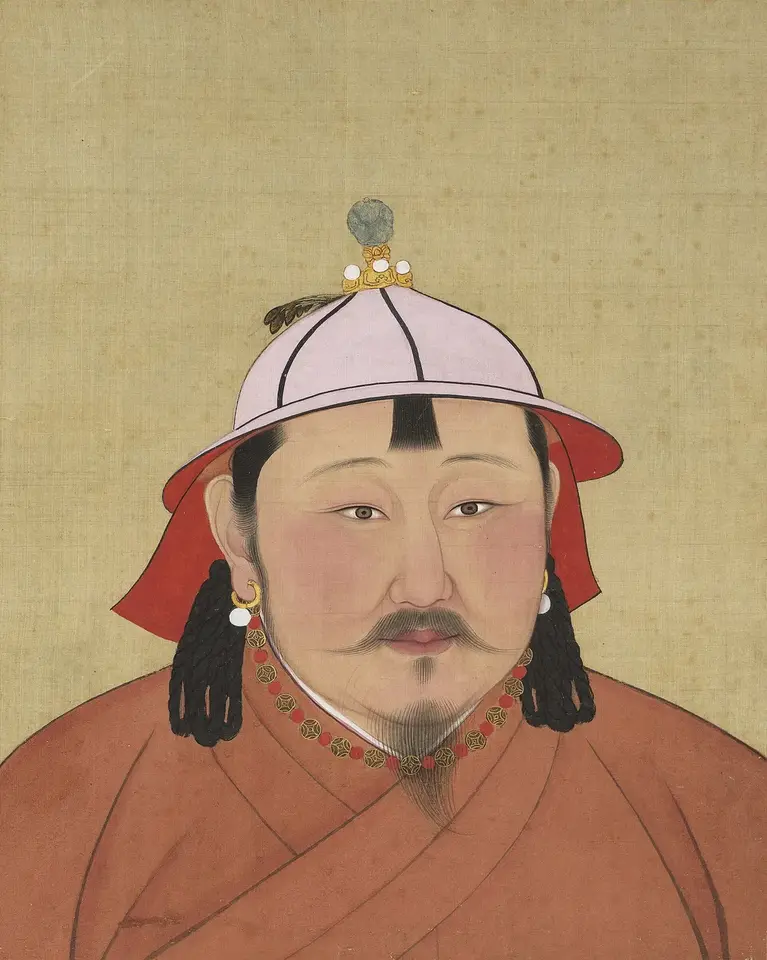
脱古思可敦
Doquz Khatun (脱古思可敦, d. 1265) was a royal princess of the Kereit confederation and the chief khatun (principal consort) of Hulagu Khan, the founder of the Ilkhanate. She belonged to the Kereit nobility who had adhered to Church of the East (Nestorian Christianity) for generations, being a granddaughter of Toghrul Khan (Wang Khan), the ruler of the Kereits. Doquz Khatun was initially betrothed to Tolui, the youngest son of…
Doquz Khatun (脱古思可敦, d. 1265) was a royal princess of the Kereit confederation and the chief khatun (principal consort) of Hulagu Khan, the founder of the Ilkhanate. She belonged to the Kereit nobility who had adhered to Church of the East (Nestorian Christianity) for generations, being a granddaughter of Toghrul Khan (Wang Khan), the ruler of the Kereits. Doquz Khatun was initially betrothed to Tolui, the youngest son of Genghis Khan. Following Tolui's death, according to the nomadic levirate custom of the Eurasian steppe, she married Tolui's son Hulagu as his principal khatun, earning his devotion and reliance. Renowned for her political wisdom and administrative acumen, she commanded the profound respect of Mongke Khan, who repeatedly instructed Hulagu prior to the western expedition to consult Doquz Khatun on all major affairs of state. Accompanying Hulagu during the Mongol conquest of West Asia starting in 1253, Doquz Khatun played a decisive role in shielding Christian communities. During the capture and sack of Baghdad in 1258 that brought down the Abbasid Caliphate, she successfully persuaded Hulagu to spare the Christian population and their sanctuaries. Maintaining a mobile church tent before her royal pavilion, she exerted significant influence over the religious policy of the Ilkhanate, prompting contemporary Christian chroniclers to liken Hulagu and Doquz Khatun to Emperor Constantine and his mother Saint Helena. She died in 1265, the same year as Hulagu, and her foster son Abaqa Khan ascended the Ilkhanate throne.
Born into the royal house of Toghrul Khan in the northern steppe; nurtured in the Christian faith of the Church of the East.
Following Tolui's demise, married Hulagu as his chief consort in accordance with traditional steppe custom.
Upon Mongke's enthronement, praised by the supreme khan for her discernment and appointed trusted advisor to Hulagu.
Traveled with Hulagu's grand host to the Middle East, establishing a mobile Christian tent-church accompanied by ringing bells.
After the fall of Baghdad and the collapse of the Abbasid Caliphate, intervened to secure imperial orders sparing all local Christians from execution.
Assisted Hulagu in establishing administrative order across Iran and Mesopotamia, extending state patronage to various religious institutions.
Hulagu passed away in February, followed by Doquz Khatun later that year; her foster son Abaqa Khan smoothly succeeded to the Ilkhan throne.
Doquz Khatun belonged to the ruling aristocracy of the Kereit confederation, an influential steppe nation that had adopted Eastern Christianity (the Church of the East) during the early eleventh century. Her ancestors employed Syriac script for state correspondence and maintained close ecclesiastical ties with the Patriarchate of the East. She was the granddaughter of Toghrul Khan (Wang Khan), the preeminent steppe monarch who had once been allied with Yesugei and young Temüjin. Through political intermarriages, Kereit Christian noblewomen played pivotal roles in the Mongol court, most notably Sorghaghtani Beki, niece of Wang Khan and mother of Mongke, Kublai, and Hulagu.
Doquz Khatun had initially been pledged as a bride to Tolui. Following Tolui's sudden death in 1232, she was wed to his son Hulagu under the traditional steppe levirate custom (yanji), becoming his primary and most revered wife (khatun). Although senior to Hulagu in age, her political intellect and regal poise earned her the lifelong devotion of the Mongol prince, who consulted her on administrative and military decisions.
Doquz Khatun exercised considerable influence throughout the imperial court in Karakorum. When Mongke Khan ascended the throne, he held her acumen in high esteem.
In 1253, Mongke commissioned his brother Hulagu to lead the third major Mongol campaign westward to subdue the Nizari Isma'ili fortresses, the Abbasid Caliphate, and the Ayyubid principalities of Syria. Prior to their departure from the Mongolian steppe, Mongke repeatedly admonished Hulagu that in every strategic matter, tribal negotiation, and conquest policy, he must take counsel with Doquz Khatun and never act unilaterally.
Doquz Khatun accompanied the army across Central Asia into Persia and Mesopotamia. A devout adherent of the Church of the East, she maintained a traveling chapel-tent situated prominently in front of her royal pavilion. Furnished with altars and church bells, the mobile chapel hosted daily Eucharistic liturgies celebrated by resident priests and monks. The sound of ringing bells echoing through the Mongol encampments was recorded as a remarkable phenomenon across the Islamic world.
In January 1258, Mongol armies led by Hulagu encircled and breached the defenses of Baghdad, the historic capital of the Islamic world, executing Caliph al-Musta'sim and terminating the five-hundred-year rule of the Abbasid Caliphate. A destructive week-long sack ensued, leaving large portions of the metropolis devastated.
Amid this catastrophe, Doquz Khatun utilized her influence over Hulagu to intervene on behalf of the local Christian populace. At her earnest urging, Hulagu issued strict orders commanding his troops to spare Christian residents and designating the cathedral and residences of the Nestorian Patriarch Makikha II as safe havens. Tens of thousands of indigenous Christians survived unharmed amid the general ruin.
When Mongol forces advanced into Syria to capture Damascus and Aleppo, Doquz Khatun coordinated with the Christian Mongol general Kitbuqa Noyan to secure favorable terms for local Christian populations that had endured centuries of subordination. Western European crusaders, the Papacy, and regional Christian leaders expressed profound gratitude. Armenian and Syriac chroniclers likened Hulagu and Doquz Khatun to the Roman emperor Constantine the Great and his pious mother, Empress Helena.
Following the conquest, Hulagu established Tabriz as his capital, organizing the Ilkhanate as one of the four great successor realms of the Mongol Empire. In shaping early institutional structures and religious policies, Doquz Khatun acted as a stabilizing force. She ensured state stipends and tax exemptions for ecclesiastical hierarchies while patronizing scholars and merchants along the Silk Road.
Although Doquz Khatun bore no sons of her own, she raised Hulagu's eldest son Abaqa (born of a secondary consort) with maternal devotion. Their bond remained intimate, and she actively supported Abaqa's standing in the court, establishing him as Hulagu's unquestioned successor.
In February 1265, Hulagu Khan died near Lake Urmia. Devastated by the loss of her husband, Doquz Khatun fell ill and passed away later that year. Thanks to the political foundation and diplomatic alliances she had cultivated, Abaqa Khan smoothly assumed the throne, preserving the administrative stability and multi-religious character of the early Ilkhanate.
Doquz Khatun stood as the preeminent protector of Eastern Christianity across thirteenth-century Eurasia. During the fall of the Abbasid Caliphate, she decisively guided Mongol imperial policy toward protecting Christian institutions and civilian populations. Sparing Christians during the sack of Baghdad preserved ancient Christian literary and theological heritage in Mesopotamia and reshaped the geopolitical landscape of the Near East.
Throughout the multi-year overland march across Eurasia, Doquz Khatun maintained a functioning Christian court. The mobile chapel stationed before her tent, where liturgy was celebrated daily to the chime of bells, symbolized the synthesis between pastoral nomadic court life and Eastern Christian liturgy. Her retinue included Syriac, Armenian, and Georgian clergy, making her encampment a focal point for intercultural diplomacy between Mongol rulers and Western Asian religious leaders.
As chief khatun, Doquz Khatun was instrumental in securing the peaceful succession of the Ilkhanate. By nurturing and backing Abaqa Khan, she averted destructive succession conflicts among the Chinggisid princes following Hulagu's death in 1265. Her political maneuvering secured Abaqa's smooth elevation, ensuring the long-term institutional survival and cultural prosperity of the Mongol dynasty in Iran.
FIGURES ASSOCIATED WITH THIS DYNASTY