Birth at Shengle
Born in the northern grassland heartland as the second son of King Pingwen Tuoba Yulv.
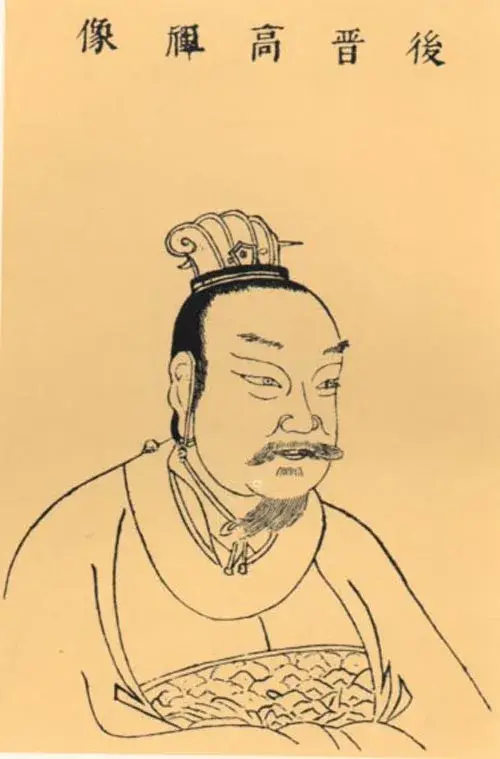
拓跋什翼犍
Tuoba Shiyijian (拓跋什翼犍, 320–376 CE), courtesy name Yulvzhan, originating from Shengle in Yunzhong (modern Horinger, Inner Mongolia), was a paramount chieftain of the Tuoba Xianbei confederation and the defining sovereign of the State of Dai (reigned 338–376 CE). He was the grandfather of Tuoba Gui (Emperor Daowu), the founding monarch of the Northern Wei dynasty. As the second son of King Pingwen (Tuoba Yulv), Shiyijian was…
Tuoba Shiyijian (拓跋什翼犍, 320–376 CE), courtesy name Yulvzhan, originating from Shengle in Yunzhong (modern Horinger, Inner Mongolia), was a paramount chieftain of the Tuoba Xianbei confederation and the defining sovereign of the State of Dai (reigned 338–376 CE). He was the grandfather of Tuoba Gui (Emperor Daowu), the founding monarch of the Northern Wei dynasty. As the second son of King Pingwen (Tuoba Yulv), Shiyijian was renowned for his stately physical stature, composure, and emotional inscrutability. From age ten, he resided for a decade in Xiangguo as an official royal hostage to the Later Zhao dynasty, acquiring deep fluency in classical Chinese governance and Confucian institutional statecraft. Ascending the throne in 338 CE with the era name "Jianguo", Tuoba Shiyijian instituted profound centralizing and administrative reforms. He established an official bureaucracy based on Chinese imperial models, enacted codifications of statutory law, enlisted Han Confucian scholars like Yan Feng, and selected Shengle as his permanent walled capital, promoting systematic agriculture alongside traditional pastoralism. Expanding his geopolitical dominion, he subjugated northern Gaoche and Central Asian oasis tribes, formed a marital alliance with the Former Yan, and crushed the rebellious Tiefu Xiongnu under Liu Weichen. In 376 CE, Former Qin emperor Fu Jian launched a massive 200,000-man invasion; following military setbacks at Shizi Ridge, Tuoba Shiyijian was murdered in a palace coup orchestrated by his eldest son Tuoba Shijun at age fifty-seven, precipitating the fall of Dai. He was subsequently venerated as Emperor Zhaocheng by the Northern Wei.
Born in the northern grassland heartland as the second son of King Pingwen Tuoba Yulv.
Sent to Xiangguo by his elder brother Emperor Lie as a hostage with five thousand households; spent ten years studying Chinese governance.
Succeeded to the throne following Emperor Lie's testament and Prince Gu's deference; proclaimed the era name Jianguo.
Established a formal civil bureaucracy, codified statutory penal laws, and appointed Han scholars to senior advisory posts.
Established his walled capital at Shengle, constructing palaces and introducing state-sponsored agricultural cultivation.
Led imperial cavalry to crush the rebellious Tiefu Xiongnu chieftain Liu Weichen, establishing regional hegemony.
Former Qin deployed 200,000 troops under Fu Luo and Zhang Hao; the Dai army was defeated at Shizi Ridge.
Murdered during a nocturnal palace coup orchestrated by his eldest son Tuoba Shijun; aged fifty-seven.
Posthumously honored by his grandson Tuoba Gui as Emperor Zhaocheng with the temple name Gaozu.
Tuoba Shiyijian was born at Shengle in 320 CE, the second son of King Pingwen (Tuoba Yulv). Endowed with an imposing physical stature, he stood eight chi tall and displayed exceptional composure from his early youth. In 329 CE, his elder brother Emperor Lie (Tuoba Yihuai) ascended the throne. To normalize diplomatic relations with the formidable Later Zhao regime dominating northern China, Emperor Lie dispatched the ten-year-old Shiyijian alongside five thousand Xianbei households to serve as a royal hostage in Xiangguo. During his decade of residence in the Central Plains, Shiyijian applied himself assiduously to Chinese canonical texts and historical treatises, observing the administrative structures, penal apparatus, and military dispositions of the Later Zhao state.
In the tenth month of 338 CE, Emperor Lie fell terminally ill. On his deathbed, he explicitly instructed his tribal elders that Shiyijian's broad exposure to Chinese governance and consummate moral integrity made him the only prince capable of securing the Tuoba ancestral altars. Following Yihuai's demise, tribal factions hesitated due to Shiyijian's distance in Ye, proposing to elevate his younger brother Tuoba Gu. Demonstrating supreme fraternal devotion, Tuoba Gu adamantly refused the throne and rode personally to Later Zhao to escort Shiyijian home. In the eleventh month of 338 CE, Shiyijian ascended the throne north of Fanshi City, proclaiming the era name "Jianguo" (Founding the State) and generously dividing half of the realm's territory and revenues with his loyal brother Tuoba Gu.
In the spring of 339 CE, Tuoba Shiyijian launched a comprehensive program of institutional modernization to transform the Tuoba Xianbei from a loose tribal coalition into a centralized bureaucratic state. Departing from pastoral custom, he established a tripartite civil bureaucracy comprised of Wuhuan, Xianbei, and Han officials to oversee specialized administrative departments. He elevated erudite Han scholars, notably Yan Feng and Xu Qian, to serve as principal confidential counselors, directing state correspondence and statutory drafting.
Concurrently, Shiyijian promulgated Dai's first formal penal code, substituting tribal blood feuds and arbitrary punishments with statutory sanctions such as decapitation, exile, and property confiscation. In 340 CE, Shiyijian resolved to establish a permanent capital at Shengle (modern Horinger, Inner Mongolia). Mobilizing his populace, he erected earthen battlements and ceremonial halls, demarcating fertile alluvial tracts around the city for agrarian cultivation and sericulture. Under his governance, the realm flourished: oasis kingdoms across Central Asia and northern nomadic confederacies submitted, mobilizing a cavalry host exceeding several hundred thousand warriors.
Navigating the treacherous geopolitical landscape of the Sixteen Kingdoms, Tuoba Shiyijian combined marital diplomacy with aggressive military expansion. To neutralize threats on his eastern frontier, he concluded a durable alliance with the burgeoning Murong Xianbei of Former Yan. In 339 CE, he married the sister of King Murong Huang of Former Yan, while reciprocally marrying his daughter to the Murong court, inaugurating decades of trans-regional commercial and military cooperation.
Securing his eastern perimeter allowed Shiyijian to concentrate on pacifying the Ordos Loop and the northern Mongolian plateau. The Tiefu Xiongnu chieftain Liu Weichen, who held the Shuofang marches, repeatedly vacillated in allegiance, colluding with Former Qin to raid Dai borderlands. In 365 CE, Shiyijian spearheaded an expedition that shattered the Tiefu forces along the Yellow River, compelling Liu Weichen to flee into Former Qin territory. In 374 CE, when Liu Weichen raided again, Shiyijian encircled the insurgents at Junzi Ford, achieving a crushing victory that cemented Dai's supremacy across the Ordos.
The formidable resurgence of the State of Dai aroused the acute alarm of Fu Jian, the powerful emperor of Former Qin. In the autumn of 376 CE, responding to appeals from Liu Weichen, Fu Jian mobilized 200,000 elite troops under Regional Inspector Fu Luo and vanguard commanders Zhang Hao and Deng Qiang to extinguish Dai. Shiyijian deployed his southern commander Liu Kuren with 100,000 cavalry to hold the strategic defile of Shizi Ridge, but the Dai forces suffered a disastrous tactical defeat. Concurrently, northern Gaoche tribes revolted, forcing Shiyijian to evacuate Shengle and lead his people north of the Yin Mountains.
In the winter of that year, the Former Qin forces withdrew due to extended supply lines, permitting Shiyijian to lead his surviving followers back to Shengle. However, fatal domestic treason erupted. Tuoba Shijun, Shiyijian's eldest concubine-born son, was suspicious and violent. Instigated by his younger brother Tuoba Jin, who falsely alleged that Shiyijian planned to execute Shijun and confer succession upon a younger son born to the Murong queen, Shijun orchestrated a nocturnal palace insurrection in the twelfth month of 376 CE. The rebel soldiers butchered Tuoba Shiyijian and his younger sons within the palace.
The sudden assassination fractured the Dai military command. Former Qin commanders seized the opportunity to occupy Yunzhong and Shengle, extinguishing the State of Dai. Horrified by the patricide, Fu Jian ordered Tuoba Shijun executed by dismemberment (chelie) in Chang'an. Shiyijian's grandson, Tuoba Gui, escaped the slaughter, eventually re-establishing the state in 386 CE as the Northern Wei dynasty and posthumously honoring Tuoba Shiyijian as Emperor Zhaocheng with the temple name Gaozu.
Tuoba Shiyijian's preeminent historical legacy was steering the Tuoba Xianbei across the threshold of statehood and bureaucratic feudalization. Drawing upon his decade of direct immersion in Later Zhao administrative practices, he dismantled nomadic tribal egalitarianism, instituting a formal civil service and statutory penal code. By integrating prominent Han literati into imperial governance, he laid the structural framework that facilitated the subsequent profound Sinicization programs executed by his descendant Emperor Xiaowen of Northern Wei.
To provide an enduring material base for his regime, Tuoba Shiyijian championed urban sedentary life and agricultural cultivation. Transforming Shengle into a permanent fortified political and economic capital, he erected walls, palatial complexes, and state granaries. He distributed arable plots along the Yin Mountains, encouraging nomadic pastoralists to adopt Chinese agricultural techniques. This agrarian transition generated massive demographic expansion and substantial logistical reserves that sustained Northern Wei military campaigns for generations.
Displaying exceptional military statecraft, Tuoba Shiyijian consolidated an expansive continental realm spanning from the Liao River westward to Central Asia and northward across the Gobi Desert. By neutralizing the Tiefu Xiongnu, subjugating the Gaoche confederacies, and maintaining marital parity with Former Yan, he created a unified geopolitical bloc in northern China. The military institutions, cavalry traditions, and territorial cohesion established under his thirty-nine-year reign formed the bedrock upon which his grandson Tuoba Gui founded the Northern Wei dynasty.
FIGURES ASSOCIATED WITH THIS DYNASTY