Birth in the Steppes
Born along the Onon River as the fourth and youngest son of Yesügei and Hoelun.
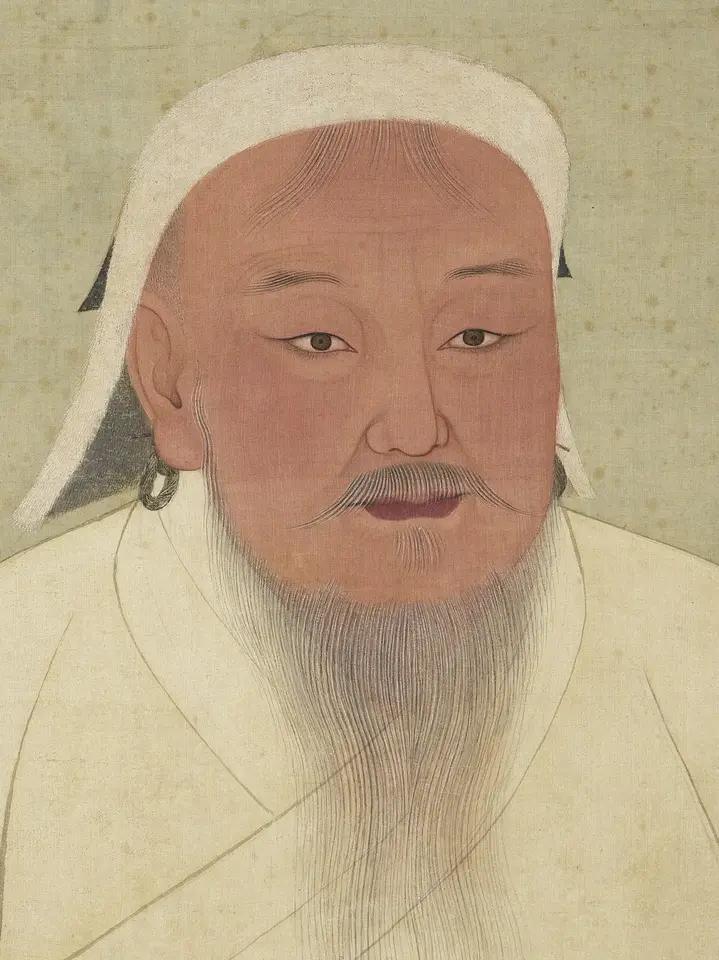
铁木哥斡赤斤
Temüge Otchigin (铁木哥斡赤斤, 1168–1246), of the Mongol Borjigin clan, was the fourth son of Yesügei Baghatur and the youngest brother of Genghis Khan (Temüjin). In Mongolian pastoral custom, the youngest son was designated the otchigin ("keeper of the ancestral hearth"), traditionally inheriting the parents' core nomadic tents, herds, and personal retainers. Enduring the deprivation that followed his father's death alongside…
Temüge Otchigin (铁木哥斡赤斤, 1168–1246), of the Mongol Borjigin clan, was the fourth son of Yesügei Baghatur and the youngest brother of Genghis Khan (Temüjin). In Mongolian pastoral custom, the youngest son was designated the otchigin ("keeper of the ancestral hearth"), traditionally inheriting the parents' core nomadic tents, herds, and personal retainers. Enduring the deprivation that followed his father's death alongside his mother Hoelun and elder brothers, Temüge supported Genghis Khan in conquering neighboring steppe confederations. Following the formal founding of the Mongol Empire in 1206, Genghis Khan distributed the empire's population and pastures among his kin. Because of his status as youngest son, Temüge was awarded the largest personal appanage among the imperial brothers, receiving eight thousand nomad households across the Greater Khingan Mountains, Argun River, and Hulunbuir steppes. Appointed paramount commander over the lineages of Qasar and Qachi'un, he stood as the supreme ruler of the "Eastern Princes" (Dongdao Zhuwang). During Genghis Khan's extensive military campaigns in Khwarazm and Western Xia, Temüge served as supreme imperial regent in the northern homeland, directing logistical resupply and administering homeland affairs. When the supreme shaman Kököchü (Teb Tenggeri) attempted to undermine imperial authority, Temüge cooperated with Genghis Khan to execute him, eliminating the political threat of theocracy. Following the death of Ögedei Khan and the regency of Empress Töregene, dynastic politics fractured. Prior to Güyük Khan's enthronement in 1246, Temüge mobilized an army in a bid for the supreme khaganate. Following Güyük's coronation, Temüge was brought before an imperial tribunal of princes and executed at the age of seventy-nine. His descendants continued to rule the Otchigin Ulus, remaining the preeminent eastern princely branch of the Yuan dynasty.
Born along the Onon River as the fourth and youngest son of Yesügei and Hoelun.
Following the murder of Yesügei, endured poverty and displacement alongside his mother and brothers.
At the founding kurultai, invested with eight thousand households and designated supreme leader of the Eastern Princes.
Orchestrated the execution of the rebellious shaman Teb Tenggeri outside the imperial yurt.
Appointed imperial regent in Mongolia during Genghis Khan's western campaign against Khwarazm.
Ögedei died, inaugurating the regency of Empress Töregene amid mounting dynastic discord.
Marched on Karakorum to claim the khaganate; subsequently condemned by a princely court and executed.
Temüge Otchigin was the youngest son of Yesügei Baghatur and his principal wife, Hoelun, born six years after his eldest brother Temüjin. Under nomadic custom, older sons departed with livestock shares upon reaching adulthood, while the youngest son, the otchigin ("master of the fire"), remained at the ancestral hearth to care for elderly parents and inherit the root camp, sacred regalia, and family bodyguards.
When Temüge was only three years old, Yesügei was poisoned by Tatar rivals, and the rival Tayichi'ud abandoned the family to perish in the wilderness. Reared under Hoelun's stern discipline, Temüge survived on wild plants, roots, and small game. Unlike his brothers Qasar and Belgütei, who were celebrated for physical strength and archery, Temüge displayed keen political perception, administrative intellect, and diplomatic caution, earning the affection of his mother and the trust of Temüjin.
During the protracted wars that unified the Merkit, Kereit, and Naiman tribes, Temüge managed the logistical baggage trains and guarded the family encampments. In 1206, upon establishing the Mongol Empire at the source of the Onon River, Genghis Khan codified the decimal military organization (mingghan) and distributed grazing grounds to the royal golden lineage.
The empire's princes were divided geographically: the sons of Genghis Khan (Jochi, Chagatai, Ögedei, Tolui) were granted territories west of the Altai Mountains, forming the Western Princes; the brothers of Genghis Khan (Qasar, Qachi'un, Temüge) received pasturages east of the Onon to the Greater Khingan range, forming the Eastern Princes.
Owing to his status as the guardian of the ancestral hearth, Temüge received his mother's appanage share combined with an imperial gift of eight thousand households. His appanage exceeded those of Qasar (four thousand) and Qachi'un (two thousand). His ulus encompassed the valleys of the Hailar, Argun, and Nonni rivers across northeastern Manchuria and eastern Mongolia, dominating thousands of mounted warriors and establishing him as paramount lord of the eastern steppe.
In the early years of the empire, the supreme shaman Kököchü (Teb Tenggeri) wielded spiritual authority to sway nomadic clans, seeking to place his family above the royal house. Kököchü publicly insulted Qasar and humiliated Temüge, attempting to fracture the brothers' solidarity. Temüge tearfully petitioned Genghis Khan. Recognizing that unchecked theocracy threatened dynastic sovereignty, Genghis Khan authorized Temüge to retaliate. When the shaman next entered the royal tent, Temüge challenged him and three imperial wrestlers snapped Kököchü's spine outside the entrance, eliminating the spiritual challenge to the khagan's throne.
In 1219, Genghis Khan led two hundred thousand troops on the western expedition against Khwarazm, an absence that spanned five years. During this prolonged campaign, Genghis Khan appointed Temüge supreme imperial regent over the Mongol heartland. Stationed in central Mongolia, Temüge governed subject tribes, maintained order, and organized massive shipments of remounts and dried provisions to the front lines, ensuring domestic tranquility throughout the interior.
Following the death of Genghis Khan, Ögedei succeeded to the khaganate, continuing to shower his uncle Temüge with imperial honors, agricultural lands, and silk revenues from northern China. However, Ögedei's sudden death in 1241 ignited a protracted succession crisis.
Empress Töregene assumed the regency, pursuing policies that alienated senior princes, while Batu Khan, commander of the Golden Horde, delayed attending a kurultai. With Töregene maneuvering to install her son Güyük, a dangerous political vacuum paralyzed the imperial center.
Approaching eighty years of age, Temüge, as the sole surviving brother of Genghis Khan and the most senior elder of the Borjigin clan, resolved to claim the imperial throne. In early 1246, he mobilized an armed force from his eastern domains, marching directly toward Karakorum to seize the imperial ordo. However, Güyük was already marching eastward from Central Asia with veteran divisions, and princely factions coalesced against Temüge's armed coup. Lacking universal support, Temüge was forced to retreat to his appanage.
In August 1246, the imperial kurultai enthroned Güyük as khagan. Güyük instituted immediate legal proceedings, assigning Chagatai's grandson Buri and Qasar's son Yegü to preside over an extraordinary princely tribunal. The investigation confirmed Temüge's treasonous mobilization, and the venerable prince was sentenced to death and executed. Nevertheless, the Otchigin lineage was spared; his grandson Taghachar succeeded to the eastern appanage, later playing a pivotal role in backing Kublai Khan during the Toluid Civil War.
Temüge Otchigin was a cornerstone prince during the foundation and expansion of the Mongol Empire.
The History of the Yuan (Yuan Shi) records in its genealogical tables: "The Otchigin Ulus was vast in extent, stretching across the borders of Liaohai; its military households and pastoral abundance surpassed all other Eastern Princes."
Persian historian Rashid al-Din observed in Jami al-Tawarikh: "Temüge Otchigin was sagacious and dignified, the most beloved younger brother of Genghis Khan. He created opulent pastoral camps across the Khingan ranges and commanded the veneration of all princes. Yet in his extreme old age, his attempt to seize the khaganate by armed force violated imperial statutes, precipitating his tragic downfall."
Modern historians of pastoral empires emphasize that the eastern princely confederation established by Temüge counterbalanced the western appanages of the Golden Horde and Chagatai, shaping the permanent geopolitical architecture of northern and northeastern Eurasia.
FIGURES ASSOCIATED WITH THIS DYNASTY