Born in Banner Clan
Born on the eighteenth day of the second lunar month into a Manchu Bordered White Banner family.
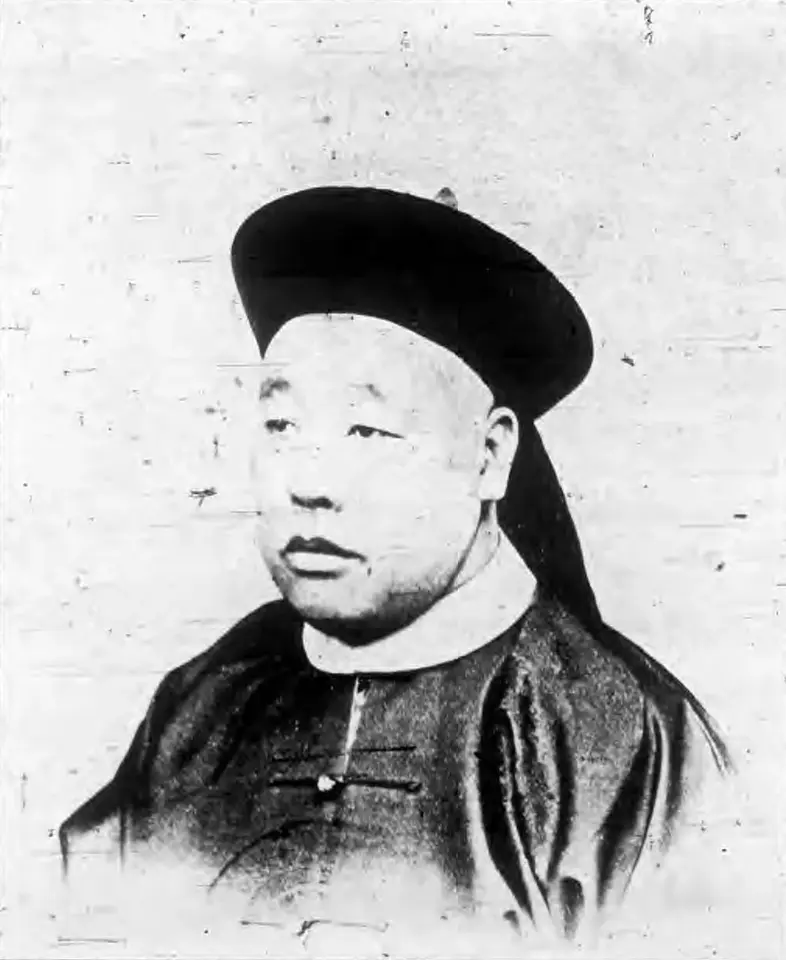
铁良
Tie Liang (铁良, April 5, 1863 – May 11, 1938), clan name Murca and courtesy name Baochen, was a member of the Manchu Bordered White Banner. He was one of the most powerful Manchu aristocrats and court ministers during the final decade of the Qing dynasty, serving as Minister of the Army, Grand Councilor, and General of Jiangning. He was a principal architect of late Qing military centralisation and modern army modernisation,…
Tie Liang (铁良, April 5, 1863 – May 11, 1938), clan name Murca and courtesy name Baochen, was a member of the Manchu Bordered White Banner. He was one of the most powerful Manchu aristocrats and court ministers during the final decade of the Qing dynasty, serving as Minister of the Army, Grand Councilor, and General of Jiangning. He was a principal architect of late Qing military centralisation and modern army modernisation, as well as the supreme leader of the diehard Royalist Party following the fall of the empire. Originating from a bureaucratic banner family, Tie Liang abandoned civil examinations following his father's early death to concentrate on Western learning, state finance, and modern military organisation. Rising from an archival clerk in the Ministry of Works, he observed military training at the Imperial Japanese Army Academy following the Boxer Crisis. Winning the deep patronage of Grand Councilor Ronglu, he climbed swiftly through the central government hierarchy, serving as Vice Minister of Revenue, Vice Minister of War, Minister of the Commission for Administrative Affairs, Grand Councilor, and Minister of Revenue. In 1904, acting as Imperial Commissioner under secret instructions from Empress Dowager Cixi, he conducted a sweeping inspection across southeastern provinces, recovering native opium transit taxes for the central treasury and disbanding regional braves, thereby consolidating central fiscal and military authority. When the Ministry of the Army was established in 1906, Tie Liang was named its inaugural Minister, where he led imperial efforts to break Yuan Shikai's private monopoly over the Beiyang Army, forcing Yuan to surrender control of four modern divisions. During the Xuantong reign, Tie Liang was sidelined by Prince Regent Zaifeng amidst internal court factionalism and was transferred to Nanjing as General of Jiangning. When the 1911 Wuchang Uprising broke out, Tie Liang led Qing forces in desperate resistance against revolutionary forces before fleeing to Shanghai on a Japanese naval vessel. Following the imperial abdication, he allied with Prince Su Shanqi and Liangbi to organise the Royalist Party to combat the republic and resist peace negotiations. He subsequently lived in the Tianjin foreign concessions, actively conspiring with Japanese militarists to restore the monarchy and participating in the establishment of the puppet state of Manchukuo. In 1938, Tie Liang died in Tianjin, receiving the private posthumous title "Zhuangjing" from the deposed imperial court.
Born on the eighteenth day of the second lunar month into a Manchu Bordered White Banner family.
After the deaths of his grandfather and father, turned away from civil examinations toward modern military affairs.
Selected as a copyist in the Shenjiying (Divisions of the Divine Engine) and appointed to naval committees.
Transferred as Director in the Revenue Ministry's Silver Treasury, mastering imperial fiscal operations.
Accompanied the court's western flight, appointed to the Grand Court of Revision, and observed Japanese military schools.
Aided Ronglu in re-establishing capital security, earning high trust and imperial secretarial rank.
Appointed Vice Minister of Revenue and Assistant Minister in the Commission for Army Reorganisation with Yuan Shikai.
Dispatched as Imperial Commissioner across eight provinces, securing opium revenue and curbing regional military power.
Promoted to Minister of Revenue, concurrently oversaw the Ministry of War, and entered the Grand Council.
Appointed inaugural Minister of the Army, compelling Yuan Shikai to transfer command of four Beiyang divisions.
Clashed with Prince Regent Zaifeng and resigned his ministerial post; reassigned as General of Jiangning.
Defended Nanjing against revolutionary allied armies during the 1911 Revolution; fled aboard a Japanese warship after defeat.
Organized the Royalist Party with Liangbi and Prince Su in Beijing, fiercely opposing imperial abdication and the republic.
Supported Zhang Xun's monarchist coup in Beijing, receiving appointment as Advisor to the Bide Council under Puyi.
Assisted the Japanese Kwantung Army in engineering Puyi's flight to the Northeast to establish Manchukuo.
Died of illness in his residence in the British Concession of Tianjin at age seventy-five; awarded the posthumous name Zhuangjing.
Tie Liang was born in 1863 into the Murca clan of the Manchu Bordered White Banner. His family had long served in administrative roles. During his youth, he studied in official residences in Ji'an, Jiangxi, where his father was stationed, receiving a rigorous education in Confucian classics. Following the deaths of both his grandfather and father, Tie Liang returned to Beijing with the mourning cortège. Facing severe financial hardship, his mother, Lady Borjigit, supervised his daily studies. Recognizing that classical eight-legged essays were inadequate to resolve the empire's escalating foreign crises, Tie Liang abandoned civil examinations to immerse himself in Western learning, administrative finance, and modern firearms and military organisation.
In 1887, Tie Liang began his bureaucratic career as a clerk in the Ministry of Works. Due to his sharp administrative competence, he was selected as a secretary in the Shenjiying and served concurrently on the Board of Admiralty, gradually earning promotions to Secretary and Vice Director in the Ministry of Works. In 1893, he was reassigned to the Silver Vault of the Ministry of Revenue, where he audited treasury accounts and gained an intimate understanding of the financial vulnerabilities and tax structures of the late Qing state.
During the Boxer Crisis of 1900, the Eight-Nation Alliance occupied Beijing, forcing Empress Dowager Cixi and the Guangxu Emperor to flee to Xi'an. The court, eager to recruit capable administrators, appointed Tie Liang as Junior Director of the Grand Court of Revision. Tie Liang was dispatched to Japan to inspect military education at the Imperial Japanese Army Academy, examining modern command structures, weaponry, and curriculum. Upon his return, Grand Councilor Ronglu recognized his unusual strategic literacy and brought him into his inner administrative circle to manage capital military affairs.
In 1901, Tie Liang was awarded the rank of Sub-Chancellor of the Grand Secretariat and Vice Minister of Rites. In December 1902, upon Ronglu's recommendation, he was appointed Junior Vice Minister of War and held concurrent deputy commander posts in several banner garrisons, assisting in organising modern banner troops. In 1903, he made a second inspection tour of Japanese military maneuvers, returning to become Senior Vice Minister of Revenue supervising the mint.
In October 1903, the Qing court established the Commission for Army Reorganisation (Lianbingchu) to unify modern military command. Prince Qing Yikuang was named Director, while Zhili Governor-General Yuan Shikai served as Associate Director and Tie Liang was appointed Assistant Director. In this capacity, Tie Liang collaborated with Yuan in creating the six divisions of the modern Beiyang Army, while maintaining vigilant oversight to prevent Han Chinese officials from monopolising military authority.
In June 1904, Empress Dowager Cixi dispatched Tie Liang as Imperial Commissioner on an inspection tour across southeastern provinces under the ostensible purpose of reviewing the Jiangnan Arsenal's relocation, but secretly tasked him with auditing provincial revenues and expenditures. Travelling through Shanghai, Suzhou, Nanjing, Wuhu, and Wuchang, Tie Liang acted decisively. Overcoming covert obstruction from prominent regional governors like Wei Guangtao and Zhang Zhidong, he reclaimed the lucrative native opium tax revenues directly for the central treasury. Furthermore, he dissolved redundant regional mercenary units and assumed budgetary and appointment oversight of the Jiangnan Arsenal. This campaign curtailed provincial autonomy, significantly reinforcing central imperial revenue.
In 1905, Tie Liang took acting charge of the Ministry of War and conducted stringent financial audits of the Beiyang Army, constricting Yuan Shikai's operational funds. Simultaneously, Tie Liang cultivated an independent cadre of young Manchu officers, such as Japanese-trained Liangbi, to balance the influence of Yuan's Beiyang proteges. In late 1905, he was elevated to Minister of Revenue, inducted into the Grand Council, and made a director of the Commission for Administrative Affairs.
In 1906, the Qing court carried out structural reforms, merging the Ministry of War, the Commission for Army Reorganisation, and the Court of the Imperial Stud into a unified Ministry of the Army. Cixi arranged for Tie Liang to step down from the Grand Council to take full charge as the first Minister of the Army. Alarmed by Tie Liang's centralising measures, Yuan Shikai allied with Prince Qing to petition for Tie Liang's removal, alleging that he obstructed administrative modernization. Cixi rejected the petition and used Tie Liang's position to counterbalance Yuan. Compelled by imperial pressure, Yuan Shikai surrendered command of four Beiyang divisions (the First, Third, Fifth, and Sixth) to the direct authority of the Ministry of the Army. In this intense confrontation, Tie Liang succeeded in preventing Beiyang's complete privatization of modern military command.
In late 1908, the Guangxu Emperor and Empress Dowager Cixi died in close succession. Puyi ascended the throne, and Prince Chun Zaifeng became Prince Regent. Seeking to balance power within the palace, Tie Liang privately suggested that Empress Dowager Longyu assume regency oversight, a move that alienated Zaifeng, who sought exclusive autocratic control. Zaifeng harbored deep suspicions of Tie Liang's extensive influence within military circles.
In early 1910, Zaifeng relieved Tie Liang of his command over the Imperial Guards, reassigning him to naval preparations. Sensing his political vulnerability, Tie Liang resigned as Minister of the Army in February. Anxious over his presence in the capital, the regent appointed him General of Jiangning in August, exiling him to Nanjing.
In October 1911, the Wuchang Uprising erupted, triggering declarations of independence across southern provinces. In November, revolutionary armies prepared to capture Nanjing, defended by Xu Shaozhen's Ninth Division, Zhang Xun's river patrol brigades, and Tie Liang's Manchu banner troops. Tie Liang and Liangjiang Governor-General Zhang Renjun resolved to defend the city. When Xu Shaozhen declared allegiance to the revolution at Molingguan, Tie Liang directed banner units and Zhang Xun's troops in tenacious defense of key bastions on Purple Mountain and Yuhuatai, inflicting heavy casualties on besieging forces over several weeks. On December 1, revolutionary forces stormed Tianbao Fort, collapsing the defense. Tie Liang and Zhang Renjun escaped under cover of darkness, boarding a Japanese gunboat moored at Xiaguan and fleeing to Shanghai. The court subsequently stripped them of their ranks.
In early 1912, Tie Liang returned to Beijing. Confronted with Yuan Shikai's peace negotiations with southern republicans and the imminent abdication of the emperor, Tie Liang joined Prince Su Shanqi, Prince Gong Puwei, and Liangbi in forming the Royalist Party (Zongshedang). They issued circular telegrams repudiating imperial abdication and advocating military resistance. However, after Liangbi was assassinated by revolutionary bomber Peng Jiazhen, the Royalist Party disintegrated. On February 12, the Qing dynasty formally ended with the imperial abdication.
Refusing allegiance to the Republic of China, Tie Liang lived as an imperial loyalist in Qingdao, Dalian, and Tianjin. Seeking to restore the monarchy, he actively allied with Japanese military officers and intelligence operatives, travelling between northeastern China and Japan to solicit funding. In 1917, he supported General Zhang Xun's brief restoration of Puyi, serving as an advisor to the Bide Council before fleeing back to Tianjin when the coup collapsed.
Following the 1931 Mukden Incident, Tie Liang collaborated with the Japanese Kwantung Army, participating in secret operations to smuggle Puyi to Northeast China to establish the puppet state of Manchukuo. On May 11, 1938, Tie Liang died of illness at his residence on Gordon Road in the British Concession of Tianjin at the age of seventy-five. The former Qing court awarded him the posthumous title "Zhuangjing."
Following the Taiping Rebellion, regional governors accumulated control over local likin and commercial levies, causing structural deficits in the central treasury. In 1904, acting as Imperial Commissioner, Tie Liang launched a resolute drive to reclaim provincial revenues.
Auditing provincial accounts across eight provinces along the Yangtze, he reclaimed the native opium transit taxes directly for the central treasury, securing millions of taels annually for central operations. Simultaneously, he restructured the finances of the Jiangnan Arsenal, ending entrenched administrative waste. These fiscal recoveries sustained the financial viability of central army reforms during the final years of the dynasty.
Between 1903 and 1906, Yuan Shikai's creation of the Beiyang Army threatened to produce independent warlord factions. Tie Liang took the lead in curbing private military power through institutional centralisation.
As Assistant Director of the Commission for Army Reorganisation and later Minister of the Army, he unified administrative codes, logistical regulations, and military ranks nationwide. Supported by Empress Dowager Cixi, he pressured Yuan Shikai into relinquishing command of four of the six Beiyang divisions to the ministry. Tie Liang also sponsored modern training for Manchu officers and founded modern banner forces, creating an institutional check against the privatization of military force.
During the 1911 Revolution, Tie Liang organized the defense of Nanjing, turning the city into the final Qing stronghold in southern China.
Facing allied revolutionary forces, Tie Liang deployed banner forces and regional garrisons across rugged defensive bastions around Purple Mountain and Tianbao Fort. For nearly a month, his forces held off numerically superior revolutionary armies before being overwhelmed. His defense demonstrated formidable tactical resolve, cementing his status as one of the last staunch defenders of the imperial regime.
Following the imperial collapse, Tie Liang stood as an unyielding defender of the fallen dynasty. Rejecting the new republican order, he organized the Royalist Party to resist peace terms and defend imperial prerogatives.
During his decades of exile, Tie Liang coordinated restoration movements from foreign concessions. Although his political career began with competent administrative modernism, his determination to restore imperial rule led him to align with foreign imperialist forces, culminating in his support for the Japanese-sponsored puppet regime in Manchuria.
FIGURES ASSOCIATED WITH THIS DYNASTY