Birth in Hangzhou
Born into the prominent Tang clan of Qiantang; his father was Vice Director in the Ministry of Justice.
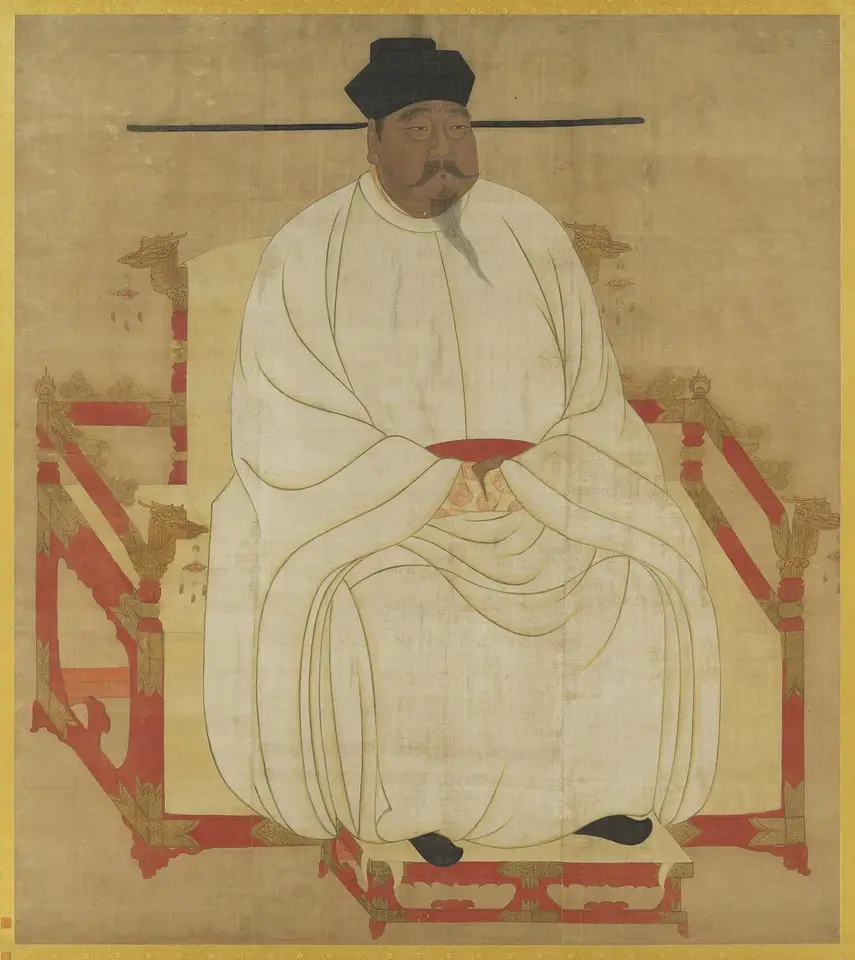
唐询
Tang Xun (1005–1064), courtesy name Yanyou, was a native of Qiantang County in Hangzhou (modern Zhejiang). He was an accomplished court official, scholar, and cultural connoisseur of the mid-Northern Song dynasty, and the son of Taizong-era minister Tang Su. Initially entering the bureaucracy through ancestral privilege, Tang Xun submitted exceptional policy memorials and rhapsodies in response to an imperial decree during…
Tang Xun (1005–1064), courtesy name Yanyou, was a native of Qiantang County in Hangzhou (modern Zhejiang). He was an accomplished court official, scholar, and cultural connoisseur of the mid-Northern Song dynasty, and the son of Taizong-era minister Tang Su. Initially entering the bureaucracy through ancestral privilege, Tang Xun submitted exceptional policy memorials and rhapsodies in response to an imperial decree during the Tiansheng era, earning a special imperial award of the jinshi degree. Over decades of dedicated administrative service, he governed Changxing, Guizhou, Huzhou, Suzhou, and Hangzhou, and served as Fiscal Commissioner of Jiangxi and Fujian, Drafter of Imperial Edicts, Hanlin Academician Reader-in-Waiting, and Supervising Secretary. Renowned for his mastery of court protocol and administrative pragmatism, Tang was equally celebrated for his calligraphy and connoisseurship of scholarly paraphernalia. His pioneering three-volume treatise Yanlu (Catalogue of Inkstones) was China's first systematic monograph dedicated to the geology, aesthetics, craft, and appraisal of inkstones, exerting a profound influence on literati material culture.
Born into the prominent Tang clan of Qiantang; his father was Vice Director in the Ministry of Justice.
Entered imperial service through ancestral shade as Registrar in the Directorate for the Palace Buildings.
Submitted policy memorials praised by Emperor Renzong, who specially conferred upon him the jinshi degree.
Governed Changxing County in Huzhou, implementing fair taxes and eliminating corrupt local clerks.
Recommended by Hanlin Academician Wu Yu as Palace Censor, but reassigned to Luzhou due to kinship ties with Grand Councilor Jia Changchao.
Dispatched as Fiscal Commissioner of Fujian, regulating maritime commerce and restoring commercial stability.
Summoned to the capital as Drafter of Imperial Edicts; later governed Suzhou and Hangzhou with widespread acclaim.
Appointed Academician Reader-in-Waiting of the Hanlin Academy, Supervising Secretary, and Administrator of the Court of Imperial Sacrifices.
Passed away in Kaifeng at age sixty; Emperor Yingzong posthumously bestowed upon him the rank of Vice Minister of Rites.
Tang Xun was born into an eminent administrative lineage in Qiantang, Hangzhou. His father, Tang Su, was an esteemed classicist who served Emperor Taizong and Emperor Zhenzong, rising to Vice Director in the Ministry of Justice. Inheriting a rigorous tradition of scholarship and classical calligraphy, Tang Xun developed high administrative ambitions and broad intellectual interests from youth.
Though eligible for automatic hereditary office, Tang was determined to prove his worth through examination scholarship. During the Tiansheng era, Emperor Renzong summoned talented men across the empire to submit policy writings. Tang presented his Grand Ritual Rhapsody (Dali Fu) along with comprehensive strategies on civil governance. Deeply impressed by Tang's eloquent style and practical insight, Renzong granted him an honorary jinshi degree and appointed him to the Court of Imperial Sacrifices.
Tang Xun was appointed Magistrate of Changxing County. The region had long suffered from litigation backlogs and entrenched local powerholders. Tang personally adjudicated hundreds of pending cases, disciplined corrupt clerks, and equalized corvee duties, making Changxing a model district. Later promoted to Court Gentleman for Ceremonial and Prefect of Guizhou (modern Zigui, Hubei), his administrative competence earned high commendation from Hanlin Academician Wu Yu, who recommended him for the Palace Censorship.
However, before Tang could assume the censorial post, his mother passed away, obliging him to observe three years of mourning. By the time his mourning concluded, Wu Yu had risen to Participant in Determining Governmental Matters (Vice Grand Councilor). Because Tang had marital connections with Prime Minister Jia Changchao, Wu Yu insisted that Tang avoid censorial duties to preserve institutional impartiality, resulting in Tang's transfer to Luzhou.
Customarily, outgoing prefects were granted an imperial audience with the emperor before departure, but Wu Yu blocked Tang's audience citing administrative precedent. Feeling humiliated, Tang subsequently submitted a memorial urging the abolition of the Decree Examinations from which Wu Yu had graduated. Emperor Renzong recognized personal antagonism and shelved the proposal. Tang subsequently served with distinction as Prefect of Huzhou.
During the Huangyou and Zhihe eras, Tang served as Fiscal Commissioner of Jiangxi and then Fujian. In coastal Fujian, maritime revenues and salt monopolies were critical to fiscal stability. Tang reformed overseas trade taxation, suppressed coastal banditry, and fostered thriving maritime merchant communities. His success led to his recall to the capital as Assistant Finance Commissioner.
In Emperor Renzong's final years, Tang was appointed Drafter of Imperial Edicts. When his relative Zeng Gongliang joined the Grand Council, Tang voluntarily requested regional transfer to avoid conflict of interest, successfully governing Suzhou, Hangzhou, and Qingzhou. Under Emperor Yingzong, Tang returned to Kaifeng as Hanlin Academician Reader-in-Waiting, Supervising Secretary, and Administrator of the Court of Imperial Sacrifices. In 1064, he passed away in the capital at age sixty and was posthumously honored as Vice Minister of Rites.
Beyond his stellar bureaucratic record, Tang Xun gained immortal renown as a connoisseur of scholars' studio objects. Throughout his travels across the empire, he collected, tested, and classified hundreds of precious antique and contemporary inkstones.
In his later years, Tang synthesized his practical insights into Yanlu (Catalogue of Inkstones) in three volumes. His monograph established the foundational paradigm of inkstone studies: categorizing stones by geographical quarries—such as Duanxi water-cave stone, Shezhou dragon-tail stone, Hongsi stone, and Chengni clay—and evaluating their geological hardness, tactile texture, water-retention properties, and abrasive interaction with pine-soot ink. His work paved the way for subsequent treatises by Su Shi and Mi Fu.
Tang was also an accomplished calligrapher. In his youth, he acquired several authentic lines of cursive calligraphy by Tang master Ouyang Xun. He practiced these models day and night, developing a supple, vigorous, and disciplined hand.
Tang was famed for his fastidious aesthetic standards, refusing to put brush to paper unless writing with top-tier ink on the finest parchment. His letters and running script were eagerly sought after by contemporary connoisseurs, and master calligrapher Huang Tingjian praised his brushwork for capturing the pure aristocratic air of the Jin and Tang masters.
FIGURES ASSOCIATED WITH THIS DYNASTY