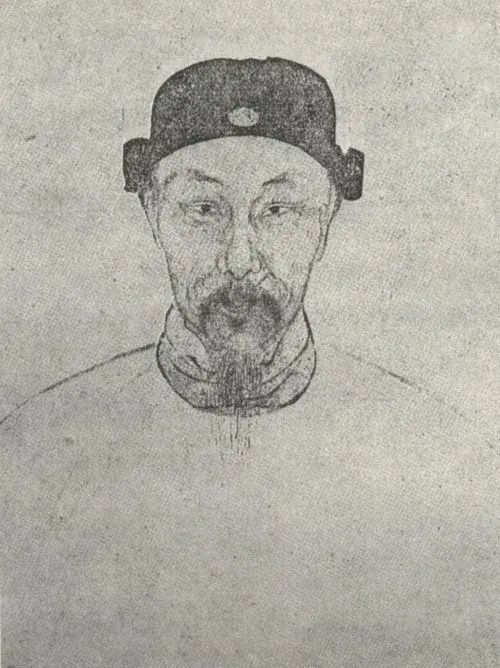
PROFILE
Tang Shunzhi (唐顺之, 1507–1560), courtesy name Yingde (应德) or Yixiu (义修), literary name Jingchuan (荆川) and posthumous name Xiangwen (襄文), was a native of Wujin (武进), Changzhou Prefecture, South Zhili. He was an eminent statesman, essayist, military strategist, mathematician, and heroic coastal defender of the mid-Ming Dynasty. In 1529 (the 8th year of the Jiajing era), he placed first in the metropolitan examinations as huiyuan, received the second-class first-place honor (chuanlu) in the palace examination, and eventually rose to Vice Minister of War, Right Assistant Censor-in-Chief, and Governor of Fengyang (Fengyang Xunfu).
In literature, Tang Shunzhi stood as the principal theorist and leader of the Tang-Song School (Tang-Song Pai), forming the Three Great Masters of the Jiajing Era alongside Wang Shenzhong and Gui Youguang. Forcefully rejecting the rigid, formulaic imitation practiced by the Seven Masters, he insisted that prose must "spring straight from the sincere heart and convey authentic human spirit" (zhi ju xiongyi, xinshou nianchu, jie wei zhen jingshen); his monumental sixty-four-volume anthology Wen Bian permanently codified the canon of the "Eight Great Masters of Tang and Song." In civil examination essays, he pioneered the technique of integrating classical prose structures into eight-legged essays, recognized by Qing scholar Fang Bao as an epochal breakthrough. In military defense, he was a master of naval strategy, ordnance, and tactics; during the devastating mid-sixteenth-century wokou crisis, he personally commanded naval forces at the glorious Battle of Sansha and Battle of Yaojiadang, before dying of exhaustion aboard an ocean vessel off Jiangyin. In mathematics, he mastered spherical trigonometry and circle-cutting algorithms, authoring Gougu Cewang Lun and Hushi Lun. He was posthumously granted the title Minister of War and the posthumous name Xiangwen.
- Courtesy Name
- Yingde (应德), Yixiu (义修)
- Literary Name
- Jingchuan (荆川)
- Posthumous Name
- Xiangwen (襄文)
- Ancestral Home
- Wujin County, Changzhou Prefecture, South Zhili (南直隶常州府武进县, present-day Changzhou, Jiangsu)
- Birth Date
- November 9, 1507 (5th day of the 10th lunar month of the 2nd year of the Zhengde era of the Ming Dynasty)
- Death Date
- April 25, 1560 (1st day of the 4th lunar month of the 39th year of the Jiajing era of the Ming Dynasty)
- Age at Death
- 54
- Major Offices
- Vice Director in the Ministry of Rites (Libu Yuanwailang, 礼部员外郎), Compiler in the Hanlin Academy (Hanlin Bianxiu, 翰林院编修), Vice Minister of War and Right Assistant Censor-in-Chief (Bingbu You Shilang jian You Qian Duyu Shi, 兵部右侍郎兼都察院右佥都御史), Governor of Fengyang (Fengyang Xunfu, 凤阳巡抚)
- Historical Identity
- Eminent Ming Dynasty writer, military strategist, mathematician, and anti-wokou hero, leader of the Tang-Song School, one of the Three Great Masters of the Jiajing Era
BIOGRAPHY
Chronology
- 1507 (Zhengde 2) | Birth in Changzhou | Born into an elite scholar-official family at Yishutang in Qingguo Lane, Changzhou, displaying unmatched intellect and moral rectitude from early youth.
- 1528 (Jiajing 7) | Provincial Graduate | Succeeded in the South Zhili provincial examinations in Nanjing, gaining widespread recognition for his profound scholarship.
- 1529 (Jiajing 8) | Huiyuan and Imperial Praise | Placed first in the metropolitan examination as huiyuan and first in the second class at the palace examination; the Jiajing Emperor personally inscribed imperial commendations upon his paper.
- 1532 (Jiajing 11) | Ministry of Personnel Post | Transferred to the Ministry of Personnel, strictly resisting corruption and refusing factional patronage from court grandees.
- 1533 (Jiajing 12) | Dismissal from Hanlin | Appointed Hanlin Compiler; refused factional overtures from Senior Grand Secretary Zhang Cong and pleaded illness, resulting in his angry dismissal.
- 1539 (Jiajing 18) | Imperial Reappointment and Banishment | Recalled as Hanlin Reader and Director of Studies; boldly remonstrated against premature palace ceremonies for the Crown Prince, causing the furious Jiajing Emperor to strip him of all rank.
- 1558 (Jiajing 37) | Recalled for Frontier Defense | Amid raging wokou pirate invasions, recalled by imperial decree to inspect northern frontier fortifications at Jizhou and coordinate coastal defense.
- 1559 (Jiajing 38) | The Great Victory of Sansha | Appointed to supervise maritime military forces; led naval fleets into ocean waves to smash pirate armadas at Sansha and Yaojiadang.
- 1560 (Jiajing 39) | Maritime Martyrdom | Elevated to Vice Minister of War and Governor of Fengyang; succumbed to chronic illness and exhaustion aboard an ocean command ship off Jiangyin at age fifty-four.
Biography
Examination Triumph and Defiance of Grandees
Tang Shunzhi was born on November 9, 1507 (the 5th day of the 10th lunar month of the 2nd year of the Zhengde era) at Yishutang in Qingguo Lane, Changzhou. His father, Tang Bao, was an austere Confucian scholar who subjected him to rigorous classical discipline. Blessed with exceptional natural intelligence and fierce independence, Tang mastered the Confucian classics, while immersing himself in astronomy, calendar calculations, military treatises, and musical acoustics.
In 1529 (the 8th year of the Jiajing era), twenty-two-year-old Tang sat the imperial metropolitan examination in Beijing, winning first place (huiyuan). Senior Grand Secretary Yang Yiqing was so captivated by Tang's brilliant essay that he sent five consecutive emissaries to Tang's lodgings offering to rank him first in the palace examination (zhuangyuan) in exchange for formal political allegiance. Tang steadfastly refused to compromise his independence. An infuriated Yang relegated him to the first position of the second class (chuanlu). Nevertheless, when the Jiajing Emperor reviewed his examination paper, the monarch was so impressed by its depth that he personally inscribed the imperial comment "thorough and exhaustive analysis," making Tang the rare second-class graduate to receive a direct imperial inscription.
Grand Secretary Zhang Cong, the presiding examiner, likewise sought to recruit Tang as a personal protege, offering him an immediate posting in the prestigious Hanlin Academy. Tang politely declined, accepting a standard appointment as Secretary in the Ministry of War. Following his mother's death in 1530, he observed mourning rites in Changzhou. Returning to office in 1532, he was assigned to the Ministry of Personnel, where he rigorously scrutinized personnel evaluations and refused every corrupt solicitation, earning the hostility of bureaucratic sycophants.
Seclusion in Chenduzhuang and Self-Cultivation
In 1533 (the 12th year of the Jiajing era), Tang was appointed Compiler in the Hanlin Academy. When Zhang Cong again pressured him to enter his inner political faction, Tang submitted an application for medical leave. Zhang, convinced that Tang was deliberately scorning him, angrily confirmed his leave while formally stamping his dossier with the punitive notation "never to be reemployed."
From 1535 to 1557, Tang lived in rural retirement for over two decades, first in the mountains of Yixing and later at Chenduzhuang south of Changzhou. He embraced an ascetic regimen to eradicate material desire: sleeping on a bare wooden doorboard, dressing in coarse hemp robes, eschewing charcoal braziers in freezing winter, refusing fans in humid summer, walking instead of riding sedan chairs, and eating meat only once a month. Under Master Yang Song from Henan, he mastered spear combat and tactical weaponry, while immersing himself in astronomical calculations, trigonometric circle-cutting, and military vehicular battle arrays. Influential grandees including Xu Jie and Zhao Wenhua repeatedly sought to orchestrate his official recall; Zhao even offered to repair Tang's ancestral tombs at public expense, but Tang composed an unyielding letter firmly rejecting the overture.
In 1539, during a brief recall to the Hanlin Academy, Tang incurred imperial wrath by submitting a memorial warning that holding full court ceremonies for the young Crown Prince while the Emperor was in seclusion violated ritual propriety. The enraged Jiajing Emperor stripped him of all status, expelling him as a commoner. When Senior Grand Secretary Yan Song threatened him with intimidation, Tang's close friend Luo Hongxian urged him to place national salvation above personal safety. Under sixty joint ministerial petitions, Tang finally agreed to reenter public service in 1558 (the 37th year of the Jiajing era).
Inspecting Frontiers and Naval Strategy
In 1558, with devastating wokou raids paralyzing the southeastern coastline and northern nomadic cavalry pressing the capital, Tang was appointed Vice Director in the Ministry of War, dispatched to inspect frontier garrisons at Tongzhou and Jizhou. Traveling for two months along the northern Great Wall, he submitted the memorial Matters Regarding Troop Replacement and Provisioning in Jizhou, advocating systematic anti-corruption measures and realistic tactical drilling.
Later that year, the court dispatched Tang to the southeastern front to assist Supreme Commander Hu Zongxian in combating wokou pirates. Recognizing that traditional commanders were terrified of maritime warfare and remained immobilized on land, Tang declared: "If the pirates are not suppressed in one month, punish the generals; if not in three months, punish me!" He boarded ocean naval craft, sailing hundreds of miles through stormy seas to survey naval routes, drawing precise hydrographic charts and severely disciplining negligent officers, which transformed morale across coastal garrisons.
The Great Victories of Sansha and Yaojiadang
In April 1559 (the 38th year of the Jiajing era), massive pirate fleets occupied Chongming Island, massing hundreds of war junks at Sansha to launch incursions into the Yangtze Delta. Tang Shunzhi took personal command of naval operations. Luring the pirate fleet out into open waters, he ordered his naval artillery and ramming vessels to strike simultaneously, sinking over thirty pirate ships and decapitating 120 elite pirate chieftains without allowing a single invader to land—an engagement celebrated as the Battle of Sansha.
When fleeing pirate remnants threatened Huaian and Yangzhou, Tang dispatched General Lu Tang to hold Sansha while rushing with Vice General Liu Xian to Jiangbei, inflicting a crushing defeat upon the invaders at Yaojiadang. Later, when the enemy regrouped at Miaowan, Tang galloped to the front lines brandishing a broadsword, advancing within one hundred paces of the pirate stockade to force the enemy to battle.
Elevated to Governor of Fengyang, Tang petitioned the throne to reopen maritime trading superintendencies (shibosi) in Zhejiang, Fujian, and Guangdong, breaking decades of rigid maritime bans; concurrently, he abolished prohibitions against local fishing boats, using naval escorts to protect fishermen while enlisting them as coastal scouts. Overwhelmed by chronic maritime exposure, salt-spray dampness, and exhaustion, Tang fell gravely ill with spitting of blood. Refusing to step ashore, he summoned his generals aboard his flagship off Tongzhou on April 25, 1560 (the 1st day of the 4th lunar month), expressing peace that he had died in service of his country, before straightening his robes and passing away seated upright at age fifty-four.
Major Achievements
Leadership of the Tang-Song School of Classical Prose
Tang Shunzhi's greatest literary achievement was serving as the primary intellectual pillar of the Tang-Song School (Tang-Song Pai). During the mid-Ming period, the Former and Latter Seven Masters had established an oppressive hegemony, mandating that all prose must imitate pre-Qin and Western Han models, which resulted in artificial compilations of archaic diction.
Tang Shunzhi, alongside Wang Shenzhong and Gui Youguang, waged a courageous aesthetic counter-revolution. In his legendary Letter in Reply to Magistrate Mao Lumen, Tang issued a ringing manifesto, demanding that prose should resemble "a peasant or townsman speaking directly from the throat," asserting that authentic human spirit (zhen jingshen) and emotional sincerity are the true soul of literature. He championed Han Yu, Liu Zongyuan, Ouyang Xiu, and Su Shi, proving that the natural cadence and dynamic structure of Tang-Song prose offered the genuine path forward, laying the groundwork for the late Ming Gong'an School.
Compilation of Wen Bian and Canonization of the Eight Masters
To provide writers with authentic literary models, Tang Shunzhi compiled the comprehensive sixty-four-volume anthology Wen Bian (Textual Compilation). In this masterwork, he integrated selected classical masterpieces from the Zuozhuan, Guoyu, Zhan Guo Ce, and Shiji with extensive collections of essays by Han Yu, Liu Zongyuan, Ouyang Xiu, Su Xun, Su Shi, Su Zhe, Wang Anshi, and Zeng Gong.
Through Wen Bian, Tang systematically demonstrated that superior prose arises from natural thematic flow, rhythmic balance, and pragmatic statecraft. This collection served as the premier literary textbook for generations of scholars, playing a decisive role in permanently establishing the canonical historical status of the "Eight Great Masters of Tang and Song" (Tang Song Ba Dajia).
Pioneering the Integration of Classical Prose into Examination Essays
Tang Shunzhi was also the most transformative eight-legged essay master of the Ming Dynasty. During the mid-sixteenth century, civil examination essays had degenerated into rigid, formulaic rhetorical games.
As a former huiyuan, Tang boldly dismantled the barrier between examination writing (shiwen) and classical prose (guwen). He introduced the organic pacing, narrative depth, and syntactic fluidity of Tang-Song masters into the rigid eight-legged format. His famous examination essays, such as Unifying All Under Heaven (Yikuang Tianxia), combined rigorous adherence to examination rules with soaring philosophical substance. Qing Tongcheng master Fang Bao acclaimed: "The integration of classical prose into examination essays began with Tang Jingchuan," establishing Tang as the pivotal reformer of Ming examination rhetoric.
Military Strategic Masterpieces and Coastal Defense
In military theory, Tang Shunzhi was a visionary strategist. His twelve-volume military compendium Wu Bian (Martial Compilation) synthesized ancient array tactics, logistics, cavalry defense, ordnance deployment, and naval maneuvers into an authoritative manual.
During the anti-wokou crisis, his strategic treatises in Hu Zongxian's Chouhai Tubian—including doctrines on securing ocean approaches, fortifying coastlines, and establishing mutual naval-fishery defense—served as the operational blueprint for victory. His hands-on leadership at Sansha and Yaojiadang proved that scholar-officials could command crack troops in modern combined naval combat.
Advanced Mathematical Treatises
Tang Shunzhi was among the most brilliant scientific minds of mid-Ming China. Proficient in traditional Chinese counting-rod algebra and Islamic trigonometric methods (Huihui Shufa), he authored advanced treatises including Gougu Cewang Lun, Hushi Lun, and Gougu Liulun.
He formulated sophisticated geometric models utilizing the Pythagorean theorem for land surveying, calculated arc-to-chord relationships with trigonometric accuracy, and explored abacus calculation algorithms. His scientific scholarship stood as a shining example of late Ming pragmatic statecraft (jingshi shixue).
Personal Relationships
- Presiding Examiner: Zhang Cong, Senior Grand Secretary who sought to recruit Tang as a political protege, but turned hostile upon being rebuffed.
- Senior Grand Secretary: Yang Yiqing, Ming chief minister who deeply admired Tang's metropolitan paper and sought to rank him first in the palace examination.
- Literary Associate: Wang Shenzhong, prominent Ming writer and co-founder of the Tang-Song School who corresponded extensively with Tang.
- Literary Associate: Gui Youguang, celebrated Ming essayist who championed Tang-Song prose alongside Tang Shunzhi.
- Supreme Commander: Hu Zongxian, Supreme Commander of coastal defense who relied heavily upon Tang to direct naval operations.
- Naval Generals: Lu Tang and Liu Xian, veteran Ming generals who executed Tang's battle plans at Sansha and Yaojiadang.
- Maternal Grandson: Sun Shenxing, late Ming Minister of Rites and philosophical heir who preserved and analyzed Tang's literary lineage.
Historical Evaluation
- History of Ming, Volume 205: "Tang Shunzhi was vast in learning and heroic in talent, exploring astronomy, acoustics, geography, military strategy, and mathematics... His prose sprang straight from his heart, unbound by rigid rules, establishing his own sovereign school. When commanding troops against the wokou, he braved storm and shot, dying in service of the state; all under heaven acclaimed his loyalty."
- Wang Shizhen, Art Garden Previews: "Master Jingchuan's prose is like ten thousand cavalry galloping along a precipice, passionate, resonant, and weathered—the supreme leader of the Tang-Song ancient prose school."
- Gu Xiancheng, Biography of Master Tang Jingchuan: "The Master's essays wrote directly from the sincere heart, opening limitless gates for subsequent generations; his loyal defense against the wokou and martyrdom aboard an ocean ship possessed the magnificent aura of ancient great ministers."
- Fang Bao, Preface to Ming Prose: "The practice of using classical prose in examination essays began with Tang Jingchuan. Blending classics and historiography with luminous clarity, it marked the absolute peak of Ming examination literature."
Related Entries
- Tang-Song School (Tang-Song Pai)
- Three Great Masters of the Jiajing Era (Jiajing San Dajia)
- Wen Bian
- Chouhai Tubian
- Wokou Coastal Defense (Kangwo Zhanzheng)
- Gougu Cewang Lun
- Gui Youguang
- Wang Shenzhong