Birth in Lingnan
Born in Tangjia Village, Tangjiawan Town, Xiangshan County, Guangzhou Prefecture, Guangdong
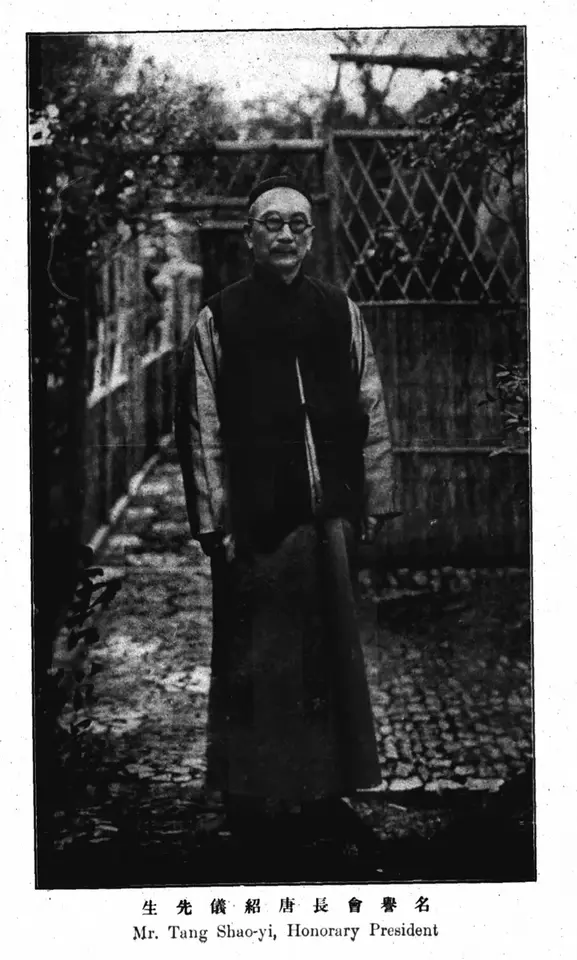
唐绍仪
Tang Shaoyi (唐绍仪, January 2, 1862–September 30, 1938), courtesy name Shaochuan, was an illustrious modern Chinese diplomat, constitutional statesman, and the first Premier of the Republic of China. Born in Tangjiawan, Xiangshan County, Guangdong, he was selected in 1874 as part of the third cohort of the government-sponsored Chinese Educational Mission to study in the United States, attending Hartford Public High School and…
Tang Shaoyi (唐绍仪, January 2, 1862–September 30, 1938), courtesy name Shaochuan, was an illustrious modern Chinese diplomat, constitutional statesman, and the first Premier of the Republic of China. Born in Tangjiawan, Xiangshan County, Guangdong, he was selected in 1874 as part of the third cohort of the government-sponsored Chinese Educational Mission to study in the United States, attending Hartford Public High School and Columbia University. Recalled to China in 1881, he was assigned to the Korean Maritime Customs under Paul Georg von Möllendorff. During the Gapsin Coup in Seoul in December 1884, Tang displayed remarkable courage by rescuing imperial loyalist ministers under heavy fire, earning the enduring admiration of General Yuan Shikai and serving as his chief advisor in Korea as Trade Commissioner in Yongsan and Chinese Consul-General in Seoul. In 1901, Tang was promoted to Tianjin Customs Intendant, where he successfully negotiated the restitution of Tianjin from the Eight-Nation Alliance, created China's first modern police force to occupy the city, and restored sovereign authority over the Qinhuangdao port and northern railway networks. Appointed Special Plenipotentiary Envoy in 1904, he traveled to Calcutta to negotiate the status of Tibet with British colonial authorities. By tenaciously rejecting the unlawful Lhasa Convention, he secured the signing of the 1906 Convention Between Great Britain and China Respecting Tibet, preserving unambiguous Chinese sovereignty over Tibet. Later, as Governor of Fengtian, he championed Manchurian development through an alliance with American capital. Following the outbreak of the 1911 Revolution, Yuan Shikai appointed Tang as Chief Northern Negotiator in Shanghai. Partnering with Southern Representative Wu Tingfang, Tang embraced republicanism, formulated the Favorable Treatment of the Qing Court, and facilitated the peaceful abdication of the Qing Emperor and the birth of the Republic. In March 1912, Tang was inaugurated as the inaugural Premier of the Republic of China, forming a cross-party coalition cabinet dominated by the Tongmenghui. When President Yuan Shikai repeatedly violated the Provisional Constitution by contracting unauthorized foreign loans and bypassing cabinet countersignatures, Tang resigned in June 1912 to defend constitutional legality. He later supported the National Protection War, co-led the Constitutional Protection Government in Guangzhou as one of its seven presiding directors, and served as Chief Southern Representative at the 1919 Shanghai Peace Conference. In his later years, he served as magistrate of his native Zhongshan County, pioneering model local autonomy. He was assassinated at his Shanghai residence on September 30, 1938, at age seventy-six, and was posthumously commended by the National Government.
Born in Tangjia Village, Tangjiawan Town, Xiangshan County, Guangzhou Prefecture, Guangdong
Selected into the third group of the Chinese Educational Mission to study in Hartford and Columbia University
Recalled to China by the conservative court; enrolled in the Tianjin Naval Academy
Dispatched to Joseon Korea to assist Paul Georg von Möllendorff in organizing Korean maritime customs
Rescued wounded Korean ministers during the Gapsin Coup in Seoul, winning Yuan Shikai's absolute confidence
Appointed Chinese Trade Commissioner in Yongsan and Acting Representative in Seoul
Appointed Consul-General to Joseon Korea following the Sino-Japanese War, safeguarding Chinese interests
Appointed Tianjin Customs Intendant, recovering the city from foreign allied troops and establishing modern police
Dispatched to Calcutta as Special Treaty Envoy to negotiate the status of Tibet with British colonial authorities
Concluded the Convention Respecting Tibet in Beijing, securing sovereign rights against foreign annexation
Appointed Governor of Fengtian to implement Manchurian administrative reforms and court American investments
Dispatched on a diplomatic mission to Washington, successfully directing the Boxer Indemnity remission toward educational fellowships
Appointed Minister of Posts and Communications, resigning shortly thereafter over bureaucratic interference
Appointed Chief Northern Negotiator in Shanghai; embraced the republic and formulated the imperial abdication terms
Inaugurated as the first Premier of the Republic of China; resigned to protest Yuan Shikai's autocracy
Joined Sun Yat-sen in Guangzhou, elected as one of the Seven Directors of the Military Government
Served as Chief Southern Representative at the Second North-South Peace Conference in Shanghai
Served as magistrate of Zhongshan County, promoting local self-governance, highway construction, and seaport development
Tragically assassinated by nationalist intelligence agents at his Shanghai residence on September 30 at age seventy-six
Tang Shaoyi was born into an affluent merchant family engaged in international maritime trade in Tangjiawan, Xiangshan County, Guangdong. Moving to Shanghai in childhood, he acquired comprehensive English training and early exposure to Western scientific knowledge. In 1874, under the visionary auspices of Rong Hong (Yung Wing), the Qing court selected Tang into the third cohort of the Chinese Educational Mission. The twelve-year-old youth sailed across the Pacific to Connecticut, where he attended Hartford Public High School and Springfield School, mastering Western jurisprudence, history, and natural sciences before matriculating at Columbia University in New York.
In 1881, conservative Qing courtiers persuaded the throne to abort the mission on charges that the students were abandoning Confucian traditions. Tang was forced to return to China prior to receiving his academic degree, entering the Tianjin Western Learning Academy attached to the Beiyang Fleet. In 1882, following the Imo Incident in Korea, Viceroy Li Hongzhang appointed the former German consul in Tianjin, Paul Georg von Möllendorff, to organize the Korean Maritime Customs. Due to Tang's fluency in English and thorough grasp of international law, he was chosen as Möllendorff's confidential attache, inaugurating his diplomatic career in Seoul.
During his initial years in Korea, Tang demonstrated superior organizational ability and diplomatic agility. On December 4, 1884, the pro-Japanese Gapsin Coup erupted in Seoul, as radical reformers slaughtered conservative pro-Qing ministers during an inaugural banquet at the central postal bureau. Tang, who was stationed nearby, seized a pistol and sprinted into the palace grounds amid heavy fire, successfully evacuating wounded dignitaries to safety. Following the military suppression of the rebellion by Yuan Shikai, Tang's bravery won Yuan's lasting respect, initiating a decades-long political partnership.
In 1885, after a brief posting in the Tianjin Maritime Customs, Tang was reassigned to Korea as Yuan Shikai's chief diplomatic secretary and confidential advisor. In late 1889, he was elevated to Trade Commissioner in Yongsan and Chinese Consul in Seoul. When Yuan took extended leave for his mother's funeral in the autumn of 1891, Tang served as Acting Imperial Resident for seven months, skillfully managing volatile Sino-Japanese-Russian rivalries while defending China's suzerainty. Following the outbreak of the First Sino-Japanese War in 1894, Tang facilitated Yuan's safe extraction from Seoul. In 1895, the Qing government appointed Tang as Consul-General to Korea, where he spent three exhausting years protecting Chinese merchant communities amid Japanese colonial encirclement before returning to China in late 1898 for his father's funeral.
In late 1901, Viceroy Li Hongzhang died and Yuan Shikai was promoted to Viceroy of Zhili and Superintendent of Northern Trade. Yuan immediately elevated Tang to Tianjin Customs Intendant and Customs Supervisor. At that juncture, the municipal center of Tianjin had been occupied and governed for over two years by the provisional military administration of the Eight-Nation Alliance. Foreign generals utilized every legal pretext to delay the restoration of Chinese jurisdiction, demanding that Chinese imperial troops remain barred within a twenty-mile radius of the city.
Tang devised an ingenious administrative solution in consultation with Yuan Shikai. He selected two thousand crack troops from the newly drilled army, restructured them into a modern municipal police force, and marched them directly into Tianjin under his personal command upon the allied departure. This maneuver complied strictly with international conventions while firmly establishing Chinese civil jurisdiction, inaugurating China's modern municipal police system. In rapid succession, Tang negotiated the recovery of operational control over the Shanhaiguan railway lines from British syndicates and asserted sovereign administrative authority over the Qinhuangdao treaty port. Concurrently serving as Director of Beiyang University, he recruited renowned Western scholars, reformed academic curricula, and established Tianjin as a premier model of modern regional governance.
In the summer of 1904, exploiting the distraction of the Russo-Japanese War, British military forces invaded Tibet, occupied Lhasa, and coerced local Tibetan ecclesiastical authorities into signing the unilateral Lhasa Convention. The agreement converted Tibet into a virtual British protectorate, outraging public opinion across China. Recognizing that military resistance was unfeasible, the Qing court appointed the formidable Tang Shaoyi as Special Plenipotentiary Envoy in late 1904 to negotiate directly with British imperial representatives in India.
Formal negotiations opened in Calcutta in early 1905. The British chief negotiator, Louis Dane, backed by Viceroy Lord Curzon, adopted an aggressive posture, attempting to dictate terms and force Chinese ratification of the Lhasa treaty. Tang stood immovable. Citing established treaties and the law of nations, he asserted that Tibet was an indivisible component of China and that local agreements lacked legal validity without central imperial assent. When the British attempted intimidation, Tang broke off negotiations and returned to Beijing, demonstrating unmatched diplomatic resolve.
Back in Beijing, Tang was appointed Junior Vice-President of the Ministry of Foreign Affairs, continuing negotiations with British Minister Ernest Satow. Tang's relentless legal arguments compelled Britain to retreat from its annexationist demands. On April 27, 1906, the two sides concluded the Convention Respecting Tibet. The treaty formally acknowledged China's unassailable sovereign authority over Tibet, stipulating that Britain would neither annex Tibetan territory nor interfere in Tibetan internal affairs, nor permit any other foreign power to do so. China agreed to disburse the indemnity stipulated in the Lhasa Convention to secure the complete evacuation of British garrisons. This triumph halted the imperialist detachment of Tibet and secured Tang's international renown.
Beginning in 1906, Tang was appointed Director-General of the National Railway Company, Co-Director of the Revenue Council, and Senior Vice-Minister of Posts and Communications. Amid the nationwide Rights Recovery Movement, Tang prioritized national sovereign control over strategic transport corridors. He oversaw the financial recovery of the Beijing-Hankou Railway and expanded Chinese administrative oversight over the Shanghai-Nanjing and Guangzhou-Kowloon railways. In the Revenue Council, he collaborated with Tie Liang to restrict the autocratic authority of Inspector-General Robert Hart, steadily reasserting sovereign Chinese authority over customs receipts and bureaucratic personnel.
In 1907, when Manchuria was reorganized into three standard provinces, the court named Tang as the inaugural Governor of Fengtian under Governor-General Xu Shichang. Confronting mounting Japanese colonial penetration following the Russo-Japanese War, Tang pursued a bold policy of checking Japan through an alliance with the United States. He formulated the Jin-Ai Railway project to construct a trans-Manchurian trunk line connecting Jinzhou to Aihui with American capital, aiming to neutralize the commercial monopoly of the South Manchuria Railway. Furthermore, he drafted a memorandum with US Consul-General Willard Straight to secure a twenty-million-dollar American loan to found a Manchurian development bank.
In June 1908, the United States Congress authorized the remission of a substantial portion of its Boxer Indemnity surplus. Seizing this opportunity to court American capital and finalize the Manchurian loan agreement, the Qing court appointed Tang as Special Ambassador to the United States and Europe in late 1908. Arriving in Washington, Tang was granted a formal audience with President Theodore Roosevelt.
However, the unexpected deaths of the Guangxu Emperor and Empress Dowager Cixi in Beijing threw the imperial court into political turmoil. The new Regent, Prince Chun (Zaifeng), promptly dismissed Yuan Shikai, destabilizing Tang's domestic backing. Simultaneously, the signing of the Root-Takahira Agreement between Washington and Tokyo undermined American willingness to confront Japanese ambitions in Manchuria, causing the loan negotiations to falter. Nevertheless, Tang achieved a historic educational breakthrough by negotiating the allocation of the remitted Boxer Indemnity funds exclusively toward educational fellowships for Chinese students in the United States.
Upon his return, Tang directed the establishment of the Office of Educational Mission to the United States and the founding of Tsinghua Academy (the predecessor of Tsinghua University) in 1909. This initiative established a continuous pipeline sending thousands of brilliant Chinese scholars to Western universities, revolutionizing modern Chinese science, engineering, diplomacy, and scholarship. In 1910, Tang was appointed Minister of Posts and Communications, but resigned shortly thereafter to protest aristocratic interference in railway concessions.
On October 10, 1911, the Wuchang Uprising erupted, swiftly dismantling imperial control across southern and central China. Imperial Premier Yuan Shikai was compelled to open negotiations with the southern revolutionaries. Recognizing Tang's progressive stature and his standing among both northern generals and southern republicans, Yuan dispatched Tang to Shanghai as Chief Northern Plenipotentiary; the southern revolutionary government appointed former minister Wu Tingfang.
Between December 18 and December 31, 1911, Tang and Wu convened five historic peace conferences at the Shanghai Municipal Council. Tang recognized the historical inevitability of republicanism, declaring that the Chinese populace possessed the political maturity for democratic governance and repudiating constitutional monarchy. Collaborating intimately with Wu, Tang negotiated a comprehensive ceasefire, agreed on convening a national convention to determine the national polity, and accepted that Yuan Shikai would be supported as president of a unified republic.
Although Yuan Shikai temporarily rescinded Tang's negotiating credentials due to suspicions over his republican sympathies, Tang remained in Shanghai as an indispensable intermediary. He assisted in drafting the historic Articles of Favorable Treatment of the Qing Court, which guaranteed the financial stipends and spiritual honors of the abdicated emperor. On February 12, 1912, the Qing court issued the Imperial Edict of Abdication, terminating more than two thousand years of imperial monarchical rule in a peaceful transition orchestrated largely through Tang's statesmanship.
On February 15, 1912, the Nanjing Provisional Senate elected Yuan Shikai as Provisional President. To restrain presidential autocracy, the senate promulgated the Provisional Constitution of the Republic of China, instituting a responsible cabinet system requiring presidential edicts to be countersigned by the cabinet. On March 13, Yuan formally nominated Tang Shaoyi as the first Premier of the Republic of China. Arriving in Nanjing, Tang joined the Tongmenghui with Sun Yat-sen's blessing and constructed a historic coalition cabinet featuring republican luminaries such as Song Jiaoren, Cai Yuanpei, and Wang Chonghui.
Tang's cabinet advanced an ambitious reform agenda: enforcing civil supremacy over regional military warlords, establishing clean civil service standards, convoking a national parliament, and standardizing tax and fiscal currencies. Tang insisted that the cabinet operate as the supreme national executive authority, scrupulously exercising its statutory countersignature power.
However, Yuan Shikai's autocratic instincts brought him into immediate collision with Tang's constitutional cabinet. The conflict culminated over unauthorized foreign loans and administrative appointments: Yuan attempted to contract a massive consortium loan without parliamentary approval, which Tang opposed; furthermore, Yuan arbitrarily revoked the agreed appointment of Wang Zhixiang as Military Governor of Zhili. Refusing to legitimize Yuan's despotic breach of the constitution, Tang quietly departed Beijing for Tianjin on June 15, 1912, submitting his formal resignation on June 27. His Tongmenghui ministers resigned in solidarity, exposing Yuan's authoritarian schemes to the nation.
Following his resignation, Tang settled in Shanghai, where he co-founded the Venus Life Insurance Company with prominent merchants, presiding as board chairman. Following the assassination of Song Jiaoren in 1913, Tang severed all ties with Yuan Shikai, publicly castigating the Beijing regime. In late 1915, when Yuan attempted to restore monarchical rule, Tang actively participated in the National Protection War, issuing nationwide telegrams urging Yuan to abdicate and preserve the republic.
In 1917, after Premier Duan Qirui dissolved the National Assembly and abrogated the Provisional Constitution, Sun Yat-sen launched the Constitutional Protection Movement in Guangzhou. Tang traveled south to support the constitutional cause. When the military government was reorganized in May 1918 under a collegiate committee of seven presiding directors, Tang was elected alongside Sun Yat-sen and Wu Tingfang, directing foreign policy and political strategy.
In early 1919, amid the international peace wave following World War I, Beijing and Guangzhou opened the Second North-South Peace Conference in Shanghai. Tang was appointed Chief Southern Representative, confronting Northern Representative Zhu Qiqian. Throughout the talks, Tang unswervingly defended the 1912 Provisional Constitution, insisting upon the restoration of the legitimate parliament and the cancellation of secret Sino-Japanese military pacts. Faced with northern insincerity and southwestern warlord factionalism, Tang refused to surrender principle, eventually walking out of the conference in 1920 to resume the anti-warlord struggle alongside Sun Yat-sen.
Following the establishment of the Nanjing Nationalist Government in 1927, Tang was appointed a member of the National Government Council and the Central Supervisory Committee. However, disdaining factional intrigue in Nanjing, Tang devoted his twilight years to local modernization in his native district. In 1929, he assumed the chairmanship of the Zhongshan Model County Political Tutelage Commission, and in 1931 formally accepted appointment as Magistrate of Zhongshan County. The spectacle of a former prime minister serving as a humble county magistrate was unprecedented in modern history. Tang proclaimed his ambition to transform Zhongshan into a world-class model of self-governance within twenty-five years.
During his administration, Tang abolished extortionate local surtaxes and rationalized public revenues. He directed the construction of hundreds of kilometers of macadamized highways connecting rural villages with coastal towns, commissioned European marine architects to design a modern deep-water free port at Tangjiawan to break the commercial monopoly of colonial Hong Kong, and founded modern secondary schools and agricultural experimental stations. In October 1934, after resisting the predatory taxation of Guangdong warlord Chen Jitang, mutinous local troops incited by Chen's subordinates besieged the magistrate's residence, forcing Tang to retire permanently to his French Concession home in Shanghai.
Following the outbreak of the Second Sino-Japanese War and the fall of Shanghai in late 1937, the aging Tang remained at his residence on Ferguson Road (modern Wukang Road). Desperate to assemble a prestigious collaborationist administration, Japanese intelligence chief Kenji Doihara targeted Tang as the ideal puppet leader under the secret "South Tang, North Wu" conspiracy. On September 28, 1938, Doihara covertly visited Tang's residence to solicit his participation. Nationalist military intelligence under Dai Li, misconstruing the meeting as impending treason, ordered his liquidation. On September 30, 1938, nationalist agents disguised as antique dealers entered Tang's home; as Tang leaned forward to inspect an antique vase, an operative struck him from behind with an axe, mortally wounding him at age seventy-six. Chiang Kai-shek and the Nationalist Government subsequently issued official decrees of state condolences and public burial, honoring his foundational services to the Republic.
From 1882 onward, Tang Shaoyi served in Joseon Korea for over a decade assisting with foreign affairs and maritime customs, earning widespread diplomatic acclaim amid the volatile late nineteenth-century East Asian geopolitical crisis. During the Gapsin Coup in Seoul in 1884, Tang personally took up arms and rushed under fire through burning streets to rescue wounded pro-Qing cabinet ministers, demonstrating remarkable physical courage and diplomatic composure. Serving successively as Qing commercial commissioner in Yongsan and Consul-General in Seoul, Tang staunchly resisted Japanese and Russian efforts to squeeze Chinese merchants out of the Korean market. Following China's defeat in the First Sino-Japanese War, when Korea became a virtual Japanese protectorate and bilateral relations were fraught with peril, the Qing court reappointed Tang to Seoul to manage Chinese affairs. Operating without the backing of imperial military power, Tang coordinated with European and American consuls to counter Japanese commercial monopolies, safeguarding Chinese merchants' legal property, business houses, and shipping rights in Incheon, Busan, and Wonsan, leaving a foundational record in protecting overseas Chinese interests.
In 1904, following the Younghusband expedition to Lhasa, the British attempted to establish an exclusive protectorate over Tibet through the Convention of Lhasa. Appointed Special Commissioner for Tibetan Negotiations, Tang traveled to Calcutta in 1905, where he adamantly rejected Lord Curzon's demands. Employing modern international law and historical documentation, Tang maintained that the Convention of Lhasa was invalid without Beijing's ratification, asserting China's undisputed sovereignty. Breaking off talks when British negotiators proved unyielding, Tang resumed negotiations in Beijing with Sir Ernest Satow in 1906, securing the Convention Between Great Britain and China Respecting Tibet, which formally recognized Chinese territorial sovereignty and barred foreign intervention in Tibetan governance, thwarting imperialist attempts to detach Tibet.
As Yuan Shikai's plenipotentiary representative to the North-South Peace Conference at the Shanghai Town Hall, Tang conducted five historic sessions of negotiations with southern representative Wu Tingfang. In the first phase, Tang strictly enforced the ceasefire agreement, creating buffer zones along frontline combat sectors to halt the spread of civil war into the interior. In the constitutional debates, Tang publicly supported the republican form of government, overcoming the objections of monarchical constitutionalists. In the negotiations over the National Assembly and imperial retirement, Tang drafted the pragmatic Articles of Favorable Treatment for the Qing Imperial House, securing imperial abdication without bloodshed. Even after Yuan Shikai rescinded his plenipotentiary credentials, Tang continued his tireless mediation between northern and southern leaders, ensuring the peaceful abdication of the Qing emperor and the unified establishment of the Republic of China.
Appointed the first Premier of the Republic of China in March 1912, Tang established China's initial responsible cabinet system. Resisting Yuan Shikai's autocratic tendencies, Tang joined the Tongmenghui to organize a cross-party coalition cabinet, appointing revolutionary leaders including Song Jiaoren andCai Yuanpei. He implemented programs separating civil and military administrations, protecting citizens' constitutional rights, and fostering industry. When Yuan Shikai attempted to bypass cabinet countersignatures to secure unauthorized foreign loans and unilaterally interfered with the military governor of Zhili, Tang defended constitutional legality by resigning along with his Tongmenghui ministers, setting a lasting precedent for democratic integrity.
As Customs Taotai of Tianjin in 1901 following the Boxer uprising, Tang negotiated the retrocession of the city from the allied powers. Utilizing gaps in international treaties, he organized a modern two-thousand-man municipal police force to assume control of the city, circumventing foreign bans on Chinese garrisons and pioneering modern Chinese municipal administration. As Director-General of the Imperial Railways and senior official in the Ministry of Posts and Communications, Tang recovered administrative control over the Beijing-Hankou Railway through sovereign buyouts, reclaimed sovereign rights over the port of Qinhuangdao, and asserted Chinese authority over customs appointments.
Appointed Governor of Fengtian in 1907, Tang confronted Japanese expansionism through the South Manchuria Railway following the Russo-Japanese War. Formulating the grand strategy of "cultivating civic wisdom internally while securing foreign alliances externally," he advanced a policy of aligning with the United States to balance Japanese power. He drew up blueprints for the Jin-Ai Railway connecting Jinzhou and Aigun, seeking to introduce American engineering capital to construct a trunk line parallel to the South Manchuria Railway to break Japan's transport monopoly. Simultaneously, Tang concluded a secret memorandum with American Consul-General Willard Straight for a twenty-million-dollar low-interest loan from an American banking syndicate to establish a provincial commercial bank, redeem foreign-controlled forestry and mineral concessions, and modernize Manchurian currency. Although unforeseen domestic political shifts halted full implementation, Tang's visionary approach to multilateral diplomacy became an enduring strategic model.
Convinced that modern education was fundamental to national rejuvenation, Tang oversaw Beiyang University while serving as Tianjin Customs Taotai, hiring European and American faculty to institute engineering and legal training, while assisting Yuan Shikai in establishing Shandong University. During his diplomatic mission to the United States in 1908, Tang seized the opportunity presented by the American remission of the surplus Boxer Indemnity, negotiating with American officials and advising the Qing court to allocate the returned funds into an educational trust for study in America. His initiative led to the founding of the China Office for Students in the United States and the construction of Tsinghua College, launching the institutional dispatch of Chinese scholars to America and training a foundational generation of Chinese scientists, engineers, diplomats, and humanists.
As Governor of Fengtian, Tang partnered with Viceroy Xu Shichang to implement modern governance, fostering land reclamation, establishing industrial enterprises, and building modern infrastructure across the Northeast. In his later years, Tang returned to his native Guangdong to serve as magistrate of Zhongshan County, turning it into a model autonomous district under Sun Yat-sen's Three Principles of the People. He oversaw the construction of hundreds of miles of modern roads, planned the modern deepwater commercial harbor at Tangjiawan, and promoted universal rural education, writing an exceptional chapter in the modernization of Chinese county-level administration.
FIGURES ASSOCIATED WITH THIS DYNASTY