Born in Guangxi
Born on January 8 in Guanyang County, Guilin Prefecture, Guangxi.
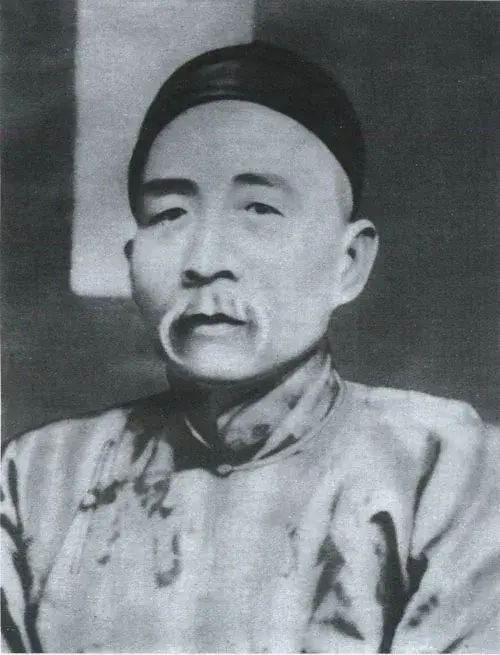
唐景崧
Tang Jingsong (唐景崧, January 8, 1842 – March 2, 1903), courtesy name Weiqing and art name Nanzhusheng, was a native of Guanyang County in Guilin Prefecture, Guangxi, and an eminent patriotic general, civil official, and cultural reformer of the late Qing period. Passing the metropolitan examination as a Palace Graduate in 1865, he was appointed Secretary in the Ministry of Personnel, serving alongside his brothers Tang…
Tang Jingsong (唐景崧, January 8, 1842 – March 2, 1903), courtesy name Weiqing and art name Nanzhusheng, was a native of Guanyang County in Guilin Prefecture, Guangxi, and an eminent patriotic general, civil official, and cultural reformer of the late Qing period. Passing the metropolitan examination as a Palace Graduate in 1865, he was appointed Secretary in the Ministry of Personnel, serving alongside his brothers Tang Jingchong and Tang Jingfeng, who also achieved Hanlin honors, creating the family fame of the "Three Hanlin Brothers." In 1882, as French forces invaded northern Vietnam and threatened China's southwestern frontier, Tang volunteered to cross the southern border to recruit Liu Yongfu's Black Flag Army. Coordinating between the Black Flags and regional Qing armies, he contributed to the victory at the Battle of Paper Bridge, where French commander Henri Rivière was slain. Tang subsequently organized the twelve-battalion Jing Army (Jingziying), commanding troops during the Siege of Son Tay and Tuyen Quang, earning the Manchu warrior title "Hogacun Baturu" and appointment as Circuit Intendant of Taiwan in 1887. Promoted to Administration Commissioner of Taiwan in 1891, he directed the compilation of the General Gazetteer of Taiwan. When the First Sino-Japanese War broke out in 1894, he was named acting Governor of Taiwan. Following the Treaty of Shimonoseki ceding Taiwan in 1895, local gentry and military forces proclaimed the Republic of Formosa (Taiwan Minzhuguo) and elected Tang as its President to lead armed resistance against Japanese occupation. Following the fall of Keelung and severe mutinies in Taipei, he crossed the strait to Xiamen and was ordered into retirement. Living in Guilin, he founded the Tiyong Academy and wrote forty theatrical scripts that modernized Gui Opera. He died in Guangzhou in 1903 at age sixty-one.
Born on January 8 in Guanyang County, Guilin Prefecture, Guangxi.
Passed the palace examination as a Palace Graduate and was appointed Secretary in the Ministry of Personnel.
Following the French seizure of Hanoi, submitted an imperial memorial volunteering to recruit Liu Yongfu's Black Flag Army.
Persuaded Liu Yongfu to attack, resulting in the death of French commandant Henri Rivière; subsequently defended Son Tay.
Raised twelve battalions of the Jing Army in Guangxi with Zhang Zhidong's support, directing operations around Tuyen Quang.
Participated in Sino-French border demarcation, received the warrior title "Hogacun Baturu," and was appointed Taiwan Circuit Intendant.
Promoted to Administration Commissioner of Taiwan, assisting Liu Mingchuan's modernizations and supervising the provincial gazetteer.
Appointed acting Governor of Taiwan upon the outbreak of the Sino-Japanese War, preparing island defenses alongside Liu Yongfu.
Elected President of the Republic of Formosa after the cession of Taiwan; escaped to Xiamen after Keelung fell.
Founded and directed the Tiyong Academy in Guilin, establishing the Guilin Chunban troupe to reform Gui Opera.
Died of illness in Guangzhou on March 2 at age sixty-one; buried at Daxu in Guilin.
Tang Jingsong was born into an educated merchant family in Jiangkou Village, Guanyang County, Guilin Prefecture, Guangxi. Gifted from youth, he achieved first place (Jieyuan) in the Guangxi provincial civil service examination in the eleventh year of the Xianfeng era (1861). In the fourth year of the Tongzhi era (1865), he attained the Metropolitan Graduate (Jinshi) degree in the second class and entered the Hanlin Academy as a bachelor. After finishing his academy term in 1868, he was assigned as an expectant secretary in the Ministry of Personnel in Beijing, remaining in minor departmental clerical posts for over a decade. Possessing a generous temperament and an avid interest in military statecraft, Tang deeply lamented the late Qing frontier crises and Western imperialist encroachments, dedicating his leisure to studying domestic and foreign gazetteers, topographical charts, and military treatises.
In the first month of the eighth year of the Guangxu era (1882), French expeditionary forces invaded China's tributary state of northern Vietnam (Tonkin), capturing Hanoi and pressing directly toward the Sino-Vietnamese border. Confronting widespread hesitation and defeatism among senior court officials, Tang, then forty years of age and holding merely a minor sixth-rank secretary post, submitted an impassioned memorial in July 1882 requesting permission to travel to Vietnam at his own expense to investigate conditions and pacify Liu Yongfu's Black Flag Army along the border to resist French aggression. Impressed by his resolute patriotism, Empress Dowager Cixi issued a secret decree dispatching him to Yunnan to serve under Governor-General Cen Yuying, inaugurating his renowned military career.
In December 1882, traveling lightly, Tang arrived in Hue and navigated malarial jungles and French patrols to reach the remote border fortress of Baosheng (Lao Cai) to seek out the Black Flag Army camp. At the time, Liu Yongfu was suspicious and guarded because imperial authorities had long regarded his forces as renegade outlaws. Meeting Liu at Baosheng, Tang delivered an impassioned appeal grounded in national survival: "General, you were born a son of China. Now that a foreign invader devours Vietnam and points its swords at our homeland, if you accept dynastic pacification to defend against foreign insult, turning misfortune into auspicious honor and securing peerages will be achieved in a single stroke!" Deeply moved by Tang's sincerity, Liu wept and swore an oath to submit to the Qing court and confront the national peril.
In the spring of 1883, French naval forces under Commander Henri Riviere advanced westward from Hanoi. Tang actively assisted Liu Yongfu in devising ambush tactics, constructing defensive flanking positions at Paper Bridge (Cau Giay) west of Hanoi. On May 19, 1883, the Battle of Paper Bridge was joined; the Black Flag troops drew the enemy in and launched a ferocious counterattack, killing Riviere and dozens of invading officers and soldiers, securing the famous Paper Bridge victory. When the victory reached Beijing, the Qing court rejoiced, conferring fourth-rank official headwear upon Tang along with the title of expectant circuit intendant and the privilege of submitting memorials directly to the throne, establishing his national renown.
By late 1883, the Sino-French War erupted fully. Facing aggressive offensives led by General Charles-Auguste Louis Millot, Tang assisted Liu Yongfu and Yunnan forces in holding crucial defense positions along the Shanxi and Xinghua fronts. During the heavy combat at Shanxi, despite intense French naval gunfire and machine gun barrages, Tang directed frontline defenses from the ramparts, refusing to retreat even after suffering an arrow wound. In the spring of 1884, Tang received imperial orders to recruit troops in Guangdong and Guangxi to form the "Jing Army," commanding four battalions at the strategic frontier node of Lintao. During the defense of Lintao, his troops held out against elite French infantry and heavy artillery, inflicting severe casualties on the invaders.
In the winter of 1884, Tang led the Jing Army alongside Yunnan Provincial Commander Ding Rongguang and Liu Yongfu's Black Flag Army deep into northern Tonkin to invest the French stronghold of Tuyen Quang. During the three-month siege, Tang directed the excavation of dozens of saps and tunnels, employing explosive-packed coffins to blast through reinforced French redoubts and pushing garrison commander Marc-Edmond Duchesne to the brink of defeat. Although relieved by French reinforcements before the citadel could fall, Tang's leadership as a scholar-commander deep in hostile territory earned him imperial acclaim. The court elevated him to second-rank headwear, rewarded him with the yellow riding jacket, and conferred the Manchu warrior title "Dokesingge Baturu."
Following the conclusion of the Sino-French War in 1885, the Qing court recognized Taiwan's vital maritime importance and elevated it to an independent province. In March 1887, Tang was appointed Circuit Intendant of Taiwan and Provincial Education Intendant, taking up residence in Taipei. There, he worked closely with Taiwan's first governor, Liu Mingchuan, to implement modernizing reforms. He oversaw the construction of Taiwan's first modern railway between Keelung and Hsinchu, founded the island-wide telegraph bureau, built modern coastal defense fortresses at Da'an Harbor, Anping, and Qihou, and procured Krupp coastal artillery.
Concurrently managing educational administration, Tang emphasized cultural development. He founded the Haiqiao Scholarship Society in Taipei, restored the Feiting and Chengdai literary societies, established Wenshi and Penghu academies, and invited eminent scholars from the mainland to lecture, fostering cultural vitality across the island. Following Liu Mingchuan's resignation in autumn 1891, Tang was promoted to Provincial Administration Commissioner of Taiwan, overseeing civil governance and fiscal revenues. He rectified cadastral survey abuses, alleviated tax burdens on tenant farmers, and earned widespread respect among local gentry and commoners.
In 1894, with the outbreak of the First Sino-Japanese War, the Qing court appointed Tang acting Governor of Taiwan in October to strengthen southeastern maritime defenses. Taking command amid national peril, Tang drew up a comprehensive defense strategy: assigning Liu Yongfu to Tainan to secure southern defenses, stationing Fujian Fleet Commander Yang Qizhen at Keelung to hold northern strongholds, and personally leading newly raised Dong Army and Guangdong volunteer battalions to defend Taipei while reinforcing the Shiqiuling and Hubawei fortress redoubts.
On April 17, 1895, Li Hongzhang signed the Treaty of Shimonoseki, ceding Taiwan and the Pescadores to Japan. The news stunned Taiwan, where people wept in streets and markets day and night. Tang dispatched urgent, weeping telegrams to the Zongli Yamen and Emperor Guangxu, pleading: "The people of Taiwan are filled with righteous indignation, swearing to live or die with the island; they would rather die fighting than submit to servitude. We beseech the court to retract the decree and salvage the realm!" However, under Japanese threats, the court strictly ordered Tang to turn over his seal and return to the mainland.
Bereft of court support, local Taiwanese gentry led by Qiu Fengjia knelt outside the governor's yamen, pleading with Tang to stay and lead armed resistance. On May 25, 1895, the gentry declared the founding of the Republic of Formosa, electing Tang as President under the reign title Yongqing (Forever Qing) to signal eternal loyalty to the Qing dynasty. On May 29, Japanese troops of the Imperial Guard Division landed at Aodi near Keelung, igniting the defense of Taiwan. Tang mobilized imperial garrisons and local volunteer militias to engage the Japanese in fierce combat at Sandiaoling, Ruifang, and Shiqiuling. However, isolated without ammunition or reinforcements from Beijing, Keelung's outer defenses fell on June 3. Amid mutinous riots in Taipei and the burning of the governor's yamen, Tang recognized the tactical collapse, left Taipei in disguise for Tamsui on June 6, and boarded a German merchant vessel bound for Xiamen.
Following his return to the mainland, the Qing court dismissed Tang from office for disobeying imperial commands and ordered local officials in Guangxi to keep him under close surveillance. Returning to Guilin, Tang secluded himself by Ronghu Lake, building the elegant "Kanqi Pavilion" (Chess-Watching Pavilion) to lament the vicissitudes of life and the loss of Taiwan. Despite his quiet reclusion, he remained deeply concerned for the empire's future, secretly funding the Hundred Days' Reform initiatives of Kang Youwei and Liang Qichao, and sponsoring young scholars such as Ma Junwu to pursue higher education in Japan.
In his final years, Tang devoted his intellectual energies to dramatic literature and poetry, reforming local Guilin operatic styles by synthesizing regional tunes with Kunqu and Pihuang. He authored over forty original theatrical scripts collected in Kanqi Ting Zaju, earning acclaim as a founding patriarch of modern Gui Opera. On March 2, 1903, Tang passed away in Guangzhou at the age of sixty-one, and his remains were interred at Daxu east of Guilin.
Amid the sudden eruption of the Sino-French crisis in 1882, Tang Jingsong, holding merely a junior secretary post in the Ministry of Personnel, risked his life to submit an impassioned memorial volunteering to travel beyond the frontier into Vietnam, creating a classic example of patriotic devotion among scholar-officials. Venturing alone into the malarial frontier of Baosheng, Tang utilized his persuasive eloquence and broad patriotic conviction to dispel the longstanding estrangement between the Black Flag Army and the imperial court, successfully bringing Liu Yongfu into dynastic service as the primary combat force against French encroachment. His mission transformed the balance of military power on the Sino-Vietnamese border, directly facilitating the celebrated victories at Paper Bridge, Shanxi, and Lintao.
When Tang first crossed the border into Vietnam in late 1882 under French dominance of central and southern Tonkin, he placed personal safety aside and traveled disguised as an itinerant scholar through French-controlled areas near Hue and coastal ports. He monitored French naval tonnage, artillery ranges, and troop movement corridors day and night, charting the natural obstacles of regional mountain passes and local grain depots. From these observations, he produced the first precise military defense terrain maps of the Sino-Vietnamese border, dispatching them by courier to the Grand Council and Governor-General Cen Yuying. Upon reaching Baosheng, he borrowed tens of thousands of silver taels from Liangguang Governor-General Zhang Shusheng to distribute pay to wounded Black Flag soldiers, while assisting Liu in enforcing strict discipline to protect local Vietnamese villagers, laying a firm logistical and organizational foundation for the Paper Bridge victory.
During the height of the Sino-French War, Tang laid aside his brush to take up arms, founding the "Jing Army" and campaigning across thousands of miles along the Sino-Vietnamese border. In the engagements at Lintao and the assault on Tuyen Quang, Tang exhibited distinguished tactical leadership and frontline courage. Facing heavy enemy bombardment, he directed forward lines in person and innovatively deployed subterranean saps, coffin mine detonations, and complex defensive trenches to counter French engineers and infantry, pinning down significant French combat forces in the Red River basin for months. His leadership laid the operational foundation for strategic counteroffensives in the overland theater, earning him the prestigious Manchu warrior title of Baturu.
During his service as Circuit Intendant and Provincial Administration Commissioner of Taiwan, Tang served as the chief administrative partner to Governor Liu Mingchuan in modernizing the newly established province. By managing fiscal allocations, maritime customs revenues, and transit duties, he secured the successful opening of Taiwan's first modern state railway and the completion of island-wide telegraph circuits, while supervising the construction of coastal defense artillery fortresses at Keelung, Kaohsiung, and Tainan. Culturally, he established the Haiqiao Scholarship Society, founded academies and literary societies, and brought scholars across the Taiwan Strait to teach, fostering remarkable economic vitality and educational flourishing across the frontier island.
Holding concurrent authority over provincial education in Taiwan, Tang reformed the island's insular educational system. He inspected prefectural schools and private academies across Taipei, Taichung, Tainan, and Penghu, severely punishing corrupt officials who embezzled academic land revenues, while establishing the Haiqiao Scholarship to support impoverished Taiwanese students. In Taipei, he expanded the Wenshi Academy and Feiting Literary Society, supplementing traditional classical curricula with modern mathematics, international law, world geography, and Western natural sciences. To cultivate civic solidarity and cultural identity, he initiated regular poetic competitions and literati assemblies at the prefectural yamen, transforming Taiwan's intellectual landscape prior to the Sino-Japanese War.
Following the cession of Taiwan under the Treaty of Shimonoseki in 1895, Tang prioritized the survival of the island's inhabitants over personal status and safety, accepting the presidency of the Republic of Formosa in response to the universal appeal of local gentry and volunteers. He led the island's civil and military populations in launching the historic armed resistance against Japanese invasion. Although the defense ultimately failed due to the total severance of imperial logistics and the disintegration of garrison units, the heroic stand of Tang and the Taiwanese volunteers dealt a severe initial blow to Japanese colonial expansion, leaving an enduring patriotic legacy of resistance.
Following the Japanese amphibious landings at Aodi on May 29, 1895, Tang directed operations from the forward command post in Taipei, deploying elite battalions to reinforce Keelung's main defenses. He ordered patriotic commander Zhang Zhaolian to hold the heights of the Shiqiuling fortress, constructing entrenched artillery redoubts along the steep ridgelines to engage the Japanese Imperial Guard Division in intense combat. Over several days and nights of close-quarters fighting, the garrison withstood heavy naval and field bombardments, inflicting hundreds of casualties on Japanese assault columns. Tang continuously dispatched ammunition and provisions to the frontline, personally inspecting reinforcements and rewarding wounded troops to sustain morale in the defense of Keelung.
In the crisis following the Treaty of Shimonoseki, Tang combined military defenses with active multilateral diplomacy under modern international law. During the formation of the Republic of Formosa, he invited British, French, and German consuls from Tamsui and Anping to the yamen for direct negotiations, emphasizing the self-determination of Taiwanese residents who refused foreign subjugation. He urged European powers to mount diplomatic interventions or recognize Taiwan as an internationally protected neutral trading port. Although European neutrality policies prevented these diplomatic overtures from altering the outcome, Tang's tireless negotiations demonstrated his extraordinary commitment as a frontier governor to exhaust every possible avenue in defending sovereign territory.
In his final years of retirement by Ronghu Lake in Guilin, Tang channeled his profound sorrow over the loss of Taiwan into operatic artistry. In the Kanqi Pavilion, he restructured Guangxi regional folk performance traditions by assimilating the refined melodies of Kunqu, Handiao, and Huidiao, elevating rustic street performances into the mature, elegant operatic form known as Gui Opera. His forty original scripts in Kanqi Ting Zaju established an enduring aesthetic canon and systematized dramatic roles, costumes, and orchestral accompaniment, exerting a lasting historical influence on the performing arts of southwestern China.
FIGURES ASSOCIATED WITH THIS DYNASTY