Birth in Liuyang
Born in the county seat of Liuyang, Changsha Prefecture, Hunan, into a scholarly family.
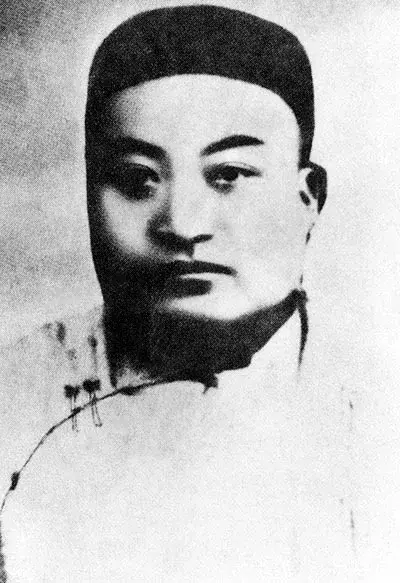
唐才常
Tang Caichang (1867–1900), styled Fucheng and Fochen, was an eminent political reformer, intellectual, and revolutionary commander of the late Qing dynasty, hailing from Liuyang, Hunan. Alongside his lifelong companion Tan Sitong, he studied under the prominent Confucian scholar Ouyang Zhonghu; the two were celebrated across central China as the Two Heroes of Liuyang. Following the catastrophic Chinese defeat in the First…
Tang Caichang (1867–1900), styled Fucheng and Fochen, was an eminent political reformer, intellectual, and revolutionary commander of the late Qing dynasty, hailing from Liuyang, Hunan. Alongside his lifelong companion Tan Sitong, he studied under the prominent Confucian scholar Ouyang Zhonghu; the two were celebrated across central China as the Two Heroes of Liuyang. Following the catastrophic Chinese defeat in the First Sino-Japanese War, Tang recognized the mortal peril threatening the Chinese nation and dedicated himself to political transformation. He studied successively at the Xiaojing Academy in Changsha, the renowned Yuelu Academy, and the Lianghu Academy in Wuchang, mastering Western constitutional statecraft, international law, and modern physical sciences. In 1897, he helped establish the Shiwu Academy (Academy of Current Affairs) in Changsha, served as chief editor for the influential journals Xiangxue Bao and Xiang Bao, and founded the Southern Study Society (Nanxue Hui), championing civil rights, institutional reform, and educational modernization across Hunan. Following the collapse of the Hundred Days' Reform and the martyrdom of Tan Sitong in 1898, Tang vowed to sacrifice his life to enact profound institutional change. Escaping to Japan, he met with Kang Youwei, Liang Qichao, and revolutionary leader Sun Yat-sen in Yokohama, forging an operational alliance. Returning to China in late 1899, Tang established the Zhengqi Hui (later the Zili Hui or Self-Reliance Society) and the Fuyou Mountain Lodge in Shanghai, enlisting over one hundred thousand members from secret societies and New Army battalions into the Self-Reliance Army. During the Boxer Rebellion crisis in July 1900, Tang convened the historic Chinese National Assembly in Shanghai, proclaiming popular sovereignty and self-determination. In August 1900, amidst preparations for a simultaneous five-route uprising along the Yangtze River, the Hankou headquarters was raided by Huguang Governor-General Zhang Zhidong. Tang Caichang was executed on the shores of Ziyang Lake in Wuchang at the age of thirty-four, marking a crucial historical pivot from peaceful reformism to armed revolution.
Born in the county seat of Liuyang, Changsha Prefecture, Hunan, into a scholarly family.
Entered the Xiaojing Academy in Changsha and subsequently studied at the Yuelu Academy, embracing institutional reform ideas.
Studied at the Lianghu Academy in Wuchang; following the Sino-Japanese War, turned toward Western politics and diplomacy.
Co-founded the Liuyang Mathematics Institute, served as instructor at the Shiwu Academy, and edited the Xiangxue Bao.
Founded the Nanxue Hui and Xiang Bao, publishing radical civil rights articles; fled to Japan after the coup.
Conferred with Sun Yat-sen in Yokohama; returned to Shanghai in the winter to organize the Zhengqi Hui and Fuyou Lodge.
Convened the Chinese National Assembly in July; was betrayed, captured, and executed in Wuchang on August 22.
Tang Caichang was born in 1867 into a respectable gentry family in Liuyang, Changsha Prefecture, Hunan. Endowed with acute intellectual curiosity, he received a rigorous education in traditional Confucian classics from an early age. In his youth, Tang became a disciple of the renowned provincial scholar Ouyang Zhonghu, forming an indissoluble bond of intellectual partnership with his fellow townsman Tan Sitong. The two young intellectuals shared a passionate commitment to national salvation and moral righteousness, earning acclaim throughout Hunan as the Two Heroes of Liuyang.
In 1887, twenty-year-old Tang enrolled in the Xiaojing Academy in Changsha, followed by advanced studies at the prestigious Yuelu Academy. While mastering evidential scholarship and Song Neo-Confucian metaphysics, he grew acutely dissatisfied with the rigid conservatism of Qing officialdom. In 1894, Tang entered the Lianghu Academy in Wuchang, founded by Huguang Governor-General Zhang Zhidong. When the First Sino-Japanese War erupted that same year, resulting in the annihilation of the Beiyang Fleet and the national humiliation of the Treaty of Shimonoseki, Tang abandoned civil examination trivia to immerse himself in Western constitutional models, international diplomacy, and the natural sciences, dedicating his life to systemic reform.
In early 1897, having completed his studies in Wuchang, Tang returned to Hunan to participate in the burgeoning provincial reform movement. Together with Tan Sitong, he established the Liuyang Mathematics Institute to introduce mathematics and physical sciences to local youth. Supported by reform-minded Governor Chen Baozhen and Provincial Judicial Commissioner Huang Zunxian, Tang assisted Liang Qichao in opening the celebrated Shiwu Academy in Changsha, serving as an influential lecturer who trained progressive youths such as Cai E, Yang Du, and Lin Gui.
To awaken public consciousness, Tang served as chief writer for the journals Xiangxue Bao and Xiang Bao. Writing with relentless passion, he drafted dozens of incisive political essays attacking reactionary dogmas that sanctified antiquity at the expense of contemporary welfare. He introduced Western social contract theories and representative governance, advocating for parliamentary elections, industrialization, and modern military training.
In early 1898, Tang collaborated with Huang Zunxian and Tan Sitong to establish the Southern Study Society (Nanxue Hui) in Changsha. Functioning as an embryonic provincial assembly, the society hosted weekly public forums on international affairs and constitutional law, transforming Hunan into the intellectual vanguard of late Qing institutional reform.
In the summer of 1898, the Guangxu Emperor issued the imperial edict establishing the Hundred Days' Reform. Tang received an imperial summons directing him to proceed to Beijing to assist the new administration. However, while traveling through Hankou, the Empress Dowager Cixi staged a palace coup, imprisoning the emperor in the Yingtai Pavilion and executing Tan Sitong and five fellow reformers at Caishikou.
Devastated by the death of Tan Sitong, Tang wept bitterly and vowed to dedicate his life to armed revolution and the overthrow of the reactionary court. Aided by comrades, he fled through Shanghai to Hong Kong and Singapore before taking refuge in Japan. In Tokyo and Yokohama, Tang consulted with exiled leaders Kang Youwei and Liang Qichao regarding plans for military insurrection.
Crucially, Tang expanded his horizons beyond the narrow monarchism of Kang Youwei. In Yokohama, through the introduction of Bi Yongnian, Tang held confidential discussions with Sun Yat-sen, leader of the Revive China Society (Xingzhonghui). Sun, who was preparing the Huizhou Uprising in Guangdong, enthusiastically endorsed Tang's plan to mobilize secret societies along the Yangtze River valley, establishing a cooperative accord between northern reformers and southern revolutionaries.
In the winter of 1899, Tang returned secretly to Shanghai under the cover of the Dongwen Translation Society, founding the clandestine Zhengqi Hui (Society of Righteousness, soon renamed the Zili Hui or Self-Reliance Society). Recognizing that scholarly treatises could not dislodge autocratic tyranny without armed forces, Tang founded the Fuyou Mountain Lodge, utilizing the traditional fraternal structures of the Gelaohui (Society of Elder Brothers) to organize secret society networks across the Yangtze valley, distributing tens of thousands of membership certificates.
Building upon this popular subterranean network, Tang established the Self-Reliance Army (Zili Jun), organizing over one hundred thousand members into five regional route armies. Assuming supreme command as Commander-in-Chief, Tang established his clandestine military headquarters in Li Chunxuan's residence in the Hankou British Concession, dispatching young officers including Qin Lishan, Wu Luzhen, and Lin Gui to direct frontline divisions across Hunan, Hubei, Jiangxi, and Anhui.
In the summer of 1900, as the Boxer Rebellion engulfed northern China and the Eight-Nation Alliance invaded Beijing, southeastern governors-general declared mutual neutrality. Tang seized this unprecedented geopolitical breakdown. In early July, he convened the historic Chinese National Assembly in Shanghai, gathering leading intellectuals including Rong Hong and Yan Fu. The assembly issued a momentous manifesto proclaiming three governing principles: preserving China's independent sovereignty to build a modern nation; repudiating the illegitimate authority of the Manchu autocracy; and restoring the Guangxu Emperor to inaugurate a constitutional republic.
Following the assembly, the Self-Reliance Army finalized plans for a coordinated insurrection scheduled for August 9, 1900, across Hankou, Hanyang, Datong, Anqing, Hunan, and Jiangxi. However, promised financial subsidies from Kang Youwei failed to arrive from overseas, leaving frontline battalions without funds for munitions. Tang was forced to postpone the general uprising repeatedly to August 23.
Unaware of the postponements due to interrupted communications, Vanguard Commander Qin Lishan launched an isolated offensive at Datong, Anhui, on August 9. Qin's forces captured the town and held out against overwhelming provincial forces for seven days before being crushed. The Datong eruption alerted the Qing authorities throughout the Yangtze valley.
Huguang Governor-General Zhang Zhidong, who had received intelligence regarding Tang's presence in Hankou, ordered security sweeps. On the evening of August 21, following a betrayal by an informant, Qing troops and concession police raided the Hankou command post, capturing Tang Caichang, Lin Gui, Fu Cixiang, and nineteen fellow conspirators. When interrogated by Zhang Zhidong's deputies, Tang proudly proclaimed sole responsibility, declaring: "This was entirely my doing, to serve the state and avenge my martyred companions; kill me without delay!" In his prison cell, he brushed his immortal lines: "I leave my head to pay my debt to departed friends, / Showing an unmarred countenance to face the gathered demons."
On the night of August 22, 1900, Qing executioners escorted Tang and ten comrades to the banks of Ziyang Lake in Wuchang. As the executioners raised their sabers, thirty-four-year-old Tang chanted aloud: "My seven-foot frame repays my loyal friends, / A cavity of hot blood splatters the desolate mound!" The martyrs were buried at the northern foot of Mount Hong in Wuchang. The blood of the Self-Reliance leaders definitively shattered the illusion of peaceful constitutional reform, propelling China's intellectual youth toward armed republican revolution.
Tang Caichang was one of the foremost intellectual catalysts of the late-nineteenth-century Hunan Enlightenment. Working alongside Huang Zunxian and Chen Baozhen in 1897, he established the curriculum of the Shiwu Academy in Changsha, serving as senior instructor in history, philosophy, and political theory. He cultivated an extraordinary cadre of progressive students, including Cai E and Yang Du, who played monumental roles in twentieth-century Chinese statecraft.
As chief editorial essayist for the Xiangxue Bao and Xiang Bao, Tang authored foundational political treatises analyzing global international law, commercial economics, and democratic contract theory. His fiery prose dismantled conservative dogmas, making the Hunan reform press the premier intellectual conduit for modern political consciousness throughout central and southern China.
In early 1898, Tang played an indispensable role in founding the Nanxue Hui (Southern Study Society) in Changsha, which stood as the earliest institutional prototype of modern municipal self-government and representative democracy in imperial China.
Divided into deliberative branches and public lecturing forums, the society assembled representatives from all seventy-two counties of Hunan to debate local taxation, educational reform, infrastructure development, and municipal law. Tang's lectures on Western parliamentary mechanisms introduced the Chinese gentry to constitutional government, establishing an influential regional precedent for modern democratic participation.
Following the failure of the 1898 reforms, Tang pioneered an unprecedented organizational strategy by bridging the historic chasm separating elite classical scholars from underground plebeian secret societies. Through the Zhengqi Hui and Fuyou Mountain Lodge, he established fraternal alliances with the leadership of the Gelaohui and Tiandihui.
Recognizing the inherent anti-dynastic sentiment of the secret societies, Tang channeled their fragmented resistance toward clear national political objectives through the issuance of formal lodge charters and membership certificates. His organizational network encompassed over one hundred thousand armed partisans across five provinces along the Yangtze River, creating the largest coordinated underground military apparatus in late-nineteenth-century China.
In July 1900, amidst the chaos of the Boxer crisis, Tang Caichang orchestrated the convocation of the Chinese National Assembly at the Yu Garden in Shanghai. Gathering leading constitutionalists, merchants, and returned overseas students, the assembly represented the first modern civil parliament convened independently of imperial authority in Chinese history.
Tang drafted the assembly's revolutionary platform, which boldly declared national sovereignty, repudiated the governing legitimacy of the reactionary Manchu court, and demanded the promulgation of a democratic constitution. This historic congress decisively broadened late Qing political thought beyond courtly deference toward popular sovereignty and civil self-determination.
As Commander-in-Chief of the Self-Reliance Army, Tang organized and launched the first large-scale armed uprising against the Qing dynasty that combined Western-educated intellectuals, military cadets, and provincial secret societies. Deploying five coordinated field armies across Hubei, Anhui, Jiangxi, and Hunan, Tang established a sophisticated operational command based in Hankou.
Although the enterprise collapsed following logistical delays and the tragic preemptive fighting at Datong, Tang's military mobilization demonstrated extraordinary administrative audacity. The uprising delivered an irrevocable psychological blow to the Qing autocracy, proving that peaceful monarchical reform had become a fatal impossibility and inspiring the subsequent military conspiracies that culminated in the 1911 Xinhai Revolution.
Beyond his revolutionary exploits, Tang was an original historical philosopher whose collected essays were preserved in the four-volume Juedian Mingzhai Neiyan. Tang was among the earliest modern Chinese scholars to consciously apply comparative historical methods to evaluate systemic political development.
Juxtaposing Chinese dynastic rise and fall against the constitutional evolutions of classical Greece, republican Rome, and modern European nation-states, Tang identified dynastic autocracy as the primary barrier to Chinese modernization. His utilitarian historiography emphasized economic, military, and legal analysis over empty philological trivia, providing an early theoretical foundation for modern Chinese historical sociology.
FIGURES ASSOCIATED WITH THIS DYNASTY