Birth in Hangzhou
Born in Renhe County, Hangzhou Prefecture, Zhejiang Province, amidst a distinguished literary family.
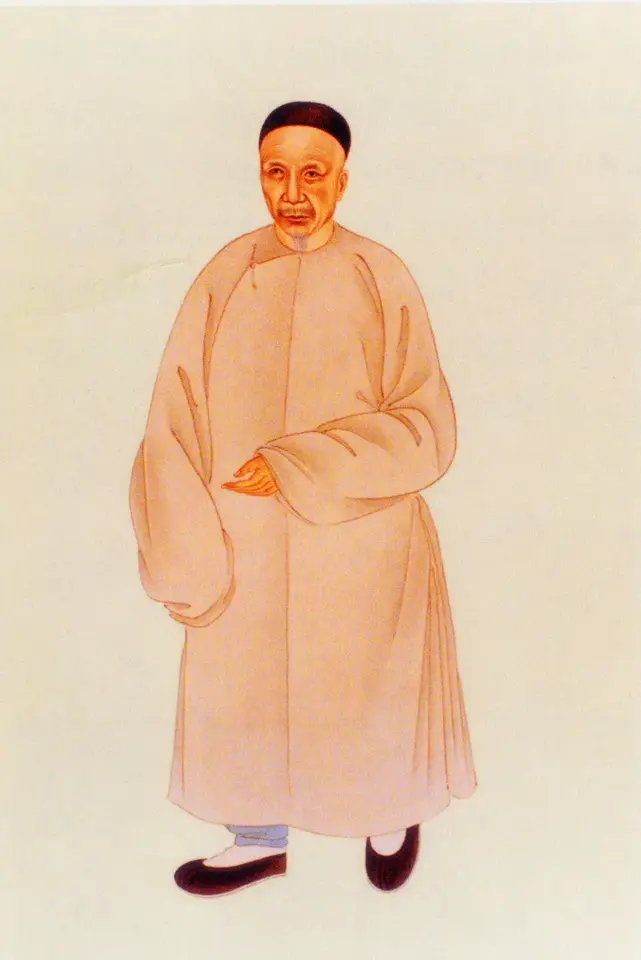
谭献
Tan Xian (谭献, 1832–1901), originally named Tingxian, courtesy name Zhongxiu (仲修), art name Futang (复堂), later styled Banchang (半厂) and Huashutang (化书堂), was a native of Renhe (modern Hangzhou, Zhejiang Province). Tan was an outstanding lyricist, poetic theorist, classical scholar, and educator in the late Qing Dynasty, revered as a pillar and master of the late Changzhou School of Ci Poetry, and celebrated throughout the…
Tan Xian (谭献, 1832–1901), originally named Tingxian, courtesy name Zhongxiu (仲修), art name Futang (复堂), later styled Banchang (半厂) and Huashutang (化书堂), was a native of Renhe (modern Hangzhou, Zhejiang Province). Tan was an outstanding lyricist, poetic theorist, classical scholar, and educator in the late Qing Dynasty, revered as a pillar and master of the late Changzhou School of Ci Poetry, and celebrated throughout the literary world as a towering giant of lyric poetry. In his early years, Tan dedicated himself to classical Confucian studies, delving deeply into the subtle words and profound principles of the New Text School of the Spring and Autumn Annals, passing the provincial civil service examination in 1867. After repeated setbacks in the metropolitan examinations, he entered the civil bureaucracy through financial contributions, serving as magistrate in several Anhui counties including Shexian, Quanjiao, Hefei, Susong, and Hanshan. During his tenure, he administered with integrity, settled church-related civil disputes with prudence, and won widespread esteem among the local populace. In his later years, he retired from bureaucratic office to accept an invitation from Governor-General Zhang Zhidong to lead the prestigious Jingxin Academy in Wuchang for over four years, later presiding over lectures at the Bianzhi Academy in Ningbo and Gujing Academy in Hangzhou, mentoring celebrated modern figures such as Zhang Taiyan, Gan Pengyun, and Chen Zengshou. In the realm of poetic theory, Tan inherited and significantly developed the doctrines of Zhang Huiyan and Zhou Ji of the Changzhou School, championing the inherent dignity of ci poetry, systematically expounding the theory of allegorical lodging, and proposing the famous aesthetic principle: "the intention of the author may not necessarily be so, but why shouldn't the intention of the reader be so?" He devoted thirty years to compiling Qiezong Ci, establishing a comprehensive structural framework for Qing dynasty ci history through his unique theory of orthodoxy and transformation. His poetic theoretical aphorisms were collected in Futang Cihua, while his own poetic compositions were renowned for profound restraint, subtle melancholy, and classical elegance.
Born in Renhe County, Hangzhou Prefecture, Zhejiang Province, amidst a distinguished literary family.
Dedicated himself to classical scholarship, prioritizing the Gongyang Commentary while mastering parallel prose and verse.
Passed the provincial civil service examinations in Zhejiang; subsequently sat for metropolitan examinations without success.
Began gathering and collating Qing dynasty ci poetry, producing the first drafts of Qiezong Ci.
Transferred as magistrate of Hefei County in Anhui, resolving litigation and forging close ties with regional literati.
Peacefully resolved the anti-foreign missionary incident in Hefei, preventing diplomatic escalation.
Appointed by Governor-General Zhang Zhidong as head lecturer at the Hubei Jingxin Academy in Wuchang.
Retired to Zhejiang; Zhang Taiyan formally enrolled as his disciple, receiving intensive scholarly guidance.
Appointed chief lecturer of literary composition at the Bianzhi Academy in Ningbo.
Directed the Gujing Academy in Hangzhou; grieved deeply over the wrongful execution of his dear friend Yuan Chang during the Boxer Crisis.
Succumbed to grief and chronic illness at his home in Hangzhou at the age of seventy.
Tan Xian was born into a distinguished scholar-gentry lineage in Renhe County, Hangzhou Prefecture. During his youth, the Qing Empire was engulfed by the domestic turmoil of the Taiping Rebellion. Amidst the chaos, Tan withdrew into intense private study. From the age of twenty-five, he concentrated on Confucian classical canons, drawing deep inspiration from the Changzhou New Text School pioneered by Zhuang Cunyv and Liu Fenglu, immersing himself in the Spring and Autumn Gongyang Commentary to illuminate profound political principles applicable to contemporary governance.
His scholarly routine was extraordinarily disciplined: "His daily reading followed strict quotas; all his critical theories were implicitly encapsulated in his daily diaries." He read indefatigably each day, recording his textual discoveries and critical insights into voluminous scholarly journals, building an immaculate foundation in traditional philology and history. Beyond Confucian exegesis, Tan cultivated exceptional mastery of Six Dynasties parallel prose and Tang poetry. In 1867, he passed the Zhejiang provincial examination to become a provincial graduate. Over subsequent years, he travelled repeatedly to Beijing to participate in the metropolitan examinations, but suffered repeated rejections. These academic frustrations redirected his intellect toward poetic collation, epigraphy, and lyric theory, establishing enduring friendships with scholars such as Zhu Jiangcun and Zhuang Yu.
Failing to attain the metropolitan doctorate, Tan entered bureaucratic service through the standard late-Qing practice of purchasing official eligibility. During the Guangxu reign, he was assigned to Anhui Province, serving successively as magistrate of Shexian, Quanjiao, Hefei, Susong, and Hanshan counties. In Shexian and Quanjiao, he personally investigated rural hardships, encouraged sericulture and agriculture, and eliminated administrative corruption, earning sincere respect from local residents. Throughout his administrative career, Tan maintained incorruptible integrity, refusing sycophancy and treating common folk with Confucian benevolence.
From 1884 to 1886, Tan served as magistrate of Hefei in Luzhou Prefecture. As the hometown of Li Hongzhang and influential military clans of the Huai Army, Hefei was notoriously difficult to govern. Tan administered with calm equity, resolving longstanding legal backlogs. In 1885, a major anti-missionary disturbance erupted in Hefei. Tan personally went to the frontline to calm the agitated populace, negotiating firmly and lawfully with foreign representatives. He successfully preserved public tranquility without provoking international conflicts. During leisure hours, he befriended Anhui scholars including Li Jingshe, Wang Shangchen, and Kuai Diandian, jointly publishing poetic anthologies and touring scenic historical landmarks.
In the first month of 1890, Zhang Zhidong, then Governor-General of Hubei and Hunan and a passionate patron of modernized classical education, extended a formal invitation to Tan to preside over the prominent Jingxin Academy in Wuchang. Tan accepted the call, resigning his administrative appointments in Anhui to lead the academy for more than four years until the winter of 1895.
At Jingxin Academy, Tan conducted thirty rigorous periodic examinations, personally evaluating student dissertations and treatises with scrupulous precision. He taught students that authentic classical research must begin with palaeography and philology, insisting upon thorough mastery of Xu Shen's Shuowen Jiezi and archaic phonology before analyzing pre-Qin historical texts. During this period, Tan instructed over one hundred and eighty disciples, cultivating luminaries such as Gan Pengyun and Chen Zengshou. Tan guided Gan from elementary philology into classical scholarship, and the two scholars frequently exchanged bronze and stone rubbings for joint epigraphic analysis. Gan's celebrated work, Qianlu Suibi, directly inherited Tan's meticulous evidential methods.
In 1896, Tan returned to Zhejiang. In Hangzhou, the young scholar Zhang Taiyan, drawn by Tan's towering academic reputation, formally sought entry into his pedagogical circle. Tan warmly welcomed him, mentoring Zhang in Six Dynasties parallel prose and evidential textual criticism. Tan critiqued Zhang's philosophical treatises, including Rudao and Rubing, and commissioned Zhang to compose the ancestral biography of Sun Zifang, creating a memorable chapter in modern Chinese intellectual history. In 1899, Tan was engaged to lecture at the Bianzhi Academy in Ningbo, and in 1900 assumed directorship of Hangzhou's preeminent classical academy, Gujing Academy, delivering lectures to enthusiastic gatherings of regional youth.
In his final years, Tan resided quietly in Hangzhou, spending his days reading, gathering rare editions, and revising poetic treaties. His library pavilions, known as Futang and Zhelintang, were celebrated across southeastern China for their incomparable collections of rare dramatic scripts and lyric anthologies.
In 1900, the Boxer Calamity engulfed northern China, leading to the allied occupation of Beijing and the flight of the imperial court to Xi'an. The Vice Minister of Revenue, Yuan Chang, along with Xu Jingcheng, was wrongfully executed at the marketplace for courageously petitioning against court support for the Boxers. Yuan was Tan's closest lifelong friend. When news of the tragic execution reached Hangzhou, Tan was shattered by grief, recording in his diary: "Faithful and noble memorials have suffered brutal punishment... our lifelong bond makes this bereavement boundless. Though details remain uncertain, I have no more tears left to weep."
The sudden loss of his dearest intellectual companion and the catastrophe facing the Chinese realm broke his health entirely. When physicians arrived to administer medicine, Tan pointed to his chest and sighed: "How could the deep agony accumulated within my chest ever be cleansed by medicinal herbs?" In 1901, filled with sorrow over the tragic demise of the empire and his fallen friend, Tan passed away at his Hangzhou home at the age of seventy.
Following the rise of the Changzhou School of Ci Poetry, traditional lyric poetry transitioned from superficial ornamental versification to deep expressions of national anxiety and existential pathos. Tan embraced the foundational tenets of Zhang Huiyan and Zhou Ji, elevating the aesthetic doctrine of allegorical lodging to its ultimate theoretical maturity. While Zhou Ji had argued that poetry should possess an initial entry into allegory and a subsequent exit from it, Tan operationalized this concept into practical critical methodologies.
Tan resolutely rejected the traditional prejudice that regarded ci poetry as an inferior literary diversion. In his preface to Futang Cilv, he passionately argued that at its highest level, the lyric genre expressed noble moral intentions and upright character, directly aligning with the transformative elegies of the Book of Songs. In Futang Cihua, he established the core critical categories of tenderness and thickness alongside ethereal wholeness, guiding poets to express historical melancholy and personal vicissitudes through subtle, understated verse.
Tan's most brilliant contribution to Chinese literary criticism was his pioneering insight into the dynamic interpretive relationship between literary texts, authors, and readers. In his extensive marginalia on Zhou Ji's Cibian, he observed that ancient authors wrote from genuine personal emotion, whereas readers derived meaning based on their unique individual circumstances and historical contexts. He formally articulated the celebrated aesthetic maxim: "The intention of the author may not necessarily be so, but why shouldn't the intention of the reader be so?"
This groundbreaking formulation broke away from centuries of pedantic criticism that dogmatically tied poetic meaning to rigid historical authorial intent. Tan demonstrated that the evocative ambiguity and layered resonance of lyric poetry created an infinite space for imaginative re-creation by subsequent generations of readers. By bridging authorial creation and aesthetic reception through allegorical interpretation, Tan elevated the reader from a passive recipient to an active co-creator of textual meaning, independently anticipating modern Western reader-response theory by several decades.
Beginning at the age of thirty-four, Tan recognized that the poetic evolution of the Qing Dynasty required systematic historical codification. Over thirty years of exhaustive reading, selection, and collation, he produced Qiezong Ci in six volumes along with a four-volume supplement.
In Qiezong Ci, Tan discarded the simplistic dichotomy dividing lyricists into heroic and delicate schools. Instead, he employed the sophisticated framework of orthodoxy and transformation to trace two centuries of Qing poetic development. He demonstrated that Qing lyrics traced their lineage back to Han, Wei, and Six Dynasties Yuefu poetry, highlighting how different masters either carried forward orthodox elegance or explored innovative variations. The work became an authoritative textbook for poets and scholars throughout the late Qing and Republican eras, lauded by Ye Gongchuo for setting the aesthetic standard for thirty years.
Although Tan spent relatively few years in bureaucratic posts, his pedagogical impact on late-Qing intellectual life was immense. From his tenure at Jingxin Academy in Wuchang to his leadership of Gujing Academy in Hangzhou, he spent over a decade guiding hundreds of students. In his teaching, he rejected superficial examination rote learning, demanding that students master classical philology, archaic phonetics, and epigraphy while upholding personal moral integrity.
His disciples included Gan Pengyun, who became a renowned bibliophile and local historian; Chen Zengshou, a prominent master of modern classical verse; and Zhang Taiyan, the paramount intellectual thinker of modern China who honed his philological expertise under Tan's direct tutelage. Amidst the intense intellectual crises of late-nineteenth-century China, Tan preserved and transmitted the finest traditions of Jiangnan classical learning to modern generations.
FIGURES ASSOCIATED WITH THIS DYNASTY