Born in Changzhou
Born into a prominent scholarly lineage in Shuangguifang, Changzhou; displayed precocious intellect and mastered classical canons from childhood.
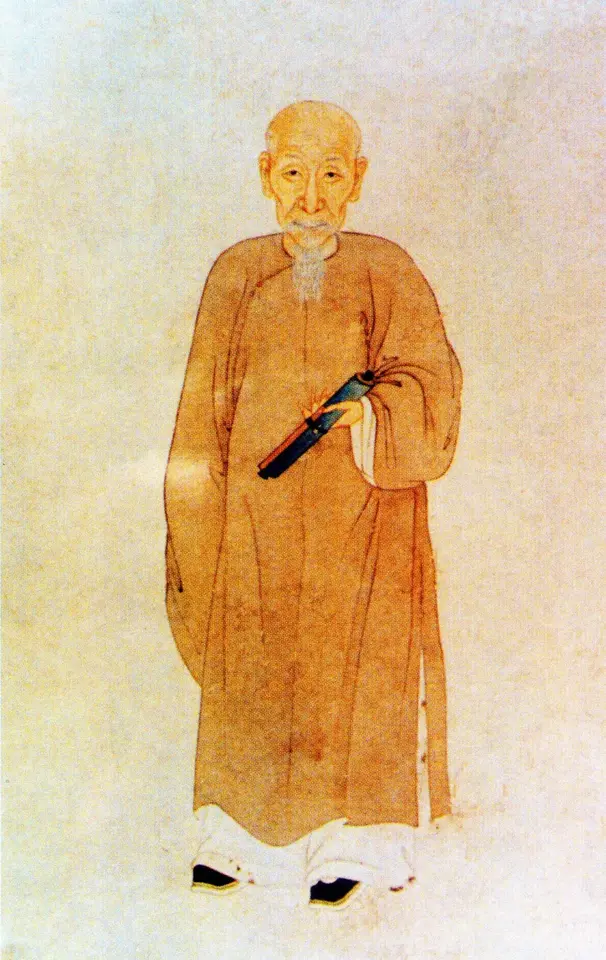
孙星衍
Sun Xingyan (孙星衍; 1753–1818), courtesy names Yuanru and Jiqiu and art names Wenzitang, Pingjinguan, and Fangmao Shanren, was a native of Yanghu, Changzhou Prefecture (present-day Changzhou, Jiangsu Province). He was one of the preeminent leaders of the Qianjia Evidential Research School (Kaozheng) and a monumental master of Old Text Confucian classics, celebrated equally as a master philologist, epigrapher, bibliographer,…
Sun Xingyan (孙星衍; 1753–1818), courtesy names Yuanru and Jiqiu and art names Wenzitang, Pingjinguan, and Fangmao Shanren, was a native of Yanghu, Changzhou Prefecture (present-day Changzhou, Jiangsu Province). He was one of the preeminent leaders of the Qianjia Evidential Research School (Kaozheng) and a monumental master of Old Text Confucian classics, celebrated equally as a master philologist, epigrapher, bibliographer, and book collector. In his youth, he achieved widespread literary fame alongside Hong Liangji, Huang Jingren, and Yang Fangcan, earning Yuan Mei's praise as an extraordinary talent of the realm. In 1787, he earned second place (Bangyan) in the metropolitan palace examinations and entered the Hanlin Academy as a compiler. During a palace examination evaluation, his use of an archaic classical phrase from the Records of the Grand Historian offended the all-powerful Grand Secretary Heshen; refusing to solicit Heshen's favor, he was demoted to Secretary in the Ministry of Punishments. In the Ministry of Punishments, Sun practiced judicial leniency and strictly applied classical precedents to overturn wrongful capital convictions, earning high praise from Grand Secretary Agui and Minister Hu Jitang before advancing to Bureau Director. Dispatched in 1795 as Circuit Intendant in Shandong, he led thousands of laborers through five days and nights of emergency embankment works when the Yellow River breached at Cao County, saving millions of taels in public funds. As acting Surveillance Commissioner, he cleared over one hundred wrongful cases and prosecuted corrupt military officers connected to Heshen. Later serving as Grain Intendant and acting Administration Commissioner, he stood firm against extortionate requisitions from imperial commissioner Guangxing. In 1811, Sun retired due to ill health, dedicating his final years to lecturing at renowned academies including the Gujing Jingshe in Hangzhou and the Zhongshan Academy in Nanjing. Renowned for his vast library at the Pingjin Pavilion, he spent over two decades synthesizing pre-Qin, Han, Tang, and Qing scholarship to compile the 39-volume Commentary and Sub-commentary on the Modern and Ancient Text Book of Documents, widely regarded as the crowning achievement of Qing classical scholarship. He also edited and published monumental compendia such as the Pingjin Pavilion Collectanea and Dainan Pavilion Collectanea. He died in 1818 at the age of sixty-six.
Born into a prominent scholarly lineage in Shuangguifang, Changzhou; displayed precocious intellect and mastered classical canons from childhood.
Achieved first-class second rank (Bangyan) in the Dingwei palace examinations; appointed Hanlin Compiler and Collator of the Three Comprehensive Histories.
Incurred Heshen's hostility over archaic phrasing and refused personal subservience; transferred to Secretary in the Ministry of Punishments.
Promoted to Bureau Director in Punishments and dispatched as Circuit Intendant of Yanzhou-Yizhou-Caozhou-Jining in Shandong.
Led workers through five days and nights of emergency construction to seal the Yellow River breach at Cao County, preserving regional livelihoods.
Served seven months as acting Surveillance Commissioner, overturning dozens of wrongful capital convictions and arresting corrupt military officers.
Appointed Grain Intendant and acting Administration Commissioner; resisted illicit extortions from imperial inspector Guangxing.
Resigned due to chronic leg illness; settled in Yangzhou and Changzhou to collate epigraphic rubbings and ancient manuscripts.
Invited by Ruan Yuan to head the Zhongshan Academy in Nanjing and lecture at Gujing Jingshe, mentoring prominent scholars.
Passed away on February 16 at age sixty-six; his philological and epigraphic works became foundational texts for subsequent scholarship.
Sun Xingyan hailed from a renowned scholarly family in Yanghu, Changzhou. Showing remarkable intellectual precocity, he mastered classical canons under his father's instruction from childhood. In his youth, Sun associated closely with fellow native literati including Hong Liangji, Huang Jingren, and Yang Fangcan, achieving widespread acclaim across Jiangnan for their exquisite prose and verse. The celebrated literary leader Yuan Mei read his compositions with astonished admiration, extolling him as a singular talent of the world and establishing a lifelong friendship across generations.
However, Sun’s academic ambitions transcended conventional literary composition. Immersing himself in the burgeoning evidential scholarship of the Qianlong era, he explored phonology, paleography, historical geography, calendrical astronomy, and the non-canonical masters, insisting on tracing every textual concept to its archaic root. In his early career, Sun entered the intellectual secretariat of Bi Yuan, the Governor of Shaanxi. In Xi'an, Sun examined vast collections of ancient bronzes, stone inscriptions, and rare regional prints. When a local scholar falsely accused an innocent commoner of plotting treason through sectarian texts, Sun and Hong Liangji examined the seized manuscripts, identified them as harmless folk compilations, and boldly threw the draft evidence into a brazier, defusing a devastating treason trial and preserving countless innocent lives.
In 1787, Sun achieved outstanding success in the metropolitan examinations, capturing first-class second rank (Bangyan) in the palace examination. He was commissioned as Compiler in the Hanlin Academy and assigned to collate materials in the Bureau of the Three Comprehensive Histories, gaining unrestricted access to imperial library collections.
In 1789, during the Hanlin graduation evaluation, Sun composed a required rhapsody entitled Strengthening One's Resolve, citing an archaic idiom from the Records of the Grand Historian. Grand Secretary Heshen, who monopolized imperial power and lacked classical erudition, suspected the characters were written erroneously and demoted Sun to third grade. Furthermore, imperial precedent allowed Hanlin compilers who were transferred to ministries to be appointed directly as vice directors, and Heshen dropped clear hints that Sun should pay an obeisant visit to his private mansion to secure preferment. Sun proudly refused to flatter the corrupt favorite, declaring: "Whatever office the Son of Heaven commands, that office I shall perform! How could a real man accept private favors from a minister's gate?" Enraged by his defiance, Heshen demoted him to an ordinary secretary in the Ministry of Punishments.
In the Ministry of Punishments, Sun applied deep jurisprudential acumen to judicial reviews. Embracing the Confucian ideal of lenient governance, he systematically utilized classical principles to review capital appeals. Grand Secretary Agui and Minister of Punishments Hu Jitang recognized his absolute fairness, entrusting him with the review of the empire’s most convoluted capital cases, through which Sun exonerated and preserved dozens of condemned prisoners. In his leisure hours, he continued collating ancient texts, earning promotion to Bureau Director in 1794.
In 1795, Sun was dispatched to Shandong as Circuit Intendant of Yanzhou, Yizhou, Caozhou, and Jining, supervising the vital commercial and river transport corridors of southwestern Shandong. In July 1796, severe flooding caused the Yellow River to breach its banks near Cao County, inundating surrounding flats and threatening catastrophic destruction in Shan County. Arriving at the water's edge, Sun joined Provincial Surveillance Commissioner Kang Jitian to organize emergency defense. Leading thousands of peasant laborers in torrential waters, Sun directed five consecutive days and nights of continuous construction, erecting an upstream barrier that successfully contained the breach and protected several counties, prompting Kang Jitian to observe that Sun had saved the imperial treasury millions of taels in flood relief.
Shortly thereafter, Sun was appointed acting Provincial Surveillance Commissioner of Shandong, supervising the provincial judiciary. During his seven months in office, he combed through backlog dossiers, redressing dozens of wrongful charges and entirely reversing false convictions in over ten capital cases. When a powerful military officer in Weixian committed crimes and sent bribery to Heshen's household retainers to solicit immunity, Sun disregarded imperial pressure, issued immediate warrants to arrest the officer, and publicly detained Heshen's emissaries in the provincial capital, establishing a formidable reputation for integrity.
While managing the excavation of diversion canals at Cao County, Sun completed his central engineering section at a savings of more than 300,000 taels compared with adjoining administrative sections. While river officials customarily pocketed such leftover funds as personal gratuities, Sun refused to take a single coin, diverting all surplus funds to construction workers. Later, when a renewed levee break left 90,000 taels of unamortized repair obligations, subordinate officials transferred the burden entirely to Sun; he accepted the financial responsibility without protest, remarking that as a river official he could not shirk state responsibilities.
In 1799, Sun retired to observe mourning for his mother. Zhejiang Governor Ruan Yuan invited him to become headmaster of the newly established Gujing Jingshe Academy in Hangzhou. Sun organized specialized curricula in classical epigraphy, phonology, astronomy, and mathematics; within a decade, disciples trained under his guidance emerged as leading scholars throughout China. Reentering civil service in 1805, he was appointed Grain Intendant of Shandong and later served as acting Provincial Administration Commissioner, managing provincial revenues.
During this tenure, Junior Vice Minister of Revenue Guangxing inspected Shandong on an imperial mission. Relying on imperial favor, Guangxing demanded lavish banquets and extortionate private allowances from provincial treasuries. While other provincial officials complied with illicit funding, Sun strictly adhered to fiscal regulations, refusing all extra-legal expenditures. When Guangxing was subsequently impeached and executed for massive corruption, governors and treasurers across Henan and Shandong were dismissed for misappropriating treasury funds, while Sun’s accounts were found completely free of improper disbursements, winning high praise from the Jiaqing Emperor.
In 1811, suffering from chronic leg ailments resulting from an earlier carriage accident, Sun submitted his resignation and retired to private life in Yangzhou and Changzhou. Prominent scholars flocked from across the empire to seek his instruction. Senior statesman Ruan Yuan repeatedly invited him to head the Anding Academy in Taizhou, Shaoxing Academy, and the Zhongshan Academy in Nanjing.
Throughout his life, Sun was passionately devoted to collecting rare editions and epigraphic rubbings, amassing treasures in his Pingjin Pavilion and Wenzitang libraries. Troubled by the historical contamination of the Pseudo-Ancient Text Book of Documents, Sun labored for more than twenty years to compile the 39-volume Commentary and Sub-commentary on the Modern and Ancient Text Book of Documents, synthesizing pre-Qin fragments, Han dynasty commentaries, and contemporary evidential scholarship into a monumental masterpiece. His scholarly publications, including the Pingjin Pavilion Collectanea, Dainan Pavilion Collectanea, and Comprehensive Record of Visiting Inscribed Stelae Throughout the Realm, set the gold standard for Qing textual precision.
Sun Xingyan possessed an insatiable passion for book collecting, exploring ancient libraries across China. Whenever he learned that scholars or families held rare Song or Yuan editions or unique manuscripts, he visited them in person to borrow and transcribe texts, reading without interruption year-round. He subjected stone and bronze inscriptions, archaic ritual vessels from the Three Dynasties, and celebrated calligraphic rubbings to exhaustive philological analysis, rigorously tracing every historical inscription to its earliest origins and correcting centuries of scribal distortion.
To accommodate his ever-expanding collection, Sun constructed famed library pavilions including the Pingjin Pavilion, Wenzitang, and Lianshiju across Changzhou, Yangzhou, and Jinan. His library was renowned throughout China for its immaculate textual collation; every edition personally reviewed by Sun was cross-referenced against Han and Wei dynasty fragments with flawless precision. His collections bore more than twenty distinctive seal impressions, such as "Pingjin Pavilion Book Collection Record," "Eastern Grain Transport Intendant," and "Fangmao Mountain Hermit," which remain prized markers of authentic provenance among modern bibliographers.
Sun was deeply troubled by the historical contamination of the Pseudo-Ancient Text Book of Documents fabricated by Mei Ze during the Eastern Jin dynasty, which had misled Confucian scholarship for over a millennium. While serving in the Ministry of Punishments, he compiled the ten-volume Ma-Zheng Commentary on the Ancient Text Documents and two volumes of lost fragments. Following his retirement from civil administration, he shut his doors to outside society and devoted more than two decades of intense intellectual labor to compiling the monumental 39-volume Commentary and Sub-commentary on the Modern and Ancient Text Book of Documents.
In structuring this masterwork, Sun adhered strictly to the philological lineage of Han dynasty masters. For scattered ancient annotations, he gathered teachings from five Han scholarly traditions: the Old Text tradition transmitted from Kong Anguo to Sima Qian; the Modern Text tradition passed from Fu Sheng to Ouyang Gao and the Xiahou masters; and the Kong Wall Old Text tradition preserved through Wei Hong, Jia Kui, Ma Rong, and Zheng Xuan. He documented citations from pre-Qin philosophers, apocryphal commentaries, and contemporary Qing evidential critics like Duan Yucai and Wang Mingsheng, while strictly excluding ungrounded speculations from Song and Ming commentators. Upon publication, it was hailed as the supreme milestone of Qing classical scholarship.
In addition to individual research, Sun was a prolific publisher and preservationist of ancient literature. During the Jiaqing reign, he edited and published the renowned Dainan Pavilion Collectanea and Pingjin Pavilion Collectanea. The Dainan Pavilion Collectanea assembled his personal writings along with critically edited editions of the Ancient Text Documents, Sunzi's Art of War, and the Xia Xiaozheng. The Pingjin Pavilion Collectanea, comprising thirty-two works in ten collections, preserved critically collated editions of pre-Qin masters, traditional medical canons, and rare historical monographs, celebrated by bibliographers for their meticulous textual integrity.
Furthermore, Sun authored seminal treatises across diverse disciplines, including the ten-volume Collected Explanations of the Book of Changes, the fifteen-volume Annotated Alternative Canon of the Spring and Autumn Annals, the twelve-volume Comprehensive Record of Visiting Inscribed Stelae Throughout the Realm, and the twenty-volume Collected Inscriptions on Bronze and Stone. His poetic and prose works were gathered in the Literary Drafts of Pingjin Pavilion and Poetic Records of the Hermit of Fangmao Mountain, while his seal and clerical calligraphy captured the austere grandeur of Qin and Han stele inscriptions, establishing him as a master of the Epigraphic School.
In his later years, Sun directed major academies across Jiangsu and Zhejiang. Following his resignation in 1811, he resided in Yangzhou, participating in the imperial compilation of the Complete Tang Prose. In 1816, at the invitation of Liangjiang Governor-General Ruan Yuan, he took charge of the Zhongshan Academy in Nanjing, concurrently lecturing at the Anding Academy in Taizhou, Shaoxing Academy, and the Gujing Jingshe in Hangzhou.
As an academy headmaster, Sun vigorously combated the superficiality of examination essay composition. He established rigorous specialized curricula covering classical exegesis, philology, historical astronomy, epigraphy, and mathematics, personally guiding students through complex textual problems. Under his mentorship, disciples such as Li Yide and Bi Heng developed into eminent scholars of their generation. Sun’s leadership revitalized the academic atmosphere across southeastern China, firmly establishing the primacy of rigorous evidential scholarship.
Sun Xingyan mastered classical philology, epigraphy, and calligraphic arts with consummate skill. Uniting the incorruptible character of an exemplary magistrate with the erudition of an intellectual titan, he stood fearless before tyrannical power, governed regional circuits with immense public benefit, and produced monumental commentaries that marked the zenith of the Qianjia Evidential School.
"I once said to Sun Yuanru: throughout the world, refined talents are plentiful, but extraordinary talents are rare. You, sir, are an extraordinary talent of the world!" — Yuan Mei, Qing literary master, Poetry Talks from Suiyuan (Suiyuan Shihua)
"Sun Xingyan was exceptionally well-read and indefatigable in writing. Passionately fond of collecting books, he borrowed and transcribed rare editions without a single day’s pause. He traced every epigraphic character to its source. His Commentary and Sub-commentary on the Modern and Ancient Text Book of Documents gathered forgotten classical lore across twenty-two years of labor, standing as a monumental masterpiece of dynastic scholarship." — Zhao Erxun, Chief Editor, Draft History of Qing (Qing Shi Gao), Volume 481, Confucian Scholars II
FIGURES ASSOCIATED WITH THIS DYNASTY