Birth in Huayuan
Born into a scholarly family in Jingzhao, renowned as a child prodigy.
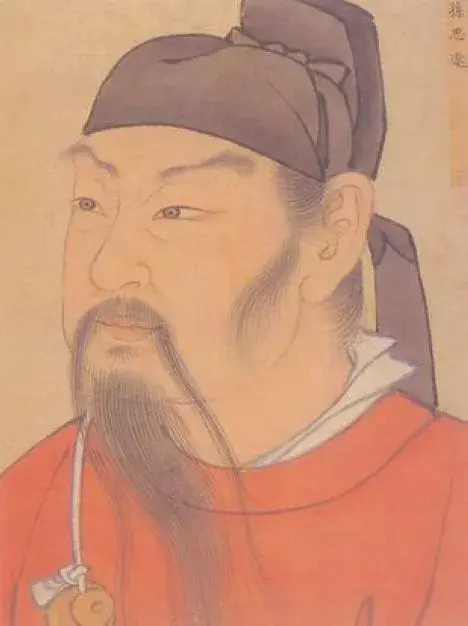
孙思邈
Sun Simiao (孙思邈, 581–682) was a native of Huayuan, Jingzhao (modern Yaozhou District, Tongchuan, Shaanxi), and a towering physician, pharmacologist, and philosopher of the Sui-Tang transitional era, celebrated throughout East Asian history as the "King of Medicine" (Yaowang). Blessed with exceptional precocity, he could recite thousands of words daily by age seven, prompting Western Wei grandee Dugu Xin to acclaim him as a…
Sun Simiao (孙思邈, 581–682) was a native of Huayuan, Jingzhao (modern Yaozhou District, Tongchuan, Shaanxi), and a towering physician, pharmacologist, and philosopher of the Sui-Tang transitional era, celebrated throughout East Asian history as the "King of Medicine" (Yaowang). Blessed with exceptional precocity, he could recite thousands of words daily by age seven, prompting Western Wei grandee Dugu Xin to acclaim him as a "sacred child." Beset by chronic illness during his youth, Sun recognized the fragility of life and resolved to master the medical arts. He thoroughly mastered classical Daoist philosophy, Buddhist healing scriptures, and Confucian learning. Although Emperor Wen of Sui, Emperor Taizong of Tang, and Emperor Gaozong of Tang repeatedly summoned him to the imperial court, offering elevated offices including Erudite of the National University and Grand Councilor, Sun resolutely declined political honors, choosing instead to live as an ascetic in the Taibai and Zhongnan Mountains, gathering medicinal herbs and healing the common people. Sun Simiao holds an epochal position in the history of traditional Chinese medicine. Over decades of clinical practice, he authored the thirty-volume clinical masterpiece Essential Formulas for Emergencies Worth a Thousand Pieces of Gold (Beiji Qianjin Yaofang) in 652, followed by the thirty-volume Supplement to the Formulas Worth a Thousand Pieces of Gold (Qianjin Yifang) in 682, collectively known as the Qianjin Fang. He pioneered the establishment of gynecology and pediatrics as independent medical disciplines placed at the very head of medical compendia, discovered the "Ashi points" for acupuncture, and devised innovative treatments using seaweed for goiter, animal livers for night blindness, and cereal bran for beriberi. In the opening treatise On the Absolute Sincerity of Great Physicians (Dayi Jingcheng), Sun formulated the foundational ethical code of traditional medicine, requiring practitioners to approach patients with supreme compassion, selflessness, and universal equality. He passed away in 682 at the age of one hundred and two.
Born into a scholarly family in Jingzhao, renowned as a child prodigy.
Commenced intensive medical practice after youthful illnesses, treating local villagers with great success.
Declined Emperor Wen's appointment as Erudite of the National University, retiring to Mount Taibai to gather herbs.
Summoned to Chang'an by Emperor Taizong, who marveled at his youthful vitality; declined imperial offices.
Finalized the thirty-volume medical encyclopedia Beiji Qianjin Yaofang.
Lodged at Princess Poyang's estate under Emperor Gaozong; declined appointment as Court Gentleman for Consultation.
Permitted by Emperor Gaozong to return to Huayuan due to advanced age, receiving imperial horses.
Finalized Qianjin Yifang and entered peaceful decease at age one hundred and two.
Sun Simiao was born in Huayuan, Jingzhao, in 581. Endowed with astonishing intellectual gifts, he was capable of memorizing over a thousand words of classical prose daily by age seven. When Western Wei general Dugu Xin encountered him, he was deeply struck by Sun's noble bearing, praising him as a rare "sacred prodigy." However, during his adolescence, Sun suffered repeatedly from severe rheumatic afflictions, exhausting his family's modest fortunes on medical consultations. Experiencing firsthand the agony of disease and the tragic deficiency of skilled physicians among ordinary folk, the eighteen-year-old youth resolved to dedicate his life to medicine.
He immersed himself in seminal canons such as Huangdi Neijing, Shanghan Zabing Lun, and Shennong Bencao Jing, while integrating Daoist longevity arts, Buddhist meditative hygiene, and Confucian ethics. In addition to textual exegesis, Sun actively sought out folk healers and itinerant herb gatherers, collecting regional prescriptions. By age twenty, his clinical acumen was widely acknowledged throughout Guanzhong as he diagnosed and healed patients suffering from fevers, rheumatic pain, and external ulcers, establishing a profound reputation for selfless healing.
During the Kaihuang era of the Sui dynasty, Emperor Wen heard of Sun's profound learning and issued an imperial decree appointing him Erudite of the National University. Anticipating the violent downfall of the Sui house, Sun feigned illness and declined court service, prophesying to his disciples that a true sage would unify the realm fifty years later. He withdrew into the dense forests of Mount Taibai and Mount Zhongnan, building thatched huts, observing seasonal flora, and gathering wild herbs along treacherous cliffs. There he lived among foresters and hunters, freely treating illnesses while recording the ecological properties of over two hundred medicinal plants.
During his years in the Taibai Mountains, Sun conducted meticulous observations regarding the correlation between plant harvesting seasons and therapeutic efficacy. He noted that herbs gathered out of season suffered from depleted pharmacological potency, establishing accurate monthly harvesting timetables and processing standards for 233 botanical substances. Following the establishment of the Tang dynasty, Emperor Taizong summoned Sun Simiao to Chang'an in 627. Observing that the septuagenarian physician possessed the radiant complexion and nimble vitality of a youth, Taizong remarked that masters of the Dao truly commanded deep reverence and offered him aristocratic titles. Sun gracefully declined, expressing a desire to remain a mountain hermit.
In 658, Emperor Gaozong summoned Sun to the palace to seek guidance on healing and dietary longevity. The emperor assigned Princess Poyang's former residence for his lodging and appointed him Court Gentleman for Consultation. Once again, Sun respectfully declined official rank, choosing to dedicate his remaining days to clinical writing and the relief of suffering. The emperor held his moral character in such high regard that court physicians were instructed to seek his counsel on intractable cases, while literary figures such as Lu Zhaolin became his devoted disciples.
Throughout decades of medical practice, Sun witnessed thousands perish due to incompetent prescriptions and inaccessible medical literature. Believing that "human life is of paramount importance, worth more than a thousand pieces of gold; saving a single life through a proper formula generates virtue surpassing even that sum," he named his monumental treatise Qianjin Fang. In 652, Sun completed the thirty-volume Essential Formulas for Emergencies Worth a Thousand Pieces of Gold (Beiji Qianjin Yaofang). Encompassing 232 thematic sections and over 5,300 therapeutic prescriptions, the work covered diagnostics, gynecology, pediatrics, infectious fevers, acupuncture, dietary therapy, and psychological counseling. Crucially, Sun placed treatments for women and children at the very beginning of the encyclopedia, championing mother and child health.
In the opening treatise On the Absolute Sincerity of Great Physicians, Sun established China's earliest formal medical oath, demanding that physicians cultivate supreme professional skill and boundless compassion, treating all patients equally regardless of wealth, social standing, or physical appearance. Throughout his life, Sun treated beggars, lepers, and high ministers alike with identical devotion, refusing excessive fees and winning the veneration of the entire realm.
Even past the age of one hundred, Sun Simiao maintained lucid mental acuity and continued writing daily. Recognizing that his earlier compendium lacked certain ancient formulas, foreign herbal remedies, and specialized acupuncture techniques, he compiled the thirty-volume Supplement to the Formulas Worth a Thousand Pieces of Gold (Qianjin Yifang) in 682. The supplement organized material into materia medica, gynecology, fever management, pediatrics, longevity techniques, stroke, complex disorders, and acupuncture, adding over three thousand formulas and systematically analyzing Zhang Zhongjing's Treatise on Cold Damage Diseases.
Together, the sixty volumes of the Qianjin canon formed the first comprehensive clinical medical encyclopedia in Chinese history. In the same year, Sun passed away peacefully in meditation at the age of one hundred and two. In his final testament, he requested a frugal burial without wooden coffins or animal sacrifices. Deeply grateful for his selfless service, successive generations erected temples in his honor, revering him as the immortal "King of Medicine."
Sun Simiao's treatise On the Absolute Sincerity of Great Physicians represents the crowning pinnacle of Chinese medical ethics. He declared: "Whenever a great physician treats disease, he must calm his mind, harbor neither personal ambition nor desire, and manifest profound compassion, vowing to alleviate the suffering of all sentient beings." He vehemently condemned physicians who exploited patients for financial gain, flattered the powerful, or disdained the impoverished, establishing empathy and moral rectitude as the inviolable soul of traditional medicine.
Furthermore, he outlined the psychological discipline of the practitioner: "Bold in resolution yet meticulous in deliberation; flexible in intellect yet upright in conduct." He explained that boldness was necessary for decisive intervention in acute crises, deliberation was vital for precise pulse diagnosis, intellectual flexibility allowed adaptation without dogmatism, and moral uprightness safeguarded against worldly corruption.
Sun Simiao was the first in Chinese medical history to demand that gynecology and pediatrics be organized as primary independent specialties. In Beiji Qianjin Yaofang, he positioned three volumes on women's disorders and two volumes on pediatric medicine at the beginning of the thirty-volume work. He argued that caring for maternal and child health was fundamental to the prosperity of the state and society.
He systematically classified menstrual irregularities, pregnancy complications, dystocia, and postpartum recovery, advising clean and quiet maternal living environments and emotional tranquility during childbirth. For infants, he instituted structured feeding schedules, advised against overdressing, and emphasized moderate exposure to sunlight and fresh air, laying the groundwork for subsequent pediatric specializations.
Sun Simiao was the foremost pioneer of nutritional therapy and clinical dietetics in ancient medicine. He famously maintained: "A physician must first comprehend the etiology of disease and attempt cure through dietary therapy; only when dietary adjustments fail should medicinal drugs be administered." Addressing endemic goiter in mountainous regions, he correctly identified unclean water as a causative factor and pioneered the therapeutic use of iodine-rich seaweeds and animal thyroid glands.
For beriberi, which afflicted thousands in humid regions, he conducted comprehensive clinical investigations, prescribing preventative decoctions of cereal bran rich in thiamine to prevent recurrence. Furthermore, he systematically utilized vitamin-dense animal liver to cure night blindness and employed animal bone broth to treat physical exhaustion, establishing a mature paradigm of clinical nutritional therapy.
Sun Simiao championed the harmonious integration of herbal pharmacology and acupuncture, asserting that "the path of the consummate physician requires diagnosis and pharmacotherapy first, reinforced immediately by acupuncture and moxibustion." He formulated the clinical concept of "Ashi points," teaching that localized pressure points where a patient cries out in pain indicate stagnant vital energy requiring puncture, independent of standard meridian pathways.
He also invented the "body-inch" (tongshou cun) measurement system, using the patient's own finger proportions to accurately locate acupoints regardless of individual bodily variations. He authored the multi-colored Mingtang Acupuncture Charts, using color coding to trace the twelve primary meridians and eight extraordinary vessels.
In pharmacognosy, Sun examined hundreds of herbs, recording seasonal picking schedules and refining detoxification methods. He pioneered the preparation of processed Rehmannia root and developed oil extraction methods to remove toxicity from Croton seeds, enhancing pharmaceutical safety.
In laboratory alchemy, Sun sought to stabilize volatile sulfur, describing the method in Dan Jing Nei Fu Liu Huang Fa. He documented the heating of sulfur, saltpeter, and wood charcoal in a sealed crucible. This text is recognized by historians of science as the earliest recorded chemical precursor to the gunpowder formula in world literature.
FIGURES ASSOCIATED WITH THIS DYNASTY