Birth in Songjiang
Born into a distinguished literati family in Huating, Songjiang; studied classical poetry and musical prosody in youth.
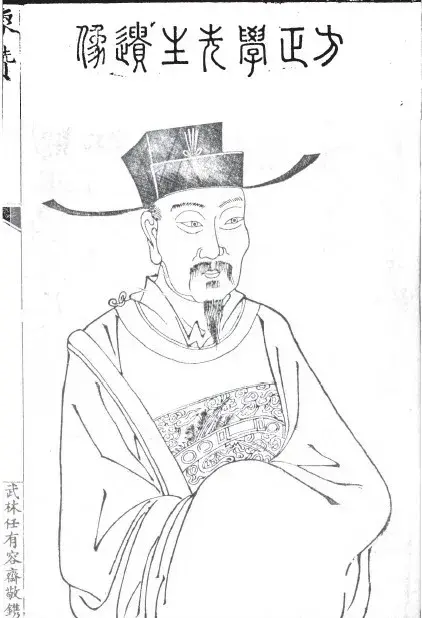
孙仁孺
Sun Renru (孙仁孺, 1585–1653), courtesy name Wendu, literary name Master of the White Snow Studio (Baixuezhai Zhuren), was a native of Huating in Songjiang Prefecture, Zhili (modern Songjiang District, Shanghai). He was a distinguished playwright and poet of the late Ming Dynasty. Hailing from a prominent scholar-gentry lineage in Songjiang, Sun demonstrated precoce literary talent and musical mastery from his youth. However,…
Sun Renru (孙仁孺, 1585–1653), courtesy name Wendu, literary name Master of the White Snow Studio (Baixuezhai Zhuren), was a native of Huating in Songjiang Prefecture, Zhili (modern Songjiang District, Shanghai). He was a distinguished playwright and poet of the late Ming Dynasty. Hailing from a prominent scholar-gentry lineage in Songjiang, Sun demonstrated precoce literary talent and musical mastery from his youth. However, his civil examination aspirations suffered repeated delays, and he only achieved the provincial graduate (juren) degree in Shuntian Prefecture in 1624 during the Tianqi era. During the Chongzhen reign, Sun was appointed Vice Magistrate of Yulin Subprefecture in remote Guangxi. Disheartened by administrative corruption, local bureaucratic decay, and political factionalism, he resigned his commission and retired to his estate in Songjiang, naming his study the "White Snow Studio" (Baixuezhai) to dedicate himself to musical drama and poetry. Following the Ming-Qing transition, Sun preserved loyalist seclusion, living in peaceful retirement until his death in 1653 at the age of sixty-nine. Sun occupies a unique and exalted position in the annals of traditional Chinese dramatic literature. While contemporary theater was dominated by sentimental romantic melodramas or Daoist deliverance plays, Sun pioneered serious literati social satire. His crowning dramatic masterpiece, Dongguo Ji (The Story of the Man of Qi at the Eastern Wall), ingeniously adapted the classical parable from Mencius ("A Man of Qi with a Wife and a Concubine"), combining sharp dramatic exaggeration with acute psychological realism to excoriate the hypocrisy, servility, and moral decay of late-Ming scholar-officials who shamelessly pursued worldly honors. His lyrics are celebrated for vigor, elegance, and musical precision, leading Qing drama theorist Jiao Xun to extol Dongguo Ji as the supreme masterpiece of dramatic satire in the Chinese tradition.
Born into a distinguished literati family in Huating, Songjiang; studied classical poetry and musical prosody in youth.
Repeatedly failed provincial examinations; consorted with Fushe scholars and Kunqu theatrical troupes along the lower Yangtze.
Traveled north to pass the Shuntian provincial examination, earning the juren degree.
Appointed Vice Magistrate of Yulin Subprefecture in Guangxi; resigned in disillusionment over bureaucratic graft.
Retired to White Snow Studio in Songjiang, authoring his celebrated satirical dramas Dongguo Ji and Zuixiang Ji.
Following the fall of the Ming Dynasty, closed his gates to the new Qing authorities and lived as a loyalist recluse.
Passed away peacefully at his residence in Songjiang at the age of sixty-nine.
Sun Renru was born into an affluent and culturally distinguished family in Huating, Songjiang Prefecture (modern Shanghai). Since the mid-Ming, Songjiang had stood as a paramount center of Chinese literati culture, producing masters such as Dong Qichang and Chen Jiru. The Sun lineage possessed extensive library holdings and preserved generations of literary scholarship.
From his early years, Sun demonstrated literary flair, mastering ancient prose, classical poetry, and the precise modal structures of Kunqu musical theater. Charismatic and passionate, he traveled extensively along the lower Yangtze, associating with reformist literati of the Fushe society and composing verses amidst the scenic waters of Songjiang. However, his civil examination aspirations were frustrated for decades, as he failed the Jiangnan provincial civil examinations multiple times.
In 1624, at the age of forty, Sun traveled to the northern metropolitan province of Zhili and passed the Shuntian provincial examination, obtaining the provincial graduate (juren) degree. Yet the realm was gripped by the autocratic terror of Grand Eunuch Wei Zhongxian, prompting Sun to decline immediate bureaucratic employment.
In the early Chongzhen reign, following the purge of the eunuch faction, Sun accepted appointment as Vice Magistrate of Yulin Subprefecture in remote Guangxi. Yulin was a malaria-ridden frontier post plagued by endemic corruption and friction between hereditary aboriginal chieftains and imperial magistrates. Sun discharged his duties with scrupulous integrity, clearing backlogged dockets and shielding commoners from illegal exactions. However, recognizing that a minor subprefectural magistrate could not reform the systemic decay of the late-Ming state, and alienated by sycophantic superiors, Sun resigned his post after several years and returned to Songjiang.
Returning to his native Huating, Sun renounced bureaucratic ambitions. He erected a garden residence in the western quarter of the city, christening it the "White Snow Studio" (Baixuezhai), devoting his remaining decades to the composition of dramatic romances.
During the late Ming, public commercial stages were saturated with frivolous romances depicting young scholars and beauties eloping against patriarchal wishes to achieve court triumph. Sun despised these clichés. He observed that as Northern Yuan remnants and Manchu armies battered the frontiers while domestic rebellions tore the interior apart, high ministers and court scholars cared nothing for statecraft, competing only for factional power and venal gain.
To expose this widespread moral corruption, Sun adapted the ancient moral parable recorded in Mencius (Li Lou II) regarding the shameless man of Qi who begged for sacrificial leftovers at gravesites. Over several years of intensive labor, Sun expanded the classical fragment into the thirty-act dramatic masterpiece Dongguo Ji (The Story of the Man of Qi at the Eastern Wall).
In the drama, the protagonist Master Dongguo is depicted as an outwardly pompous scholar-official who constantly pontificates on moral benevolence and boasts of dining with princes. In reality, he sneaks away daily to city cemeteries, begging for greasy scraps and wine from tomb mourners. Sun created sharp dramatic juxtapositions: on one side, Dongguo boastfully swaggered before his wife and concubine; on the other, his women trailed him to the graves, observing him on his knees devouring table scraps. The play dissected the moral hypocrisy, greed, and servility of late-Ming literati with razor-sharp satire and refined musical cadences, creating an immediate sensation upon its theatrical premiere.
In addition to Dongguo Ji, Sun composed the drama Zuixiang Ji (The Land of Drunken Serenity), which utilized dialogues between drunken immortals and hermits to envision a utopian haven detached from worldly turmoil, articulating his desire for reclusive purity.
In 1644, Beijing fell to peasant insurgent forces, followed by the Qing conquest of Jiangnan. Loyalists in Songjiang, including Xia Yunyi and Chen Zilong, rose in armed defiance and died heroic deaths.
Grief-stricken by the extinction of his dynastic house, Sun shut his courtyard gates, refusing all communication with Qing collaborationist officials. In his modest studio, he passed his remaining years copying classical canons and collating musical scores. He died peacefully in Songjiang in 1653 at the age of sixty-nine.
Sun Renru is celebrated in Chinese theatrical history as an extraordinary master of satirical comedy.
In his Discourse on Drama (Ju Shuo), Qing scholar Jiao Xun wrote: "Among Ming chuanqi dramas, those that depict romance are legion, but those that satirize society are vanishingly rare. Sun Wendu's Dongguo Ji, expanding the Mencian passage into a full-length opera, laid bare the hypocrisies of the world with devastating psychological penetration—truly the foremost cautionary masterpiece in the chuanqi corpus!"
The modern drama theorist Wang Guowei observed: "During the late Ming, drama turned toward realism and moral critique. Sun Renru's Dongguo Ji combined sparkling prose with intricate stagecraft, achieving the highest summit of literati comedy."
Modern literary historians emphasize that Sun utilized sophisticated dramaturgy and incisive satire to expose the ethical bankruptcy of the late-imperial elite, establishing an enduring monument of realistic social satire amidst the ornate romanticism of Ming theater.
FIGURES ASSOCIATED WITH THIS DYNASTY