Birth in Rongcheng
Born into a literate agrarian family in Rongcheng, Baoding; displayed philosophical talent and moral gravity in youth.
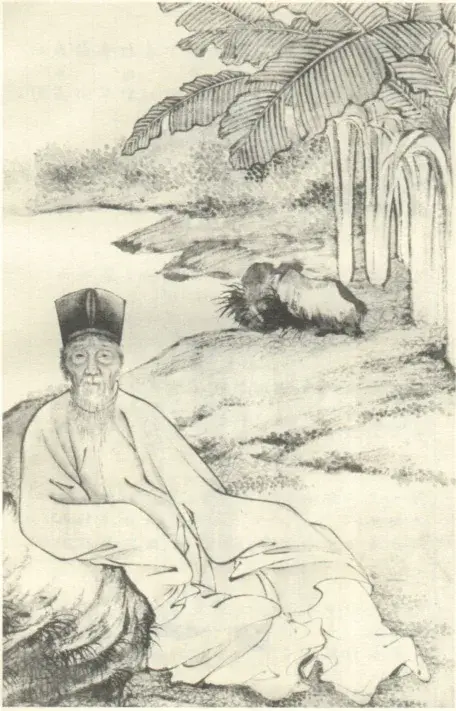
孙奇逢
Sun Qifeng (孙奇逢, 1584–1675), courtesy name Qitai, literary name Zhongyuan, honored by scholars as Master Xiafeng (Xiafeng Xiansheng), was a native of Rongcheng in Baoding Prefecture, Zhili (modern Rongcheng County, Hebei). He was a paramount philosopher, educator, and moral exemplar during the transition from the Ming to the Qing, celebrated alongside Huang Zongxi and Li Yong as one of the "Three Great Confucian Masters of…
Sun Qifeng (孙奇逢, 1584–1675), courtesy name Qitai, literary name Zhongyuan, honored by scholars as Master Xiafeng (Xiafeng Xiansheng), was a native of Rongcheng in Baoding Prefecture, Zhili (modern Rongcheng County, Hebei). He was a paramount philosopher, educator, and moral exemplar during the transition from the Ming to the Qing, celebrated alongside Huang Zongxi and Li Yong as one of the "Three Great Confucian Masters of the Ming-Qing Transition." Displaying precocious intellectual talent, Sun earned the provincial graduate (juren) degree in 1599 at the young age of sixteen. Observing the factional degeneration and administrative paralysis of the late Wanli court, he abandoned bureaucratic ambitions, never sitting for the metropolitan examination. During the Tianqi reign, when the eunuch dictator Wei Zhongxian unleashed a reign of terror against the Donglin six gentlemen—including Yang Lian and Zuo Guangdou—Sun joined fellow scholars Lu Zheng and Zhang Guozhong in risking clan extermination. Liquidating his household property and collecting thousands of ounces of silver across Zhili, Sun personally delivered ransom funds to the Imperial Bodyguard prison to delay their executions, winning national acclaim as one of the "Three Heroes of Fanyang." Throughout the Chongzhen reign, the throne repeatedly summoned him to ministerial and secretarial posts, all of which he resolutely declined. Following the fall of the Ming Dynasty in 1644, Sun organized village self-defense militias and fortified rural stockades in Rongcheng, saving tens of thousands of lives from marauding armies. In 1651, to escape the persistent recruitment summons of the new Qing administration, he relocated his family to the remote village of Xiafeng beneath Mount Sumen in Huixian, Henan, where he directed the Xiafeng Academy for over three decades. Resolutely rejecting imperial honors from the Shunzhi and Kangxi emperors, he lived as a loyalist recluse. In philosophy, Sun sought to bridge the bitter sectarian rift dividing the Cheng-Zhu school of principle and the Lu-Wang school of mind, arguing that genuine scholarship consisted of practical moral conduct (jingshi zhixing). His magnum opus, the twenty-six-fascicle Lineage of the School of Principle (Lixue Zongchuan), remains a foundational historiographical canon of Neo-Confucian thought. He passed away peacefully in 1675 at the age of ninety-two, and was later enshrined in the Confucian Temple.
Born into a literate agrarian family in Rongcheng, Baoding; displayed philosophical talent and moral gravity in youth.
Passed the Shuntian provincial examination at the age of sixteen, earning the juren degree.
Liquidated family assets to raise funds to rescue imprisoned martyrs Yang Lian and Zuo Guangdou.
Repeatedly petitioned Emperor Chongzhen to decline appointments as drafter and Hanlin academician.
Built over forty defensive stockades in Rongcheng to protect civilians amidst dynastic warfare.
Migrated to Xiafeng village beneath Mount Sumen in Huixian, Henan, establishing Xiafeng Academy.
Completed his landmark twenty-six-chapter history of Neo-Confucian philosophy, synthesizing Cheng-Zhu and Lu-Wang.
Died peacefully without illness at his Xiafeng retreat at the age of ninety-two; mourned by thousands.
Sun Qifeng was born into an established literati household in Rongcheng County, Baoding Prefecture. Demonstrating an extraordinary capacity for philosophical reflection, he committed the classical canons to memory during early youth. In 1599, at the age of sixteen, he placed prominently in the Shuntian provincial examinations, receiving the provincial graduate (juren) degree and widespread public praise.
However, upon traveling to the capital and observing the decay of the late Wanli court, where ministers traded influence and neglected administration, Sun concluded that the pursuit of eight-legged examination success yielded nothing of benefit to the welfare of the people. He renounced further participation in metropolitan examinations, returning home to immerse himself in the writings of Zhou Dunyi, Zhang Zai, the Cheng brothers, Zhu Xi, and Wang Yangming, while studying military logistics, irrigation, and agrarian administration.
During the Tianqi reign, the eunuch dictator Wei Zhongxian fabricated the Donglin treason trials, casting Vice Censor-in-Chief Yang Lian and Vice Minister of the Court of Judicial Review Zuo Guangdou into the Imperial Bodyguard prison. Wei subjected them to horrific torture and demanded twenty thousand ounces of silver in fictitious graft, vowing they would be executed if the sums were not paid. Terrified courtiers abandoned their associates to avoid implication.
Outraged by the persecution of upright ministers, Sun joined his close friends Lu Zheng and Zhang Guozhong in an act of extraordinary moral heroism. Selling his ancestral farmlands, Sun traversed Baoding, Zhending, and Shuntian, pleading with gentry families to contribute funds. Raising thousands of ounces of silver, he personally entered the Imperial Bodyguard prison in Beijing to pay the ransom, securing temporary respites for the prisoners.
Concurrently, Sun established contacts with sympathetic guards to attempt an escape for Zuo Guangdou. Although Yang and Zuo ultimately perished under torture, Sun's fearless defiance shook the realm. The empire lauded Sun, Lu, and Zhang as the "Three Heroes of Fanyang" (Fanyang San Lieshi), hailing them as the moral pillars of the late Ming literati.
In 1628, following the accession of Emperor Chongzhen and the purge of the eunuch clique, the court rehabilitated purged ministers. Acknowledging Sun's moral stature, the emperor issued special decrees appointing him Secretary in the Grand Secretariat, subsequently elevating him to Supervising Secretary, Assistant Censor-in-Chief, and Hanlin Expositor. Emperor Chongzhen issued five separate imperial rescripts demanding his presence at court, but Sun pleaded the infirmity of his aged mother, steadfastly refusing bureaucratic office.
During the late Chongzhen reign, severe famines struck north China, triggering the rapid expansion of peasant rebel armies alongside incursions by Manchu forces across the Great Wall. Rongcheng lay along the central transit corridor between Beijing and the south. Rather than seeking refuge elsewhere, Sun mobilized his lifelong studies of military fortification. He designed and constructed more than forty stone stockades across the county, organized peasant patrols, and trained village youths during agricultural lulls. Over a decade of ceaseless warfare, the Rongcheng stockades repelled numerous incursions by raiders, saving tens of thousands of local civilians.
In 1644, Beijing fell and the Qing Dynasty established control over northern China. Upholding his Ming loyalist convictions, Sun refused to serve the new regime. In 1651, to escape repeated administrative solicitations and provincial pressures, the sixty-seven-year-old philosopher led his extended household across the Yellow River, settling in the remote hamlet of Xiafeng beneath Mount Sumen in Huixian, Henan.
At Xiafeng, Sun established the Xiafeng Academy, opening classrooms to scholars from across the empire. Disciples arrived in large numbers, transforming the remote Henan village into the intellectual capital of northern China and giving rise to the influential "Xiafeng School." Emperors Shunzhi and Kangxi repeatedly issued decrees offering prestigious appointments as Grand Academician and court councilor, with provincial governors visiting his humble cottage in person. Sun respectfully declined every summons, remaining faithful to his reclusive hermitage.
In intellectual thought, Sun confronted the sectarian feud between the Cheng-Zhu school of principle and the Lu-Wang school of mind that had paralyzed late-Ming scholarship.
He maintained that while the Cheng-Zhu tradition emphasized intellectual inquiry and textual investigation, the Lu-Wang school emphasized moral introspection and personal action. He argued that the two approaches were complementary paths toward the same ethical truth. The Cheng-Zhu tradition provided philological rigor to prevent intuitionism from degenerating into empty Zen mysticism, while the Lu-Wang school provided moral immediacy to prevent classical scholarship from devolving into dry pedantry. He insisted that true learning was inseparable from active moral conduct, establishing a northern school of practical ethics.
In his later years, Sun labored for over a decade to complete the Lineage of the School of Principle (Lixue Zongchuan) in twenty-six fascicles. Documenting over one hundred philosophers from Zhou Dunyi to Wang Yangming, the work evaluated their philosophical contributions with objective balance, standing as the earliest systematic historiographical compendium of Neo-Confucianism. He also authored Collected Works of Master Xiafeng, Near Meaning of the Four Books, and Records of Sagely Learning.
On May 22, 1675, Sun passed away peacefully in his meditation room at the Xiafeng Academy at the age of ninety-two. Thousands of disciples and local peasants wept as they escorted his cortege across Mount Sumen. In 1828, the Qing court formally enshrined his spirit tablet in the eastern wing of the Confucian Temple.
Sun Qifeng is revered in Chinese intellectual history as a moral sage whose practical scholarship revitalized northern Chinese philosophy.
In his Records of Ming Confucian Scholars, philosopher Huang Zongxi wrote: "Master Xiafeng took practical conduct as his absolute root; with integrity established and moral fame shining bright, scholars across the realm looked up to him. Following the dynastic collapse, he secluded himself at Mount Sumen for thirty years, ensuring that northern Confucian learning did not perish—truly an enduring light in a darkened world!"
Qing minister Tang Bin recorded in The Life of Master Xiafeng: "The master's doctrine was purely sagely; his moral integrity transcended heaven and earth. In liquidating his fortune during the Tianqi persecutions, he viewed death with serene detachment; in lecturing at Xiafeng, he synthesized Zhu and Wang, commanding the reverence of myriad generations—truly a monumental hero among Confucians!"
Modern intellectual historians observe that amidst the cultural desolation of seventeenth-century northern China, Sun harmonized ideological factions, combined moral philosophy with pragmatic social defense, and set an eternal benchmark for intellectual responsibility during periods of historic crisis.
FIGURES ASSOCIATED WITH THIS DYNASTY