Born in Jiangdong
Born into the Eastern Wu court as Sun Quan's second son, displaying early intellect and varied talents.
孙虑
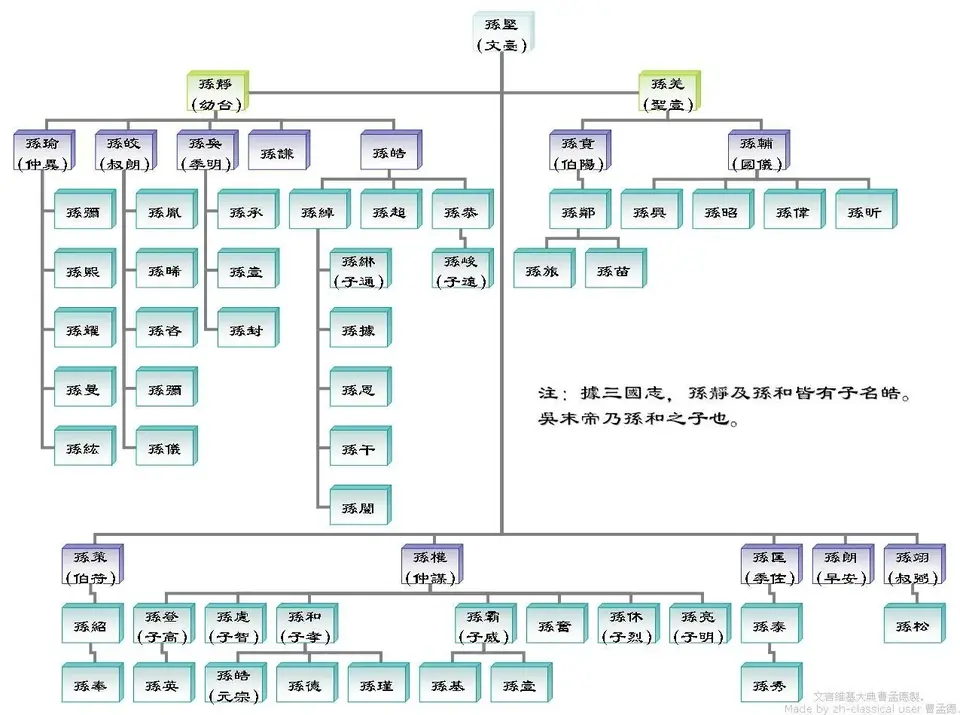
Sun Lu (213–232), courtesy name Zizhi, was a native of Fuchun County, Wu Commandery (modern Fuyang District, Hangzhou, Zhejiang Province). He was a core imperial prince and military commander of Eastern Wu during the Three Kingdoms period, the second son of Sun Quan (Emperor Da of Wu), and the younger full brother of Crown Prince Xuan (Sun Deng), whose maternal descent remains unrecorded. Endowed from youth with exceptional…
Sun Lu (213–232), courtesy name Zizhi, was a native of Fuchun County, Wu Commandery (modern Fuyang District, Hangzhou, Zhejiang Province). He was a core imperial prince and military commander of Eastern Wu during the Three Kingdoms period, the second son of Sun Quan (Emperor Da of Wu), and the younger full brother of Crown Prince Xuan (Sun Deng), whose maternal descent remains unrecorded. Endowed from youth with exceptional brilliance and agility, Sun Lu excelled in martial arts and horse archery while also reading widely in history and classical texts, earning his father Sun Quan's profound affection and esteem. In 228 (7th year of the Huangwu era), at the age of sixteen, Sun Lu was created Marquis of Jianchang, receiving Jianchang County in Yuzhang Commandery as his fief. In 229 (1st year of the Huanglong era), when Sun Quan assumed the imperial title and moved the capital to Jianye, he left Crown Prince Sun Deng and Marquis of Jianchang Sun Lu to co-govern the former capital of Wuchang, placing them under the tutelage of Senior General-in-Chief Lu Xun. In his youth, Sun Lu was fond of duck-fighting matches and constructed an ornate enclosure in front of his audience hall. When Lu Xun sternly admonished him that an imperial prince ought to study classical texts to gain wisdom rather than waste time on trivial amusements, Sun Lu immediately repented, personally dismantled the duck enclosure, and applied himself diligently to statecraft, setting a celebrated example of imperial humility. Sun Quan subsequently appointed young Sun Lu Senior General Who Guards the Army, granted him acting imperial credentials, authorized him to open an official headquarters, and dispatched him to garrison Banzhou (west of modern Jiujiang, Jiangxi Province) to oversee regional river defenses. Stationed in Banzhou, Sun Lu upheld administrative discipline, drilled his forces, treated scholars and mentors with genuine deference, and adjudicated judicial and civil cases with remarkable discernment, demonstrating administrative capabilities that far exceeded the public's expectations. In 232 (1st year of the Jiahe era), Sun Lu was struck down by sudden illness in Banzhou and passed away at the age of twenty. Sun Quan was devastated by the loss of his beloved son, refusing food in profound mourning. Because Sun Lu died young without an heir, his marquisate was formally extinguished.
Born into the Eastern Wu court as Sun Quan's second son, displaying early intellect and varied talents.
Enfeoffed as Marquis of Jianchang at age sixteen by Sun Quan, receiving his fief in Yuzhang Commandery.
Remained in Wuchang with Crown Prince Sun Deng when Sun Quan moved the capital, mentored by Lu Xun.
Built an enclosure for duck fights; upon Lu Xun's stern reproof, he immediately dismantled it to focus on study.
Appointed Senior General Who Guards the Army with credentials and office, garrisoning the strategic post of Banzhou.
Enforced discipline, welcomed worthy scholars, and adjudicated disputes with insight, winning widespread acclaim.
Died of sudden illness at Banzhou; Sun Quan suspended court in intense mourning, and the marquisate was abolished.
Sun Lu was born in the eighteenth year of the Jian'an era (213), shortly after his father Sun Quan repelled Cao Cao's massive invasion of four hundred thousand troops at the Ruxu River line, prompting Cao Cao's famous remark that "a son should be like Sun Zhongmou." Sun Lu was Sun Quan's second son, younger brother to Crown Prince Sun Deng, who was beloved by the people of Jiangdong.
From earliest childhood, Sun Lu displayed extraordinary mental acuity and perception. Quick-witted and observant, he mastered both military and civil arts, showing natural skill in horsemanship, archery, and classical memorization. Among Sun Quan's numerous sons, Sun Lu's noble bearing, keen intellect, and magnanimous demeanor won his father's deep affection and special consideration, and he was frequently tutored directly by Sun Quan.
In March 228 (3rd month of the 7th year of the Huangwu era), when Sun Lu turned sixteen, Sun Quan issued an imperial rescript officially creating him Marquis of Jianchang to strengthen the imperial perimeter, granting him the prosperous and strategically vital Jianchang County in Yuzhang Commandery (modern Yongxiu County, Jiangxi Province) as his personal fief. The conferral of the marquisate at such a tender age endowed Sun Lu with independent tax revenues and high aristocratic prestige.
In April 229 (1st year of the Huanglong era), Sun Quan officially ascended the imperial throne in Wuchang. In September of that year, weighing strategic geography and river logistics, Sun Quan resolved to relocate the imperial capital eastward to Jianye (modern Nanjing, Jiangsu). However, Wuchang stood at the vital throat of the middle Yangtze River, serving as both the military barrier protecting the Jiangdong heartland and the supply base for operations across Jing Province.
To preserve regional defense, Sun Quan resolved that his eldest son Crown Prince Sun Deng and his second son Marquis of Jianchang Sun Lu should remain in Wuchang to govern the middle reaches. To guide the young princes, Sun Quan summoned Senior General-in-Chief Lu Xun to reside permanently in Wuchang, entrusting the imperial administration and the education of both princes entirely to Lu Xun's supervision.
At the time, young Sun Lu was fond of competitive amusements. While residing in Wuchang, he developed a passion for duck-fighting, a popular pastime in the southern waterways, constructing an elaborate wooden duck-fighting enclosure in front of the steps of his administrative hall. He gathered companions daily to watch the birds fight amid loud clamor. Senior General-in-Chief Lu Xun, renowned for his rectitude and strict adherence to classical propriety, observed the young prince's indulgence with grave concern. Lu Xun requested a private audience and sternly admonished him: "Your Lordship is an imperial prince and a bulwark of the dynasty; you ought to spend day and night studying the Confucian classics to broaden your knowledge for governing the realm. What possible benefit can come from playing with birds and fowl!"
Sun Lu, despite his royal birth, possessed a rare capacity for self-reflection and humility. Rather than taking offense at Lu Xun's unsparing critique, he was overcome with remorse and bowed deeply in apology. He immediately summoned attendants with axes and crowbars, personally dismantling the duck enclosure and vowing never to engage in frivolous games again. From that day forth, Sun Lu closed his doors to idle gaming companions, devoting his days to studying statecraft and classical rituals under Lu Xun and court scholars. His humility and readiness to correct errors spread through the court, earning high praise from Sun Quan and Jiangdong gentry.
Sun Lu's virtues were matched by an impressive natural aptitude for civil and military administration. In 230 (2nd year of the Huanglong era), to reinforce river defenses across the middle Yangtze and Gan River basins, Sun Quan took the unusual step of appointing seventeen-year-old Sun Lu Senior General Who Guards the Army. He granted Sun Lu acting imperial credentials with authority to execute martial law, permitted him to open an official commandery headquarters, and dispatched him to command Banzhou.
Banzhou was situated at the strategic Xunyang river choke point west of modern Jiujiang, serving as a gateway between Jing Province and Jiangdong. Arriving at his frontier post, young Sun Lu demonstrated political maturity far beyond his years. In military discipline, he scrupulously adhered to state ordinances, maintaining orderly encampments and dispensing rewards and punishments strictly according to merit without relying on his princely prerogative. In administrative relations, he displayed genuine modesty, treating senior staff officers, military advisors, and local scholars with profound courtesy and actively seeking their counsel. In judicial matters, he personally reviewed civil and criminal disputes as well as grain transport logistics, adjudicating cases with sharp insight and equitable fairness.
Under Sun Lu's governorship, the Banzhou command was orderly, frontier defenses were secure, and the local populace prospered. While capital officials had initially doubted whether a youth under twenty could govern a major regional military post, Sun Lu's stellar governance won universal acclaim, with contemporaries marveling that his achievements far surpassed all expectations, ranking him as the most talented and virtuous among Sun Quan's second-generation princes.
Yet fate proved unsparing. In 232 (1st year of the Jiahe era), while working tirelessly in his military headquarters at Banzhou, Sun Lu suddenly fell grievously ill. Despite the desperate efforts of military physicians, his condition worsened rapidly, and he passed away in the garrison at the age of twenty.
Sun Lu's premature death dealt an agonizing emotional blow to Sun Quan. Although Sun Quan grew increasingly suspicious in his later years, he cherished his obedient and capable second son with deep paternal love. Upon receiving the tragic report, Sun Quan wept bitterly in the palace at Jianye, suspending court sessions and refusing food for several days in overwhelming grief, relenting only after ministers prostrated themselves to console him. Because Sun Lu died young and unmarried without progeny, his marquisate was formally abolished according to imperial law. Sun Lu passed like a bright and fleeting meteor across the early political sky of Eastern Wu; his early death deprived the imperial house of a pivotal pillar who might have anchored the succession and prevented the ruinous Crown Prince Dispute.
Exhibited martial and literary talents from early childhood, earning Sun Quan's special love; created Marquis of Jianchang at age sixteen in 228 with an extensive fief in Yuzhang.
While co-governing Wuchang, he constructed a duck-fighting arena; upon receiving Lu Xun's stern admonition, he immediately dismantled it by hand to devote himself to serious scholarship.
Appointed Senior General Who Guards the Army with imperial credentials and full administrative staff in 230, commanding regional river defenses at the strategic post of Banzhou.
Maintained strict military law, respected scholars and mentors, and adjudicated judicial cases with fairness, earning universal acclaim across the court and regional population.
Passed away from sudden illness in 232 at age twenty; Sun Quan mourned inconsolably and suspended court affairs, abolishing the marquisate due to the absence of heirs.
FIGURES ASSOCIATED WITH THIS DYNASTY