Birth in Gaoyou
Born into a distinguished scholarly family in Gaoyou, demonstrating brilliant memory from youth.
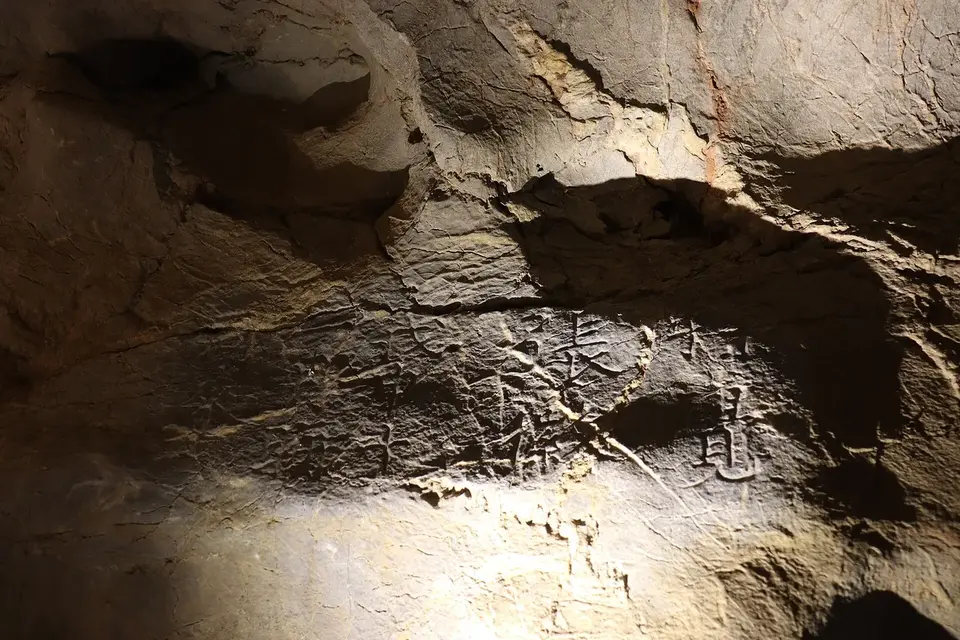
孙觉
Sun Jue (1028–1090), courtesy name Shenlao, was a native of Gaoyou in Yangzhou (modern Jiangsu). He was an esteemed Northern Song classical scholar, literary master, and incorruptible remonstrance official. He was a premier disciple of the Neo-Confucian educational pioneer Hu Yuan and the father-in-law of literary titan Huang Tingjian. Passing the imperial examination in 1053, Sun served in diverse local and central…
Sun Jue (1028–1090), courtesy name Shenlao, was a native of Gaoyou in Yangzhou (modern Jiangsu). He was an esteemed Northern Song classical scholar, literary master, and incorruptible remonstrance official. He was a premier disciple of the Neo-Confucian educational pioneer Hu Yuan and the father-in-law of literary titan Huang Tingjian. Passing the imperial examination in 1053, Sun served in diverse local and central positions, including Collator in the Imperial Library, Magistrate of Hailing, Policy Critic, and Prefect of Fuzhou. As Censor-in-Chief during the early Yuanyou reign, he demonstrated extraordinary moral courage, submitting over ten memorials within a single month to impeach corrupt councilors such as Cai Que and Zhang Dun, refusing personal promotions until abusive ministers were purged. In classical scholarship, Sun Jue revolutionized exegetical traditions with his fifteen-volume masterpiece Chunqiu Jingjie (Exegesis of the Spring and Autumn Annals), which prioritized direct philosophical meaning over cumbersome ancient commentaries. Revered by contemporaries including Su Shi, Sima Guang, and Wang Anshi, he served as a pivotal intellectual patron linking multiple generations of Song literati.
Born into a distinguished scholarly family in Gaoyou, demonstrating brilliant memory from youth.
Traveled to Huzhou to study under Master Hu Yuan, gaining acclaim alongside fellow student Liu Yi.
Passed the metropolitan examinations in Kaifeng, receiving initial appointment as Sheriff of Shanyin County.
Recommended by Ouyang Xiu for his profound classical mastery, appointed Collator in the Imperial Library.
Promoted to Right Reminder and Policy Critic; criticized administrative abuses of the New Policies and governed Hailing County.
Actively defended and petitioned for Su Shi during the Crow Terrace Poetry Trial, affirming Su's loyal integrity.
Elevated to Censor-in-Chief under the regency of Empress Dowager Xuanren, fiercely censuring corrupt grand councilors.
Appointed Vice Minister of Personnel and Auxiliary Academician of Longtu Pavilion, reforming civil evaluations.
Passed away in Kaifeng at age sixty-three; deeply mourned by Su Shi and Huang Tingjian, privately posthumously titled Wenjian.
Sun Jue was born into an illustrious lineage of scholars in Gaoyou. Endowed with exceptional intellectual gifts, he immersed himself in the Confucian classics from early childhood. During the Qingli era, educational reformer Hu Yuan established his celebrated academy in Huzhou, implementing innovative pedagogical methods emphasizing practical statecraft and classical ethics. Sun Jue journeyed to Huzhou and became Hu Yuan's foremost disciple, absorbing the inner philosophy of the Spring and Autumn Annals and the Book of Changes.
In 1053, Sun Jue passed the jinshi examinations and was appointed Sheriff of Shanyin County in Yuezhou. There he suppressed banditry, protected ordinary peasants, and arbitrated disputes with transparent fairness. During the Jiayou era, Ouyang Xiu, deeply impressed by Sun's erudite writings and refined moral character, submitted a warm memorial recommending him to the court. Sun was subsequently summoned to the capital as Collator in the Imperial Library and Deliberating Officer in the Judicial Review Commission.
When Wang Anshi instituted the New Policies during Emperor Shenzong's reign, Sun Jue served as Right Reminder and Right Policy Critic. While acknowledging the need for fiscal health, Sun maintained a balanced, pragmatic stance, repeatedly presenting memorials pointing out coercive collection practices in the Green Sprouts and Labor Service reforms. Because his critiques conflicted with court councilors, Sun requested reassignment to provincial posts, governing Hailing, Fuzhou, and Bozhou. In Hailing, when severe floods submerged farmland, Sun opened official granaries and personally donated his salary, organizing wealthy clans to distribute relief and saving tens of thousands of lives.
In autumn 1079, when Su Shi was arrested and imprisoned during the notorious Crow Terrace Poetry Trial, many court acquaintances avoided him out of fear. Sun Jue courageously stepped forward, petitioning the emperor on Su's behalf and affirming Su's profound loyalty and upright nature, helping protect the great poet from execution.
In 1086, upon Emperor Zhezong's accession and the regency of Empress Dowager Xuanren, conservative scholar-officials returned to power. Sun Jue was appointed Right Policy Advisor and swiftly promoted to Censor-in-Chief, commanding imperial surveillance. Sun exercised his remonstrance duties without fear or favor. Condemning Han Zhen for ceding sovereign territory, Cai Que for fabricating political trials, Zhang Dun for treacherous factionalism, and An Dao for administrative incompetence, Sun submitted more than ten impeaching memorials within thirty days.
When the imperial court sought to reward his integrity with higher ministerial rank, Sun Jue steadfastly refused, declaring: "If these four officials do not leave office, your servant dare not accept promotion! If they are removed, your servant will undertake any hazardous assignment without hesitation!" His resolute stance compelled the court to dismiss the offending ministers, winning universal acclaim across the capital.
In 1088, Sun Jue was transferred to Vice Minister of Personnel and concurrent Auxiliary Academician of Longtu Pavilion. Overseeing the selection and promotion of civil bureaucrats, he eliminated bribery and political favoritism, institutionalizing stringent merit evaluations.
In 1090, Sun succumbed to chronic illness in the capital, dying at age sixty-three. Literary masters Su Shi and Huang Tingjian wept bitterly upon receiving the news, composing moving funeral orations in his honor. Disciples privately conferred upon him the posthumous title Master Wenjian.
Sun Jue's preeminent intellectual achievement was his fifteen-volume treatise Chunqiu Jingjie (Exegesis of the Spring and Autumn Annals). Breaking free from the cumbersome and restrictive medieval commentary traditions of Zuo, Gongyang, and Guliang, Sun directly examined Confucius's original text to illuminate the essential principles of moral praise and censure (baobian).
Sun interpreted the classic through systematic intertextual analysis, maintaining rigorous philological discipline without resorting to far-fetched subjective speculation. The Qing imperial cataloguers of the Siku Quanshu lauded his work as "the most refined and sober among Song Confucian commentaries," establishing Sun as a principal architect of Song Neo-Confucian scriptural scholarship.
Beyond his own scholarship, Sun Jue possessed an exceptional eye for discovering intellectual genius. When young poet and calligrapher Huang Tingjian was still obscure in provincial postings, Sun recognized Huang's transcendent brilliance, vigorously promoting his career and giving his own daughter in marriage to Huang.
Sun maintained close literary dialogues with Su Shi, Su Zhe, Qin Guan, Chao Buzhi, and Zhang Lei. Literati throughout the Northern Song considered commendation from Sun Jue as the highest seal of intellectual honor, cementing his legacy as a vital cultural patron during the golden age of Song literature.
FIGURES ASSOCIATED WITH THIS DYNASTY