Birth
Sun Jiagan was born into a poor farming household in Xing County, Shanxi, studying diligently under harsh conditions.
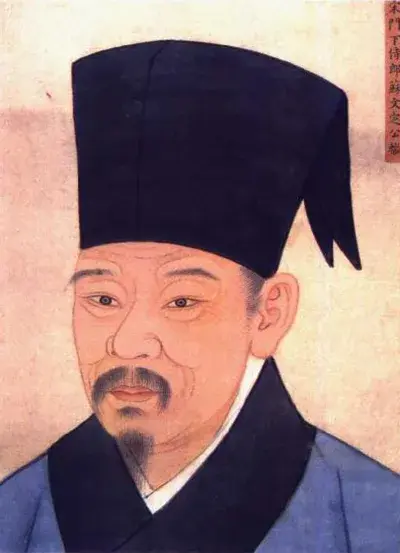
孙嘉淦
Sun Jiagan (孙嘉淦, 1683–1753), courtesy name Xigong, art name Yigu, and posthumous title Wending, was a native of Xing County, Shanxi. He was an eminent statesman, scholar, and legendary outspoken remonstrator of the mid-Qing dynasty who served with distinction through the Kangxi, Yongzheng, and Qianlong reigns. Attaining the jinshi degree in 1713, he entered the Hanlin Academy as a bachelor and was later appointed Hanlin…
Sun Jiagan (孙嘉淦, 1683–1753), courtesy name Xigong, art name Yigu, and posthumous title Wending, was a native of Xing County, Shanxi. He was an eminent statesman, scholar, and legendary outspoken remonstrator of the mid-Qing dynasty who served with distinction through the Kangxi, Yongzheng, and Qianlong reigns. Attaining the jinshi degree in 1713, he entered the Hanlin Academy as a bachelor and was later appointed Hanlin corrector. When the Yongle-like succession controversies left imperial ministers silent at the start of Yongzheng's reign, Sun courageously submitted a memorial urging the emperor to treat his brothers with fraternal kindness, halt the sale of official titles, and cease western military expeditions, winning the sovereign's deep admiration for his singular boldness. Upon the Qianlong Emperor's accession, Sun submitted his celebrated Memorial on Three Habits and One Evil, a masterclass of political remonstrance analyzing monarchical psychology that became widely hailed as the finest memorial of the Qing dynasty. He subsequently served as Minister of Punishments, Minister of Personnel, Minister of Works, and Governor-General of Zhili and Huguang. In Zhili, he lifted long-standing prohibitions on folk alcohol distillation to foster rural commerce, surveyed the Tianjin water systems to tame the Yongding River, and overturned wrongful capital convictions. Rising to Assistant Grand Secretary in his later years, he was posthumously granted the title Grand Guardian of the Heir Apparent and enshrined in the Temple of Eminent Statesmen.
Sun Jiagan was born into a poor farming household in Xing County, Shanxi, studying diligently under harsh conditions.
Passed the metropolitan civil examination as an imperial jinshi, entering the Hanlin Academy as a bachelor and subsequently becoming corrector.
Submitted a bold memorial urging the new emperor to show fraternal affection and suspend title purchases; Yongzheng praised his courage and promoted him to Director of Studies at the Imperial Academy.
Promoted to Chancellor of the Imperial Academy, rigorously reforming academic discipline before being temporarily demoted to the Board of Revenue silver vaults after a blunt dispute.
Prince Yunli verified that every ounce of silver in the vaults balanced perfectly, leading to Sun's reappointment as Vice Minister of Punishments and Personnel.
Promoted to Senior Censor-in-Chief, he presented his renowned Memorial on Three Habits and One Evil, and was subsequently made Minister of Punishments.
Appointed Governor-General of Zhili, where he successfully petitioned to abolish the ban on folk spirit brewing and personally surveyed maritime waterways.
Collaborated with River Director Gao Bin to dredge waterways, construct sluice dams, and reinforce protective embankments around Baoding.
Reassigned as Governor-General of Huguang, where he reformed regional administration and addressed local grievances.
Appointed Assistant Grand Secretary while concurrently directing the Ministry of Personnel and presiding over the Hanlin Academy.
Passed away in Beijing at seventy-one; the emperor bestowed the posthumous title Wending, granted burial honors, and inducted him into the Temple of Eminent Statesmen.
Sun Jiagan was born in 1683 in Xing County, Shanxi. His family was impoverished, and his father, Sun Tianxiu, maintained a strict household centered on agriculture and classical learning. Sun was naturally resolute and unadorned, enduring severe deprivation to pursue his education. On freezing winter nights, he reportedly submerged his feet in cold water to keep awake while reading.
In 1713, during the special metropolitan examination held under the Kangxi Emperor, Sun attained the prestigious jinshi degree. Selected as a Hanlin bachelor, he was subsequently appointed Hanlin corrector upon completing his training. During his years working on historical compilations, he immersed himself in Cheng-Zhu Neo-Confucianism and the Book of Changes, cultivating a steadfast and pragmatic moral character that prioritized genuine governance over literary ornamentation.
Following the accession of the Yongzheng Emperor in 1723, imperial politics became highly fraught due to factional tensions surrounding the succession. While other court officials hesitated to speak, Sun Jiagan boldly submitted a memorial advancing three sensitive proposals: reconcile with imperial brothers to consolidate public morale, halt the purchase of official titles to preserve bureaucratic integrity, and end military campaigns in the northwest to spare state finances. The emperor was initially enraged by the reference to fraternal discord and reprimanded the Hanlin leadership.
However, Grand Minister Zhu Shi intervened, remarking that while Sun's memorial was audacious, his courage was admirable. The emperor reflected, laughed, and declared that he too admired Sun's boldness. Instead of punishment, Sun was summoned to court and promoted to Director of Studies at the Imperial Academy, later becoming Chancellor in 1726. When Sun persistently defended certain instructors during evaluation, the emperor grew angry and demoted him to labor at the Board of Revenue silver vaults. The emperor observed to the court that Sun was stubborn but entirely uncorrupted by money. When Prince Yunli audited the vaults and found every account balanced down to the smallest fraction of an ounce, Sun was reinstated as Vice Minister of Punishments in 1732.
In 1735, the Qianlong Emperor ascended the throne. Sun was appointed Senior Censor-in-Chief. Seeking to guide the young monarch toward virtuous rule, Sun submitted his celebrated Memorial on Three Habits and One Evil. He analyzed how sovereigns naturally fall prey to flattery, agreeable deception, and comfortable indolence, warning that these personal flaws would inevitably foster bureaucratic evasion and silence across the entire realm.
The Qianlong Emperor was deeply impressed by Sun's insight and elevated him to Minister of Punishments. In this role, Sun adjudicated complex legal cases with absolute fairness. Sent to Henan to re-examine a convoluted long-standing dispute in Zhengzhou that imperial commissioners had failed to resolve, he overturned wrongful verdicts and exonerated more than ten falsely accused individuals. In 1738, he was promoted to Minister of Personnel.
In October 1738, the emperor appointed Sun Governor-General of Zhili. Since early Qing times, the court had enforced draconian prohibitions against brewing spirits to conserve grain, resulting in extensive extortion and widespread criminalization of rural folk. Sun conducted extensive field inquiries, demonstrating through detailed evidence that sorghum and husks were not primary food staples and that spirit production actually bolstered rural livelihoods. The court accepted his recommendation and repealed the ban.
Concurrent with his governorship, Sun took charge of Zhili river conservancy. He traveled personally to Tianjin to inspect river confluences discharging into the sea, proposing a drainage canal at Duliu and building brushwood dams along the Yongding River to trap sediment. In 1740, working alongside River Director Gao Bin, he successfully dredged the Yongding, Ziya, and Grand Canal networks while reinforcing the Baoding city embankments against flooding. In the judiciary realm, he personally investigated and overturned the wrongful capital conviction of Jiao Tao, clearing hundreds of innocent civilians accused of heresy, and freed the villager Ji Huairang, who had been tortured into confessing to murder merely because bean sauce had stained his clothes red.
In 1741, Sun was transferred to serve as Governor-General of Huguang. Due to jurisdictional entanglements surrounding the Xie Jishi legal controversy, he was briefly removed from office in 1743. Recognizing his incorruptibility, the Qianlong Emperor recalled him the next year as Director of the Imperial Clan Court and subsequently promoted him to Senior Vice Censor-in-Chief. In 1747, citing his failing strength, Sun was granted honorable retirement.
In 1749, the emperor recalled Sun to Beijing to tutor the imperial princes. Between 1750 and 1752, he held senior posts as Vice Minister of War, Minister of Works, and Chancellor of the Hanlin Academy, culminating in his appointment as Minister of Personnel and Assistant Grand Secretary. In December 1753, Sun passed away at his Beijing residence at age seventy-one. The Qianlong Emperor expressed profound grief, conferring the title Grand Guardian of the Heir Apparent, approving his enshrinement in the Temple of Eminent Statesmen, and bestowing the posthumous name Wending.
Sun Jiagan was celebrated throughout the Qing empire as an unyielding remonstrator whose state papers were distinguished by rigorous moral reasoning and fearless conviction. During the tense early days of Yongzheng's reign, his willingness to risk his life to urge imperial reconciliation and public relief cemented his reputation as an exemplar of Confucian duty.
His Memorial on Three Habits and One Evil penetrated the core dilemma of imperial autocracy, articulating how flattery gradually isolates an emperor from truth and leaves bureaucratic governance frozen in cowardly self-preservation. Because of its analytical brilliance and enduring ethical stature, historical scholars have universally ranked it alongside Wei Zheng's Tang dynasty remonstrances as one of the greatest state papers in Chinese history.
During his tenure as Governor-General of Zhili, Sun demonstrated profound economic realism. Recognizing that the long-standing imperial prohibition against folk distillation penalized peasants without saving grain, he compiled empirical data on crop usage to demonstrate that allowing sorghum brewing stimulated local agriculture and trade.
His successful campaign to lift the prohibition ended predatory extortion by low-level yamen runners, revitalized rural commerce across northern China, and marked a milestone in Qing agrarian and commercial legislation.
Sun prioritized hydraulic infrastructure as the foundation of regional stability in the capital province. To counter the unpredictable flooding of the silt-laden Yongding River, he introduced sediment-trapping brushwood dams and engineered drainage conduits to speed floodwaters toward the Bohai Sea.
Collaborating closely with the veteran conservancy expert Gao Bin, he engineered the dredging of the major tributaries converging on Tianjin and reinforced the defensive dykes protecting Baoding, successfully sheltering the metropolitan region from devastating inundations.
Throughout four decades of public life, Sun remained strictly incorruptible, refusing bribes and managing state treasury assets with scrupulous transparency. His legendary integrity earned the enduring praise of the demanding Yongzheng Emperor, who publicly noted that Sun was completely immune to greed.
According to widespread folklore, when Sun retired, he filled his travel chests with plain bricks to prevent local villagers from assuming he had been dismissed in disgrace for corruption; upon discovering this, the emperor ordered imperial post stations along the route to replace the bricks with solid silver bars. His upright and frugal conduct made him one of the most revered figures in mid-Qing bureaucratic culture.
FIGURES ASSOCIATED WITH THIS DYNASTY