Birth in Southeastern China
Sun Guoting is born into an impoverished scholar family, displaying intellectual acumen and early fascination with brush and ink.
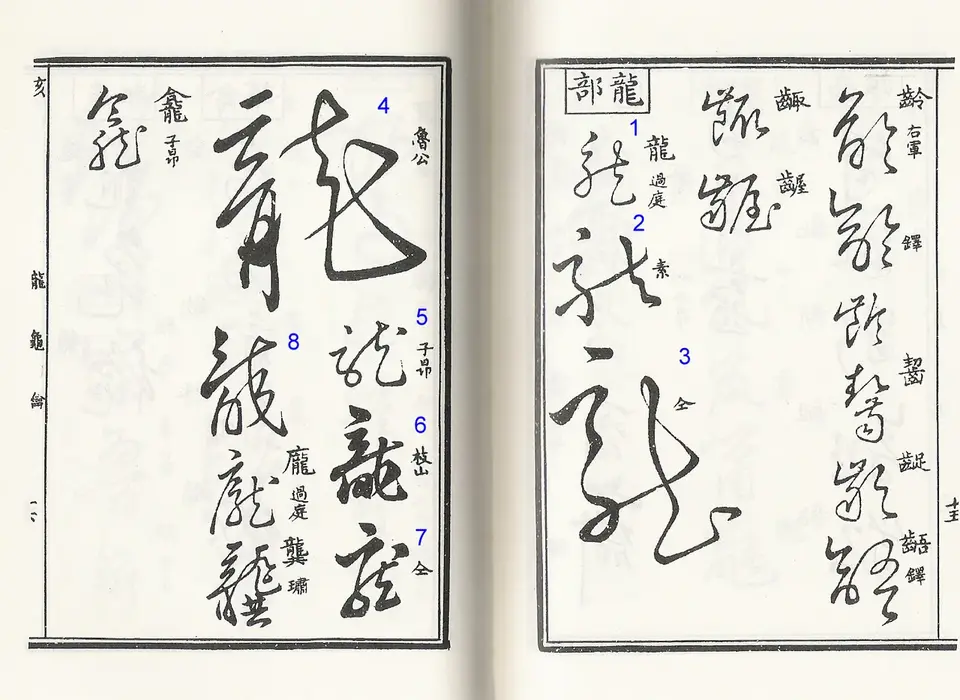
孙过庭
Sun Guoting (孙过庭) was a renowned calligrapher and preeminent calligraphy theorist of the Tang Dynasty, celebrated for his profound mastery of cursive script and his foundational contributions to aesthetic theory. Rising from humble social origins, he devoted more than two decades to assiduous self-instruction in the ancient calligraphic heritage, thoroughly assimilating the brush techniques of the Eastern Jin masters Wang…
Sun Guoting (孙过庭) was a renowned calligrapher and preeminent calligraphy theorist of the Tang Dynasty, celebrated for his profound mastery of cursive script and his foundational contributions to aesthetic theory. Rising from humble social origins, he devoted more than two decades to assiduous self-instruction in the ancient calligraphic heritage, thoroughly assimilating the brush techniques of the Eastern Jin masters Wang Xizhi and Wang Xianzhi. His cursive brushwork was characterized by vigorous strength, uninhibited dynamism, and refined elegance, leading the Song Dynasty master Mi Fu to proclaim him the foremost practitioner in Tang times to directly inherit the genuine methods of the Two Wangs. Beyond his creative achievements with the brush, Sun Guoting authored and calligraphed the monumental work Treatise on Calligraphy (Shupu), comprising over 3,700 characters in surviving manuscript form. This enduring masterpiece systematically evaluated calligraphic traditions from the Han and Jin through the early Tang, formulated the dialectical unity between physical brushwork structure and personal spiritual temperament, and articulated the classic three-stage progression of learning—moving from equilibrium to precipitous vigor, and ultimately returning to harmonious equilibrium. By elevating calligraphic technique to the realm of philosophical aesthetics, Sun Guoting secured a lasting and distinguished reputation in Chinese cultural history.
Sun Guoting is born into an impoverished scholar family, displaying intellectual acumen and early fascination with brush and ink.
Reaching the age of aspiring study, he undertakes twenty years of intensive self-directed practice modeled on the masterworks of Wang Xizhi and Wang Xianzhi.
Near the age of forty, he obtains appointment to junior administrative posts in the capital guard commands, maintaining rigorous moral rectitude.
He writes and transcribes in cursive script the preface to his Treatise on Calligraphy (Shupu), creating an immortal double masterpiece of prose and brushwork.
Stripped of office following slander by bureaucratic rivals, he passes away in poverty and illness at a lodging house in Luoyang.
Full Name: Sun Guoting; Courtesy Name: Qianli; Native Place: Fuyang, Hangzhou; Highest Office: Administrative Assistant in the Heir Apparent's Guard Command (率府录事参军); Major Offices: Administrative Assistant in the Right Guard Command (右卫胄参军), Administrative Assistant in the Heir Apparent's Guard Command (率府录事参军); Principal Identity: Calligrapher, Calligraphy Theorist;
Sun Guoting grew up in modest circumstances, possessing neither high hereditary pedigree nor abundant family resources to ease his entry into the elite scholar-official stratum. Undeterred by material hardship, he cultivated ambitious intellectual aspirations from early youth, delving extensively into historical records and ancient literary classics. During the formative period of his adolescence, he committed his full energy and concentration to the art of calligraphy.
In an era when access to authentic Wei and Jin dynasty masterpieces was largely restricted to entrenched aristocratic lineages, Sun Guoting persevered through remarkable fortitude and acute artistic intuition. He systematically studied and transcribed ancient stone inscriptions and surviving rubbings, treating the brushworks of Wang Xizhi and Wang Xianzhi as supreme standards. Through twenty years of relentless immersion, his copies achieved such extraordinary verisimilitude that contemporaries could scarcely distinguish them from authentic originals. Emperor Gaozong of Tang remarked that Sun Guoting's small standard script and running-cursive script were so faithful to the Two Wangs that they could bewilder even experienced connoisseurs.
In the status-conscious hierarchy of early Tang governance, individuals of humble lineage encountered formidable obstacles in official promotion. Sun Guoting attained official employment only around the age of forty, selected on the strength of his literary talent and artistic repute. He served sequentially as Administrative Assistant in the Right Guard Command and as Administrative Assistant in the Heir Apparent's Guard Command, discharging his responsibilities in handling military documents and court protocol with meticulous dedication.
Sun Guoting possessed an unbending integrity and high ethical standards, refusing to curry favor with powerful courtiers or factional cabals. However, the early Tang court was characterized by turbulent inner intrigues, and the Heir Apparent's establishment witnessed frequent personnel fluctuations. Sun's uncompromising demeanor provoked jealousy and slander among bureaucratic colleagues. Subjected to persistent ostracism and political marginalization, he relinquished his official post and withdrew entirely from the bureaucratic sphere, bringing an early and disheartening close to his administrative career.
Following his departure from official office, Sun Guoting left Chang'an and settled in the eastern capital of Luoyang. Although afflicted with worsening physical illness and reduced to acute material deprivation, his creative zeal remained undiminished. He determined to distill decades of studio practice, aesthetic observation, and historical reflection into a comprehensive written treatise that would guide future generations along the authentic orthodox path of calligraphic study.
Dwelling in modest rented lodgings in Luoyang's Zhiye quarter, Sun Guoting composed his monumental work Treatise on Calligraphy (Shupu), planned as a six-chapter comprehensive system. In 687, he brushed the expansive preface in his mature, expressive cursive script. The manuscript integrated profound theoretical argumentation with breathtaking brush mastery. Moving smoothly from reflective restraint to dramatic flourishing sweeps, the calligraphy perfectly mirrored the intellectual rhythms of the text, producing an unprecedented synthesis of theoretical literature and visual art.
Protracted material destitution, combined with the rigorous mental and physical exertion required for his writing, took a fatal toll on Sun Guoting's fragile health. Before he could bring the remaining chapters of his ambitious theoretical work to full completion, he suffered a severe physical collapse and died suddenly in his Luoyang guest quarters in 691. At the time of his passing, he possessed no substantial material property, leaving him unable even to afford a dignified burial.
The distinguished early Tang poet and essayist Chen Zi'ang, then residing in Luoyang, was deeply grieved upon hearing of Sun Guoting's untimely demise. Chen gathered fellow scholars and admirers to secure funds for Sun's honorable interment. Recognizing Sun's profound moral dignity and extraordinary artistic genius, Chen Zi'ang composed the heartfelt and solemn epitaph Tomb Inscription for Gentleman Sun, Administrative Assistant in the Heir Apparent's Guard Command alongside a commemorative sacrificial text. In these inscriptions, Chen likened Sun Guoting to the ancient Three Kingdoms master Zhong Yao and praised his surviving writings as immortal achievements, preserving the legacy of this impoverished master for posterity.
Sun Guoting's foremost contribution to the history of Chinese art criticism lies in his formulation of an independent and systematic theoretical framework in Treatise on Calligraphy (Shupu). Within this work, he critically evaluated the historical evolution of calligraphy since the Han and Jin eras, drawing detailed comparative assessments of the four supreme masters: Zhang Zhi, Zhong Yao, Wang Xizhi, and Wang Xianzhi. He proposed the fundamental historical principle that calligraphic style progressed from ancient substantive austerity toward contemporary decorative refinement, arguing that authentic mastery required uniting inherited structural gravity with dynamic contemporary grace.
Sun Guoting was the first theorist to explicitly establish structural substance and emotional temperament as the twin core categories of calligraphic aesthetics. He asserted that dots and strokes constitute the essential physical vehicle of form, whereas the expressive intent of the writer animates its internal spiritual essence. By demonstrating that genuine art emerges only when rigorous mechanical precision merges seamlessly with authentic emotional spontaneity, Sun Guoting elevated calligraphy from a decorative craft to a profound vehicle of moral and philosophical expression.
In his studio practice, Sun Guoting served as the definitive early Tang bridge for preserving and transmitting the orthodox cursive lineage of the Two Wangs. His surviving autograph manuscript of Shupu demonstrates an unparalleled command of brush dynamics. The work opens with deliberate, measured brushstrokes comparable to a musical prelude, gradually expands into sweeping, interconnected ligatures in the middle section, and culminates in an exhilarating crescendo of rapid, uninhibited cursive flourishes where technical dexterity and spiritual freedom achieve complete unity.
In technical execution, Sun Guoting deployed both concealed and exposed brush tips, central and slanted brush orientations, and varied pressures that generated both gossamer-light wisps and monumental stone-like impacts. His dry and moist ink gradations endowed the work with tactile depth and dramatic contrast. For over a millennium, the Shupu scroll has remained an indispensable primer and aesthetic standard for students of cursive calligraphy throughout East Asia.
Sun Guoting articulated what has become the classic paradigm for artistic development in Chinese culture: the three developmental stages of learning calligraphy. He summarized: "In initial study, one strives solely for balanced regularity; having mastered balanced regularity, one must pursue precipitous daring; having attained precipitous daring, one ultimately returns to harmonious balanced regularity." This formulation lucidly captured the dialectical journey from disciplined foundational learning through individualized dynamic experimentation to ultimate mature simplicity.
Furthermore, Sun Guoting laid down the essential mechanics of brush handling through his four operational principles: holding, directing, revolving, and applying the brush. He provided precise aesthetic definitions for the major historical scripts, noting that seal script favors supple continuity, clerical script demands meticulous compactness, cursive script prizes flowing velocity, and draft cursive requires concise convenience. He strongly condemned the shallow trend toward overly ornamental or artificial character design, urging practitioners to anchor their art in genuine structural vigor and inner spiritual conviction.
FIGURES ASSOCIATED WITH THIS DYNASTY