Birth in Hangzhou
Born while his father served as Controller-General of Hangzhou, nurtured in elite literary learning.
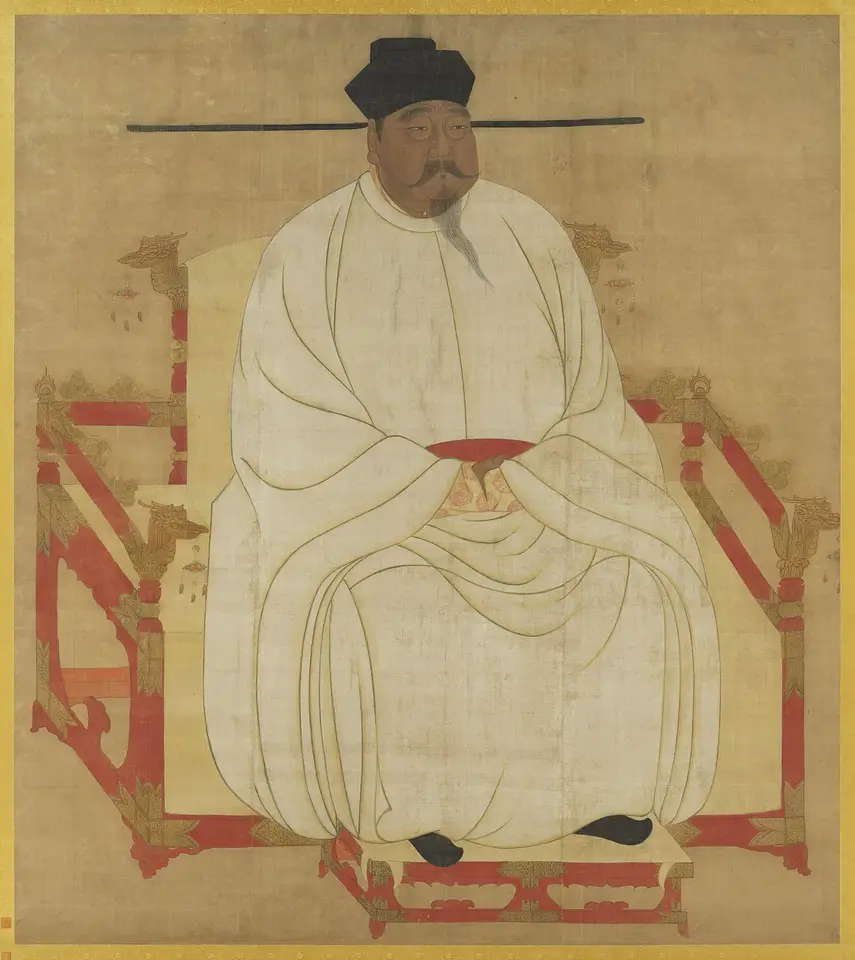
苏过
Su Guo (苏过, 1072–1123), courtesy name Shudang, art name Recluse of Xiechuan, was a native of Meishan, Meizhou (modern Meishan, Sichuan). He was an accomplished late Northern Song writer, calligrapher, and landscape painter, and the third son of China's paramount literary titan, Su Shi (Su Dongpo). Because his poetry, prose, and painting mirrored his father's style with uncanny vitality, contemporary scholars and later…
Su Guo (苏过, 1072–1123), courtesy name Shudang, art name Recluse of Xiechuan, was a native of Meishan, Meizhou (modern Meishan, Sichuan). He was an accomplished late Northern Song writer, calligrapher, and landscape painter, and the third son of China's paramount literary titan, Su Shi (Su Dongpo). Because his poetry, prose, and painting mirrored his father's style with uncanny vitality, contemporary scholars and later generations unanimously honored him as "Little Dongpo". Growing up amidst the tumultuous political upheavals of his family, Su Guo witnessed the terrifying Crow Terrace Poetry Affair in childhood and endured years of rural labor during his father's exile in Huangzhou, which forged his enduring serenity and philosophical detachment. In 1094, when Su Shi was banished to Huizhou and subsequent frontier exile on Hainan Island (Danzhou), Su Guo was the only son who accompanied his aged father across the ocean into the tropical wilderness. For seven grueling years, Su Guo tended to his father's health, prepared meals, transcribed manuscripts, and comforted his father's spirit. Following Su Shi's death in 1101, Su Guo fulfilled his filial duties by burying his father at Mount Xiao'emei in Jiaxian. Blacklisted under the Yuanyou partisan purges during Emperor Huizong's reign, he lived in agrarian retirement in Yingchang, naming his retreat "Xiechuan." In his twilight years, he served as Magistrate of Yancheng County and was appointed Controller-General of Dingzhou, but died suddenly en route in 1123 at the age of fifty-two. He authored Collected Works of Xiechuan (Xiechuan ji) and the famous rhapsody Rhapsody on Choosing Seclusion (Zhiyin Fu).
Born while his father served as Controller-General of Hangzhou, nurtured in elite literary learning.
Su Shi was arrested and imprisoned; seven-year-old Su Guo stayed in Huzhou with his mother, experiencing familial peril.
Accompanied his family to Huangzhou, laboring on the Dongpo farm and developing rustic equanimity.
Su Shi was recalled to central office in Kaifeng; Su Guo studied rigorously with his cousins in the capital.
Following factional reversals, Su Shi was banished to Huizhou; Su Guo insisted on accompanying his father south.
Su Shi was exiled to Hainan Island; Su Guo crossed the sea with his father, establishing a thatched hut in Danzhou.
Composed the famous rhapsody Rhapsody on Choosing Seclusion in Danzhou to console his father with philosophical contentment.
Emperor Huizong issued an amnesty; Su Guo escorted his father across the Qiongzhou Strait back to the mainland.
Su Shi died in Changzhou; Su Guo mourned deeply and arranged for his father's burial in Jiaxian, Henan.
Disqualified by partisan bans, bought land in Yingchang, naming his hut Xiechuan and adopting the title Recluse of Xiechuan.
Appointed Magistrate of Yancheng County, providing equitable governance and repairing local academies.
Promoted to Controller-General of Dingzhou; died suddenly of acute illness at Zhenlong at the age of fifty-two.
Su Guo was born in 1072 while his father Su Shi served as Controller-General of Hangzhou. Endowed with natural intellect and literary sensitivity, his childhood was nonetheless marred by political storms. In 1079, when Su Shi was arrested in Huzhou during the Crow Terrace Poetry Affair, the seven-year-old Su Guo remained with his mother and brothers, experiencing the bitter humiliation of social ostracism.
Following Su Shi's pardon and demotion to Huangzhou, young Su Guo moved with the family to the rustic Yangtze outpost. Deprived of official salary, the family faced genuine hunger. Su Shi cleared the barren hillside at Eastern Slope (Dongpo), tilling crops and vegetables with his own hands. Living on coarse porridge and wild greens, Su Guo witnessed his father's heroic optimism and transcendent composure, absorbing an enduring resilience and disdain for worldly vanity.
During the Yuanyou era, Su Shi returned to high ministerial office in Kaifeng. Su Guo studied diligently with his cousins in the capital, attaining profound classical and literary mastery. However, upon the resumption of the New Policies under Emperor Zhezong in 1094, the Yuanyou scholars were ruthlessly purged. Su Shi was banished across the southern mountains to Huizhou.
While his elder brothers remained behind in the Yangtze valley to care for families, the twenty-two-year-old Su Guo insisted on accompanying his aged father into the malarial south. In Huizhou, Su Guo cooked meals, drew water, and brewed medicinal draughts. Facing meat shortages, Su Guo ingeniously mashed white radishes, sweet potatoes, and rice flour into a delicate, comforting porridge. Su Shi was delighted, composing his famous poem Yusan Geng: "Heavenly nectar has countless flavors, yet none surpasses this mountain delicacy."
In 1097, political enemies banished Su Shi further to Danzhou on Hainan Island. Crossing the tempestuous ocean on a fragile skiff, father and son arrived in the tropical wilderness. Lacking official quarters, they cut timber to construct thatched huts named "Chuxuan" and "Betel Nut Hermitage."
Despite debilitating humidity, frequent famine, and leaking roofs, Su Guo looked after his father with boundless filial care, copying manuscripts by day and studying classics by night. The duo opened local lectures, mentoring Hainan's very first successful civil service examination candidate, Jiang Tangzuo. In 1098, Su Guo penned the renowned Rhapsody on Choosing Seclusion, using Daoist and Buddhist insights to solace his father: "If fish find peace in water, why should they choose between vast rivers and humble lakes?" Father and son preserved transcendent composure in the face of desolation.
In 1100, Emperor Huizong granted a general amnesty, allowing Su Shi and Su Guo to cross back to mainland China. However, years of tropical hardship had shattered Su Shi's physical constitution. In July 1101, Su Shi died in Changzhou with his sons at his bedside.
Following his father's dying wish to be buried in Jiaxian, Henan, Su Guo and his elder brother Su Mai borrowed funds and overcame tremendous logistical hurdles, successfully transporting Su Shi's casket to Mount Xiao'emei in Jiaxian in 1102. Su Guo observed strict mourning rituals in a hut beside the tomb, his profound grief moving all contemporary scholars.
Under Emperor Huizong, Grand Councilor Cai Jing erected the Yuanyou Partisan Stele, barring Su Shi's descendants from imperial examinations and residence in the capital. Facing political disenfranchisement, Su Guo settled in Yingchang in 1111, purchasing land and building a cottage named "Xiechuan" in emulation of Tao Yuanming's pastoral ideals, styling himself Recluse of Xiechuan.
When factional restrictions gradually eased in late Zhenghe, Su Guo was appointed Magistrate of Yancheng County in 1121. In Yancheng, he reformed oppressive levies, mediated disputes equitably, and renovated local schools, earning widespread popular adoration. In 1123, he was promoted to Controller-General of Dingzhou. While traveling to his new assignment, he was struck by sudden illness and died at Zhenlong at the age of fifty-two.
Su Guo's paramount contribution to Chinese literature was his comprehensive preservation and continuation of the Su Shi literary tradition. He was the sole son of Su Shi who attained equal mastery in poetry, prose, calligraphy, and painting.
Su Guo's poetry and essays were distinguished by their surging energy, philosophical depth, and unadorned natural beauty. His masterwork, Rhapsody on Choosing Seclusion, seamlessly harmonized Confucian moral rectitude with Daoist cosmic detachment. Leading literati of the era, including Huang Tingjian, Zhang Lei, Chao Buzhi, and Chen Shidao, showered his compositions with praise. Huang Tingjian declared: "Shudang's brushwork greatly resembles his father's; it possesses profound resonance and lofty spirit—truly he is Little Dongpo." Southern Song master Lu You later praised him: "Under heaven, Dongpo's writings walked alone; Little Dongpo succeeded him, preserving the pure ancestral breeze." His collected works were compiled into Collected Works of Xiechuan (Xiechuan ji) in twenty volumes.
In painting and calligraphy, Su Guo was an acclaimed master of the literati ink-wash school. He inherited the ink-bamboo techniques of his father and Wen Tong, specializing in bizarre rocks, withered branches, and resilient bamboo groves.
His brushwork was bold, muscular, and free from artisanal rigidity, creating atmospheric depth through graded washes of dry ink. Critics such as Deng Chun in Huaji noted that collectors avidly sought his scrolls, celebrating them as "Little Dongpo Paintings." His artistic legacy formed a vital stylistic bridge connecting Northern Song literati painting to the Yuan dynasty ink-monochrome revival.
In cultural history, Su Guo is immortalized as a supreme paragon of filial piety and spiritual perseverance. His decision to follow his banished father to the edge of the known world, forsaking youth, marriage, and career, represents one of the most poignant narratives in Chinese intellectual history.
By sharing extreme isolation, hunger, and sickness with his father, Su Guo not only preserved Su Shi's life through the darkest years of exile, but also provided the emotional solace that enabled Su Shi to complete his final philosophical masterpieces. His unblemished filial love earned him enduring veneration across nine centuries.
FIGURES ASSOCIATED WITH THIS DYNASTY