Itinerant Diviner
Born with a dwarfed stature in Yongcheng, Henan; mastered occult divination, physiognomy, and military strategy.
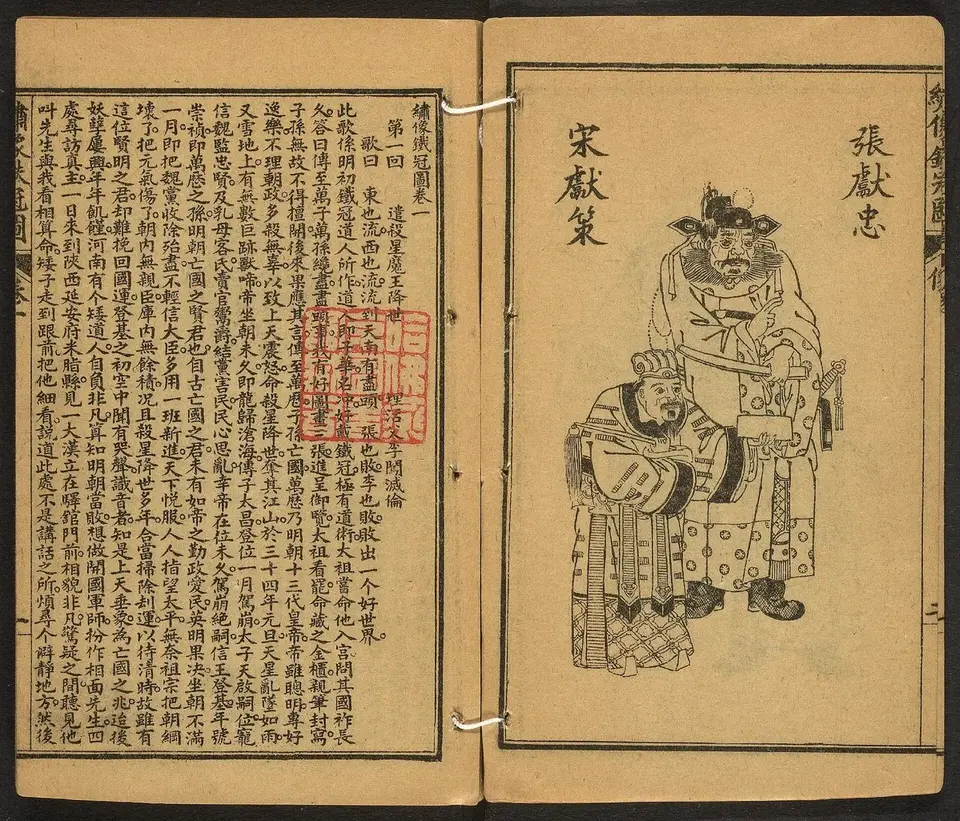
宋献策
Song Xiance (宋献策, ?–1645), a native of Yongcheng (alternatively Zhecheng) in Henan, was a celebrated political strategist, occult diviner, and the Grand Military Strategist (Da Junshi) of the late-Ming peasant Dashun regime. Standing under three feet tall and afflicted with a slight limp, Song possessed extensive erudition in dynastic chronicles, military strategy, and esoteric geomancy. Wandering through northern…
Song Xiance (宋献策, ?–1645), a native of Yongcheng (alternatively Zhecheng) in Henan, was a celebrated political strategist, occult diviner, and the Grand Military Strategist (Da Junshi) of the late-Ming peasant Dashun regime. Standing under three feet tall and afflicted with a slight limp, Song possessed extensive erudition in dynastic chronicles, military strategy, and esoteric geomancy. Wandering through northern provinces during the famines of the late Ming, he gained intimate insight into peasant distress and imperial administrative bankruptcy. In the spring of 1641, following Li Zicheng's capture of Luoyang, Song joined the rebel army in Henan through the introduction of scholar Niu Jinxing. During his initial audience with Li, Song presented the prophetic political formula: "Eighteen characters shall rule the imperial regalia" (Shi ba zi, zhu shen qi, wherein the radical components of the characters for eighteen combine to spell the surname "Li"). This prophecy, promising celestial mandate to Li's cause, electrified the insurgent ranks and established Song as Li Zicheng's most trusted ideological and strategic counselor. Between 1641 and 1644, Song collaborated with Niu Jinxing and Li Yan to reform rebel strategy, establishing military base areas and adopting the policy of equalizing land distribution and exempting taxation (juntian mianfu). He helped plan the campaigns that destroyed Ming general Zuo Liangyu's armies at Zhuxianzhen, crushed Grand Coordinator Sun Chuanting's veteran Shaanxi legions at Jiaxian, and seized Tongguan Pass and Xi'an. In early 1644, when Li Zicheng established the Dashun dynasty in Xi'an, Song was ennobled as the founding Grand Military Strategist. He marched with the vanguard into Beijing in April 1644, ending the 276-year rule of the Ming Dynasty. However, following the defeat at the Battle of Shanhai Pass against combined Qing and Wu Sangui forces, Song accompanied Li Zicheng in the retreat toward Hubei. In May 1645, following the death of Li Zicheng at Mount Jiugong, Song was captured by the Qing army under Prince Ajige and executed.
Born with a dwarfed stature in Yongcheng, Henan; mastered occult divination, physiognomy, and military strategy.
Presented the "Eighteen Characters" prophecy in Henan, appointed chief military counselor by Li Zicheng.
Formulated strategic maneuvers at the Battle of Zhuxianzhen and the encirclement of Sun Chuanting at Jiaxian.
Established civil bureaus at Xiangyang; directed operations capturing Tongguan Pass and Xi'an.
Proclaimed founding Grand Military Strategist upon the establishment of the Dashun dynasty in Xi'an.
Advanced into Beijing through Juyongguan, entering the Forbidden City as supreme civilian counselor.
Defeated at the Battle of Shanhai Pass, escorted Li Zicheng during the westward evacuation to Shaanxi.
Ambushed in Tongshan, captured in the Jiugong Mountains and executed by Prince Ajige's army.
Song Xiance was born in Yongcheng County in eastern Henan. Physically dwarfed and afflicted with deformed legs, he was derided by commoners as "Song the Dwarf." However, endowed with sharp intellectual curiosity, he read deeply in the Confucian classics, while immersing himself in esoteric divination, the Book of Changes, physiognomy, and tactical warfare.
During the late Wanli and Chongzhen eras, recurring catastrophic droughts and crushing military grain surtaxes devastated the Central Plains. Song made his living as an itinerant fortune-teller and herbalist across Henan, Shandong, Shaanxi, and Huguang. Frequenting garrison barracks, rural markets, and post stations, he gained an intimate, ground-level understanding of the administrative breakdown of the Ming state, recognizing that an apocalyptic dynastic cataclysm was imminent.
In January 1641, Li Zicheng led his insurgent cavalry in a surprise assault that stormed Luoyang, executing the corrupt Prince of Fu Zhu Changxun and distributing royal grain stores to famine victims. Literati from across Henan flocked to his camp, including the scholar Niu Jinxing.
Recognizing that Li's disciplined army commanded unprecedented popular support, Song decided to cast his lot with the rebellion. In April 1641, in the mountainous terrain of Lushi County, Niu Jinxing introduced Song to Li Zicheng. Presenting himself with poise, Song analyzed imperial vulnerabilities and delivered his famous political prophecy: "Eighteen characters shall rule the imperial regalia."
In classical Chinese glyphomancy, the radical components of the phrase "eighteen characters" (shi ba zi) combine to form the character "Li," while "regalia" (shenqi) symbolized the dynastic throne. Deeply superstitious and eager to claim legitimate dynastic destiny, Li was captivated by the prophecy, which rapidly spread through the ranks, convincing the peasant fighters that their leader enjoyed the mandate of heaven. Li immediately appointed Song his chief military counselor, consulting him before every military march. The rebel ranks respectfully nicknamed the tiny strategist "Song the Dwarf" or the "Immortal Strategist."
Following Song's induction, the rebel leadership transitioned from roving banditry to establishing permanent territorial control. Collaborating with Niu Jinxing and Li Yan, Song urged Li to enforce strict prohibitions against rape, looting, and arson, formulating the popular slogan "Equalize land and abolish taxation."
During the Battle of Zhuxianzhen in 1642, Song designed the battlefield ambushes along the Jalu River that severed the supply lines of Ming general Zuo Liangyu's one hundred thousand troops, triggering a catastrophic rout. Later that year, when Ming Grand Coordinator Sun Chuanting marched elite legions from Shaanxi into Henan, Song advised Li to feign retreat during autumn rains, drawing Sun into deep mud at Jiaxian before severing his grain convoys with light cavalry, annihilating forty thousand Ming troops.
In early 1643, following the capture of Xiangyang, Song organized administrative civil ministries (Liuzhengfu), elevating Xiangyang into the interim capital "Xiangjing." In autumn, the rebel armies smashed Sun Chuanting's last defenses at Tongguan Pass, capturing Xi'an. Song advised establishing the dynastic seat in Guanzhong before mounting a dual-pronged overland invasion of Beijing.
On the Lunar New Year of 1644, Li Zicheng formally proclaimed the Dashun Dynasty in Xi'an, declaring the Yongchang reign. Rewarding his inner circle, Li invested Song as the founding Grand Military Strategist (Kaiguo Da Junshi), ranking him alongside Prime Minister Niu Jinxing at the head of the civilian administration.
In February 1644, the Dashun armies crossed the Yellow River into Shanxi. Song accompanied the main army as it overran Taiyuan, Datong, and Xuanfu. On April 23, the rebel forces invested Beijing. Song participated in directing the assault on the city gates. At dawn on April 25, rebel divisions breached the Zhangyi Gate, capturing the imperial capital as Emperor Chongzhen hanged himself on Coal Hill.
Accompanying Li Zicheng as he rode through the Meridian Gate into the Forbidden City, Song took up residence in the Wenhua Palace, drafting imperial proclamations and amnesty decrees. However, the unexpected speed of the victory unraveled internal discipline. Senior commanders led by Liu Zongmin rounded up captured Ming ministers, subjecting them to public torture to extract immense sums of silver. The resulting reign of terror alienated metropolitan elites. Although Song urged moderation, he was unable to curb the arrogance of the military commanders.
In late April 1644, Ming commander Wu Sangui allied with Prince Dorgon of the Qing Dynasty at Shanhai Pass. Li Zicheng marched east with one hundred thousand veteran troops, accompanied by Song Xiance.
On May 27, 1644, the bloody Battle of Shanhai Pass (Battle of Yipianshi) erupted. While Dashun troops were engaged with Wu Sangui's forces, Eight Banner cavalry struck the rebel flank in a blinding sandstorm. Smashed by the surprise assault, the Dashun lines collapsed. Song retreated with Li Zicheng to Beijing, where Li held an abbreviated coronation ceremony on May 29 before setting fire to parts of the palaces and executing a general retreat toward Shaanxi.
Over the subsequent year of retreat against relentless Qing pursuit under Prince Dodo and Prince Ajige, the Dashun forces evacuated Xi'an and retreated south into Huguang. In May 1645, while traversing the rugged slopes of Mount Jiugong in Tongshan, Hubei, Li Zicheng was ambushed and killed by local landlord militia. The remaining Dashun divisions dissolved into chaos.
Separated from the retreating troops in the mountain defiles, Song was encircled and captured by the pursuing Qing vanguard commanded by Prince Ajige. Recognizing him as the famous Grand Military Strategist of the Dashun rebellion, Prince Ajige ordered his immediate summary execution, terminating the career of the enigmatic counselor.
Song Xiance stands as a legendary strategist whose intellect and prophecies propelled the downfall of the Ming Dynasty.
Late-Ming historian Ji Liuqi recorded in Northern Chronicles of the Ming Dynasty: "Song Xiance stood under three feet tall, master of divination and military stratagems. Presenting the prophecy that eighteen characters would rule the realm, Li Zicheng trusted him as a divinity. During a decade of warfare, Li had suffered constant setbacks, but once he obtained Xiance and followed his counsel, his armies advanced like split bamboo. The fall of Beijing was due in no small part to Xiance's stratagems."
The Biographies of the Qing Dynasty observes: "Li Zicheng rose from the common ranks, and upon securing Niu Jinxing and Song Xiance, formulated the strategy of imperial accession. Xiance was astute in discerning sovereign psychology and geographical terrain; while his prophecies bordered on the occult, his strategic mastery in conquering Guanzhong and Beijing demonstrated genuine tactical genius."
Modern historians of peasant movements evaluate Song as an archetype of the itinerant Chinese tactician who provided ideological legitimacy and operational discipline to popular insurrections, though his inability to construct an enduring administrative structure in Beijing contributed to the swift collapse of the Dashun enterprise.
FIGURES ASSOCIATED WITH THIS DYNASTY