Biographical Narrative
Family Lineage and River Escape
Song Hong descended from an established bureaucratic lineage. His father, Song Shang, served as Privy Purser during the reign of Emperor Cheng of Han and was widely respected for his unyielding candor. Song Hong was naturally composed, courteous, and strictly observant of traditional propriety from his youth. During the reigns of Emperor Ai and Emperor Ping of Western Han, he entered public service through family status and personal virtue, serving as an Imperial Attendant within the forbidden palace. When Wang Mang seized imperial power and established the Xin dynasty, the official nomenclature was revised, renaming the Privy Purser as Minister of Works, and Song was appointed to this post, discharging his duties with scrupulous probity.
In 23 CE, the Red Eyebrows forces and the Gengshi regime captured Chang'an, bringing about the fall of Wang Mang. Eager to co-opt established capital notables, the Gengshi leadership dispatched officers to compel Song Hong into service. Knowing that the Gengshi generals were predatory and undisciplined, Song firmly refused to compromise his allegiance. As guards escorted him across the Wei Bridge north of Chang'an, Song seized an opportunity and leaped into the torrential waters. Rescued by his family, he held his breath and feigned drowning. Convinced that Song had perished, the officers departed, allowing him to conceal himself in rural seclusion.
Grand Minister of Works and Incorruptibility
In 25 CE, Emperor Guangwu proclaimed the restoration of Han in Luoyang. Having long respected Song Hong's unblemished moral reputation, the emperor sent envoys to summon him to court, appointing him Grand Palace Grandee. In 26 CE, when Grand Minister of Works Wang Liang was removed from office following setbacks in canal engineering projects, Emperor Guangwu appointed Song to succeed him as Grand Minister of Works, ennobling him as Marquis of Xunyi.
Although elevated to the supreme rank of the Three Excellencies, Song maintained an austere and frugal household. He systematically distributed the extensive grain stipends and landed tenant revenues granted by the imperial court to needy relatives and impoverished widows across his lineage, keeping no surplus property or lands for himself. His daily household utensils remained coarse and plain. The entire court was moved by his extraordinary incorruptibility, and Emperor Guangwu subsequently revised his fief title to Marquis of Xuanping.
Promoting Worthies and Defending Decorum
Early in his reign, Emperor Guangwu eagerly sought men of comprehensive learning to assist in administrative governance. When the emperor asked Song to recommend scholars of profound intellect, Song warmly recommended Huan Tan of Pei, praising his encyclopedic learning and literary talent as rivaling Western Han masters Yang Xiong and Liu Xiang. Emperor Guangwu promptly summoned Huan Tan and appointed him Gentleman Consultant and Attendant in Ordinary. However, Huan Tan possessed a passion for light, seductive court music. Whenever the emperor hosted state banquets, Huan was summoned to play the zither and perform alluring melodies, which greatly delighted the sovereign.
Song deeply regretted having facilitated Huan's appointment. Later, as Huan passed by during a court assembly, Song kept his seat and sternly admonished him, stating that he had recommended Huan to guide the sovereign with sage king governance, whereas Huan was corrupting the imperial court with decadent secular music. Huan dropped to his knees in terror to beg forgiveness. Subsequently, while Huan was performing for the emperor in the palace, Song entered. Rattled by Song's presence, Huan lost his tempo. Observing the disruption, Song removed his official cap, knelt before the throne, and declared that his recommendation had caused decadent music to pollute the palace halls, offering his own punishment. Ashamed, Emperor Guangwu apologized to Song and never again summoned Huan to perform banquet entertainment.
Rebuffing the Princess and Preserving Fidelity
Following the death of Marquis Zhuang of Xinping, Emperor Guangwu's elder sister, Princess Huyang, was widowed in Luoyang. While conversing with the princess about court ministers, the emperor discreetly asked if any grandee caught her esteem. The princess replied that among all the civil and military ministers of the court, Grand Minister of Works Song Hong possessed an imposing dignity and peerless virtue unmatched by anyone else. Emperor Guangwu promised to explore the matter.
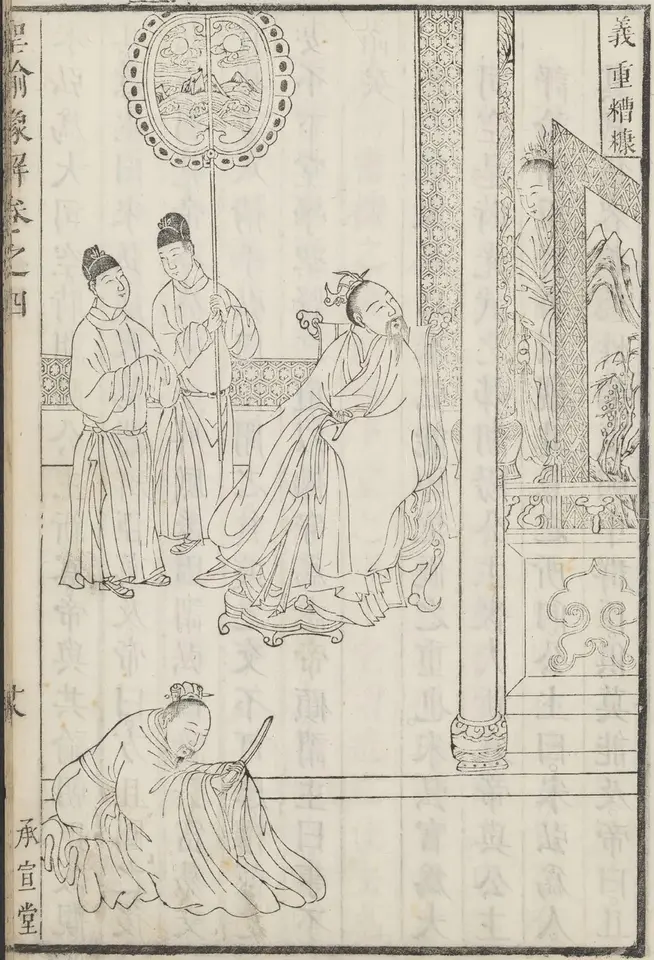
Shortly thereafter, the emperor invited Song to an intimate palace audience, placing Princess Huyang behind a screen to listen. Probing Song's intentions, the emperor remarked that popular wisdom held that one changes friends upon attaining high status and replaces wives upon gaining wealth, asking if this was not common human nature. Song stood firm and solemnly replied: "I have heard that friends made in poverty must never be forgotten, and the wife of husks and chaff must never be cast out." Behind the screen, Princess Huyang sighed and conceded that the match could not be pursued. Deeply moved by Song's unyielding rectitude, Emperor Guangwu revered his fidelity all the more. In 30 CE, Song was dismissed after an unsubstantiated impeachment of the Administrator of Shangdang, retiring peacefully to Chang'an, where he passed away in 40 CE.