Born in Shaoxing
Born on the ninth day of the fourth lunar month in the Rong mansion in Shanyin to Zhao Yurei and concubine Huang Dingxi.
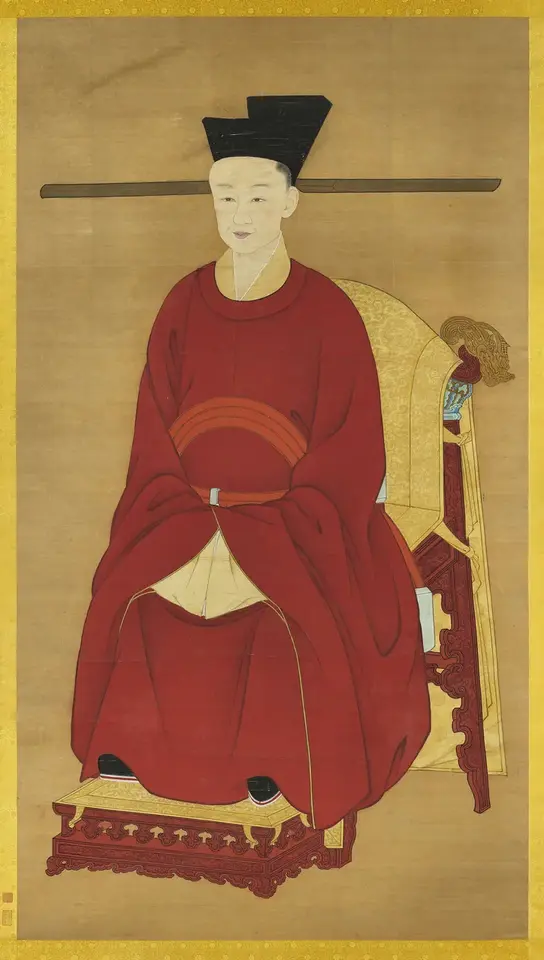
赵禥
Zhao Qi (赵禥, May 2, 1240 – August 12, 1274), originally named Zhao Mengqi and later renamed Zhao Zi and Zhao Qi, courtesy name Changyuan, was the sixth emperor of the Southern Song Dynasty, known historically by his temple name Emperor Duzong. He was the nephew of Emperor Lizong (Zhao Yun) and the biological son of Prince of Rong Zhao Yurei. Because Emperor Lizong had no surviving male heirs, Zhao Qi was adopted into the…
Zhao Qi (赵禥, May 2, 1240 – August 12, 1274), originally named Zhao Mengqi and later renamed Zhao Zi and Zhao Qi, courtesy name Changyuan, was the sixth emperor of the Southern Song Dynasty, known historically by his temple name Emperor Duzong. He was the nephew of Emperor Lizong (Zhao Yun) and the biological son of Prince of Rong Zhao Yurei. Because Emperor Lizong had no surviving male heirs, Zhao Qi was adopted into the palace as imperial heir, successively enfeoffed as Prince of Jian'an, Prince of Yongjia, and Prince of Zhong. He was designated Crown Prince in 1260 and ascended the imperial throne in 1264, adopting the era name Xianchun. He reigned for ten years, dying at the age of thirty-four, and was buried at the Yongshao Mausoleum in Kuaiji. Zhao Qi's mother, Lady Huang Dingxi, was a concubine in the Prince of Rong's household who had been forcibly administered abortifacients by the principal consort during pregnancy, leaving Zhao Qi with congenital physical frailty and limited mental capacity. Although Emperor Lizong provided prominent Confucian tutors and imposed rigid study schedules, the prince made little intellectual progress. Left Grand Councilor Wu Qian strongly opposed designating Zhao Qi as heir on account of his obvious cognitive limitations, but Chancellor Jia Sidao leveraged the dispute to purge Wu Qian, securing Zhao Qi's succession. Throughout his ten-year reign, state administration was monopolized by Grand Preceptor Jia Sidao. Zhao Qi treated Jia as a revered master, prostrating himself before the minister and granting him permission to attend court only once every ten days, allowing state affairs to be directed from Jia's luxurious lakeside estate at Geling. Zhao Qi withdrew entirely into the inner palace, abandoning himself to excessive drinking and concubines. During this period, the Mongol Empire under Kublai Khan besieged the strategic dual strongholds of Xiangyang and Fancheng for five years. Jia Sidao systematically suppressed military dispatches from the front lines, while Zhao Qi remained ignorant of the peril. Fancheng fell and Xiangyang surrendered in 1273, collapsing the Yangtze River defensive perimeter. In August 1274, Zhao Qi died of physical exhaustion in Funing Hall, leaving an empire on the brink of total destruction.
Born on the ninth day of the fourth lunar month in the Rong mansion in Shanyin to Zhao Yurei and concubine Huang Dingxi.
Granted the name Zhao Mengqi, made Regional Prefect of Guizhou, and created Prince of Jian'an; later Prince of Yongjia.
Brought into the imperial palace by Emperor Lizong, renamed Zhao Zi, and created Prince of Zhong.
Following the purge of Chancellor Wu Qian by Jia Sidao, formally invested as Crown Prince and granted courtesy name Changyuan.
Ascended the imperial throne in Funing Hall following Emperor Lizong's death in October; adopted the era Xianchun.
Initiated the Tuipai land survey system in Jiangnan under Jia Sidao's direction to facilitate state land purchases.
Abolished state-managed manors in favor of tenant contracting systems, establishing branch offices in Pingjiang and Jiaxing.
Mongol commanders Aju and Liu Zheng surrounded the strategic gateway of Xiangyang and Fancheng, initiating a five-year siege.
Jia Sidao blocked intelligence from the front; general Lü Wende died, leaving the fortress increasingly isolated.
Fancheng fell to Mongol siege engines, and Lü Wenhuan surrendered Xiangyang, shattering the middle Yangtze defensive network.
Died of physical collapse from indulgence in Funing Hall on the ninth day of the seventh lunar month at age thirty-four.
Zhao Qi was born on May 2, 1240, in the Shanyin residence of the Prince of Rong in Shaoxing Prefecture. His father was Emperor Lizong's only full brother, Zhao Yurei, while his mother, Huang Dingxi, was a humble concubine. During her pregnancy, the primary consort of the household, jealous of concubines bearing children, coerced Huang Dingxi into drinking strong abortifacient herbs. Although the fetus survived, the toxicity permanently compromised the child's physical and mental development. Born exceptionally frail, Zhao Qi suffered from muscular weakness, learned to walk abnormally late, did not speak until age seven, and exhibited cognitive abilities far below ordinary children.
Because Emperor Lizong had lost all his biological sons in infancy, Zhao Qi was the emperor's closest living male relative. In 1247, Lizong granted him the name Zhao Mengqi, appointed him Regional Prefect of Guizhou, and created him Prince of Jian'an, later transferring him to the Princedom of Yongjia. In 1253, Lizong officially brought the boy into the imperial palace in Lin'an for education, renaming him Zhao Zi and creating him Prince of Zhong.
Recognizing the boy's severe intellectual limitations, Lizong nevertheless had no other heirs and sought to train him through rigid discipline. The emperor appointed esteemed scholars as lecturers and instituted a strict schedule: Zhao Zi was required to pay filial respect at dawn, return to his apartments to study, attend ministerial morning deliberations, and spend the afternoon listening to commentaries on the classics and histories. Despite these efforts, Zhao Zi could not absorb basic governance concepts, frequently leaving Lizong in deep despair.
As Emperor Lizong aged, succession became an acute political dilemma. In 1260, Left Grand Councilor Wu Qian boldly petitioned the emperor against naming Zhao Zi as heir apparent, warning that the prince's evident cognitive deficiencies rendered him incapable of managing the state, and urged the emperor to select a capable heir from collateral imperial branches. However, because Lizong had himself been plucked from obscure gentry origins by Chancellor Shi Miyuan, Wu Qian's proposal to look outside the immediate branch deeply offended the emperor.
Right Grand Councilor Jia Sidao seized upon the rift to slander Wu Qian, accusing him of factionalism and plotting against the throne. Lizong dismissed Wu Qian, banishing him to Xunzhou, where he was subsequently murdered. With opposition eliminated, Lizong issued an imperial edict in July 1260 designating Zhao Zi as Crown Prince, bestowing the name Zhao Qi and courtesy name Changyuan, with Yang Dong and Ye Mengding appointed tutors.
In October 1264, Emperor Lizong passed away. The twenty-five-year-old Crown Prince Zhao Qi ascended the throne in Funing Hall, adopting the era name Xianchun. Aware that his elevation was entirely due to Jia Sidao's maneuvering against Wu Qian, Zhao Qi regarded Jia with boundless deference.
Immediately following Zhao Qi's accession, Jia Sidao engaged in political theater, repeatedly tendering his resignation on the pretext of old age and ill health. Panicked by the prospect of governing alone, Zhao Qi fell to his knees in the inner palace, weeping and pleading with Jia Sidao to remain. Zhao Qi showered Jia with extraordinary honors, creating him Grand Preceptor, Special Commissioner of Military Affairs, Duke of Wei, and conferring upon him the title of "Master Minister" (Shichen). Whenever Zhao Qi received Jia in audience, the emperor rose from his throne, bowed respectfully, and addressed him only as Master Minister, never uttering his personal name.
To satisfy Jia Sidao's thirst for luxury, Zhao Qi granted him exemption from daily morning audiences, requiring him to report only once every ten days. Jia Sidao relocated his official headquarters to his lavish private villa at Geling on West Lake, spending his days staging cricket fights, drinking with concubines, and collecting rare antiquities. Executive memorials, bureaucratic appointments, and military reports were routed to Geling, where high officials lined up to seek instructions.
Meanwhile, Zhao Qi indulged himself within the inner palace. He elevated four favored concubines as his "Ladies of the Four Seasons" (Spring, Summer, Autumn, and Winter), abandoning himself to daily revelry and excessive drinking. His weakened constitution deteriorated rapidly under constant indulgence. Zhao Qi delegated his vermilion endorsement authority to his concubines and palace eunuchs, leaving the state without an active sovereign.
Beneath the veneer of court pleasure, the Southern Song faced mortal peril from the north. In 1268, Kublai Khan acted on advice from defected Song general Liu Zheng, dispatching commanders Aju and Shi Tianze with massive cavalry and naval forces to encircle the twin strongholds of Xiangyang and Fancheng. These fortresses were the strategic bulwark safeguarding the Han River and middle Yangtze, holding the key to Southern Song survival.
During the five-year siege, commanders Lü Wende and Lü Wenhuan mounted a desperate defense, repeatedly sending couriers through the lines to request relief forces. However, Jia Sidao concealed the crisis from the court to preserve his status, imposing strict censorship on military reports. When a young palace maid mentioned during attendance that Xiangyang had been besieged for years, Zhao Qi questioned Jia Sidao the following day. Jia Sidao denied the report, claiming that the realm was peaceful, and subsequently had the maid strangled in secret. When Zhao Qi learned of her execution, he raised no objection, cowed into complete silence on military affairs.
In early 1273, Mongol forces deployed counterweight trebuchets to breach Fancheng, massacring its defenders. In March 1273, exhausted of food and arrows after five years of resistance, Lü Wenhuan surrendered Xiangyang. The fall of this critical gateway collapsed the entire Southern Song defense line along the Yangtze, allowing Mongol forces to advance virtually unimpeded into the southern heartland.
The loss of Xiangyang shattered Zhao Qi's nerve, but his body had already been ravaged by debauchery and illness. By the summer of 1274, his condition deteriorated into delirium, leaving him bedridden.
On August 12, 1274, Zhao Qi died in Funing Hall at the age of thirty-four. His deathbed decree placed his four-year-old legitimate son Zhao Xian (Emperor Gong) upon the throne under the regency of Grand Empress Dowager Xie. In a moment of supreme national crisis, Zhao Qi had abdicated all imperial responsibility to a treacherous minister. Less than two years after his death, Mongol armies under Bayan surrounded Lin'an, forcing the young emperor's surrender and bringing the three-century-old Song Dynasty to its ruin.
Facing systemic deficits, heavy military expenditures, and severe land concentration in Jiangnan, Zhao Qi's administration carried out aggressive land reforms under Jia Sidao's leadership.
Beginning in 1265, the court initiated the Tuipai land survey across western Zhejiang, checking land registers and fish-scale maps to identify concealed private estates for forced government purchase under the Public Field Law. Completed in 1267, this was followed in 1268 by the abolition of state-managed agricultural manors in favor of tenant contracting systems, establishing branch supervisory offices in Pingjiang and Jiaxing. However, widespread administrative corruption turned these measures into instruments of official extortion, deepening class antagonism across Jiangnan.
To fund the Xiangyang campaigns and purchase agricultural estates, Zhao Qi's court resorted to unchecked monetary expansion. Jia Sidao directed the Ministry of Revenue to issue vast quantities of Huizi and cash-exchange certificates without adequate reserves.
This unbacked paper currency triggered hyperinflation. Commodity and rice prices soared, bankrupting urban merchants and smallholders. Soldiers received pay vouchers that were virtually worthless in local markets, destroying the morale of frontier garrisons and collapsing the economic foundation of the state before the final Mongol assault.
Zhao Qi's greatest historical culpability lay in his total inaction during the five-year siege of Xiangyang and Fancheng. The twin fortresses commanded the confluence of the Han and Yangtze rivers, forming an indispensable barrier protecting the capital.
Paralyzed by Jia Sidao's deceptions, Zhao Qi failed to mobilize imperial relief forces or coordinate regional armies to break the siege. He tolerated the execution of palace maids who dared report military truths, allowing the frontline fortress to fall in 1273. The loss of Xiangyang removed all natural obstacles shielding Lin'an, ensuring the swift conquest of the empire by Mongol armies.
Zhao Qi represented an extreme example of imperial incompetence and moral abdication in Chinese history. Possessing diminished mental capacity and a passive nature, he exhibited a pathological obsession with sensual pleasure, establishing the "Four Seasons Ladies" within his inner quarters.
His personal subservience to Jia Sidao undermined imperial prestige. Kneeling before his own chancellor, granting him ten-day court exemptions, and permitting state decrees to emanate from a private lakeside villa demonstrated the vulnerability of autocratic monarchy when held by a weak and compromised ruler.
FIGURES ASSOCIATED WITH THIS DYNASTY