司马徽
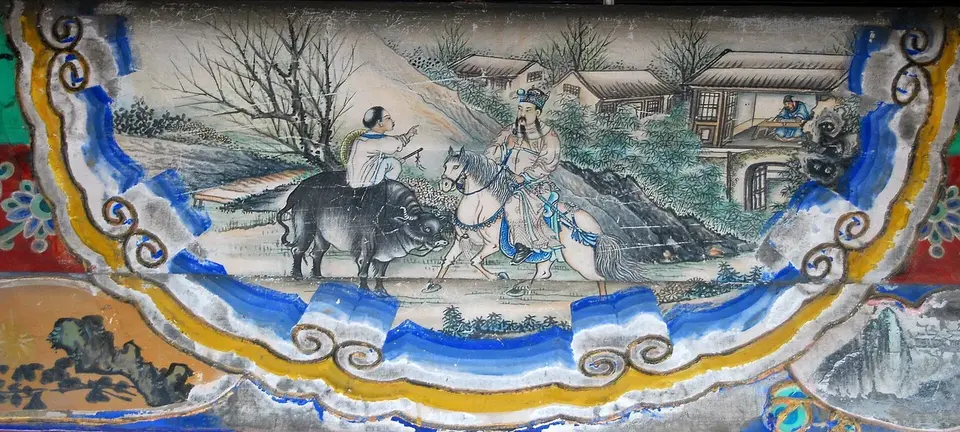
Related historical visual for Sima Hui
Image creditsshizhao (talk)拍摄,画者不明 · Public domainImage source

Historical figure

Sima Hui (司马徽)

司马徽

Sima Hui (died 208 AD), courtesy name Decao, was a native of Yangdi County in Yingchuan Commandery, Yu Province (present-day Yuzhou, Henan). He was an eminent recluse, master of the Old Text Confucian classics, and legendary talent appraiser during the late Eastern Han dynasty, universally revered as "Master Water Mirror." Living in seclusion in Yingchuan during his early years, Sima Hui was celebrated for his profound…

Late Eastern Han

PROFILE

Sima Hui (died 208 AD), courtesy name Decao, was a native of Yangdi County in Yingchuan Commandery, Yu Province (present-day Yuzhou, Henan). He was an eminent recluse, master of the Old Text Confucian classics, and legendary talent appraiser during the late Eastern Han dynasty, universally revered as "Master Water Mirror." Living in seclusion in Yingchuan during his early years, Sima Hui was celebrated for his profound erudition, unworldliness, and mastery of classical exegesis alongside astronomical divination. When young scholar Pang Tong traveled over two thousand leagues from southern Jingzhou to seek his guidance, Sima Hui discoursed with him beneath a mulberry tree throughout the day and night, subsequently proclaiming Pang Tong to be the "foremost of all southern scholars," thereby establishing Pang's reputation across the empire. Amid the chaos of the Central Plains, Sima Hui fled south in 198 AD to Xiangyang, taking advantage of Governor Liu Biao's patronage of Confucian schools. In Xiangyang, Sima Hui shared equal renown with classical master Song Zhong, establishing an influential academy where he educated such luminaries as Liu Yi, Xiang Lang, Yin Mo, and Li Ren, effectively promoting the transmission of Old Text classics into southwest China. Sima Hui forged a close friendship with elder recluse Pang Degong, who compared his crystal-clear appraisal of men to water and a mirror, coining his famous epithet "Water Mirror." Discerning that Liu Biao was suspicious and intolerant of true worthies, Sima Hui prudently maintained absolute silence on contemporary politics, causing Liu Biao to dismiss him as an ordinary rustic pedant. When Liu Bei visited him in Xinye to seek counsel on the empire, Sima Hui declared that only true geniuses understand the trends of the times, famously recommending the secluded talents of "Crouching Dragon" Zhuge Liang and "Fledgling Phoenix" Pang Tong, providing Liu Bei with the indispensable architects of the tripartite division of China. Following Cao Cao's pacification of Jingzhou in 208 AD, Sima Hui was inducted into Cao's staff, but passed away from sudden illness shortly thereafter.

Courtesy Name
Decao
Art Name
Master Water Mirror (水镜先生, Bestowed by Pang Degong)
Native Place
Yangdi County, Yingchuan Commandery, Yu Province (Modern Yuzhou, Henan)
Dynasty
Late Eastern Han
Date of Death
208 AD (Thirteenth Year of the Jian'an Era)
Historical Identity
Celebrated Late Han Recluse, Master of Old Text Classics, Paragon of Character Appraisal, Master Water Mirror

LIFE TIMELINE

Relationship graph

BIOGRAPHY

Chronology

  • c. 160 AD (3rd year of the Yanxi era) | Birth in Yingchuan | Born into a scholarly gentry family in Yangdi, mastering Confucian classics and divination from youth.
  • c. 195 AD (2nd year of the Xingping era) | Discourse Under Mulberry Tree | Conversed day and night with the visiting Pang Tong, proclaiming him the foremost scholar of the southern provinces.
  • 198 AD (3rd year of the Jian'an era) | Seeking Refuge in Xiangyang | Relocated south to escape northern warfare, establishing an academy in Xiangyang under Liu Biao's jurisdiction.
  • c. 200 AD (5th year of the Jian'an era) | Conferred Title Water Mirror | Befriended elder scholar Pang Degong, who bestowed upon him the famous honorific title Master Water Mirror.
  • c. 204 AD (9th year of the Jian'an era) | Prudent Self-Preservation | Recognized Liu Biao's narrow-minded nature, concealing his political insight to appear as an unexceptional scholar.
  • 207 AD (12th year of the Jian'an era) | Recommending Worthies | Consulted by Liu Bei at Xinye; recommended Zhuge Liang and Pang Tong as supreme geniuses capable of pacifying the realm.
  • 208 AD (9th month, 13th year of the Jian'an era) | Meeting Cao Cao | Cao Cao took control of northern Jingzhou; admired Sima Hui's reputation and recruited him with high honors.
  • 208 AD (Winter, 13th year of the Jian'an era) | Peaceful Demise | Succumbed to illness shortly after meeting Cao Cao, buried at his home in Yangdi with lasting memorials in Nanzhang.

Life and Career

Discourse Under the Mulberry Tree and Renown of the South

Sima Hui was born in Yangdi County, Yingchuan Commandery. During the Eastern Han dynasty, Yingchuan stood as the preeminent intellectual capital of northern China, renowned for its tradition of character appraisal and philosophical debate. Possessing an aloof, noble, and contemplative temperament, Sima Hui rejected the pursuit of worldly honors, devoting himself to the study of Old Text classical traditions, the Classic of Changes, and the principles of cosmological cycles.

During the Xingping and early Jian'an eras, Sima Hui lived as a private scholar in the Yingchuan countryside. In Xiangyang, young Pang Tong, who possessed an unpretentious and clumsy outward demeanor, was widely overlooked by regional gentry. Having heard of Sima Hui's legendary discernment, Pang Tong traveled two thousand leagues from southern Jingzhou to visit him in Yingchuan.

Upon his arrival, Pang Tong found Sima Hui up in a mulberry tree gathering leaves for silkworms. Remaining in his carriage, Pang Tong remarked: "I have heard that when a true gentleman lives in the world, he ought to wear gold and purple robes and achieve great deeds; why should one stifle the torrential volume of the great rivers to engage in the domestic chores of a silkworm woman?"

Sima Hui climbed down from the tree and smiled calmly: "Sir, pray alight from your carriage! You know only the swiftness of convenient side paths, without considering the peril of losing the true way. In antiquity, Bicheng Zigao preferred plowing fields over the honors of a feudal lord; Yuan Xian dwelled behind a door pivoted on mulberry wood rather than accept high official estates. Why must a man ride fat steeds, inhabit grand pavilions, and command dozens of handmaidens to be deemed exceptional? This was the exact reason why Xu You and Chaofu lamented, and why Bo Yi and Shu Qi sighed in seclusion. Even if one held the stolen nobility of Lü Buwei or the thousand carriage teams of Duke Jing of Qi, it would not be worth the esteem of a noble soul!"

Stunned by this profound rebuke, Pang Tong bowed in veneration: "I was born in a remote frontier region, with narrow vision of great principles. If I had not struck this reverberating bell, I would never have recognized its majestic resonance!" Delighted, Sima Hui took Pang Tong by the hand, and the two sat beneath the shade of the mulberry tree, conversing through the day and into the night on statecraft, dynastic philosophy, and historical trends. Following their discussion, Sima Hui was awestruck by Pang Tong's intellect, publicly proclaiming him to be the "foremost of all southern scholars." Through this definitive judgment, Pang Tong's fame spread throughout China.

Seeking Refuge in Jingzhou and Preserving Integrity in Silence

By the late 190s, the Central Plains were ravaged by continuous warfare between Cao Cao, Yuan Shao, and Lü Bu. Farmlands across Yan and Yu provinces lay desolate, and historical archives were scattered. In contrast, Liu Biao, Governor of Jingzhou, maintained peace south of the Han River, founding state academies in Xiangyang and inviting renowned scholars from across the empire.

Seeking to preserve his library and live in tranquility, Sima Hui migrated south to Xiangyang, taking up residence near Mount Yuxi in present-day Nanzhang. At the Xiangyang academy, he and the noted scholar Song Zhong were venerated as twin luminaries of classical learning. Scholars from Yi Province, such as Yin Mo and Li Ren, dissatisfied with the superficial contemporary schools of Sichuan, traveled over mountains to study the Zuo Zhuan and ancient classics under Sima Hui; local youths like Xiang Lang and Liu Yi likewise became his devoted disciples. Through his pedagogical efforts, Sima Hui fostered an entire generation of administrative and judicial thinkers, deeply rooting Old Text scholarship in southwestern China.

While in Xiangyang, Sima Hui formed an intimate intellectual partnership with the senior recluse Pang Degong. Sima Hui treated Pang Degong as an elder brother, bowing respectfully whenever visiting his home. Acknowledging Sima Hui's flawless and impartial discernment of character, which reflected men as clearly as still water and a polished bronze mirror, Pang Degong bestowed upon him the famous honorific title "Water Mirror."

However, Sima Hui harbored no illusions regarding Governor Liu Biao. He recognized that Liu Biao was outwardly generous but inwardly suspicious and jealous, incapable of tolerating genuine virtue. Consequently, Sima Hui adopted the strategy of absolute silence on political and military affairs, discussing only weather and farming whenever questioned. When associates recommended Sima Hui to Liu Biao as an extraordinary talent, Liu Biao paid him a personal visit; true to form, Sima Hui spoke only of pleasantries. Returning to his palace, Liu Biao sneered to his courtiers: "The world talks nonsense. This Sima Decao is merely a common rustic bookworm, no different from an ordinary farmer!" By embracing apparent foolishness, Sima Hui protected himself from suspicion throughout a decade of political turbulence.

Discerning Supreme Talent and Recommending Wolong and Fengchu

Between 201 and 207 AD, Liu Bei, having suffered defeat in the north, took refuge under Liu Biao, who stationed him at the frontier outpost of Xinye. Frustrated by years of military stagnation and realizing that his veteran generals lacked a grand strategic advisor, Liu Bei actively sought council among the literati of the Xiangyang region.

Liu Bei traveled to Sima Hui's hermitage at Nanzhang to inquire into the grand geopolitical trajectory of the realm. Sima Hui greeted him and immediately framed the challenge of statecraft: "Common scholars and mediocre literati understand only textual recitations; how could they comprehend the shifting currents of contemporary affairs? Those who recognize the trends of the times are true geniuses!"

When Liu Bei urgently inquired who could be called such geniuses, Sima Hui stroked his beard and revealed: "Crouching Dragon and Fledgling Phoenix; if you obtain either one of them, you can bring peace to the empire!" Pressed further by Liu Bei, Sima Hui disclosed their true identities: Zhuge Liang of Longzhong and Pang Tong of Xiangyang.

This famous revelation lifted the veil from Liu Bei's eyes. Guided by Sima Hui's recommendation and reinforced by Xu Shu, Liu Bei undertook his famous three visits to Zhuge Liang's thatched cottage, obtaining the epochal Longzhong Plan and subsequently appointing Pang Tong as a military director. Sima Hui's insight laid the intellectual and strategic foundation for the tripartite division of China.

Benevolent Forbearance and Immortal Legacy

Beyond his unparalleled intellectual discernment, Sima Hui was celebrated for his warm benevolence and refusal to speak ill of anyone. While contemporary scholars frequently engaged in vicious factional critiques, Sima Hui resolved never to mention human shortcomings.

Whenever visitors asked his opinion of any individual, Sima Hui invariably smiled and replied: "He is good, very good!" One day, his wife protested: "People travel great distances to seek your guidance because of your discernment; how can you respond to every inquiry by merely saying 'good'? That is not what people hope to hear!" Sima Hui smiled and replied: "What you have just said is also very good!" This anecdote gave birth to the enduring Chinese idiom "Mr. Goody-Goody," reflecting his Daoist philosophy of non-contentious self-preservation in a dangerous world.

In his daily life, Sima Hui displayed boundless charity. Once, a neighbor lost a pig and mistakenly claimed that Sima Hui's pig was his own. Rather than arguing, Sima Hui yielded the pig without hesitation. Days later, the neighbor discovered his original pig in a ravine and rushed to return Sima Hui's animal, prostrating himself in shame. Sima Hui showed no resentment, warmly thanking him for bringing it back. When a silkworm farmer requested to borrow his drying frames, Sima Hui emptied his own active frames to lend them, teaching his family: "The man was desperate; had I refused, he would have suffered immense humiliation. How could one value material property over human dignity?"

In the autumn of 208 AD, Cao Cao marched south and took possession of Xiangyang after Liu Cong surrendered. Long aware of Sima Hui's immense reputation, Cao Cao received him with great honor, intending to grant him high ministerial office. However, Sima Hui fell ill and passed away peacefully that winter, never entering official service. He was laid to rest in his native Yangdi, while his hermitage at Shuijing Manor in Nanzhang endured as a shrine to his wisdom. Sima Hui remains immortalized as one of the most enigmatic, generous, and visionary hermits of Chinese antiquity.
Major Achievements

Appraising and Launching the Fame of Pang Tong Under the Mulberry Tree

Conducted an exhaustive day-and-night dialogue beneath a mulberry tree with young Pang Tong, definitively evaluating him as the "foremost of all southern scholars" and launching his career.

Lecturing on Old Text Classics and Nurturing Renowned Scholars

Established an academy in Xiangyang during the Jian'an era, teaching luminaries such as Xiang Lang, Yin Mo, and Liu Yi, serving as an indispensable conduit for Old Text scholarship in the south.

Recommending Zhuge Liang and Pang Tong to Liu Bei

Advised Liu Bei that "those who recognize the trends of the times are true geniuses," famously recommending "Crouching Dragon" Zhuge Liang and "Fledgling Phoenix" Pang Tong to lay the groundwork for the Three Kingdoms.

Self-Preservation in Chaos and the Cultural Heritage of Shuijing Manor

Safeguarded himself against Liu Biao's suspicion through calculated silence and benevolent humor, leaving behind cultural legacies such as the idiom "Mr. Goody-Goody" and the historical landmark of Shuijing Manor.

Personal Relationships

  • Intimate Mentor / Elder Brother: Pang Degong (venerable recluse of Jingzhou, revered by Sima Hui as an elder brother, who bestowed upon him the title Master Water Mirror)
  • Discovered Worthy: Pang Tong (courtesy name Shiyuan, appraised by Sima Hui as the foremost scholar of the south)
  • Championed Genius: Zhuge Liang (courtesy name Kongming, recommended by Sima Hui to Liu Bei as Crouching Dragon)
  • Patron Inquirer: Liu Bei (Emperor Zhaolie of Shu Han, who sought Sima Hui's advice at Xinye)
  • Disciples: Xiang Lang (Left General of Shu Han), Yin Mo (Prefect of Zitong and classical scholar), Liu Yi (Palace Attendant of Cao Wei), Li Ren (classical scholar of Shu Han)
  • Imperial Recruiter: Cao Cao (King of Wei, who sought to employ Sima Hui before his sudden death in 208 AD)
  • Suspicious Governor: Liu Biao (Governor of Jingzhou, whom Sima Hui avoided by playing the unexceptional rustic)

Historical Evaluations

  • Chen Shou, Records of the Three Kingdoms, Volume 37: "Sima Hui of Yingchuan was refined, noble, and possessed profound discernment of character. When Pang Tong reached the age of twenty, he went to visit Hui. Hui was gathering mulberry leaves in a tree, sat Tong beneath the tree, and they conversed from daytime until nightfall. Hui was extraordinarily impressed, declaring that Tong was the crown of all southern scholars, whence Tong's renown spread."
  • Pang Degong: "Zhuge Kongming is the Crouching Dragon, Pang Shiyuan is the Fledgling Phoenix, and Sima Decao is the Water Mirror."
  • Pei Songzhi citing Separate Biography of Sima Hui: "Hui was pure, noble, and transcendent. From youth he loved learning, possessing profound and subtle discernment of men. Knowing that Liu Biao was dark-natured and would inevitably harm good men, he sealed his tongue and refrained from discussions... Hui possessed the grand measure of human relations, excelling at guiding men."
  • Liu Biao: "The world talks nonsense. This man is merely a petty bookworm, whose wisdom is no different from the common crowd."
  • Li Zhi: "In this world, only being Mr. Goody-Goody is hard; yet in such an age, one cannot survive without being Mr. Goody-Goody. Sima Decao truly understood the profound art of self-preservation!"
  • Traditional Historical Commentary: In the turbulence of the late Han dynasty, heroes arose on all sides; yet the man who manipulated the balance of the tripartite division with smiling composure was Master Water Mirror of Yangdi! Decao dwelled in rural seclusion, yet his intellect penetrated Heaven and earth, clear as autumn waters and immaculate as a bronze mirror. He unearthed the Fledgling Phoenix from rustic obscurity and pointed out the Crouching Dragon from his humble cottage, enabling the Former Sovereign to part the clouds and gaze upon the clear sky! Toward Liu Biao he practiced silence; toward neighbors he practiced yielding; toward the world he responded 'very good.' Outwardly unexceptional, inwardly possessing supreme wisdom, he drifted away just as Cao Cao swept across the south, untainted by dynastic dust—truly the foremost transcendent hermit of all antiquity!

Related Entries

  • Zhuge Liang
  • Pang Tong
  • Pang Degong
  • Liu Bei
  • Shuijing Manor
  • Mr. Goody-Goody
  • Old Text Classics

FIGURES ASSOCIATED WITH THIS DYNASTY

Bibliography

  • Chen Shou, Records of the Three Kingdoms, Volume 37, "Book of Shu: Biography of Pang Tong"
  • Chen Shou, Records of the Three Kingdoms, Volume 35, "Book of Shu: Biography of Zhuge Liang"
  • Chen Shou, Records of the Three Kingdoms, Volume 41, "Book of Shu: Biography of Xiang Lang"
  • Chen Shou, Records of the Three Kingdoms, Volume 42, "Book of Shu: Biography of Yin Mo"
  • Xi Zuochi, Records of Xiangyang
  • Fan Ye, Book of the Later Han, Volume 74, "Biography of Liu Biao"
  • Sima Guang, Zizhi Tongjian, Volume 65, "Han Annals 57"