Birth into Imperial Clan
Born in Wen County, Henei, as the second son of Sima Xun, Prince of Qiao.
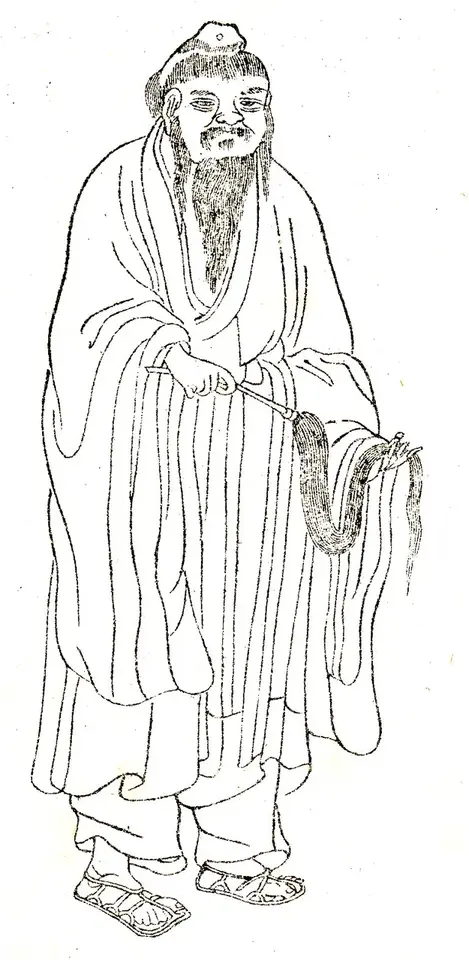
司马承
Sima Cheng, courtesy name Jingcai (also recorded as Yuanjing), was an imperial prince, military commander, and celebrated loyalist martyr of the Jin dynasty from Wen County, Henei Commandery. He was the grandson of Cao Wei Court Gentleman Sima Jin (the sixth younger brother of Sima Yi) and the second son of Prince Gang of Qiao (Sima Xun). Sima Cheng was noted from his youth for earnest integrity, prudent composure, and…
Sima Cheng, courtesy name Jingcai (also recorded as Yuanjing), was an imperial prince, military commander, and celebrated loyalist martyr of the Jin dynasty from Wen County, Henei Commandery. He was the grandson of Cao Wei Court Gentleman Sima Jin (the sixth younger brother of Sima Yi) and the second son of Prince Gang of Qiao (Sima Xun). Sima Cheng was noted from his youth for earnest integrity, prudent composure, and personal austerity. He began his career as Carriage-Retinue Commandant and Court Gentleman, later advancing to General of Wide Martial Might and Protector of the Pacified Barbarians. In 306, for his merit in escorting Emperor Hui from Chang'an back to Luoyang, he was appointed General of Mobile Cavalry. Amid the cataclysmic collapse of the Western Jin during the Yongjia era, Sima Cheng made his way south through dangerous territory, joining Sima Rui (Prince of Langye) in Jiankang as Military Consultation Libationer. In 317, following the murder of his nephew Sima Sui by Shi Le, Sima Rui issued an imperial commission appointing Sima Cheng to inherit the princely title of Qiao. In 320, seeking to erect a reliable regional bastion to counter the overweening ambitions of Senior General Wang Dun, Emperor Yuan dispatched Sima Cheng as Commander-in-Chief of Military Affairs in Xiang Province, General of the Southern Gentlemen-of-the-Household, and Regional Inspector of Xiang Province. Passing through Wuchang, Sima Cheng deflected Wang Dun's suspicions with humble tact. Arriving in Xiang Province, he governed frugally, riding in a simple straw cart and winning widespread popular devotion. In 322, when Wang Dun launched his rebellion from Wuchang under the pretext of executing imperial ministers, he attempted to coerce Sima Cheng into joining the uprising. Sima Cheng resolutely arrested the rebel envoy, rallied the entire province to defend the throne, and organized a desperate defense of Changsha alongside Chief Clerk Yu Kui and Regional Administrator Liu Yi. Subjected to an unrelenting hundred-day siege by twenty thousand rebel troops under Wei Ai, the city finally fell. Sima Cheng was captured and murdered en route to Wuchang at age fifty-nine. Following the suppression of Wang Dun's rebellion, the court posthumously awarded him the rank of Senior General of Chariots and Cavalry and conferred the posthumous title King Min.
Born in Wen County, Henei, as the second son of Sima Xun, Prince of Qiao.
Participated in escorting Emperor Hui back to Luoyang, rewarded with rank of General of Mobile Cavalry.
Escaped northern turmoil through Xiangyang and Wuchang, joining Sima Rui in Jiankang as Libationer.
Following the death of Sima Sui, created Prince of Qiao by Sima Rui.
Sima Rui ascended the throne; Sima Cheng served as Colonel of Garrison Cavalry and General of the Left Army.
Appointed Regional Inspector of Xiang Province; parried Wang Dun's overtures during a feast at Wuchang.
Rebuilt the impoverished province, living humbly and gaining widespread administrative renown.
Defied Wang Dun's mutiny, arrested rebel envoys, and mobilized provincial forces to defend the imperial house.
Held Changsha for over a hundred days; captured upon the city's fall and executed at age fifty-nine.
Following the defeat of Wang Dun's rebellion, posthumously elevated to Senior General of Chariots and Cavalry as King Min.
Sima Cheng was born in 264 into the princely Qiao cadet branch of the Jin imperial house. His grandfather Sima Jin was a younger brother of Sima Yi, and his father Sima Xun had been created Prince Gang of Qiao under Emperor Wu of Jin. From childhood, Sima Cheng was recognized for his modest integrity, conscientious character, and unwavering moral clarity.
Entering imperial service in his early twenties, he served initially as Carriage-Retinue Commandant and Court Gentleman, later rising to General of Wide Martial Might and Protector of the Pacified Barbarians, garrisoning Anding. When the War of the Eight Princes shattered the Western Jin empire and Emperor Hui was abducted to Chang'an, Grand Tutor Sima Yue organized the royal return. In 306, Sima Cheng participated in the expedition to escort Emperor Hui back to Luoyang, earning promotion to General of Mobile Cavalry.
During the Yongjia era, nomadic armies from Han Zhao overran the Central Plains, capturing both Luoyang and Chang'an. Recognizing that northern China was lost, Sima Cheng secretly led his household southward, initially seeking refuge with Senior General Shan Jian in Xiangyang.
In 312, upon reaching Xiangyang, Sima Cheng found that Shan Jian had just passed away. He continued eastward to Wuchang and ultimately arrived in Jiankang, joining the court of Sima Rui, Prince of Langye. Impressed by his steadfast loyalty, Sima Rui appointed him Military Consultation Libationer, incorporating him into his inner strategic circle.
In 317, news reached the south that Chang'an had fallen and Emperor Min had been captured, prompting Sima Rui to assume the title Prince of Jin. Previously, Sima Sui, son of Sima Sui's elder brother Sima Sui, had been slaughtered in the north by Shi Le, leaving the Qiao princedom without an heir. Recognizing Sima Cheng's upright character and seniority, Sima Rui issued an edict investing Sima Cheng as Prince of Qiao.
In 318, upon receiving definitive confirmation of Emperor Min's execution, Sima Rui officially mounted the throne in Jiankang as Emperor Yuan. Sima Cheng was appointed Colonel of the Garrison Cavalry, promoted to General Who Assists the State, and placed in command of the Left Army. He was subsequently elevated to Attendant-in-Ordinary, attending directly upon the sovereign.
Throughout his service in the palace guards, Sima Cheng carried out his duties with solemn dignity. He maintained a strictly frugal domestic life, living without excessive luxury, earning the deep respect and affection of Emperor Yuan.
During this period, Eastern Jin faced mounting friction between the imperial court and powerful regional warlords. Senior General Wang Dun held formidable military command in Wuchang, harbored overarching political ambitions, and viewed Emperor Yuan's reliance on Liu Wei and Diao Xie with mounting hostility. When Wang Dun submitted increasingly arrogant memorials, Emperor Yuan became alarmed and summoned Sima Cheng into the palace at night to review the documents. Sima Cheng astutely warned the emperor that Wang Dun was preparing for rebellion.
To construct a loyalist military bulwark in the upper Yangtze region, Emperor Yuan sought to place trusted kin in frontier commands. In 320, following the death of Regional Inspector of Liang Province Zhou Fang, Gan Zhuo was transferred to Liang Province, leaving the inspectorship of Xiang Province vacant. Wang Dun recommended his subordinate Shen Chong, but Emperor Yuan, recognizing Xiang Province's vital role in commanding the river approaches, firmly rejected the petition and appointed Sima Cheng Commander-in-Chief of Military Affairs in Xiang Province, General of the Southern Gentlemen-of-the-Household, and Regional Inspector.
En route to his posting, Sima Cheng passed through Wuchang. Wang Dun hosted a banquet to test his guest's capabilities and intentions. Sima Cheng discerned Wang Dun's purpose and answered modestly by citing Ban Chao's metaphor of the humble lead knife, concealing his strategic resolve. Wang Dun remarked dismissively to his confidant Qian Feng that Sima Cheng merely mimicked ancient rhetoric without practical courage, and allowed him to proceed.
Arriving in Xiang Province, Sima Cheng found the region desolate and impoverished. He lived with rigorous simplicity, traveling in a modest carriage woven from rushes, and poured his energy into pacifying local populations and rebuilding agriculture. His popularity grew rapidly. Suspicious of Sima Cheng's rising influence, Wang Dun claimed to be planning a northern expedition and demanded the requisition of all vessels in Xiang Province. Sima Cheng discerned the ploy and surrendered only half of the fleet, preserving vital transport for local defense.
In the spring of 322, Wang Dun openly rebelled at Wuchang under the guise of purging Liu Wei and Diao Xie, mobilizing his fleet toward Jiankang. Wang Dun sent his staff officer Huan Pi to Xiang Province, offering Sima Cheng the position of Army Director to entice him into joining the insurrection.
Sima Cheng angrily rejected the overture. He immediately detained Huan Pi and gathered provincial commanders, including Chief Clerk Yu Kui, Major Yu Wang, Administrator of Jianchang Wang Xun, and Administrator of Hengyang Liu Yi, to swear solemn blood oaths of loyalty to the imperial throne. He issued proclamations across the province calling for the destruction of the rebels and mobilized troops to advance toward Baling to sever Wang Dun's retreat. Administrator of Lingling Yin Feng rallied in support, and most commanderies endorsed the royalist cause. When Wang Dun's brother-in-law, Administrator of Xiangdong Zheng Dan, refused to comply, Yu Kui attacked and executed him.
Fearing an assault on his rear, Wang Dun detached Commander of the Southern Barbarians Wei Ai, along with generals Li Heng and Tian Song, leading an elite force of twenty thousand troops to besiege Changsha.
Changsha's fortifications were dilapidated after years of neglected defense. Facing overwhelming odds, several officers urged Sima Cheng to flee south to Guangzhou or seek refuge in the mountain passes of Lingling and Guiyang. Sima Cheng adamantly refused, declaring that as an imperial prince tasked with frontier defense, he would fight to the death rather than save his own life by flight.
Under heavy bombardment from rebel catapults and fire arrows, Sima Cheng led the garrison with heroic fortitude. Major Yu Wang led a desperate counter-attack outside the walls and perished in fierce hand-to-hand combat.
Meanwhile, Regional Inspector of Liang Province Gan Zhuo, persuaded by Sima Cheng's messengers, declared opposition to Wang Dun. However, after advancing to Zhukou, Gan Zhuo vacillated, hesitating to advance downriver to relieve Changsha. When news arrived that Jiankang had fallen and loyal ministers Zhou Yi and Dai Yuan had been slain, Gan Zhuo panicked and withdrew his army, leaving Changsha totally isolated.
The rebel commander Wei Ai shot copies of imperial capitulation edicts into the city to break the defenders' morale. Though weeping at the news of the capital's fall, the citizens and soldiers remained fiercely devoted to Sima Cheng, refusing to surrender. Administrator of Hengyang Liu Yi fell on the ramparts, and the defenders were reduced to starvation.
After enduring a relentless siege of more than a hundred days, Changsha was breached by overwhelming numbers. Sima Cheng was captured, maintaining absolute composure and fiercely condemning the traitors. Wei Ai placed him in a prisoner cart and transported him toward Jing Province. Fearing his enduring moral authority, Wang Dun ordered Regional Inspector of Jing Province Wang Yi to execute Sima Cheng on the road. He died a martyr at the age of fifty-nine. His loyal clerks Huan Xiong and Han Jie disguised themselves as servants to accompany his body and arrange his burial.
In 324, following Emperor Ming's defeat of Wang Dun's rebellion, the court issued an imperial decree commending Sima Cheng's supreme sacrifice. He was posthumously elevated to Senior General of Chariots and Cavalry, conferred the inspectorship of Si Province, and granted the posthumous title King Min. His son Sima Wuji inherited the princedom. Sima Cheng's sacrificial stand in defense of the royal house remains one of the most celebrated acts of imperial loyalty in the Jin dynasty.
Appointed Regional Inspector of Xiang Province in 320, Sima Cheng demonstrated profound political judgment. At the dangerous banquet in Wuchang, he skillfully disarmed Wang Dun's suspicions through measured humility. In Xiang Province, he revitalized a devastated command through personal austerity and benevolent administration, establishing a vital royalist bastion directly threatening Wang Dun's rear flank.
When Wang Dun rebelled in 322, Sima Cheng's refusal to capitulate provided an inspiring rallying point for imperial loyalists. Rejecting flight, he coordinated provincial resources and withstood a twenty-thousand-man siege for over one hundred days behind crumbling ramparts. His prolonged resistance pinned down Wang Dun's veteran western divisions, preventing them from reinforcing operations downriver. His heroic martyrdom established him as a paramount moral exemplar of dynastic loyalty.
FIGURES ASSOCIATED WITH THIS DYNASTY