Birth in Hengzhou
Born in Hengzhou; exhibited spiritual wisdom and classical acumen in youth before taking monastic vows.
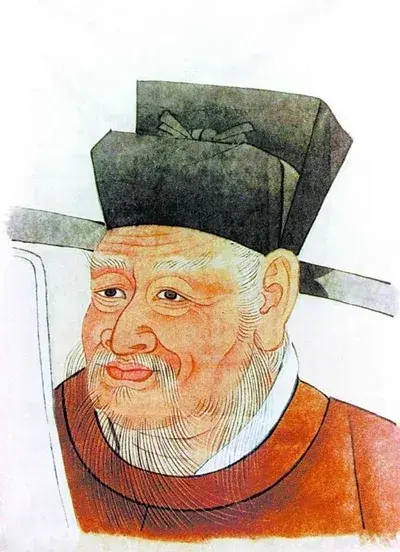
释梦英
Mengying (释梦英, dates of birth and death unknown), whose secular name was Yongya (永牙) and dharma name was Xuanyi (宣义), commonly known as Master Mengying, was a native of Hengzhou (present-day Hengyang, Hunan Province). A renowned Buddhist master, calligraphic luminary, and paleographer across the late Five Dynasties and early Northern Song period, he was later revered as one of the "Four Monks of Xiaoxiang." Precociously…
Mengying (释梦英, dates of birth and death unknown), whose secular name was Yongya (永牙) and dharma name was Xuanyi (宣义), commonly known as Master Mengying, was a native of Hengzhou (present-day Hengyang, Hunan Province). A renowned Buddhist master, calligraphic luminary, and paleographer across the late Five Dynasties and early Northern Song period, he was later revered as one of the "Four Monks of Xiaoxiang." Precociously learned from his youth, Mengying was celebrated for his poetry and prose, mastering clerical, standard, and cursive scripts, but achieving supreme nationwide fame for his consummate mastery of the "jade-chopstick" seal script. Following two centuries of decline after Li Yangbing in the late Tang, Mengying revived this endangered art form, prompting contemporary literary arbiter Tao Gu to praise him with the adage: "Li Yangbing passed away, and Mengying was born." Following the founding of the Northern Song Dynasty, Mengying's calligraphic reputation resounded across the realm. Emperor Taizong of Song, an ardent patron of calligraphy, summoned Mengying to a private palace audience and bestowed upon him an imperial purple robe, making him the first Buddhist monk in the Northern Song to receive such sovereign honors solely for calligraphic excellence. Leading court scholars including Guo Zhongshu, Chen Tuan, Song Bai, and Jia Huangzhong composed hundreds of poems in praise of his brushwork. His surviving masterpieces, the Seal-Script Thousand Character Classic Stele and the Stele of Radical Origins for the Shuowen Analytical Directory, stand preserved in the Forest of Stone Steles in Xi'an, displaying wiry, resilient strokes of steel-like tensile strength. By systematically analyzing the 540 radicals of Xu Shen's Han Dynasty dictionary Shuowen Jiezi and providing standard script commentaries, he laid the cornerstone for the early Song renaissance in paleography and epigraphy, igniting a widespread revival of seal script study.
Born in Hengzhou; exhibited spiritual wisdom and classical acumen in youth before taking monastic vows.
Mastered the jade-chopstick seal script; inscribed the Seal-Script Thousand Character Classic Stele with standard script commentary by Yuan Zhengji.
His fame reached the capital; future Emperor Taizong summoned him to audience and conferred the imperial purple robe.
Traveled through Chang'an and the Zhongnan Mountains, sharing calligraphic and philosophical discussions with Chen Tuan and Guo Zhongshu.
Authored the Treatise on Eighteen Calligraphic Styles, gathering ancient archaic seal varieties to explore archaic structural lineages.
Inscribed the Stele of Radical Origins for the Shuowen Analytical Directory, collating the radicals of Shuowen Jiezi on stone.
Retired to monastic seclusion in Hengzhou and passed away peacefully; his stone steles became treasured rubbings across generations.
Mengying was born during the turbulent close of the Five Dynasties period in Hengzhou, Hunan. Endowed with precocious spiritual discernment, he entered the Buddhist monastic community in his early youth, receiving the dharma name Xuanyi. Beyond his deep immersion in Buddhist sutras and Chan philosophy, Mengying harbored an intense passion for the structural genealogy and calligraphic aesthetics of archaic Chinese characters. In the quietude of monastic practice, he practiced brushwork incessantly, attaining proficiency in standard, clerical, and cursive scripts. However, the art to which he devoted his lifelong intellectual vigor was the classical small seal script and its refined branch, the "jade-chopstick" seal script, which had languished in neglect for nearly two centuries following the death of Tang master Li Yangbing.
Since the late Tang and Five Dynasties, incessant warfare had ruined ancient stele monuments, and the classical seal script traditions of the Qin and Han dynasties had fallen into near-total oblivion, with scholar-officials practicing only vulgar contemporary running and regular hands. Mengying resolved to revive this forgotten art. He scoured ancient regions to inspect surviving cliff carvings and bronze inscriptions, adopting as his supreme models the Qin Dynasty chancellor Li Si's Mount Tai Inscription and the Tang master Li Yangbing's Sanfenji. His seal script was distinguished by solemn poise, rounded fluidity, and concealed internal bone, bending like tempered steel. When Five Dynasties and early Song scholar-statesman Tao Gu observed Mengying's seal script, he was stunned by its antique purity, lavishly declaring that "Li Yangbing passed away, and Mengying was born," establishing Mengying's renown across northern and southern China.
Emperor Taizong of Song, who had served as Prefect of Kaifeng before ascending the throne, ardently patronized civil culture, ancient manuscripts, and fine calligraphy. Having achieved celebrated fame across the Xiang River basin during the Qiande era of Emperor Taizu, Mengying was summoned to the capital in 967 by imperial decree. Emperor Taizong granted him a personal audience in an informal palace hall, commanding him to execute large-character seal script on the spot. Captivated by his unhurried composure and the graceful, metallic purity of his strokes, Taizong was immensely pleased and bestowed upon him a prestigious purple monastic robe. In the history of the Northern Song, Mengying was the first Buddhist monk to receive this sovereign honor solely on the merits of calligraphic achievement.
Following this imperial honor, Mengying's fame reached its zenith, with elites across the realm urgently seeking specimens of his brushwork. Leading Hanlin academicians such as Song Bai and Jia Huangzhong, eccentric master painter Guo Zhongshu, and the reclusive Daoist immortal Chen Tuan of Mount Zhongnan eagerly forged friendships with him. More than several hundred contemporary scholar-officials and poets composed celebratory verses honoring his calligraphy, creating a vibrant cultural phenomenon in the early Northern Song. In his later years, Mengying traveled widely through Chang'an and the Zhongnan Mountains, finding seclusion amid wild crags and debating the structural origins of ancient ideograms with Guo Zhongshu.
Mengying recognized that true calligraphy was not merely an artistic pastime of ink and brush, but an essential vehicle for classical exegesis and cultural preservation. In 999, at an advanced age in Chang'an, Mengying completed a monumental philological and calligraphic endeavor: the composition and engraving of the Stele of Radical Origins for the Shuowen Analytical Directory. Utilizing Eastern Han scholar Xu Shen's monumental lexicon Shuowen Jiezi as his source, Mengying systematically surveyed and inscribed all 540 radical classifiers in pristine jade-chopstick seal script, appending standard script commentaries beneath each entry to elucidate ancient pronunciations and semantic derivations.
Once erected, this stone stele served as an indispensable pedagogical textbook for generations of Song scholars studying the Six Categories of Chinese characters and ancient philology, sparking the only widespread seal-script movement in Song history. In addition, at the request of Military Commissioner Chai Yuxi, Mengying inscribed the Stele Commemorating the Renovation of the Queen Mother of the West Palace at Mount Hui. He also authored the Treatise on Eighteen Calligraphic Styles, gathering and classifying ancient archaic scripts—including tadpole script, bird-and-insect script, and flying-white script—and engraving his Poem on Eighteen Calligraphic Styles. Mengying spent his final days in contemplative retirement in his native Hengzhou monastery, leaving behind enduring stone monuments in the Forest of Stone Steles in Xi'an that have retained their majestic luster across a millennium.
Mengying's foremost artistic achievement was his single-handed revival of the classical seal script at a crucial turning point between the Tang and Song dynasties. Following Li Yangbing's demise, seal script had fallen into severe decline; Mengying took the ancient models of Li Si and Li Yangbing as his guiding compass, refining the disciplined "jade-chopstick" aesthetic. His strokes featured uniform thickness and profound internal tension, resembling coiled iron wire endowed with warm elegance. His Seal-Script Thousand Character Classic Stele, containing over one thousand characters executed with unbroken rhythmic continuity, became universally recognized as the supreme exemplar of Northern Song seal script, establishing aesthetic criteria that inspired epigraphers and calligraphers for centuries.
Mengying's Stele of Radical Origins for the Shuowen Analytical Directory, carved in 999 and preserved in the Forest of Stone Steles in Xi'an, represents a landmark milestone in Chinese paleography. At the time, circulating editions of Shuowen Jiezi were plagued by errors and corrupted character forms. Mengying dedicated years to collating the authentic structural forms of all 540 radicals, inscribing them in pristine seal script on stone and providing standard script annotations detailing phonetic values and canonical meanings. This monument served not only as a calligraphic masterpiece, but also as an indispensable foundation for the early Song revival of paleography and bronze-and-stone epigraphy, paving the way for the critical editions of Shuowen produced by the Xu Xuan brothers.
Mengying was an indefatigable scholar of ancient script varieties, authoring the Treatise on Eighteen Calligraphic Styles and engraving the Poem on Eighteen Calligraphic Styles. He systematically analyzed ancient archaic scripts preserved in stone and bronze—including ancient script, large seal, small seal, bird-and-insect script, and tadpole script—initiating early Song debates on character etymology, the Six Categories of characters, and ancient pictographic symbolism. Although later connoisseurs such as Mi Fu offered occasional critiques regarding stylistic purity, Mengying's pioneering classification of ancient orthographic systems broadened calligraphic horizons and preserved essential paleographical knowledge during an era of fragmented historical records.
FIGURES ASSOCIATED WITH THIS DYNASTY