Born in Henan
Born on the fourth day of the eleventh lunar month in Xiangfu County, Kaifeng Prefecture, inheriting an Embroidered Uniform Guard lineage.
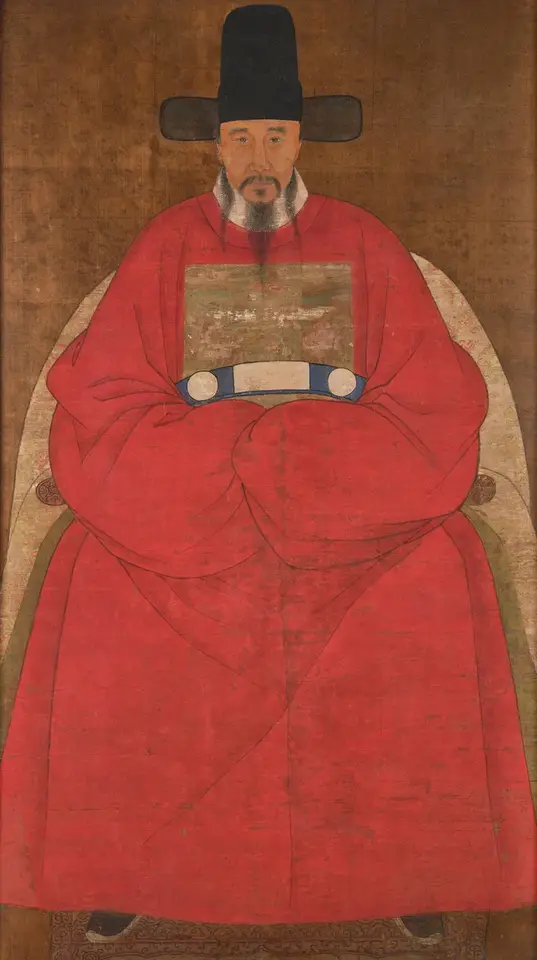
史可法
Shi Kefa (史可法, December 16, 1602 – May 20, 1645), courtesy name Xianzhi, pseudonym Daolin, was registered with the Embroidered Uniform Guard in Beijing and born in Xiangfu County, Kaifeng Prefecture, Henan. He was a preeminent statesman, supreme military commander, and venerated loyalist martyr of the late Ming and Southern Ming dynasties. Passing the imperial examination during the early Chongzhen era, he served through…
Shi Kefa (史可法, December 16, 1602 – May 20, 1645), courtesy name Xianzhi, pseudonym Daolin, was registered with the Embroidered Uniform Guard in Beijing and born in Xiangfu County, Kaifeng Prefecture, Henan. He was a preeminent statesman, supreme military commander, and venerated loyalist martyr of the late Ming and Southern Ming dynasties. Passing the imperial examination during the early Chongzhen era, he served through domestic peasant uprisings and external invasions with unwavering loyalty, rising through posts including judicial judge, director in the Ministry of Revenue, Governor of Anqing and Luzhou, and Minister of War in Nanjing. Following the fall of Beijing, he orchestrated the establishment of the Southern Ming Hongguang regime, briefly directed cabinet policy as Grand Secretary, and subsequently volunteered to serve as Supreme Commander north of the Yangtze River to coordinate the Four Defense Commands of Jiangbei. In the desperate siege of Yangzhou by the advancing Qing army in 1645, he steadfastly defended the isolated citadel, refused high honors offered for surrender, and died a heroic martyr's death at age forty-two. In his youth, Shi Kefa became the foremost protégé of the celebrated Donglin official Zuo Guangdou, absorbing his rigorous moral uprightness and statecraft traditions. In 1628, he earned his metropolitan graduate degree and took office as Judicial Judge of Xi'an Prefecture, where he won popular renown for integrity and rectifying wrongful judicial sentences. During the mid-Chongzhen reign, amid the eruption of nationwide peasant rebellions, Shi was promoted to Vice Minister of War and Censor to govern Anqing, Luzhou, and Chizhou. Partnering with imperial generals Lu Xiangsheng and Zu Kuan, he defended key riverine outposts and crushed rebel detachments at Shucheng. In 1643, he became Minister of War in Nanjing, reorganizing garrisons across the southern secondary capital. When Beijing fell to Li Zicheng and Emperor Chongzhen committed suicide in 1644, Shi Kefa upheld order in Nanjing and presided over the accession of the Prince of Fu, Zhu Yousong. Appointed Minister of Rites and Grand Secretary of the Dongge Hall, he found himself alienated by the political intrigue of factional rivals Ma Shiying and Ruan Dacheng. Choosing patriotism over bureaucratic friction, he departed the capital to oversee the frontlines at Yangzhou. There he harmonized fierce feuds between rival warlords Gao Jie and Huang Degong, raised vital army funds through salt administration reform, built fortifications along the Yellow River, and recaptured Pizhou. However, the internal factional collapse of Southern Ming and the assassination of Gao Jie fatally shattered northern defenses. When Prince Dodo led the Qing army to encircle Yangzhou in May 1645, Shi rejected all surrender demands from Prince Regent Dorgon and Dodo. When artillery breached the walls, he attempted suicide and was executed upon refusal to serve the Qing. His adoptive son Shi Dewei collected his official robes and tablet to erect the cenotaph at Plum Blossom Ridge in Yangzhou, which remains an eternal monument to Chinese civic courage and uncompromising patriotic martyrdom.
Born on the fourth day of the eleventh lunar month in Xiangfu County, Kaifeng Prefecture, inheriting an Embroidered Uniform Guard lineage.
Discovered by Education Intendant Zuo Guangdou in a winter monastery school near Beijing and accepted as chief disciple.
Passed the palace examination as Jinshi in the first year of Chongzhen and was appointed Judicial Judge of Xi'an Prefecture.
Elevated to Assistant Surveillance Commissioner to garrison Chizhou and inspect Jiangbei garrisons alongside Lu Xiangsheng.
Appointed Right Assistant Censor-in-Chief to govern Anqing and Luzhou, settling refugees and fortifying regional bastions.
Promoted to Minister of War in Nanjing to reorganize garrisons, naval flotillas, and defense coordination across southern provinces.
Following Beijing's fall, supported Zhu Yousong's enthronement in Nanjing, becoming Grand Secretary and Minister of Rites.
Volunteered to head military operations at Yangzhou, harmonized rival warlords, and recaptured Pizhou from Qing raiders.
Stood fast in Yangzhou amid northern defense collapse, rejecting surrender letters from Qing leaders Dorgon and Dodo.
Qing forces breached the northwest walls; captured after an attempted suicide, Shi refused submission and was executed at age forty-two.
Shi Kefa belonged by family lineage to the hereditary Embroidered Uniform Guard, an honor conferred on his ancestors for military achievements under early Ming rulers. On December 16, 1602, he was born in Shuanglong Lane, Xiangfu County, Kaifeng Prefecture, Henan. His father Shi Congzhi was a respected scholar of moral integrity, and his mother Madame Yin maintained a strict domestic standard. From childhood, Shi showed extraordinary dedication to Confucian classics and became widely celebrated in his native town for exceptional filial piety. He immersed himself in histories and administrative treatises, determined to serve the state through practical statecraft.
In the winter of 1621, while studying in a secluded Buddhist monastery near the capital, Shi Kefa was discovered by Zuo Guangdou, then Education Intendant of Shuntian Prefecture. On a bitter, snowy inspection tour, Zuo entered the temple room and found the young scholar asleep over his desk, surrounded by freshly written draft essays. Impressed by the incisive arguments and noble aspirations in the text, Zuo quietly removed his own sable fur coat, placed it over the sleeping youth, and closed the door.
Zuo subsequently inquired of the temple monks about the scholar's identity and summoned Shi to his official yamen for an extended interview. Enthralled by his breadth of learning and moral gravity, Zuo ranked him first in the regional examination and announced to fellow literati that Shi would one day shoulder the burdens of the empire. Years later, when Zuo Guangdou was imprisoned and tortured to death by the eunuch faction of Wei Zhongxian, Shi risked his life to visit the dungeon. Zuo severely reprimanded him for endangering himself, demanding that he preserve his life to serve the Ming realm. This parting injunction became Shi's guiding light for the rest of his career.
In 1628, the newly enthroned Chongzhen Emperor eliminated the eunuch faction and held the imperial palace examinations. Shi Kefa passed successfully and received appointment as Judicial Judge of Xi'an Prefecture in Shaanxi. Xi'an was a volatile northwestern crossroads plagued by mounting litigation, rural banditry, and corrupt clerical practices. Upon arrival, Shi prohibited clerical extortions, examined long-neglected case files day and night, and exonerated numerous innocent prisoners who had suffered years of unlawful detention.
Throughout his tenure in Shaanxi, Shi distinguished himself by spotless integrity and meticulous legal discernment. He traversed subordinate counties with minimal retinue, curbed landlord oppression, and protected vulnerable peasants from arbitrary levies. His administration earned widespread gratitude from local communities, who praised him as an incorruptible and compassionate magistrate. Following a superior performance evaluation after three years, he was summoned to the central government in 1631, advancing to Director in the Ministry of Revenue, where he managed military expenditures and national logistical transport.
At the Ministry of Revenue, Shi confronted the fiscal strain of dual conflicts against peasant rebellions in the Central Plains and Jurchen raids along the northern frontier. He enforced stringent financial accounting, eliminated fraudulent requisitions, and maximized grain and weapons deliveries to frontline commands. His professional diligence earned praise across the capital bureaucracy, providing him with indispensable practical insight into supply management and troop logistics.
During this period, Shi also repeatedly inspected riverine granaries along the Yellow and Huai rivers, strictly punishing corrupt clerks who embezzled tribute grain. He established systematic ledgers for warehouse deposits, personally inspected frontier supply depots, and secured the repair of dozens of dilapidated official granaries, guaranteeing unimpeded transport along thousands of miles of canal networks.
In 1635, peasant insurgencies led by Zhang Xianzhong and Gao Yingxiang expanded south into the Huai and Yangtze river valleys. The imperial court appointed Shi Kefa Assistant Surveillance Commissioner to oversee defensive measures in Chizhou and Taiping, while supervising army discipline north of the Yangtze. In the autumn of that year, Grand Coordinator Lu Xiangsheng gathered imperial forces for a counteroffensive, and Shi was transferred to Anqing and Chizhou to direct grain transport and guard strategic river passes.
In late 1636, after rebel forces suffered a defeat near Chuzhou and retreated into Henan, insurgent commanders Ma Shouying, Luo Rucai, and Li Wanqing joined forces to sweep eastward from Yunyang. They stormed Tongcheng and threatened the administrative seat of Anqing. Learning of the emergency, Shi deployed garrison detachments to block mountain defiles at Taihu and Susong, personally directed city defense, and coordinated counterattacks that forced the rebel coalition to abandon the siege, preserving southern Anhui from destruction.
Recognizing his battlefield success, Emperor Chongzhen elevated Shi in 1637 to Right Assistant Censor-in-Chief and Governor of Anqing, Luzhou, Chizhou, Taiping, and southern Henan. In a devastated territory ravaged by continuous fighting, Shi implemented energetic reconstruction: he resettled displaced refugees, launched military agricultural colonies, and exempted ruined farmland from taxation. Concurrently, he constructed fortified stone towers at frontier bottlenecks, repaired city walls in Luzhou, and trained local militia to coordinate with regular troops, transforming western Huai into a resilient defense belt.
Shi maintained rigorous discipline while caring deeply for his troops: he never ate before his soldiers had their fill, nor wore winter garments until his men had winter cloaks. In Anqing, he personally inspected hazardous passes in storms and provided coffins and burial funds for fallen soldiers, earning the profound affection and unwavering devotion of his subordinates throughout southern Anhui.
By 1641, when Li Zicheng overran Luoyang and besieged Kaifeng, the Yellow River basin faced total collapse. The court promoted Shi to Vice Minister of War and Governor to oversee logistical and defensive operations across Huaian, Fengyang, and Luzhou. Collaborating with generals Liu Liangzuo and Mu Wenshou, Shi repelled numerous rebel raids, maintaining a critical defensive barrier between northern battlefields and the wealthy southern provinces.
In the summer of 1643, as military threats encroached closer to the southern heartland, Shi Kefa was promoted to Minister of War in Nanjing with authority over military administration throughout the southern metropolitan region. Nanjing was the secondary capital of the Ming Empire, but its hereditary garrisons were plagued by desertion, neglect, and dilapidated equipment. Shi introduced strict roll calls, weeded out phantom soldiers on payrolls, refurbished war galleys, and instituted rigorous firearm drills.
In March 1644, Li Zicheng led the Shun forces in a lightning assault against Beijing, quickly surrounding the capital. Receiving urgent distress signals from the northern court, Shi mobilized all available land and naval contingents in Nanjing and led an expeditionary relief force to Pukou, preparing to cross the Yangtze to rescue the sovereign. However, immediately after reaching the northern riverbank, catastrophic intelligence arrived: Beijing had fallen, and Emperor Chongzhen had hanged himself on Jingshan Hill.
The tragedy devastated Shi Kefa. Facing north, he wept uncontrollably, threw himself onto the ground, and struck his head against a pillar until blood streamed over his boots. He immediately ordered all civil and military officials in Nanjing to put on mourning garments and perform memorial rites for the fallen monarch. With the northern half of the empire overrun and the dynastic throne vacant, the crucial burden of establishing a new court fell directly upon the shoulders of the southern leadership.
Debate erupted immediately in Nanjing regarding imperial succession. Eastern Depot and Donglin-aligned officials including Zhang Shenyan, Lu Daqi, and Jiang Yueguang favored Prince of Lu Zhu Changfang, citing his moral character and noting that Prince of Fu Zhu Yousong had a reputation for indulgence. Conversely, Fengyang Commander Ma Shiying formed a private pact with disaffected former factionalist Ruan Dacheng to advocate for Prince of Fu on the strict grounds of genealogical primogeniture as the grandson of Emperor Wanli.
Shi initially shared misgivings about Zhu Yousong's personal suitability and wrote privately to Ma Shiying enumerating the prince's perceived weaknesses. However, Ma allied with regional warlords Liu Kongzhao, Liu Zeqing, Gao Jie, and Huang Degong, using military intimidation to escort the Prince of Fu downriver to Yizhen. Realizing that armed internal discord would ignite immediate civil war and destroy the remaining dynastic territory, Shi chose conciliation to maintain imperial unity, personally greeting the prince at Pukou.
On June 19, 1644, Zhu Yousong formally ascended the throne in the Wuying Palace in Nanjing, designating the following year as Hongguang. The court overwhelmingly recommended Shi Kefa as senior Grand Secretary. He was appointed Minister of Rites and Grand Secretary of the Dongge Hall, with the honor of Junior Preceptor. Shortly thereafter, Ma Shiying also entered the Grand Secretariat as Minister of War, igniting intense factional rivalry.
Ma Shiying quickly introduced Ruan Dacheng into central administrative ranks, reviving bitter political vendettas. Shi recognized that factional warfare inside the capital was irreconcilable and observed that the four regional warlords along the northern riverbank were violent, insubordinate, and constantly feuding over plunder. Fearing that defense lines would collapse without unified command, Shi voluntarily resigned his senior ministerial position in Nanjing. He requested permission to serve as Supreme Commander of Jiangbei, moving his headquarters to Yangzhou to guard the empire's northern frontier.
Upon establishing his headquarters in Jiangbei, the Hongguang court divided northern defenses into four autonomous commands: Liu Liangzuo at LinHuai, Gao Jie at Yangzhou, Liu Zeqing at Huaian, and Huang Degong at Luzhou. These four warlords possessed massive armies but lacked imperial discipline. They preyed upon local civilian populations and regularly engaged in armed turf wars over territory and grain supplies, creating widespread terror throughout the Huai-Yang region.
Shi Kefa arrived in Yangzhou with only a single contingent of personal troops. He established a military headquarters, created regional salt administration bureaus to license trade, and partnered with prominent merchants to import vital food supplies. He also created the Hall of Worthies, recruiting scholars such as Ying Tingji and Lu Xunzhi to manage agricultural reclamation, civilian logistics, and fortress supply lines.
In running the Hall of Worthies, Shi instituted rigorous testing to appoint talents: scholars such as Gui Zhao and Sun Yuankai were appointed administrative aides, while others including Tang Dazhang, Tang Yan, Zhang Dawu, and Lu Sui received postings as prefectural judges and magistrates to pacify refugees and raise army provisions. Shi accepted proposals to lease public municipal estates to merchants in return for steady grain supplies, enabling his headquarters to operate despite receiving zero funding from Nanjing.
Among the four commanders, Gao Jie was particularly rapacious. When Yangzhou gentry barricaded city gates to keep his unruly troops outside, Gao's cavalry began burning and sacking suburban villages. This sparked a full-scale clash with Huang Degong's forces stationed at Yizhen, causing over a thousand casualties. Shi personally rode unarmed into Huang's camp, embraced the general, and provided one thousand taels of silver from personal allowances to reward his soldiers.
Next, Shi met directly with Gao Jie, appealing to his sense of honor, dynastic duty, and patriotism. Deeply moved by Shi's selfless dedication and moral authority, Gao submitted to his guidance, moved his main camp west of the city, and agreed to cooperate in northern military operations. Through patient diplomacy and personal charisma, Shi temporarily pacified the four warlords, stitching together a precarious northern defense line.
With regional commanders temporarily reconciled, Shi Kefa initiated preparations for a northern counteroffensive. In August 1644, he inspected Liu Zeqing's divisions in Huaian and petitioned the court in Nanjing for weapons, armor, and gunpowder supplies. However, Ma Shiying withheld and delayed shipments out of jealousy, compelling Shi's staff to rely on local taxation and merchant contributions.
In October, Shi reached Qingjiangpu to coordinate frontline positions. He ordered military farming in Kaifeng to support future operations and directed the construction of a line of earthen and stone forts along the southern bank of the Yellow River, designating the front from Wangjiaying to Suqian as the central pivot. In November, Qing commander Xia Chengde marched southward from Shandong into northern Jiangsu, threatening Pizhou.
Receiving emergency reports on his birthday, Shi immediately assembled his riverine fleet at Baiyanghe. He directed generals Liu Zhaoji and Li Qifeng to sail north to relieve Pizhou. The imperial units maintained defensive positions outside Pizhou walls for over two weeks, fighting skirmishes until the invading Qing detachments withdrew due to logistical exhaustion.
The defense of Pizhou represented the first tactical success against northern forces achieved by the Jiangbei command. When Shi reported the victory to Nanjing, Ma Shiying refused to award rewards to the frontline troops. Instead, the court dispatched palace eunuch Gao Qiqian to oversee grain supplies at Yangzhou and monitor Shi's command, severely constraining the field staff's strategic independence.
To counter court interference, Shi assigned commander Huang Rifang to guard strategic bottlenecks at Suqian and Pizhou, while directing Lu Xunzhi to expand military colonies in Kaifeng and Ying Tingji to gather grain and livestock. In addition, Shi established supply hubs along the Grand Canal between Yangzhou and Huaian, mobilizing hundreds of transport vessels at Shaobo Town to provide continuous riverine patrols, effectively repelling Qing cavalry probing attacks.
In January 1645, catastrophic tragedy struck the Jiangbei defense system. Seeking to launch an advance toward Henan, Gao Jie marched his main body to Xuzhou and entered Suizhou with a small cavalry escort to negotiate an alliance with local commander Xu Dingguo. Unknown to Gao, Xu had secretly surrendered to the Qing court. Xu staged a welcoming banquet and murdered Gao Jie in his sleep, throwing his large army into confusion.
The murder destroyed the central pillar of the Yellow River defense line. Shi rushed to Xuzhou overnight, calmed panicked officers, and appointed Gao's nephew Li Benshen as commander to keep the units intact. However, Gao Jie's assassination removed the only general willing to take aggressive offensive action, opening the way for an unimpeded Qing advance into the Huai valley.
To prevent mutiny, the staff permitted Gao's widow Madame Xing and her son to acknowledge eunuch Gao Qiqian as adoptive father to maintain equilibrium. Yet Nanjing appointed academician Wei Yinwen to take command without frontline respect, alienating veteran officers and accelerating the breakdown of defensive cohesion.
Seizing the initiative, Prince Regent Dorgon and Prince Dodo dispatched the main Eight Banners armies south across Shandong and Henan. Confronted by the sudden Qing offensive, Liu Zeqing abandoned Huaian and fled by sea with his wealth, while Liu Liangzuo refused to advance. The entire defensive network constructed by the Southern Ming court disintegrated within weeks.
Amid the collapse on the northern front, an internal insurrection erupted within Southern Ming. In April 1645, Zuo Liangyu launched a massive naval expedition down the Yangtze from Wuchang under the banner of purging corrupt officials in Nanjing. Paralyzed with fear, the Hongguang Emperor and Ma Shiying ordered Shi Kefa to divert frontline forces to defend Nanjing.
Shi complied to protect the court, but contradictory dispatches arrived in quick succession: first ordering him to Pukou, then to Yangzhou, and finally to Xuyi. Traveling day and night through torrential rains to Tianchang, Shi issued calls for reinforcements, only to discover that Xuyi had defected and Sizhou had fallen. Returning to Yangzhou, he learned that Zuo Liangyu had died and his son Zuo Menggeng had surrendered his entire army to Qing forces.
Taking advantage of the vacuum, Prince Dodo's armies crossed the Huai River and approached Yangzhou. On April 16, Qing vanguard detachments raided Wajiaopu and Shaobo Town, where staff officer Ying Tingji and General He Gang of the Zhongguan Battalion repulsed them with firearms. Nevertheless, on May 13, Li Benshen surrendered his divisions to Dodo, followed by commanders Zhang Tianlu and Zhang Tianfu. Yangzhou was entirely encircled, left with only several thousand loyal defenders facing overwhelming Qing forces.
On May 14, 1645, Prince Dodo's vanguard completed the encirclement of Yangzhou. When staff members proposed abandoning the city to conduct guerrilla warfare in nearby hills, or breaching the Gaoyan dikes to drown the invaders, Shi sternly refused, asserting that the people are the foundation of the state and that drowning thousands of innocent civilians to delay enemy forces was morally impermissible.
Shi deployed four thousand troops under Gansu commanders Li Qifeng and Gao Qifeng alongside Liu Zhaoji, He Gang, Ma Yingkui, Shi Dewei, and scholar recruits from the Hall of Worthies to defend the gates. However, Li Qifeng and Gao Qifeng soon scaled the walls and surrendered, leaving only a few thousand diehard loyalists.
During the siege, Dodo and Dorgon sent multiple letters promising Shi vast lands, princely titles, and supreme governorship over southern provinces if he surrendered. Shi wrote his famous response, sternly condemning Qing aggression, declaring his unyielding debt to the Ming dynasty, and consigning the surrender letters to flames on the ramparts.
Shi dispatched urgent appeals for reinforcements to Nanjing and neighboring garrisons, but none responded. Ma Shiying and court eunuchs abandoned Yangzhou to its fate. On the night of May 20, Qing forces deployed heavy artillery to bombard the northwest wall, reducing the dilapidated masonry to rubble.
General Liu Zhaoji fell in furious street fighting, while He Gang and Ma Yingkui died heroically in combat. Seeing the city lost, Shi drew his sword to cut his throat, but subordinates seized the blade to prevent his suicide. Captured and brought before Prince Dodo, Shi was offered survival in exchange for fealty. Shi shouted with righteous fury: "I am a high minister of the imperial court. I will never surrender to preserve my life! The city has fallen, and I die with it. Kill me at once!" Dodo recognized his unbending defiance and ordered his execution. Shi died a martyr at age forty-two.
Following the capture of the citadel, Qing forces subjected Yangzhou to days of indiscriminate massacre. When the violence subsided, Shi's body could not be identified among the fallen. His adoptive son Shi Dewei collected his ceremonial robes and court tablet to construct a cenotaph at Plum Blossom Ridge outside the city's Tianning Gate, creating a perpetual shrine venerated by generations for patriotic devotion and heroic sacrifice.
In the face of empty imperial treasuries in Nanjing and deliberate fiscal obstruction by Senior Grand Secretary Ma Shiying, Shi Kefa demonstrated extraordinary administrative competence to sustain the northern front. Upon arriving in Yangzhou, he established regional offices of the Ministry of Revenue and appointed commissary commanders, outlawing arbitrary tolls imposed by warlords and reopening vital canal trade.
Shi introduced innovative salt licensing systems, leasing public estates to merchants in exchange for large deliveries of grain and silver. By enforcing fiscal transparency and curbing clerical corruption, he recruited and trained thousands of disciplined personal troops and supplied hundreds of thousands of taels in provisions and ordnance to regional garrisons, keeping the defensive frontier viable.
He further dispatched aides to audit salt production records across the Lianghuai region, abolishing predatory levies and encouraging production. Under his management, the salt monopoly yielded hundreds of thousands of taels annually even during wartime, funding the purchase of warhorses, battle carts, and cannons that modernized Jiangbei defensive infrastructure.
Shi Kefa's most formidable domestic challenge was the insubordination and mutual hostility among the Four Defense Commands. When violent clashes between Huang Degong and Gao Jie at Yizhen resulted in over a thousand casualties, Shi risked his life to visit the frontlines unarmed. Through profound sincerity, Confucian moral authority, and personal financial gifts, he resolved the crisis and averted civil war.
His moral stature transformed Gao Jie from a predatory insurgent chieftain into a committed commander devoted to the northern expedition under imperial direction. By establishing defensive redoubts along the Yellow River and organizing the relief of Pizhou, Shi achieved rare tactical victories that delayed the southern advance of the Qing banner armies.
In managing tensions between Liu Zeqing and Liu Liangzuo, Shi combined strict military inspections with steady logistical provisioning. His persistent efforts maintained basic civic and defensive order across the Huai-Yang corridor for over a year, denying northern forces an immediate breakthrough.
Recognizing that restoring the realm required intellectual talent and practical expertise rather than military force alone, Shi founded the Hall of Worthies upon entering Yangzhou. He issued wide proclamations inviting scholar-officials, legal experts, and hydraulic specialists to join his headquarters.
He implemented rigorous examinations to recruit administrators: scholars Gui Zhao and Sun Yuankai became chief strategic counselors, Ying Tingji directed disciplinary oversight and canal provisioning, and Lu Xunzhi undertook land reclamation in Kaifeng. The institution energized administrative execution across the military government.
Shi also directed skilled artisans to build observation bastions along canal banks, manufacture hundreds of armored carts, and upgrade firearms including rocket launchers and Frankish breech-loading cannons. He supervised city wall reinforcements and defensive gate bastions in Yangzhou, laying the structural groundwork that enabled the citadel to endure sustained Qing assaults.
During the siege of Yangzhou, facing overwhelming Qing banner cavalry and widespread defections among neighboring commanders, Shi unhesitatingly spurned generous imperial titles offered for surrender. His response to Dorgon affirmed the dignity of the Ming realm and his uncompromising moral integrity. When the citadel fell, he chose death over survival, refusing to breach dikes to drown enemies at the cost of civilian lives and fearlessly confronting his executioners.
Shi Kefa embodied the highest Confucian ideals of total dedication and unwavering loyalty unto death. Revered by contemporaries and subsequent dynasties alike, he received top posthumous honors from both Southern Ming and Qing emperors, standing as an enduring symbol of Chinese civic courage, selfless patriotism, and immortal righteousness.
The citizens of Yangzhou erected a memorial hall at Plum Blossom Ridge to commemorate his virtue, transmitting his story through generations. In the Qianlong era, he was placed at the head of the official roster of loyal martyrs, officially canonized with the posthumous title Zhonglie as the pinnacle of dynastic fidelity.
FIGURES ASSOCIATED WITH THIS DYNASTY