Birth in Suzhou
Born in Changzhou, Suzhou; reared under his maternal grandmother's surname Xu; displayed remarkable intellect and diligence.
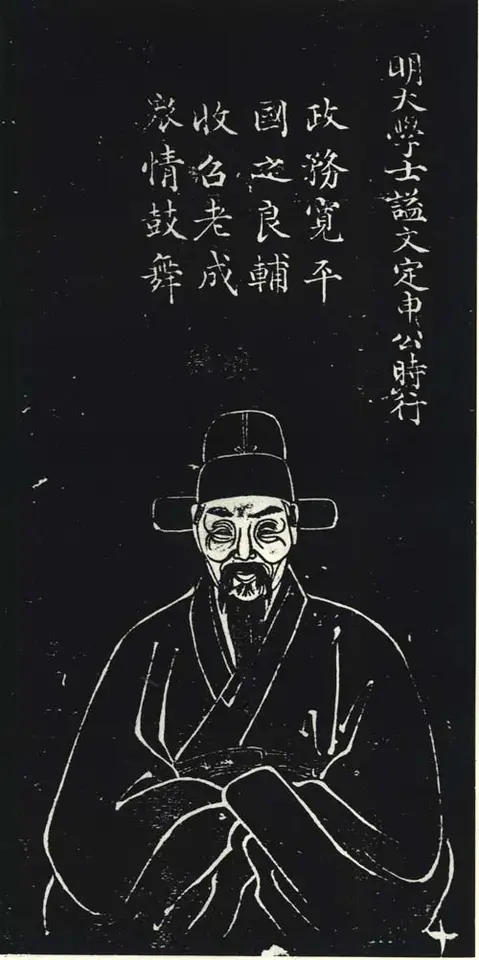
申时行
Shen Shixing (申时行, 1535–1614), courtesy name Rumo, art name Yaoquan, and in his late years styled Xiuxiu Jushi, was a native of Changzhou County, Suzhou Prefecture (modern Suzhou, Jiangsu Province). He was an eminent prime ministerial statesman of the Jiajing, Longqing, and Wanli reigns, serving as Senior Grand Secretary of the Ming cabinet. In 1562, he achieved the first place in the imperial palace examinations (Zhuangyuan)…
Shen Shixing (申时行, 1535–1614), courtesy name Rumo, art name Yaoquan, and in his late years styled Xiuxiu Jushi, was a native of Changzhou County, Suzhou Prefecture (modern Suzhou, Jiangsu Province). He was an eminent prime ministerial statesman of the Jiajing, Longqing, and Wanli reigns, serving as Senior Grand Secretary of the Ming cabinet. In 1562, he achieved the first place in the imperial palace examinations (Zhuangyuan) and was appointed Senior Compiler in the Hanlin Academy. Ascending through vice-ministerial posts in the Ministries of Rites and Personnel, he entered the Grand Secretariat as Grand Secretary of the Wenyuan Pavilion in 1578, succeeding Zhang Siwei as Senior Grand Secretary in 1583, presiding over the imperial government for over eight years. Shen Shixing's administrative philosophy was characterized by moderation, patience, and pragmatic consensus. Navigating the turbulent aftermath of Zhang Juzheng's rigorous legalist reforms and subsequent posthumous political purges, Shen functioned as an essential political stabilizer, soothing bureaucratic grievances and maintaining administrative continuity. In practical governance, he staunchly supported water conservancy expert Pan Jixun's yellow river management projects, securing flood defense and the grain transport canal system, while adroitly resolving the border succession crisis of the Tumet Mongol leader Sengge Düüreng, preserving peace along the Great Wall. Caught in the protracted Controversy over the Imperial Succession (Guoben Zhi Zheng) between the emperor's favoritism for Prince of Fu (Zhu Changxun) and the outer court's demand to install the eldest prince (Zhu Changluo), Shen secretly memorialized the throne to preserve legal primogeniture. When his confidential communications were leaked and attacked by outer censors, he resigned in 1591, spending over two decades in peaceful retirement in Suzhou. He died in 1614 at eighty, received posthumous honors as Grand Preceptor, and was conferred the posthumous title Wending.
Born in Changzhou, Suzhou; reared under his maternal grandmother's surname Xu; displayed remarkable intellect and diligence.
Ranked first in the imperial palace examinations as Zhuangyuan; restored his ancestral surname Shen and joined the Hanlin Academy.
Advanced to Junior Supervisor of the Household and Imperial Seminar Lecturer, instructing the young Wanli Emperor with calm gentleness.
Promoted from Vice Minister of Rites to Vice Minister of Personnel, entering the Grand Secretariat in 1578 as Grand Secretary.
Following Zhang Siwei's retirement due to parental mourning, appointed Senior Grand Secretary and Grand Secretary of the Zhongji Hall.
Following the confiscation of Zhang Juzheng's estate, submitted urgent memorials to spare Zhang's eighty-year-old mother and retain family lands.
Skillfully managed the succession dispute of Mongol leader Cherik, ensuring the continuation of border horse markets.
Led cabinet memorials urging the formal investiture of the eldest prince Zhu Changluo as Crown Prince, resisting royal procrastination.
When confidential cabinet memorials on the succession were leaked to outer censors, resigned from office and retired to Suzhou.
Passed away peacefully at home at eighty; the Wanli Emperor posthumously conferred the rank of Grand Preceptor and the title Wending.
Shen Shixing was born in 1535 in Changzhou County, Suzhou Prefecture, Southern Direct-ruled Region. His grandfather had been adopted into the maternal Xu family in youth, leading Shen to be registered under the surname Xu as Xu Shixing during his youth. From early childhood, Shen was quiet, disciplined, and remarkably studious, becoming a county licentiate at age fourteen. Immersed in the rich cultural milieu of Suzhou, his prose acquired balanced classicism and moral gravity.
In 1562, at twenty-eight, Shen journeyed to Beijing and passed the metropolitan examinations. In the ensuing palace examinations in the Forbidden City, his insightful statecraft essay on Confucian governance impressed the examiners and the Jiajing Emperor, who selected him as Zhuangyuan (first place overall). Following his triumph, he received imperial permission to restore his ancestral surname Shen. Customarily appointed Senior Compiler in the Hanlin Academy, Shen spent over a decade compiling official histories, including the Veritable Records of Ming Shizong, earning broad esteem for administrative integrity.
In 1572, the ten-year-old Wanli Emperor (Zhu Yijun) ascended the throne, with Zhang Juzheng assuming power as Senior Grand Secretary. Shen Shixing was promoted to Left Mentor and subsequently Junior Supervisor of the Household, serving as daily imperial seminar lecturer for the child sovereign. In the Wenhua Palace, Shen explained the Confucian classics with crystalline clarity and gentle patience, establishing an enduring bond of mutual trust with the young monarch.
In 1577, Shen was transferred to Vice Minister of Personnel. In 1578, seeking trusted statesmen to strengthen the cabinet, Senior Grand Secretary Zhang Juzheng recommended Shen Shixing and Zhang Siwei to enter the Grand Secretariat as Grand Secretaries. Serving with diligence, Shen assisted in nationwide land surveys and the implementation of the Single Whip taxation system, advancing to Minister of Rites and Grand Secretary of the Wenyuan Pavilion.
In 1582, Zhang Juzheng died of exhaustion, and Zhang Siwei succeeded him as Senior Grand Secretary. In the fourth month of 1583, Zhang Siwei resigned following his father's death; Shen Shixing was promoted to Junior Preceptor, Grand Preceptor of the Crown Prince, and Grand Secretary of the Zhongji Hall, officially assuming leadership of the imperial cabinet.
Shen Shixing assumed the prime ministerial helm during a volatile political transition. Zhang Juzheng's stringent reforms had generated widespread bureaucratic hostility; following his death, outer censors launched aggressive purges, and the young emperor ordered the confiscation of Zhang's estate. Facing extreme factional vengefulness, Shen demonstrated courage and humane wisdom. He repeatedly risked imperial disfavor by memorializing the throne, emphasizing that while Zhang had faults, his statecraft had saved the empire; his pleas moved the emperor to allocate land to sustain Zhang's elderly mother and protect his surviving descendants.
Throughout his eight years as Senior Grand Secretary, Shen adhered to an administrative philosophy of harmony and bureaucratic protection. Acting as a bridge between the stubborn sovereign and moralistic outer censors, he smoothed sharp ideological conflicts. He rehabilitated upright officials like Zou Yuanbiao, supported water conservancy expert Pan Jixun's yellow river dredging campaigns, and coordinated with frontier generals Wang Chonggu and Qi Jiguang to maintain stable trade relations with the northern Mongols, securing prolonged domestic tranquility.
From 1586 onward, the Wanli Emperor favored Noble Consort Zheng and secretly sought to elevate her son Zhu Changxun, refusing to formally invest his eldest son Zhu Changluo as Crown Prince, precipitating the fifteen-year Controversy over the Imperial Succession. Outer censors engaged in relentless remonstrance, while the emperor responded with stubborn silence and refusal to hold audiences.
Aware that public confrontation would only provoke imperial defiance, Shen adopted a dual approach: signing public joint cabinet memorials demanding early investiture, while submitting confidential inner-court memorials (mijie) urging the emperor on moral and dynastic grounds to follow ancestral primogeniture. However, in the autumn of 1591, after outer censors accused him of flattery, an imperial eunuch leaked a confidential memorial in which Shen discussed censorate impatience. Misunderstood and besieged by outer moralists, Shen concluded that his mediating role was exhausted and submitted dozens of retirement memorials. The emperor reluctantly accepted, bestowing top honors and full ministerial pensions.
Retiring to Suzhou, Shen lived in peace at his Cixiantang estate for over twenty years, avoiding local and national politics. On August 16, 1614, Shen passed away peacefully at home at eighty. Deeply mourning his former teacher, the Wanli Emperor suspended court, posthumously bestowed the supreme rank of Grand Preceptor, and granted the posthumous title Wending, interring him on Mount Zhixing in Suzhou.
Shen Shixing was one of the most adept conciliatory prime ministers in imperial Chinese history. In the wake of Zhang Juzheng's legalist severity, the bureaucratic apparatus was rife with mutual suspicion and factional warfare. Shen governed through tolerance and broad consensus, seeking to preserve administrative stability.
During his eight years as head of cabinet, Shen refused to use prime ministerial authority to purge censors who viciously impeached him. He famously advised colleagues: A minister's duty is to preserve the moral vigor of the state. In an autocratic imperial system prone to extremes, his magnanimous tolerance sheltered conscientious scholars and ensured the uninterrupted operation of imperial bureaucracy, earning historical acclaim as an exemplary senior statesman.
In statecraft, Shen Shixing's foremost practical accomplishment was his steadfast patronage of water engineer Pan Jixun in taming the Yellow River. The Yellow River frequently breached its banks, disrupting Grand Canal grain transportation to Beijing and devastating the Central Plains. Pan advocated the advanced hydraulic doctrine of constricting the current with dikes to flush silt, but faced intense criticism for the vast expense.
Recognizing Pan's hydraulic genius, Shen overruled ministerial opposition, championing Pan's appointment to oversee river conservancy and securing millions of taels in funding. Backed by Shen's political support, Pan constructed hundreds of li of monumental dikes along Lake Hongze and the Huai River, forcing the silt into the sea and securing the Grand Canal's navigation, stabilizing northern grain supplies for decades.
Following the Longqing Peace of 1571, the Tumet Mongols under Altan Khan accepted Ming vassal titles and horse trade. When Altan Khan died in 1582, his grandson Cherik gathered troops on the border, demanding expanded silver subsidies and military investiture, threatening war.
While hawkish generals urged military confrontation, Shen maintained strategic composure. Analyzing the frontier balance of power, he concluded that Cherik desired legitimate trade rather than genuine rupture. Collaborating with Governor-General Zheng Luo, Shen prepared defenses while granting Cherik the title Shunyi Wang and restoring authorized border markets. This statesmanlike resolution preserved peace along thousands of miles of northern frontiers.
Throughout the bitter Controversy over the Imperial Succession, Shen endured immense pressure from both sovereign and censors. The Wanli Emperor boycotted state affairs to avoid appointing his eldest son.
Shen refrained from theatrical defiance that would further entrench royal resistance, choosing sustained internal persuasion. He authored over a dozen official cabinet memorials and twenty personal confidential letters, demonstrating that classical primogeniture was the unalterable foundation of dynastic survival. Although his confidential letters were tragically misunderstood by purist censors, Shen's unyielding institutional defense preserved the legal legitimacy of Zhu Changluo, paving the way for his eventual accession as the Taichang Emperor.
During the early Wanli reign, serving as daily lecturer, Shen took on the vital responsibility of educating the child emperor. To make the difficult classical prose of the Book of Documents (Shangshu) accessible to a ten-year-old sovereign, Shen was commissioned by Zhang Juzheng to compile the monumental fifty-volume palace textbook Illustrated Book of Documents (Shujing Tushuo).
Shen drafted accessible commentaries and historical assessments, commissioning imperial artists to paint hundreds of fine illustrations depicting ancient benevolent and tyrannical reigns. The text became the young emperor's favorite reading, playing an essential role in instilling moral reverence and administrative ethics during the first decade of his reign.
During Shen's two decades of retirement in Suzhou, the Wanli Emperor increasingly secluded himself within the Forbidden City, refusing all audiences. Yet in the emperor's heart, his early preceptor occupied a revered position. In 1612, plagued by illness and endless ministerial debates, the sovereign dispatched imperial bodyguards with handwritten decrees, delicacies, and medicines to Suzhou to inquire after Shen's health.
The bedridden eighty-year-old scholar wept at this imperial favor. Rather than sending empty courtesies, he summoned his remaining strength to draft a profound memorial, urging the emperor to overcome weariness, hold regular audiences, fill vacant ministerial offices, and formally confirm the imperial heir to secure the state. The emperor was deeply moved and bestowed additional silks, leaving a celebrated memory of mutual devotion between sovereign and minister in late Ming history.
FIGURES ASSOCIATED WITH THIS DYNASTY