Aristocratic Marriage
Married Chen Qian of Wuxing in her youth as his primary consort.
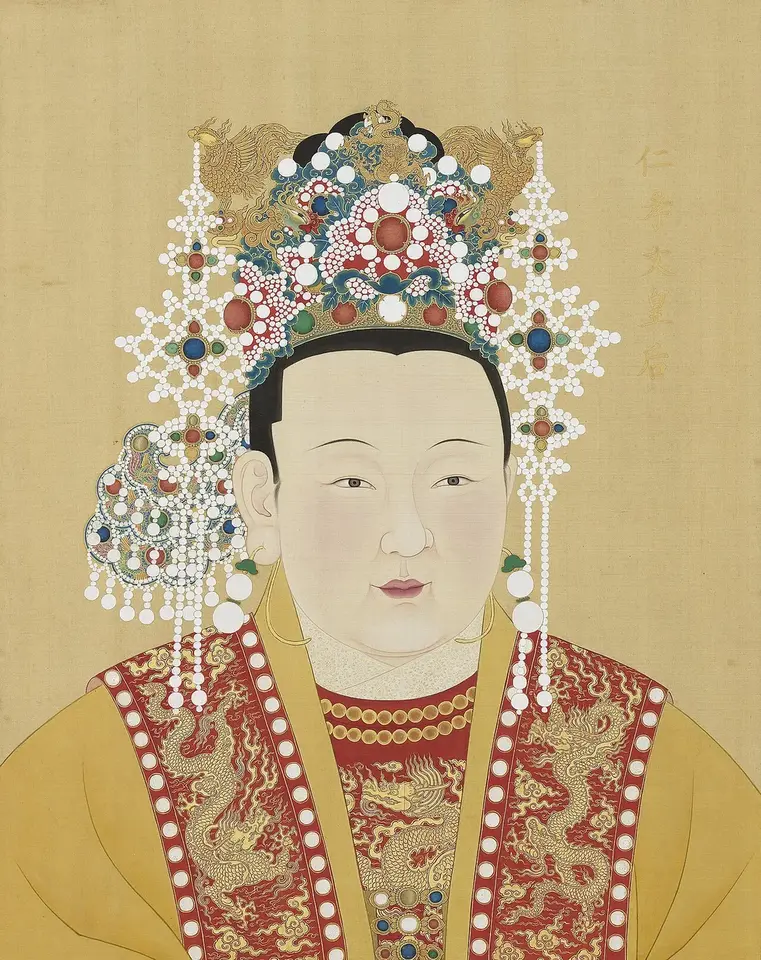
沈妙容
Shen Miaorong (沈妙容), formally known as Empress Wen of Chen, was a native of Wukang in Wuxing (present-day Deqing, Zhejiang), daughter of Officer Shen Fashen, and the primary empress consort of Emperor Wen of Chen (Chen Qian). During the Datong era of the Southern Liang dynasty, she married Chen Qian in her teenage years. When the Hou Jing Disturbance erupted, Chen Qian's uncle Chen Baxian raised troops in rebellion…
Shen Miaorong (沈妙容), formally known as Empress Wen of Chen, was a native of Wukang in Wuxing (present-day Deqing, Zhejiang), daughter of Officer Shen Fashen, and the primary empress consort of Emperor Wen of Chen (Chen Qian). During the Datong era of the Southern Liang dynasty, she married Chen Qian in her teenage years. When the Hou Jing Disturbance erupted, Chen Qian's uncle Chen Baxian raised troops in rebellion suppression, while Chen Qian and Shen Miaorong were captured and imprisoned by rebel forces in Wuxing, narrowly escaping execution after the rebellion was crushed. Following the founding of the Chen dynasty in 557, she was created Princess Consort of Linchuan, and upon Chen Qian's accession to the imperial throne in 559, she was formally invested as empress. In 566, Emperor Wen passed away and her eldest son Crown Prince Chen Bozong ascended the throne, honoring Shen Miaorong as empress dowager residing in the Ande Palace. Because regent Prince Chen Xu monopolized civil and military governance and sidelined the young monarch, Shen Miaorong secretly dispatched palace eunuch Jiang Yu to incite armed uprisings in Jian'an to unseat Chen Xu. Following the plot's exposure and Jiang Yu's execution, Shen Miaorong maintained composure to preserve her family. In 568, Chen Xu deposed Chen Bozong to usurp the throne as Emperor Xuan, redesignating Shen Miaorong as Empress Wen. After the fall of the Chen dynasty to the Sui dynasty in 589, she was relocated as a captive to Chang'an, eventually returning south to her native Jiangnan in the early Daye era before her passing.
Married Chen Qian of Wuxing in her youth as his primary consort.
Captured alongside Chen Qian by rebel troops during the Hou Jing Disturbance and spared death upon liberation.
Created Princess Consort of Linchuan upon Chen Baxian's establishment of the Chen dynasty.
Formally enthroned as empress following Chen Qian's accession, posthumously honoring her deceased father.
Honored as empress dowager at Ande Palace upon the succession of her eldest son Chen Bozong.
Dispatched eunuch Jiang Yu to organize an uprising against regent Chen Xu, which was swiftly suppressed.
Deposed from dowager status to Empress Wen after Chen Xu usurped the imperial throne.
Transported to Chang'an alongside the Chen imperial clan following Sui's conquest of Southern Chen.
Permitted by the Sui court to return to her ancestral home in Jiangnan, where she died shortly thereafter.
Shen Miaorong belonged to the distinguished Shen gentry clan of Wuxing, which held deep agrarian and social roots in the Jiangnan region. Her father, Shen Fashen, served as a military aide in the administration of Southern Liang. During the Datong era of Southern Liang, Shen Miaorong, known for her gentle demeanor and adherence to domestic decorum, was wedded in her mid-teens to Chen Qian, nephew of general Chen Baxian. In 548, rebel general Hou Jing initiated a destructive rebellion that besieged the capital Jiankang. As Chen Baxian mobilized an army from Lingnan to deliver relief, Chen Qian and Shen Miaorong were residing in Wuxing. Rebel units captured the young couple and held them in severe confinement. Throughout months of imprisonment, Shen Miaorong shared hardships with her husband until loyalist forces liberated the region, ensuring their survival.
In October 557, Chen Baxian deposed Emperor Jing of Liang to establish the Chen dynasty as Emperor Wu. In November, Chen Qian was enfeoffed as Prince of Linchuan, and Shen Miaorong was designated Princess Consort of Linchuan. In June 559, Emperor Wu died without an heir present in the capital, prompting Empress Dowager Zhang and senior courtiers to elevate the capable and battle-tested Chen Qian to the throne as Emperor Wen. In September of that year, Emperor Wen issued a formal edict designating his primary wife Shen Miaorong as empress.
Emperor Wen showered posthumous honors upon her natal family, granting her late father Shen Fashen the rank of grand master of the palace with golden seals and purple ribbons, alongside the hereditary peerage of Marquis of Jiancheng with five hundred households. Her mother Lady Gao was posthumously granted the title of Commandery Mistress of Sui'an, while her elder brother Shen Qin inherited the marquisate and received military postings. Throughout her tenure in the inner palace, Empress Shen maintained frugal living habits, declining to solicit improper court appointments for her kinsmen.
In April 566, Emperor Wen died at age thirty-five. Her eldest son, Crown Prince Chen Bozong, succeeded him as the third sovereign of Chen, bestowing upon Shen Miaorong the title of empress dowager and installing her in the Ande Palace. In accordance with Emperor Wen's testamentary instructions, state administration was entrusted to a collective regency consisting of his younger brother Chen Xu, Prince of Ancheng, and senior palace ministers Dao Zhongju and Liu Shizhi.
While Liu Shizhi and Dao Zhongju managed routine affairs from within the inner palace chambers, Prince Chen Xu stationed several hundred heavily armed retainers in the Department of State Affairs, consolidating operational control over the metropolitan military garrison. Sensing their growing disenfranchisement, Liu Shizhi conspired to fabricate an imperial decree in the name of Empress Dowager Shen to dispatch Chen Xu to a provincial governorship. However, Chen Xu acted decisively, arresting and forcing Liu Shizhi to commit suicide while dismissing Dao Zhongju. With all civil and military levers firmly under his control, Chen Xu effectively reduced Chen Bozong to a figurehead.
Witnessing Chen Xu's complete usurpation of administrative power and fearful that the imperial lineage of Emperor Wen would be extinguished, Empress Dowager Shen determined to resist. Working in absolute secrecy, she contacted Jiang Yu, a trusted eunuch attached to the Ande Palace, granting him substantial treasury bullion to travel south to Jian'an. Jiang Yu was instructed to incite local warlord Zhang Anguo into initiating an armed insurrection against Chen Xu, aiming to divert the regent's field troops away from Jiankang and create an opportunity for loyalist ministers to restore personal rule to the young emperor.
However, Zhang Anguo's uprising was quickly betrayed by his subordinates and suppressed by veteran commanders loyal to Chen Xu. Jiang Yu was apprehended and executed alongside the insurrection leaders. During the judicial interrogation, multiple attendants confessed to Empress Dowager Shen's clandestine orchestration. Terrified of collective retribution, the staff of the Ande Palace fell into utter panic. Throughout the investigation, however, Empress Dowager Shen preserved absolute calm and revealed nothing. Pragmatically aware of the need to preserve political legitimacy, Chen Xu refrained from publicly implicating the empress dowager, though he intensified military isolation around her residence and the emperor.
In November 568, Prince Chen Xu secured an imperial edict from Grand Empress Dowager Zhang deposing nineteen-year-old Chen Bozong as Prince of Linhai and ascended the imperial throne as Emperor Xuan. Following his accession, Emperor Xuan altered Shen Miaorong's rank, redesignating her as Empress Wen while keeping her confined in the Ande Palace. In 570, the deposed Chen Bozong died abruptly at age nineteen, widely suspected of having been poisoned. Furthermore, her second son Chen Bamao, Prince of Shixing, who had vehemently protested the usurpation, was murdered by Chen Xu's assassins along a transit route. Having lost both her sons within a few years, Shen Miaorong spent the subsequent decades in quiet Buddhist devotion.
In 589, the Sui dynasty conquered the Chen dynasty, taking the imperial house and court aristocracy captive to Chang'an. Shen Miaorong lived peaceably in Chang'an for sixteen years, preserving the surviving descendants of Emperor Wen. In 605, Emperor Yang of Sui ascended the throne and issued permission for displaced southern aristocrats to repatriate. Shen Miaorong returned to her ancestral homeland in Jiangnan, where she passed away shortly thereafter at an advanced age, having witnessed the rise and fall of Liang, Chen, and Sui.
Shen Miaorong shared life-and-death crises alongside Emperor Wen during their youth. In the chaotic aftermath of the Hou Jing Disturbance, when nomadic rebel contingents ravaged Jiangnan, she endured severe imprisonment in Wuxing with fortitude. Her unwavering companionship provided crucial emotional stability to Chen Qian as he consolidated military commands across the lower Yangtze, ultimately helping him emerge as the military pillar of the nascent Chen dynasty.
In the critical moment following Emperor Wen's death when the child sovereign faced total eclipse by his powerful uncle, Shen Miaorong exhibited remarkable political courage. Recognizing that institutional channels were blocked by Chen Xu's military presence, she deployed personal funds and eunuch networks to organize regional armed resistance. Although her covert endeavor failed against superior military forces, her defiant effort to defend the legitimate lineage of Emperor Wen demonstrated extraordinary daring for an imperial dowager.
Surviving the successive murders of both her sons and the deposition of her line, Shen Miaorong demonstrated formidable stoicism. Through twenty years of internal isolation within the Chen palace followed by sixteen years of foreign displacement in Sui Chang'an, she conducted herself with dignity and restraint, successfully protecting the surviving offspring of Emperor Wen from dynastic purges and completing a symbolic return to her native Jiangnan.
FIGURES ASSOCIATED WITH THIS DYNASTY